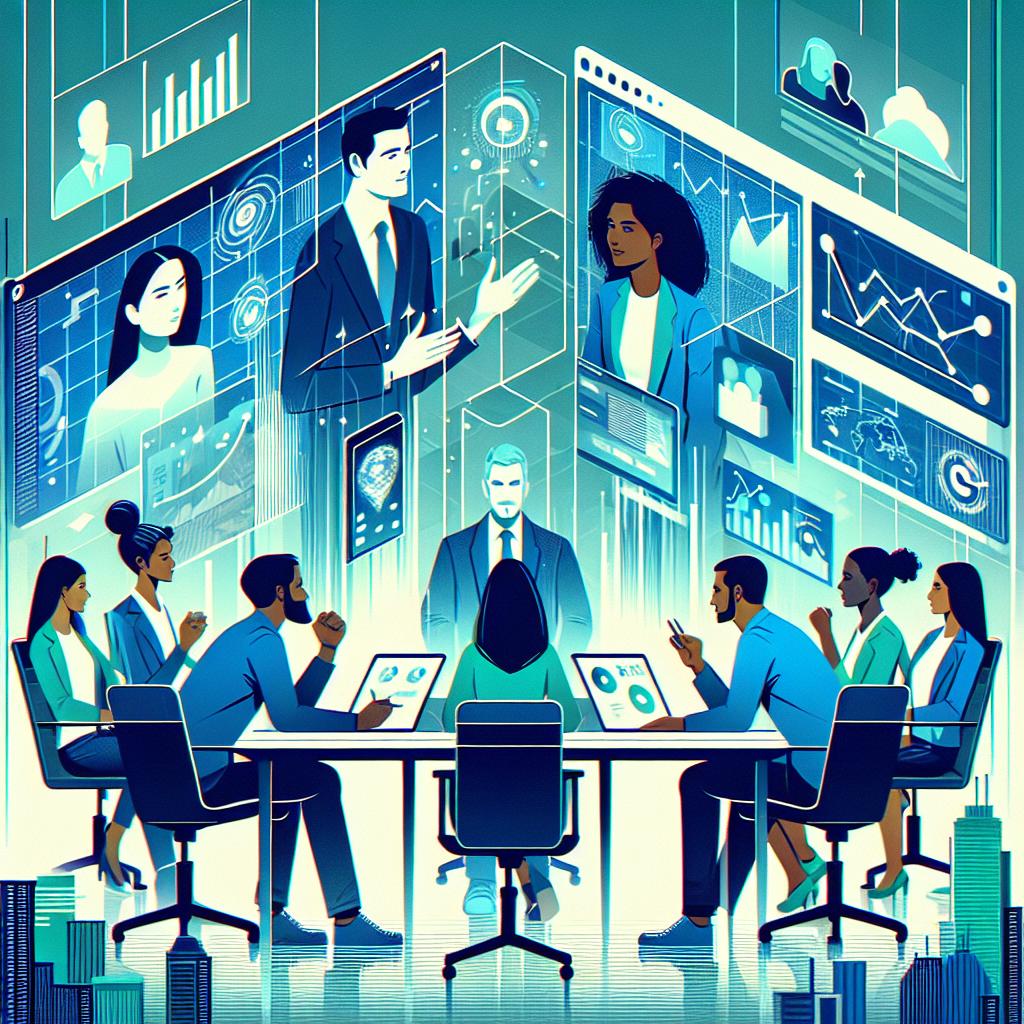
Navigating Teamwork in the Age of AI: Challenges, Strategies, and Future Directions

TABLE OF CONTENTS
- The AI Paradox: Collaboration Challenges in Modern Enterprises
- Foundations of Effective Teamwork: Principles and Practices
- Cultural and Diversity Dimensions: Neurodivergence and Shared Truth
- Design and Implementation: Role-Based Training and Low-Code Consistency
- Leadership and Organizational Roles in the AI Era
- Future Outlook: Predictions and Strategies for 2026 and Beyond
- Conclusion
1. Summary
In the rapidly evolving landscape of teamwork influenced by artificial intelligence (AI), organizations are confronted with a unique set of challenges and opportunities. As of December 11, 2025, the integration of AI into collaborative frameworks is reshaping how teams function, exposing new barriers alongside presenting fresh prospects for efficiency and innovation. Prominent studies, including one conducted by Forrester, underline that while collaboration remains a cornerstone of successful enterprises, the influx of AI tools has complicated traditional workflows. Approximately 46% of surveyed teams face difficulties prioritizing initiatives due to increased collaboration complexity, leading to operational risks and diminished information security. These findings highlight the pressing need for solutions that bolster collaboration while ensuring a unified approach to data governance, helping to avoid the emergence of shadow tools that can disrupt established procedures and efficiencies.
In addition to these practical barriers, the report underscores the foundational principles of effective teamwork that transcend technological changes. Genuine teamwork requires a cultural commitment to open communication and shared objectives, breaking down competitive silos that hinder collective progress. By actively designing collaborative frameworks and embracing practices that support neurodiversity and inclusive engagement, organizations can enhance their innovative capabilities and overall productivity. Engagement activities and role-specific training emerge as essential strategies for fostering not just camaraderie but also a shared understanding that paves the way for heightened team performance.
Moreover, the evolution of leadership roles in the context of AI integration cannot be overstated. Leaders are increasingly expected to wield not only technical knowledge about emerging AI technologies but also a keen sense of ethical governance. Those who proactively engage their workforce in the transition toward AI-driven systems—such as through embedding worker inputs in the implementation process—tend to foster smoother adaptations and higher morale among employees. The methodological shift towards role-based training signifies a broader trend, acknowledging the distinctive skill sets that each team member brings to the table, thus reinforcing the imperative for continuous learning and adaptation amid technological advancements.
2. The AI Paradox: Collaboration Challenges in Modern Enterprises
2-1. AI-driven Collaboration Barriers
The rise of AI in enterprises has augmented productivity potential but simultaneously introduced significant collaboration barriers. A recent study from Forrester highlights that while teams recognize collaboration as fundamental to successful enterprise outcomes, the proliferation of AI tools often disrupts established workflows. According to the research, 46% of respondents reported difficulties in prioritizing initiatives due to increasing collaboration complexity, leading to operational risk and diluted information security. When teams lack a cohesive view of their collective work, they resort to ad hoc methods to maintain momentum, inadvertently creating shadow processes that further complicate governance and decision-making. This paradigm emphasizes the necessity for integrating AI solutions that reinforce collaborative efforts rather than fragmenting them, advocating for tools that operate seamlessly within the user's shared work environment.
2-2. Shadow Tools and Uncontrolled Data Flows
The advent of shadow tools—unauthorized applications used within organizations—poses a significant challenge to data governance and operational efficiency. The Forrester study noted that as AI tools often cater to individual tasks, employees tend to gravitate towards these tools for quick wins while bypassing formal channels. This behavior generates uncontrolled data flows, where sensitive information gets lost in a tangle of communication silos and informal storage solutions. Consequently, organizations find themselves unable to perform effective oversight of their information landscape, resulting in potential security vulnerabilities and compliance issues. To mitigate these risks, it is crucial for leaders to establish frameworks that both empower employees to innovate within a secure environment and ensure that all tools used are properly vetted and aligned with organizational goals.
2-3. Standardizing Workplace Technology for Productivity
As enterprises grapple with a fragmented technology landscape, the push toward standardization emerges as a strategic imperative. Research documented by Atlassian indicates that the chaotic proliferation of workplace applications leads to a 'silent productivity tax,' undermining effective collaboration and decision-making. In response, forward-thinking CIOs are advocating for unified digital workplace solutions that bolster collaboration, governance, and security. These platforms aim to create a cohesive environment where all tools work together, enhancing operational visibility and facilitating streamlined workflows. By standardizing workplace technology, organizations can not only improve employee experience but also lay a foundation that is conducive to the effective deployment of AI, ensuring that data remains consistent and context-rich, thereby enabling meaningful insights and enhanced decision-making capabilities.
3. Foundations of Effective Teamwork: Principles and Practices
3-1. Defining Genuine Teamwork Beyond Buzzwords
Effective teamwork transcends mere rhetoric and buzzwords commonly found in today's corporate dialogues. Leaders often invoke terms like 'synergy' and 'collaboration' to foster a vision of unity, yet the reality within many organizations often diverges significantly from this ideal. In numerous workplaces, the term 'team' has become synonymous with a fragmented workforce where competition overshadows collaboration. Employees frequently find themselves competing for recognition or metrics rather than collaborating effectively toward shared objectives. This competitive environment stifles creativity and leads to burnout, as individuals focus more on outperforming each other than on achieving collective goals. To cultivate true teamwork, leadership must move past superficial ideals and actively foster a culture of collaboration based on genuine interaction and shared commitment to goals. Collaborative environments empower employees to share unique perspectives, ultimately enhancing innovation and productivity. Companies where teamwork is embedded as a cultural value show higher levels of employee engagement and retention, reaffirming the importance of fostering an authentic team spirit.
3-2. Designing Collaboration by Design
Collaboration does not arise spontaneously; it is meticulously crafted through intentional design and clear communication practices. Organizations must establish environments where open dialogue is not just encouraged but normalized. This includes direct conversations among team members, rather than discussing issues in triangulated contexts or avoiding confrontation. Key to this design is establishing norms for communication that promote psychological safety and trust. High-performing teams engage in candid discussions that address concerns directly, thereby enhancing accountability and clarity. A culture that celebrates transparency and direct feedback not only accelerates problem-solving but significantly boosts team morale. Training on effective communication and empathy can further equip teams to navigate challenges collaboratively. Organizations exemplifying this collaborative framework demonstrate enhanced performance metrics, as teams work cohesively to meet shared objectives. The emphasis should be placed on cultivating environments where all team members feel secure in expressing their thoughts and ideas, fostering an atmosphere conducive to innovation and collective success.
3-3. Team Games and Engagement Activities
Engaging team games and activities serve as vital tools for nurturing collaboration within teams. These activities not only improve interpersonal relationships but also promote critical thinking and problem-solving skills, which are essential for effective teamwork. Research has indicated that participation in such exercises leads to improved communication and heightened morale among team members. Some effective activities include: - **Icebreaker Games**: Games like 'Two Truths and a Lie' help in fostering personal connections within teams, allowing members to share personal stories in a relaxed format. - **Problem-Solving Activities**: Tasks such as escape rooms encourage team members to collaborate under pressure, improving their ability to work together creatively. - **Outdoor Team Building**: Activities like scavenger hunts not only promote physical engagement but also facilitate better communication in dynamic settings. - **Virtual Engagements**: With the rise of remote work, virtual team-building activities like collaborative drawing and virtual escape rooms have emerged as effective means to enhance engagement and collaboration among geographically dispersed teams. Regularly incorporating these activities into the team calendar not only strengthens relationships but also elevates the overall productivity of the teams, positioning organizations for greater success in an increasingly collaborative workforce.
4. Cultural and Diversity Dimensions: Neurodivergence and Shared Truth
4-1. Neurodivergent Employment Facilitation
The conversation surrounding neurodiversity in the workplace has gained momentum, particularly emphasizing the integration of neurodivergent individuals—those whose neurological development and functioning differ from the norm—into corporate environments. Findings from recent systematic literature reviews conducted by researchers, including Koldas et al., highlight both enhancements and hindrances faced by neurodivergent individuals seeking employment. Conditions such as autism, ADHD, and dyslexia are recognized under this umbrella and are associated with unique cognitive strengths and challenges. One significant facilitator for successful employment of neurodivergent individuals is the implementation of tailored workplace adjustments. Such adjustments may include flexible work hours, personalized mentorship programs, and structured environments that reduce sensory overload. Organizations that adopt these strategies create spaces where neurodivergent individuals can not only fit in but thrive. Management support is also crucial; leaders who demonstrate understanding and inclusivity foster a climate in which neurodivergent employees are more likely to succeed. Conversely, significant barriers remain. Ongoing discrimination—manifesting as both overt bias and subtle microaggressions—can lead to negative workplace experiences, diminishing confidence and job satisfaction among neurodivergent employees. A substantial number of employers lack the necessary training to adequately support these individuals, often failing to recognize and leverage their distinct skill sets. Traditional workplace structures can also prove rigid, inadvertently pushing neurodivergent individuals into roles that do not capitalize on their strengths, ultimately resulting in high turnover rates. Moreover, the literature indicates that positive corporate culture transformations can arise from embracing neurodiversity. Organizations engaged in this practice report enhanced innovation and diversity of thought, which in turn drives problem-solving capabilities. Those firms that actively work to include neurodivergent individuals are likely to see increased productivity and reduced turnover, as highlighted in numerous case studies. Advancements in technology also play a pivotal role in facilitating the employment of neurodivergent individuals. Assistive tools designed to accommodate various challenges—such as communication and task management—can bridge gaps in understanding and enable better workplace interactions. As society continues to shift toward a more inclusive model, the narrative around neurodiversity must evolve to focus on the capabilities and contributions of neurodivergent individuals rather than solely on their challenges. This calls for a collective effort from employers, educators, and community stakeholders to nurture and support diverse neurodevelopmental profiles in a way that aligns with organizational goals and enhances workforce diversity.
4-2. Building Shared Truth in Teams
The concept of 'shared truth' is increasingly vital in teams, particularly as diverse viewpoints and backgrounds come together within modern work environments. Shared truth is not merely an agreement on facts but a collaborative understanding that acknowledges each member's perspective. In a world rife with differing opinions, especially shaped by individual experiences and biases, the ability to find common ground is crucial for effective teamwork and collective decision-making. Recent discussions, including insights from experts, emphasize that the pursuit of shared truth can transform potentially contentious debates into constructive dialogues. By practicing active listening, demonstrating empathy, and collaboratively exploring ideas, teams can transcend conflicts and harness varied perspectives—a practice that ultimately strengthens team collaboration. Psychological research supports that navigating conflicting views effectively can lead to innovative solutions and enhanced group dynamics, turning initial disagreements into opportunities for learning and cohesion. Moreover, incorporating methodologies such as mindfulness training can bolster emotional intelligence within teams, allowing members to approach discussions with a mindset geared toward understanding rather than confrontation. Techniques designed to improve collaboration have shown positive impacts on work atmosphere, notably in high-stakes environments like healthcare, where teamwork is paramount for shared goals. Notably, blending dialogues with exercises that foster empathy can facilitate deeper connections among team members, paving the way for solutions that respect differing viewpoints. The importance of shared truth extends beyond internal team dynamics to broader societal issues, including public health and social equity initiatives. Collaborative frameworks that acknowledge diverse perspectives often yield more comprehensive policies and solutions, as evidenced in projects addressing complex challenges such as climate change. When individuals focus on building shared truths, they not only create spaces of inclusivity but also cultivate a rich environment conducive to systemic change. The transformation from conflict to shared understanding is represented as a superpower, enabling teams and societies alike to shift from adversarial stances to cooperative solutions, thereby reinforcing the value of diversity and inclusion in organizational contexts.
5. Design and Implementation: Role-Based Training and Low-Code Consistency
5-1. Role-Based Training for Tech Teams
Role-based training has become increasingly essential for tech teams as they navigate the complexities of modern projects and specialized roles. According to recent findings, effective role-based training can significantly enhance productivity, reduce errors, and improve team collaboration. It centers on teaching team members skills tailored to their specific job functions rather than employing a one-size-fits-all approach. This ensures that each member is equipped with the competencies needed to thrive in their designated role. The implementation of role-based training involves a systematic approach. First, organizations need to identify roles within their teams and map out the essential skills required for each. For instance, developers must be trained in coding standards and frameworks, while QA engineers require competencies in automated testing tools. Following this identification, the next step is to assess current skill levels, allowing teams to pinpoint areas needing improvement. This assessment can be conducted using self-evaluations and practical exercises. Additionally, training programs should be designed to close skill gaps effectively. This can include hands-on workshops, mentorship programs, and online learning resources that cater to various learning preferences. Continuous learning should also be prioritized, with regular refresher sessions and access to updated materials. The success of such training programs can be measured through productivity metrics and employee feedback, which should lead to iterative improvements in training methodologies.
5-2. Maintaining Design Consistency in Low-Code Platforms
The rise of low-code platforms has revolutionized application development by enabling teams to rapidly create and deploy solutions. However, this acceleration comes with its own set of challenges—most notably, maintaining design consistency across various screens and workflows. As teams collaborate within these platforms, variances in layout, spacing, and component usage can emerge, potentially harming user experience and brand integrity. AI technologies are increasingly being integrated to mitigate these inconsistencies. They can analyze patterns and detect deviations in design, but their effectiveness relies heavily on human oversight and structured governance. For instance, AI can enforce design systems by validating spacing, aligning components, and ensuring that outdated design patterns are not utilized. However, a critical component of successful AI implementation is having designated personnel to guide these systems and make nuanced design decisions that AI alone cannot achieve. To effectively manage design consistency, organizations can adopt a four-step governance framework. This includes auditing current design tokens, synchronizing low-code libraries, training AI models on acceptable design patterns, and instituting human review processes for exceptional cases. Such a framework not only reinforces design integrity but also allows teams to leverage the power of AI while maintaining a creative and user-focused approach.
5-3. Resolving Differing Opinions within Teams
Differing opinions are inherent in team environments, especially when diverse perspectives converge. Rather than being viewed as obstacles, these differences can be harnessed to foster innovation and enhance problem-solving capabilities. Effective management of these scenarios is crucial for maintaining team cohesion and driving progress. One important strategy for resolving conflicts arising from differing opinions is to promote a culture of open communication and respect. Team members should feel comfortable expressing their thoughts and actively listening to others, creating a foundation for healthy debate. Encouraging managers to facilitate respectful disagreements can also contribute to creating an inclusive atmosphere where diverse viewpoints are valued. Additionally, employing structured conflict resolution techniques such as mediation can aid in achieving mutual understanding among team members. By identifying common goals and focusing on collaborative solutions, teams can turn differences into strengths, ultimately leading to improved creativity and cohesion. Training sessions can further equip teams with skills to navigate conflicts constructively, paving the way for a more resilient and productive team environment.
6. Leadership and Organizational Roles in the AI Era
6-1. Emerging AI-Driven Organizational Roles
The rise of artificial intelligence (AI) is dramatically reshaping organizational roles across industries. As companies increasingly integrate AI into their operations, traditional positions are evolving to meet the needs of technology-driven environments. This shift is characterized by the emergence of new roles such as AI ethicists, data scientists, and AI trainers who are tasked with developing and managing AI systems responsibly. Additionally, leadership positions now necessitate a familiarity with AI technologies, as leaders are expected to steer their organizations through transformations that prioritize both innovation and ethical considerations.
Research indicates a pressing need for leaders who can navigate these changes effectively. A recent report highlights that organizations that adopt AI with a collaborative mindset can harness the technology to enhance both operational efficiency and employee satisfaction. Those leaders who are proactive about AI integration, fostering environments of trust and transparency, tend to emerge as the most successful in adapting their organizations to the new landscape.
6-2. Embedding Worker Inputs and Managing Resistance
Engaging workers in the AI implementation process is essential for overcoming resistance and creating effective systems. A recent document discussed how companies that include frontline workers in the development and deployment phases of AI experience smoother transitions and fewer conflicts. This approach contrasts sharply with companies that deploy AI technologies without consulting those affected by these changes, which often leads to skepticism and backlash.
The German trade union IG Metall offers a successful model by training union leaders on AI, enabling them to advocate for workers’ interests effectively. By fostering informed dialogue, companies can incorporate worker input into AI strategies, bridging the communication gap between management and employees. This shift not only enhances the effectiveness of AI systems but also increases overall employee morale and cooperation.
6-3. AI Performance Management and Employee Feedback
The integration of AI into performance management systems fosters a more data-oriented and streamlined approach to evaluating employee productivity. Tools leveraging AI capabilities can automate evaluation processes, synthesize feedback, and help employees set measurable objectives. A report published in late 2025 indicated that 61% of HR leaders view the role changes stemming from AI as critical, emphasizing the urgency of adapting performance metrics accordingly.
Organizations that implement AI-enhanced performance management tools have reported improved performance outcomes. These tools facilitate ongoing feedback loops and provide insights that traditional performance metrics may overlook. However, it is crucial to ensure that the introduction of AI in performance management is executed with care to avoid undermining human judgment and to maintain fairness in evaluation processes.
6-4. Workforce Strategy Evolution
As the workforce undergoes transformations driven by AI and changing employee expectations, organizations must adapt their workforce strategies to align with these new realities. An effective workforce strategy provides clarity in understanding what skills are necessary for achieving business objectives. A recent document highlighted the importance of evaluating current workforce capabilities against future needs, a process that requires regular adjustments and strategic foresight.
Strategies now incorporate diverse elements such as upskilling initiatives, emphasis on diversity and inclusion, and leveraging data analytics for workforce planning. By aligning workforce capabilities with organizational goals, companies can position themselves for sustainable success in an increasingly competitive market. Moreover, regularly engaging with data analytics allows companies to not only anticipate talent shortages but also to gauge employee engagement and satisfaction levels effectively.
7. Future Outlook: Predictions and Strategies for 2026 and Beyond
7-1. Game-Changing AI Trends in 2026
As we look ahead to 2026, the integration of artificial intelligence into various domains will fundamentally reshape business operations and organizational structures. Key trends that are expected to emerge include the rise of agentic AI, which facilitates greater autonomy in task execution. Unlike traditional AI systems that merely respond to prompts, these advanced AI models will initiate and manage workflow tasks autonomously. This development is likely to enhance operational efficiency and productivity by allowing teams to focus on more strategic activities rather than mundane tasks.
Moreover, there will be a significant shift from general-purpose models to specialized, domain-focused AI systems. These models are tailored for specific industries, offering enhanced precision and contextual understanding, which is crucial in fields like healthcare, finance, and legal compliance. As organizations prioritize these specialized systems, they will benefit from improved data accuracy and operational outcomes.
The multimodal interaction capabilities of AI are expected to evolve further, enabling users to communicate through various formats—spoken commands, written text, and visual inputs—including images and graphs. This level of interaction will make collaboration between humans and AI much more intuitive, facilitating smoother workflows and creative processes.
In addition, the longitudinal emphasis on AI governance cannot be overstated. Organizations will need to establish robust frameworks for data governance, addressing critical issues such as security, ethical AI use, and quality assurance. As AI becomes more embedded in decision-making processes, adherence to ethical standards will transition from a supplementary consideration to a mandatory practice.
7-2. Frameworks for Leading Teams in an AI-First World
In navigating the AI-centric landscape that is unfolding, leadership will require a dual focus on technical literacy and ethical governance. Successful leaders will need to interpret complex AI capabilities while remaining grounded in their core ethical responsibilities. This includes promoting a culture of transparency and accountability and empowering team members through the strategic use of AI tools to amplify human potential rather than replace it.
Effective teamwork will increasingly hinge on leaders fostering adaptive frameworks that prioritize collaborative problem-solving. Such frameworks should integrate both human insight and AI analytics to elevate decision-making and innovation. Leaders will be called to cultivate environments that encourage continuous learning and curiosity, encouraging talent to evolve alongside the fast-paced changes brought on by AI technologies.
Moreover, companies must adapt their human resources strategies to align with the capabilities required in 2026. This includes redefining career pathways that favor skill adaptability and continuous learning over traditional hierarchies. As the workforce evolves, organizations will increasingly value diverse abilities and innovative thinking over the conventional pedigree, thus reshaping the notion of career advancement.
7-3. Long-Term Implications for Teamwork
The long-term implications of these transformations will significantly alter the fabric of teamwork as we know it. With AI playing an integral role in daily operations, teams will need to leverage AI-enhanced decision-making processes to thrive. The essence of teamwork will shift towards fostering collaborative partnerships between human intelligence and AI capabilities, requiring a rethinking of roles and responsibilities within teams.
Organizations that succeed will recognize that capability over headcount will be the new metric for productivity. Consequently, teams will gradually evolve to consist of roles that prioritize critical thinking, emotional intelligence, and creativity—skills inherently human that AI cannot replicate. The emphasis will shift towards building agile teams capable of working across disciplines, adapting to the dynamic market, and employing rapid learning techniques to keep pace with continuous technological advancements.
Ultimately, the changes in teamwork dynamics triggered by AI's pervasive integration raise critical questions about team culture, collaboration ethics, and the responsibilities of leaders. As AI tools become ubiquitous in facilitating collaboration, organizations must also remain vigilant in addressing the ethical challenges these technologies pose. This includes ensuring equitable access to AI resources, avoiding biases reinforced by algorithms, and emphasizing shared values in team interactions.
Conclusion
In conclusion, the pathway to effective teamwork in the AI era necessitates a multifaceted approach that encompasses targeted design, an inclusive culture, and adaptive leadership tailored to harness the benefits of AI while minimizing inherent risks. As organizations look forward to 2026 and beyond, the integration of AI features—such as agentic systems and domain-specific modeling—will be pivotal in redefining team dynamics and productivity metrics. By aligning foundational teamwork principles with data-driven methodologies, companies can mitigate the risks associated with shadow processes and reinforce the concept of shared truths across diverse teams.
The success in fostering a collaborative environment hinges on the inclusion of neurodivergent perspectives, structured role-based training programs, and consistency in using low-code platforms that can support the versatile nature of modern teamwork. Leaders will play a critical role, evolving into architects capable of navigating the complexities introduced by AI while ensuring the workforce remains engaged and empowered. As organizations adopt strategic frameworks outlined for future trends, they will not only reinforce resilience but also drive sustained innovation, positioning themselves advantageously in an increasingly competitive market landscape.
Ultimately, the future of teamwork, laden with the promise of AI integration, poses essential questions about collaboration ethics, cultural inclusivity, and leadership responsibilities. Addressing these variables will be crucial in fostering equitable access to resources, combating algorithmic biases, and enhancing shared values among team members. Successful organizations will thrive by embracing these complexities, thereby establishing a rich ecosystem that bridges the gap between human potential and technological prowess.