Charting the Future: Evolution of South Korea’s Military Satellite Capabilities

TABLE OF CONTENTS
- Current Space Launch and Satellite Deployment Landscape
- Regional and Global Satellite Industry Trends
- Technological Enablers for Advanced Military Satellites
- Defense R&D Synergies and Resource Security
- Future Outlook: Roadmap for Military Satellite Evolution
- Conclusion
1. Summary
As of December 8, 2025, South Korea finds itself on the cusp of a monumental transformation in its military satellite capabilities. The successful deployment of the domestically developed Nuri rocket and CAS500-3 cubesats reflects a significant leap forward, showcasing the nation’s growing technological prowess in the context of space exploration. These milestones are indicative of South Korea's strategic investment in advancing its defense capabilities, particularly in light of the competitive manufacturing ecosystems emerging in regions like China, Europe, and India. The successful launch of Nuri on November 27, 2025, which placed twelve cube satellites into orbit, is a testament to the effectiveness of Korean aerospace technology and operational readiness. Each cube satellite demonstrated proficient communication with ground stations, thereby not only validating the technology but also enhancing South Korea’s position in the global satellite landscape.
In parallel, the ongoing expansion of military satellite programs is supported by innovations in artificial intelligence (AI), semiconductors, and critical minerals. These technological enablers are poised to transform how military satellites operate, pushing towards greater autonomy and self-sufficiency. Moreover, the framework of defense research and development (R&D) and policy initiatives signifies a concerted effort to nurture a robust military satellite ecosystem. As South Korea looks toward the future, the roadmap for military satellite evolution indicates a strong focus on advancing AI capabilities, ensuring secure communications, and developing indigenous manufacturing capabilities. Collectively, these developments prioritize national security objectives while propelling South Korea closer to its aspirations as a leader in military technology.
Moreover, the prevailing trends in the global satellite industry reveal significant strides and competition, particularly from China's ambitious satellite production capabilities and Europe’s agile communication systems. South Korea's strategic observance and proactive response to these regional and global shifts underscore a commitment not only to immediate technological advancements but also to long-term resilience in military aerospace operations. The trajectory of satellite technology and strategic defense partnerships will undoubtedly shape the next phase of military space initiatives, ensuring that South Korea remains competitive and secure within the ever-evolving geopolitical landscape.
2. Current Space Launch and Satellite Deployment Landscape
2-1. Overview of Nuri Rocket and CAS500-3 Deployment
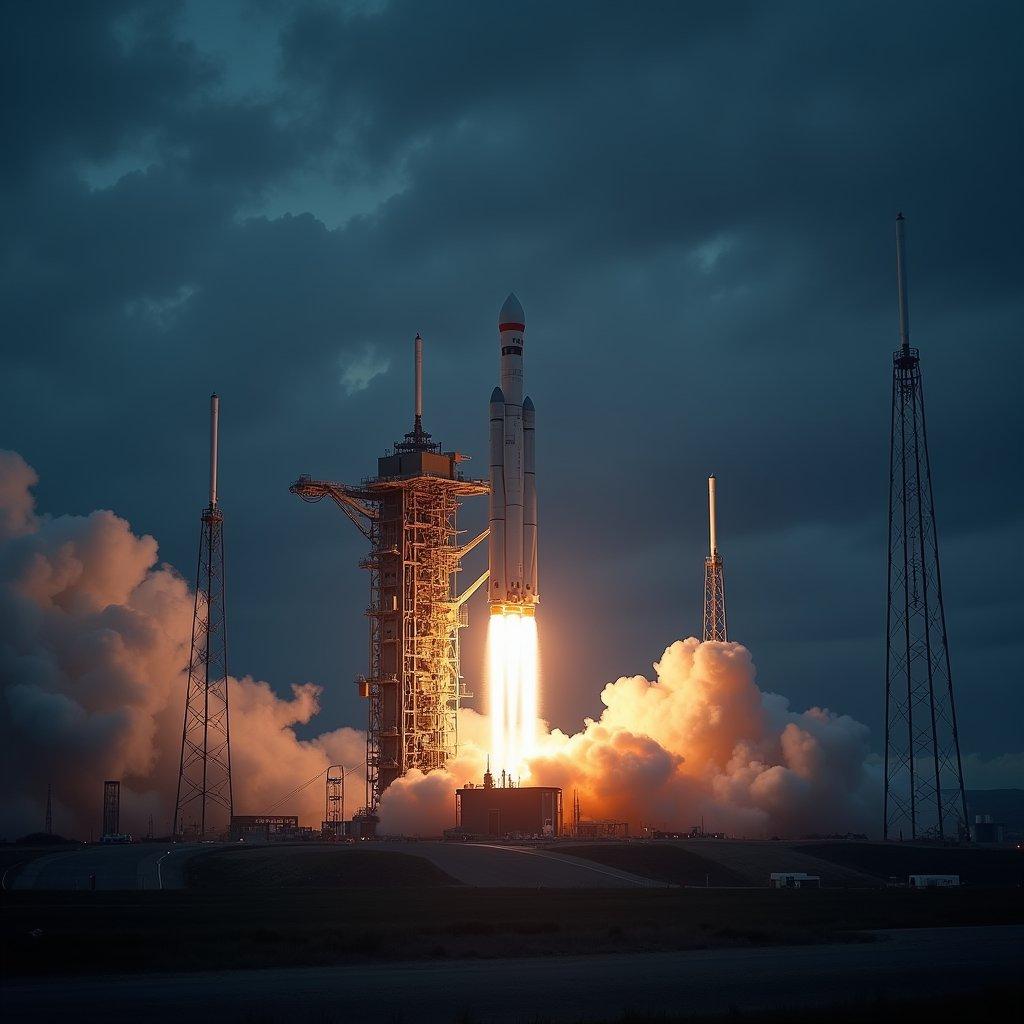
On November 27, 2025, South Korea successfully launched its homegrown Nuri rocket from the Naro Space Center, located in Goheung. This mission was particularly significant as it marked the fourth launch of the Nuri rocket, deploying the primary satellite along with twelve cube satellites into an orbit approximately 600 kilometers above Earth. Following the launch, developers confirmed that all twelve cube satellites engaged in successful communication with ground stations, marking an unprecedented achievement for a single launch of Nuri. This success highlights South Korea's growing capabilities in satellite deployment and operational readiness, showcasing the country’s advancements in space technology.
The deployment included sophisticated systems for satellite control where the main satellite established communication with South Korea's King Sejong Station located in Antarctica. This operational success indicates not only the reliability of the Nuri rocket but also the technical competencies surrounding the control and management of these satellites in real-time conditions.
The Korea Aerospace Research Institute (KARI) along with private companies like Space Liin Tech and Quaternion played vital roles in verifying communication capabilities. As reported, KARI confirmed the functionality of the E3 Tester-1 cube satellite, while Space Liin Tech validated communication with its satellite BEE-1000, and Quaternion reported success with its satellite PERSAT. The cumulative success of communication with all deployed satellites indicates a strong foundation and preparedness for future satellite missions.
2-2. Ground Communication Achievements
The operational milestone achieved by the twelve cube satellites post-deployment illustrates a significant leap for South Korea’s space capabilities. With successful communication established across all deployed satellites, this event represents a monumental step in managing satellite networks effectively. Each communication success underscores the operational readiness of the satellites, reflecting improvements in their design and control systems.
The data from this launch and subsequent communications is expected to contribute significantly to future projects. These developments bolster national security objectives, particularly in enhancing communication roles for military applications. The successful establishment of ground communication marks a shift towards more autonomous operational capabilities for South Korea's space assets, enabling them to function collaboratively in a military context.
Looking beyond mere communication, these achievements signify South Korea's dedicated efforts in advancing its satellite technology, placing it in a favorable position within the competitive landscape of space-faring nations. The emphasis on successful control and maintenance of cube satellites will likely shape the future trajectory of South Korea's military satellite initiatives, particularly as the nation seeks to enhance its capabilities and self-reliance in space exploration and defense.
3. Regional and Global Satellite Industry Trends
3-1. China’s WIAC ‘Super Factory’ for Satellite Production
As of December 2025, China's Wenchang International Aerospace City (WIAC) is poised to begin operations of a satellite 'super factory' designed to produce up to 1,000 satellites annually. This facility represents a significant advancement in satellite manufacturing capabilities. It will not only streamline the production process—allowing satellites to be launched almost immediately after assembly—but also foster a comprehensive ecosystem involving over 20 enterprises that span the entire satellite supply chain, from rocket development to tracking.
The super factory is notable for being Asia's largest facility dedicated to satellite production and includes both a testing and inspection center and several core development units. This innovative structure aims to support China's ambitious 'Thousand Sails Constellation' project, which seeks to enhance the deployment of low-earth orbit (LEO) satellite systems. Furthermore, it will utilize benefits from the Hainan Free Trade Port to establish an international satellite data trading platform, thereby attracting global satellite data resources. This development not only illustrates China's rise as a formidable player in the global satellite industry but also highlights the increasing significance of manufacturing and logistics capabilities as competitive advantages in the space sector.
3-2. SWISSto12’s Agile Communication Systems Gains
SWISSto12, a key player in the European satellite communications industry, has reported significant growth and technological advancements as of late 2025. The company has successfully expanded its portfolio of agile satellite communication systems while being recognized for its leadership in this area, evidenced by the honor awarded to its CEO, Dr. Emile de Rijk, as Satellite Executive of the Year at SATELLITE 2025.
Notably, SWISSto12's work on the HummingSat GEO satellite platform—designed for high-performance geostationary connectivity—has progressed significantly, with four satellites slated for Critical Design Review and initial hardware assembly in early 2026. Furthermore, SWISSto12's entry into the APAC market with NEASTAR-1 highlights its commitment to developing regional satellite solutions by providing a platform for rich media, IoT connectivity, and emergency alert services. This strategic positioning underscores the growing trend of satellite sovereignty, as nations and companies alike seek self-reliant capabilities to deliver robust communication infrastructures amid increasing geopolitical tensions.
The company's significant revenue growth of over 40% in 2025 and an expanded workforce reflect the rising demand for agile satellite solutions worldwide, reinforcing the notion that Europe is rapidly enhancing its technological assets in defense and communications sectors through innovations in satellite technology.
3-3. India’s Strategic Space-Military Collaboration
India's space sector is undergoing a remarkable transformation, bolstered by a blend of technological breakthroughs and a proactive approach to industrial collaboration. With significant state support and a thriving private space industry, India's strategic investments have positioned it as an emerging power in the realm of military applications and space initiatives.
Recent geopolitical developments, particularly those involving regional tensions such as the Russia-Ukraine conflict and India-Pakistan relations, have demonstrated the pivotal role that commercial satellite systems can play as force multipliers in enhancing national defense capabilities. India is increasingly recognizing the need for effective military-space integration, prompting partnerships across academia, industry, and military sectors to foster innovation and collaboration.
These efforts have unlocked new avenues for commercial enterprises, driving a surge in astropreneurial ventures aimed at modernizing defense strategies through space technology. As such, India’s evolving space economy not only amplifies its military effectiveness but also heralds a new era of orbital warfare preparedness, rendering it a key player in the future landscape of global space security.
4. Technological Enablers for Advanced Military Satellites
4-1. On-Device AI Innovations for Satellite Control
As of December 2025, the advancement of on-device AI technologies is significantly enhancing the capabilities of military satellites. Recent initiatives, such as the 'Qualcomm AI Innovator Program 2025 – APAC Demo Day' held in Seoul, exemplify the integration of on-device AI solutions that can bolster satellite control systems. Fifteen startups from Korea, Japan, and Singapore showcased innovations that leverage Snapdragon processors for real-time inference and low-power operation, critical for the demanding environments of satellite operations. Such technologies promise to improve operational efficiency, enabling satellites to process data on-site rather than relying on distant servers, thus enhancing responsiveness and reducing latency in military applications.
The continuous development of edge AI across sectors demonstrates the transformational potential for satellite technologies. The emphasis on personalization and privacy in these on-device AI solutions aligns with defense needs, where secure data handling is of utmost importance. These innovations are not only pushing the envelope on performance but also laying the groundwork for future applications in various domains, including reconnaissance and communication, which are pivotal in military contexts.
4-2. Next-Gen Semiconductor Focus in APAC and Singapore
In a strategic move to consolidate semiconductor capabilities, Singapore has announced a significant five-year research and development budget of S$37 billion, specifically focusing on advancements in semiconductors and artificial intelligence (AI). This investment is part of the broader RIE2030 initiative aimed at enhancing the region’s technological landscape, promoting innovations that directly impact military applications such as satellite communications and data processing.
For South Korea, the semiconductor sector is a critical enabler for military satellite systems, particularly as it aims to achieve self-sufficiency in hardware production. The collaborative efforts across APAC nations in semiconductor R&D further reinforce the importance of regional partnerships in advancing military technologies. By focusing on tighter integration between AI capabilities and semiconductor evolution, South Korea and its partners are gearing towards enhanced military satellite functions, ensuring higher performance, efficiency, and resilience in the face of regional challenges.
4-3. South Korea’s Sovereign AI Initiative and Model-Building
South Korea's commitment to establishing a sovereign AI initiative marks a pivotal moment in its technological landscape, particularly in the context of military applications. Launched in 2025, this initiative involves an investment of ₩530 billion (approximately $390 million), aimed at fostering five domestic entities focused on developing large-scale foundational AI models. This strategy is not merely about adopting existing technologies; it is aimed at reducing dependency on foreign AI systems, which often do not cater to specific national security needs.
The initiative’s focus encompasses critical areas such as data security, local language processing, and integration with high-value industries including defense and aerospace. By nurturing a full-stack AI ecosystem attuned to local requirements, South Korea is positioning itself to lead in both the development and application of AI-powered solutions for its military satellites. The performance-based funding model—assessing projects bi-annually and reallocating resources to the most promising initiatives—ensures that the best advancements are funded, enhancing the agility and responsiveness of its defense technology landscape.
5. Defense R&D Synergies and Resource Security
5-1. Short-Range Missile Development as a Defense Tech Driver
As of December 8, 2025, South Korea has embarked on a significant initiative to enhance its short-range missile capabilities, particularly through the development of the indigenous Short-Range Air-to-Air Missile-II (SRAAM-II). Announced on December 2, 2025, during a program initiation meeting led by the Agency for Defense Development, this project is backed by a substantial budget of 435.9 billion South Korean won (approximately $296.2 million). The SRAAM-II program, running from 2025 to 2032, aims to modernize South Korea’s defense technology and improve operational readiness against shifting regional threats, particularly in light of heightened tensions on the Korean Peninsula and the broader Indo-Pacific region. This initiative underscores South Korea's commitment to building a robust defense infrastructure capable of addressing contemporary military challenges. By focusing on indigenous development, South Korea not only seeks to enhance its military capabilities but also aims to stimulate domestic defense industries and foster technological synergies between various branches of the government and private sectors.
5-2. Interagency Council on Critical Minerals and Energy Security
The establishment of the Interagency Council on Critical Minerals and Energy Security, initiated on December 5, 2025, marks a crucial development in South Korea’s approach to resource security. This council is strategically designed to enhance the country's capacity to manage supply chain disruptions and safeguard essential resources critical for the growth of advanced industries. With geopolitical tensions and global competition for critical minerals intensifying, the government's proactive stance aims to mitigate vulnerabilities associated with resource supplies, particularly those needed for emerging technologies such as electric vehicles and advanced battery systems.
The council, chaired by Industry Minister Kim Jung-kwan, aims to create a comprehensive framework that includes a crisis alert system to monitor and respond to potential supply chain disruptions. Additionally, it will facilitate collaboration between public and private sectors to enhance participation in international resource development projects, thereby expanding South Korea's petroleum and mineral reserves. The initiative reflects a broader strategy to maintain resilience amidst mounting pressures from major economies, notably the competitive landscape shaped by the U.S. and China regarding rare earth elements. Through this council, South Korea endeavors to solidify its national resource security, ensuring that its defense and technology sectors remain resilient and capable of meeting future demands.
6. Future Outlook: Roadmap for Military Satellite Evolution
6-1. AI-Driven Autonomy and Resilient Constellations
As South Korea progresses into the late 2020s, the integration of AI in military satellite operations is poised to revolutionize situational awareness and strategic autonomy. The anticipated advancements in AI-driven autonomy will enable satellites not only to engage in real-time data collection but also to analyze and interpret that data with minimal human intervention. This transition will likely result in more resilient satellite constellations capable of adapting to threats and operational demands without centralized control. By harnessing AI, these systems can be programmed to autonomously maneuver, optimize communication pathways, and enhance their operational lifespan through predictive maintenance protocols.
Furthermore, this evolutionary phase is expected to employ advanced machine learning algorithms to improve decision-making processes in satellite operations. The upcoming rollouts of such capabilities will be critical in countering adversarial actions in contested environments, ensuring that South Korea maintains a tactical advantage in the realm of military space operations.
6-2. Building a Sovereign Satellite Manufacturing Base
A central theme in South Korea’s future military satellite roadmap is the establishment of a sovereign satellite manufacturing capability. This initiative aims to reduce reliance on foreign technologies and bolster the national defense industry's independence. Investment in domestic semiconductor production and AI-integrated systems will form the backbone of this manufacturing base, allowing for the production of next-generation satellites that are both lightweight and utilizing advanced materials.
The objective is to create a sustainable ecosystem, promoting collaboration between government agencies, defense contractors, and academia. This collaboration is projected to foster innovation in satellite design and manufacturing processes, enhancing the agility and adaptability of South Korea's military satellite fleet. By developing these capabilities within national borders, South Korea aims to strengthen its strategic autonomy and bolster its position against other regional players.
6-3. Enhanced Reconnaissance and Secure Communications Roles
The evolution of military satellites in South Korea will significantly enhance reconnaissance capabilities and secure communications roles. Future satellites are expected to feature advanced imaging technology, possibly aided by AI, allowing for real-time intelligence gathering across diverse geographic regions. As geopolitical tensions rise, the ability to swiftly obtain critical reconnaissance will strengthen South Korea's defensive posture and support military operations.
Moreover, the integration of secure communication systems within these satellites will ensure resilient and secure lines of communication during crises or conflicts. Enhanced encryption technologies and robust signal processing will mitigate the risks of interception and jamming by adversaries, thus safeguarding critical military information. As these systems evolve, they will be pivotal in establishing a layered defense strategy that leverages both surveillance and secure communication to enhance situational awareness and operational efficiency.
Conclusion
In summary, South Korea’s advancements in medium-lift launch capabilities and cube-satellite communication mark a crucial first step in a broader military-space strategy. The increasing manufacturing momentum in China, Europe, and India highlights an urgent need for South Korea to fortify its domestic technological base—from sourcing critical minerals to enhancing semiconductor production and integrating AI. Additionally, government-led defense R&D initiatives, such as the development of short-range missiles and the establishment of interagency councils for resource security, provide essential support for building a self-sufficient military satellite infrastructure.
As South Korea progresses into a new era of military satellite capabilities, it is imperative to maintain sustained investments in key areas such as AI autonomy, secure communication systems, and local production. These initiatives will be vital in enabling the operation of resilient satellite constellations that enhance reconnaissance, missile warning, and tactical command. By 2030, one can expect a sophisticated layered space architecture characterized by high-throughput microsatellites, autonomous on-orbit servicing, and advanced ground infrastructure. Such an evolution is poised to deliver a transformative advantage to South Korea’s defense posture, ensuring enhanced military readiness and strategic agility in a complex and competitive geopolitical environment.
Ultimately, the ongoing developments in South Korea’s military satellite capabilities not only mark a significant leap forward but also set the stage for future advancements that will redefine how the nation approaches security in the realm of space. The drive towards self-reliance, innovation, and advanced technology integration is set to empower South Korea's defense operations, reinforcing its position as a formidable player on the global stage.