Mid-November 2025 Global Developments: Strategic Shifts in Politics, Technology, and Society

TABLE OF CONTENTS
- Geopolitical and Security Realignments
- Technological Innovations and Industrial Strategies
- Economic Trends and Market Developments
- Domestic Governance and Societal Movements
- Conclusion
1. Summary
As of November 16, 2025, the global landscape is marked by a complex interplay of geopolitical dynamics, technological advancements, economic transformations, and societal movements, all contributing to a reshaping of the international order. A significant U.S.-China trade agreement, announced on October 30, 2025, has temporarily eased some long-standing tensions, though many tariffs and export controls persist. This agreement, while a step towards de-escalation, underscores the ongoing strategic competition, notably as both nations enhance their military capabilities—China with its next-generation nuclear carrier and hypersonic railgun, and the U.S. in maintaining its maritime dominance. Simultaneously, China-Russia relations are solidifying, evidenced by their regular summits, which emphasize mutual support against Western sanctions, illustrating a concerning pivot toward a new bipolar world format that may redefine international alliances.
In the realm of technology, the U.S. and China are advancing along distinct yet complementary AI trajectories, with the former prioritizing Artificial General Intelligence (AGI) and the latter making strides in embodied AI through community-driven innovation. This technological race also extends to semiconductors, with Baidu's launch of advanced Kunlun chips marking a critical development in China's AI capabilities amidst tightening U.S. export controls. Economic indicators reveal a resurgence in China driven by consumption-led growth, reflected in impressive retail sales and Alibaba's record Singles Day, while Vietnam emerges as a dominant player in the streaming market, signaling shifting consumer habits and preferences across Southeast Asia. Lastly, domestic movements, such as South Korea's governance reforms, anti-corruption protests in the Philippines, and cultural restoration initiatives in Egypt, showcase a global call for accountability and community resilience in the face of pressing social issues.
Overall, these narratives interweave into a broader discourse on the strategic, technological, and societal shifts currently underway, raising questions about future governance, international cooperation, and the balancing of national interests against global challenges.
2. Geopolitical and Security Realignments
2-1. US-China Trade Agreement and Supply-Chain Controls
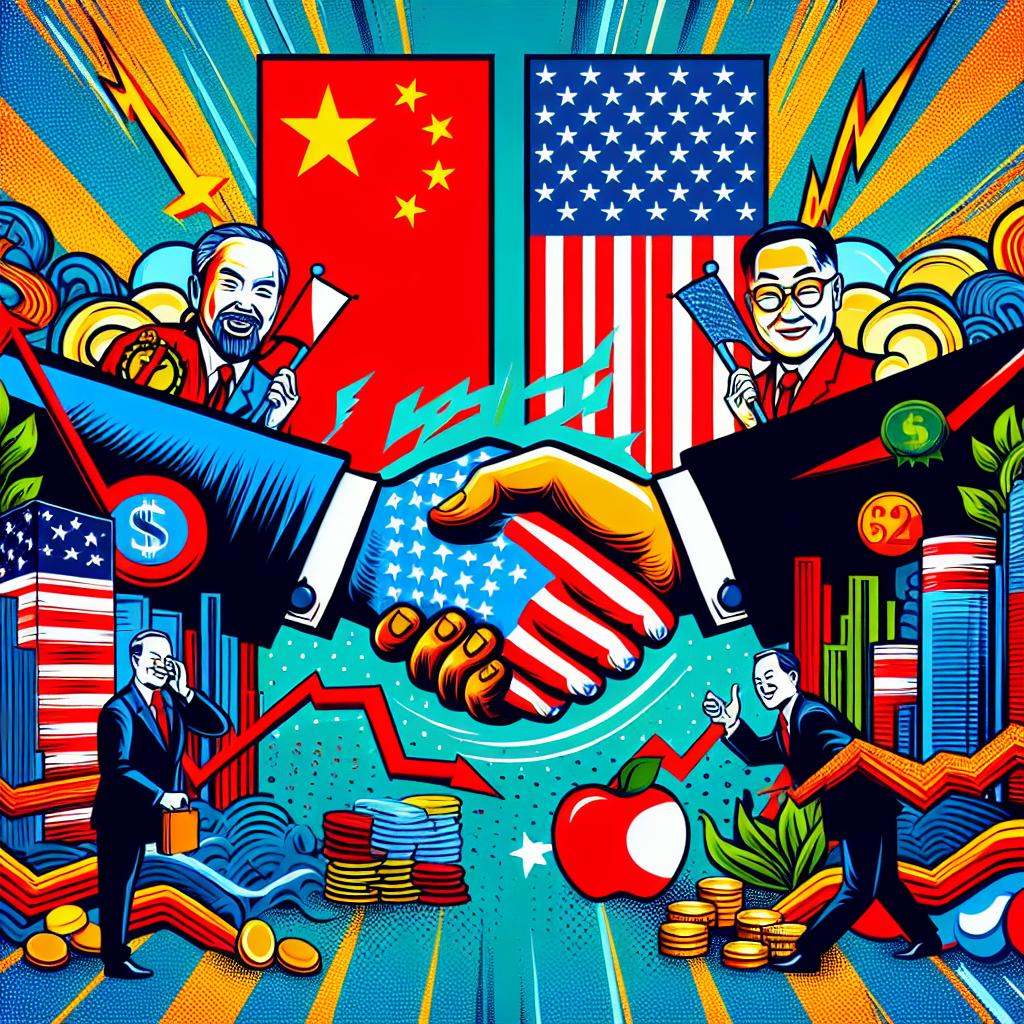
On October 30, 2025, U.S. President Donald Trump and Chinese President Xi Jinping announced a significant bilateral trade agreement following a summit held in Busan, South Korea. This agreement, though lacking formal documentation, is intended to de-escalate economic tensions that have been intensifying in recent years. Key aspects of the agreement include a temporary suspension of certain tariff increases and export controls. The United States has agreed to suspend its implementation of the 'Affiliates Rule' for one year, which had aimed to broaden the scope of export controls on foreign entities tied to U.S. interests. In return, China has committed to resume semiconductor manufacturing and lift some restrictions on rare earth material exports for a period of one year.
However, this agreement does not completely eradicate the underlying issues, as many tariffs and trade restrictions remain in place. The U.S. will reduce the existing 20% tariff on certain fentanyl-related goods to 10%, while China has pledged to suspend counter-tariffs on U.S. agricultural products. The effectiveness and sustainability of this agreement will largely depend on the implementation of its terms and ongoing diplomatic engagements between the two nations.
2-2. China’s Next-Generation Carrier and Hypersonic Railgun Ambitions
China is actively developing a next-generation nuclear-powered aircraft carrier designed to integrate advanced defensive capabilities, including high-energy laser weapons and electromagnetic railguns. Information disclosed during a state media program indicated that the carrier could feature systems capable of intercepting threats at hypersonic speeds, thus enhancing China's naval power.
The implications of these developments are significant, particularly given the U.S. Navy's historical advancements in similar technologies, which were eventually abandoned due to costs. The introduction of the Liaoyuan-1, a new laser weapon showcased in September 2025, underscores China's commitment to modernizing its military capabilities. Designed primarily for the interception of drones and missiles, these advancements not only strengthen China’s defense posture but also signal an escalation in naval warfare capabilities in the Asia-Pacific region.
2-3. Semi-Regular China-Russia Summit Dynamics
The relationship between China and Russia appears to be solidifying as evidenced by their semi-regular summits in 2025, which have grown increasingly significant in light of global geopolitical shifts. The most recent meeting on November 4, 2025, between Chinese Premier Li Qiang and Russian Prime Minister Mikhail Mishustin highlights an ongoing partnership that extends beyond mere rhetoric. Both countries reaffirmed their commitment to mutual support against external pressures, particularly regarding Western sanctions targeting Russia due to its actions in Ukraine.
This pattern of interaction is reflected in both nations' collaborative efforts within organizations such as BRICS and the Shanghai Cooperation Organization, focusing on reinforcing their strategic partnership amidst complex geopolitical landscapes. As both nations continue to engage in joint military exercises and share defense technologies, their relationship may contribute to forming a new bipolar structure in international relations.
2-4. North Korea’s De Facto Nuclear Recognition by China
The evolving dynamics concerning North Korea are shaped by its strategic relationships, particularly with China. There is a growing perception that China is effectively acknowledging North Korea’s nuclear status and capabilities, especially in the context of its broader strategic considerations against U.S. influence in the region. Beijing's apparent leniency towards Pyongyang—manifested in its maintenance of high-level contacts and tolerance for North Korean provocations—indicates a tacit acceptance of North Korea's nuclear arsenal as a stabilizing factor against U.S. interests.
Moreover, recent communications suggest that China is leveraging its position to foster dialogue around denuclearization, albeit without exerting substantial pressure on North Korea. This stance preserves China's regional influence and fortifies Pyongyang’s status as a critical buffer state against perceived encroachments by the United States and its allies.
2-5. India’s Defence Self-Reliance and Global Value-Chain Integration
India's push towards self-reliance in defense and aerospace is evident as it integrates more deeply into global value chains within the sector. Sunil Kant Munjal, Chairman of Hero Enterprise, emphasized the necessity for India to avoid an isolationist approach and instead work collaboratively on various defense projects. This sentiment reflects a pivot towards engaging with international partners to enhance India’s defense capabilities, particularly in light of advancements in technology and changing geopolitical threats.
The government aims to develop a robust aerospace sector by 2030, rallying support from private enterprises and setting ambitious goals for integrating local manufacturers with global supply chains. This strategic shift not only aims to bolster India's defense production but also positions the nation as a critical player in the international defense market.
2-6. US Maritime Anti-Drug Operations Under Scrutiny
The effectiveness of U.S. maritime anti-drug operations has come under increased scrutiny as domestic and international stakeholders question the sustainability and efficiency of these initiatives. Recent reports indicate that U.S. operations in the Caribbean and Latin America are facing challenges due to evolving smuggling tactics and increased naval presence by rival powers.
As the Biden administration continues to allocate resources towards these operations, there is a growing call for an assessment of their outcomes and a potential recalibration of strategy to better address the complexities of drug trafficking networks. This scrutiny reflects larger discussions regarding U.S. military engagement and resource allocation in the face of shifting global security dynamics.
3. Technological Innovations and Industrial Strategies
3-1. Complementary AI Strategies in the US and China
As of November 16, 2025, the AI strategies of the United States and China exhibit complementary dynamics, reflecting distinct focuses and technological developments. The US emphasizes advancements in Artificial General Intelligence (AGI), while China largely concentrates on embodied AI and open-source models, a strategy bolstered by a community-driven approach. This divergence has not only influenced research priorities but has also shaped the competitive landscape within global AI markets. Notably, developments in AI framework and hardware are pivotal, allowing both nations to draw on their respective strengths. As companies start adapting their technologies to cater to these strategic focuses, we see the establishment of fertile ground for collaboration and competition, potentially leading to groundbreaking advancements in AI applications.
3-2. Semiconductor Research at Seoul National University
Seoul National University has emerged as a leader in semiconductor research, crucial for the future of technology as of mid-November 2025. Researchers have made significant strides in exploring advanced semiconductor materials, particularly gallium nitride (GaN) and silicon carbide (SiC). These materials promise to improve efficiency and performance in numerous applications, including electric vehicles and renewable energy systems. One of the key focus areas of the research is the integration of theoretical understanding with hands-on learning experiences, ensuring that students are well-equipped to navigate real-world challenges in semiconductor manufacturing. Interdisciplinary collaboration among engineering, materials science, and environmental studies is emphasized, fostering innovative thinking essential for tackling contemporary issues within the global semiconductor landscape.
3-3. Baidu’s Kunlun Chips and Ernie 5.0 Launch
On November 16, 2025, Baidu introduced the next generation of its Kunlun chips at Baidu World 2025, marking a significant advancement in China's AI capabilities. The Kunlun M100 chip, set for release in early 2026, is designed specifically for large-scale inference tasks pertinent to AI models, while the more advanced Kunlun M300, aimed at ultra-large-scale multimodal training and inference, is expected to debut in early 2027. This launch occurs against a backdrop of tightening US export controls on advanced AI chips, prompting Chinese firms to innovate and develop local alternatives. Moreover, Baidu’s upgraded large language model, Ernie 5.0, showcases enhanced multimodal capacities, allowing it to process and generate content from diverse input formats including text, images, and audio.
3-4. Tesla’s Shift Away from China-Sourced Parts
Tesla is actively reducing its reliance on China-sourced components for its US-manufactured vehicles as of November 2025. This strategic shift is driven by geopolitical tensions and economic pressures, including steep tariffs imposed on Chinese imports which have sparked a broader movement within the US automotive industry to diversify supply chains. The company aims to eliminate all remaining China-made components in the next one to two years, making significant modifications to its supply chain logistics in response to recent demands for greater autonomy and stability in production. Such transitions not only impact Tesla's operational frameworks but also signify a wider transformation in the automotive sector, which is increasingly adapting to evolving geopolitical landscapes.
3-5. Nissan’s N6 Extended-Range Electric Sedan
As of November 2025, Nissan has unveiled its N6 Extended-Range Electric Sedan (EREV), designed to revitalize its presence in the automotive market. This vehicle boasts a significant battery range before transitioning to a gas engine, enhancing its appeal in an electrifying automotive landscape. Positioned as a potential game-changer for Nissan, the N6 embodies the automaker's effort to modernize its offerings in alignment with consumer demands for sustainability and innovation. Currently developed in partnership with joint ventures in China, the N6 serves as a testament to Nissan’s strategy to leverage technological advancements from key markets while reinforcing its brand identity and market position.
3-6. Leveraging New Tech to Promote Chinese Language
In the booming tech landscape, new technologies are being harnessed to promote the Chinese language and culture as of mid-November 2025. This initiative reflects a broader trend of integrating sophisticated AI and language models into educational frameworks, enabling a more interactive and engaging learning experience for language students. The advancements in AI, particularly through tools like multimodal learning systems, offer students the ability to engage with the language in diverse contexts, enhancing both comprehension and retention. This strategic utilization of technology not only aids in language education but also plays a pivotal role in fostering cross-cultural understanding in an increasingly globalized world.
4. Economic Trends and Market Developments
4-1. China’s Consumption-Led Growth and Global Corporate Alignment
As of mid-November 2025, China's economy is exhibiting a notably strong recovery driven by consumption-led growth. This growth is underpinned by an array of pro-consumption government initiatives aimed at bolstering domestic demand. These measures have catalyzed a renewed momentum in the consumer market, with retail sales of consumer goods witnessing a year-on-year rise of 4.5% in the first nine months of the year, amounting to around 36.59 trillion yuan (approximately $5.15 trillion). Furthermore, consumer spending accounted for 53.5% of the country’s total economic growth during the same period, highlighting the critical role of domestic consumption in economic prospects. Major corporations, both domestic and international, have increasingly aligned their strategies with the evolving demands of Chinese consumers. Notably, the recent China International Import Expo (CIIE) featured global brands unveiling products tailored to local preferences, indicating a strategic shift towards high-quality and premium offerings. This trend is augmented by initiatives promoting green and intelligent goods, reflecting a growing consumer focus on quality and sustainability.
4-2. Alibaba’s Expanded Singles Day Shopping Gala
The Singles Day shopping event, initiated by Alibaba in 2009, has undergone a significant evolution, transforming from a 24-hour sale into a nearly month-long shopping extravaganza. This year, the event, which occurred from October 20 to November 11, emphasized technology-driven growth rather than mere gross merchandise volume (GMV) figures. Industry analyses suggest that the adoption of artificial intelligence (AI) played a pivotal role in enhancing operational efficiency and providing personalized shopping experiences. Early data showed remarkable sales performances, with over 30,000 brands reportedly doubling their sales compared to the previous year, particularly within the electronics segment. The orchestrated efforts by e-commerce platforms to extend promotional periods and simplify user transaction processes demonstrate their commitment to meeting and stimulating consumer demand amidst shifting economic landscapes. Ultimately, while Singles Day continues to break sales records, there is a definitive pivot towards ensuring sustainable and high-quality growth in a rapidly changing retail environment.
4-3. Vietnam’s Dominance in Streaming Format Acquisitions
Vietnam has firmly established itself as Southeast Asia's leading buyer of international TV formats, currently accounting for 33% of the region's unscripted format acquisitions. This is particularly noteworthy as the landscape of Vietnamese entertainment is shifting rapidly, with streaming subscriptions soaring 33% in the first half of 2025, reaching 70 million. This substantial growth contrasts sharply with the decline of traditional pay television subscriptions, which have fallen from 22 million to 16.5 million. The surging popularity of streaming platforms has transformed consumption habits, with significant opportunities arising for local and international content producers. Local adaptations of popular foreign formats, particularly from South Korea and China, are becoming increasingly prevalent as they cater to the Vietnamese audience's growing sophistication and demand for diverse content. The interaction between social media and content consumption also plays a critical role in driving this growth, suggesting a dynamic shift in how audiences engage with media and entertainment.
4-4. Revival of Vietnam’s Railway Sector
Vietnam's railway sector is entering a renaissance, seeking to enhance its role within the national transportation framework. Following years of underdevelopment, recent investments and modernization initiatives, such as the launch of culturally-themed tourist trains and advanced digital ticketing systems, aim to revive the industry. These endeavors signal a broader commitment to integrating modern technology into Vietnam's transport landscape. The implementation of significant infrastructure projects, alongside the ongoing development of urban railway systems in major cities, reflects a strategic pivot towards prioritizing rail as a sustainable mobility option amidst increasing urbanization and environmental considerations. With ambitious future projects, including the North-South high-speed railway, slated for the next phase of development, the railway sector in Vietnam is poised to reclaim its essential status in the broader national transport strategy.
5. Domestic Governance and Societal Movements
5-1. South Korea’s Carrot-and-Stick Approach to Martial Law Abettors
As of November 16, 2025, South Korean President Lee Jae Myung has defended a dual strategy to address officials linked to the controversial martial law declaration by his predecessor, former President Yoon Suk Yeol. This approach, commonly referred to as a 'carrot-and-stick' method, involves simultaneously seeking accountability for those who participated in the martial law declaration while also rewarding civil servants who excel in their duties. During a social media statement, President Lee emphasized the necessity of balancing punishment for wrongdoing with incentives for commendable service. In line with this philosophy, the South Korean government has initiated the formation of a 'government innovation task force for constitutional integrity' aimed at investigating the officials involved in the martial law attempt. This strategy has elicited mixed reactions, highlighting the tension within the administrative community as officials navigate the shift towards more accountability in governance.
5-2. Mass Rally in Manila Against Flood-Control Corruption
On November 16, 2025, hundreds of thousands of Filipinos gathered in Manila, marking a pivotal moment in ongoing protests demanding accountability regarding a flood-control corruption scandal. This largest rally to date erupted following revelations that many flood defense projects across the Philippines were either inadequately completed or non-existent. The investigations have implicated senior government officials and Congress members in a web of kickback schemes linking them to unscrupulous construction companies. The scale of public outcry signifies a critical reaction against perceived governmental ineptitude in addressing urgent infrastructure issues, particularly in a nation that frequently suffers from severe flooding due to typhoons. Amidst a heightened police presence and security measures, President Ferdinand Marcos Jr. has vowed that those involved would face justice, promising significant actions by the end of the year.
5-3. Thailand-Cambodia Border Evacuations and Clashes
Recent developments as of November 16, 2025, indicate a significant rise in tensions along the Thailand-Cambodia border, with the latest clashes resulting in one civilian death and three injuries. The renewed violence reflects a deterioration in relations between the two nations, with both sides blaming each other for initiating hostilities. The fragile ceasefire established through diplomatic efforts appears to be fracturing, complicating the humanitarian situation for civilians in border areas. The ongoing conflict underscores the fragility of peace agreements and the pressing need for diplomatic engagement to resolve long-standing territorial disputes that have often resulted in violence and instability in the region.
5-4. Cairo Film Festival’s Egyptian Classics Restoration
The Cairo International Film Festival, which took place recently in mid-November 2025, prominently featured the restoration of landmark Egyptian films. This initiative, led by festival president Hussein Fahmi, aims to reinvigorate Egypt's rich cinematic heritage through substantial archival efforts. Emphasizing the importance of preserving cultural legacies, the festival unveiled dozens of restored classics, presenting them to both local and international audiences. Fahmi's commitment to making these films accessible through digital platforms signifies a proactive step toward not only safeguarding cinematic history but also fostering a connection between the past and contemporary filmmaking. This restoration effort is part of a broader cultural renaissance aimed at revitalizing Egypt's artistic identity amid ongoing challenges faced by the film industry.
5-5. France’s 10-Year Commemoration of the 2015 Paris Attacks
In November 2025, France marked the 10-year anniversary of the tragic Paris attacks that took the lives of 130 individuals on November 13, 2015. The commemorative events reflect on the profound impact of these attacks on French society and the ongoing efforts to promote unity and counter extremism. The anniversary stirred a national discussion on issues of memory, resilience, and the importance of civic engagement in ensuring the protection of freedoms and values that were under threat. The events included memorial services and discussions aimed at fostering understanding while commemorating the victims of terrorism, illustrating France's continued commitment to combatting fear through solidarity and strength.
5-6. Clean Air for Blue Skies Environmental Campaign
The 'Clean Air for Blue Skies' campaign, launched recently, aims to address the pressing issue of air quality and environmental degradation. This initiative seeks to unite communities and drive policy change, advocating for measures to reduce pollution and promote sustainable practices. The campaign highlights the growing public concern over health impacts caused by environmental hazards, especially in urban areas. It underscores the need for collaborative efforts between governments, NGOs, and citizen groups to implement effective environmental strategies and ensure cleaner skies for future generations.
5-7. Launch of ICOM Dubai 2025
The launch of the International Council of Museums (ICOM) conference in Dubai marks a significant event in the cultural landscape as of November 16, 2025. Under the theme 'The Future of Museums in Rapidly Changing Communities,' the conference brought together over 4,500 participants, including museum professionals and cultural leaders, to discuss progressive practices in the museum sector. The event aims to address future challenges and opportunities within cultural institutions, representing a collaborative effort to enhance engagement and innovation in the museum field. The inaugural sessions included discussions on how technology and societal changes impact museum practices, providing a platform for sharing best practices and strategic visioning for the future.
Conclusion
The state of the world in mid-November 2025 reflects a dynamic interplay of challenges and opportunities that will underpin the future. The recent U.S.-China trade accord and ongoing defense innovations across Asia are pivotal elements likely to redefine the contours of global security architectures well into the foreseeable future. The implications of these developments extend beyond immediate bilateral relations, suggesting a longer-term shift towards a multipolar world characterized by collaboration interspersed with competition.
Technological advancements, particularly in AI and semiconductor industries, hold promise for fostering economic growth and innovation, yet they also present governance challenges that will require nations to find common ground on standards and regulations. In this regard, initiatives that emphasize sustainable practices, as seen in China's consumption-led recovery and Vietnam's railway revitalization efforts, underline the necessity for strategies that integrate economic objectives with social responsibility. Furthermore, the vibrant societal movements observed—whether through civic engagement in South Korea, mass protests in the Philippines, or environmental campaigns around the globe—indicate an increasing public demand for transparent, accountable governance and civic responsibility.
Looking ahead, stakeholders must actively pursue multilateral dialogues that focus on technology governance frameworks, enhance regional economic integration, and empower community-led cultural and environmental initiatives. Such efforts are crucial for fostering resilient societies and navigating the complex web of global interdependencies in an increasingly interconnected world.