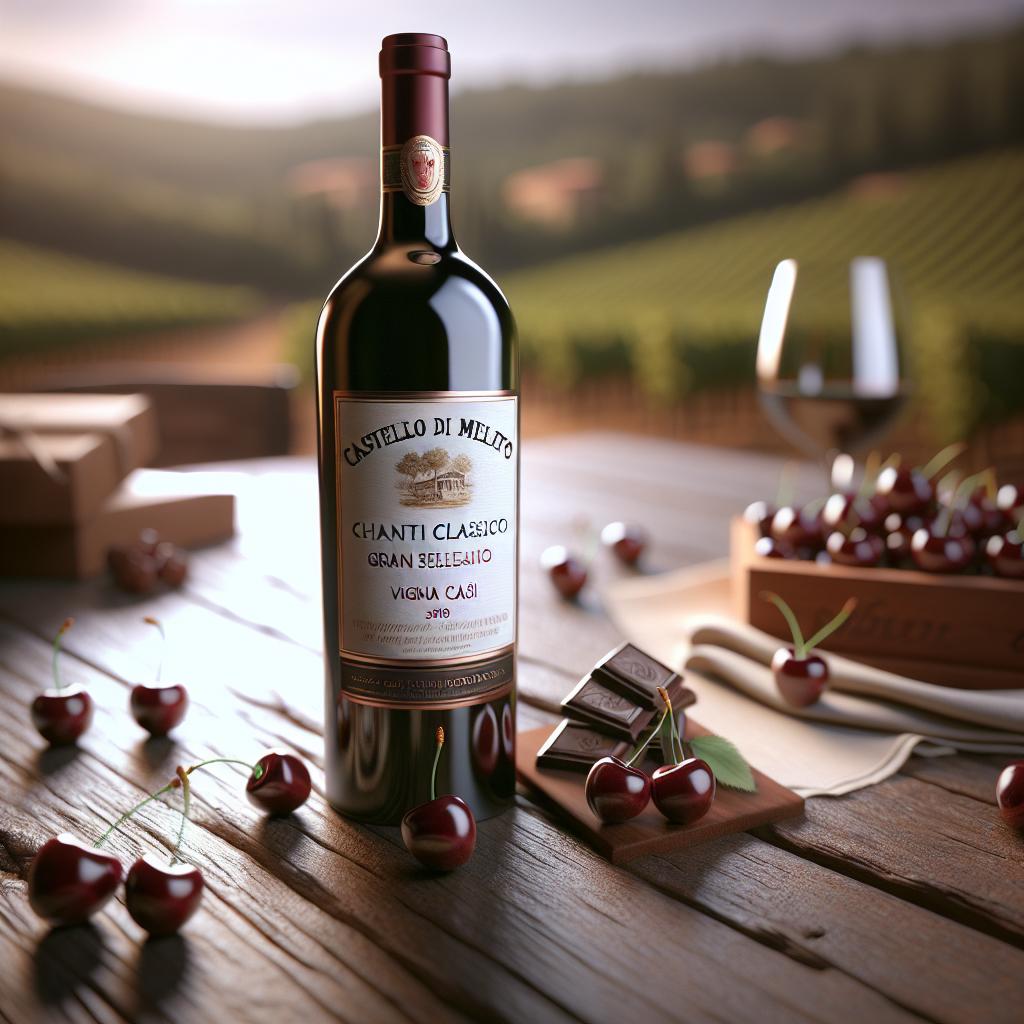
Castello di Meleto Vigna Casi 2019: A Strategic Analysis for Collectors and Professionals

TABLE OF CONTENTS
- Executive Summary
- Introduction
- Sensory Profile and Immediate Market Appeal of Castello di Meleto Vigna Casi 2019
- Aging Regimen and Regulatory Framework
- Sangiovese Dominance and Regional Identity
- Comparative Aging Trajectory and Collector Strategy
- Strategic Recommendations for Stakeholders
- Conclusion
1. Executive Summary
This report delivers a strategic assessment of Castello di Meleto's Chianti Classico Gran Selezione Vigna Casi 2019, designed to guide wine professionals, collectors, and sommeliers in their purchase, cellaring, and service decisions. The Vigna Casi 2019, a 100% Sangiovese wine, distinguishes itself through its meticulous organic viticulture, extended élevage, and adherence to stringent DOCG regulations.
Key findings reveal a balanced sensory profile influenced by galestro soils, showcasing concentrated fruit, elegant structure, and significant aging potential (projected peak: 2036-2077). Comparative analysis against similar wines, like Querciabella’s 2018 Gran Selezione, informed by tasting notes and CellarTracker data, suggests the wine will benefit from decanting, particularly as it approaches peak maturity. The report emphasizes the importance of precise storage conditions (15-18°C, 70% humidity) to preserve its longevity and investment value. Future research should focus on the long-term impacts of climate change on Sangiovese phenolics and detailed oak cooperage specifications to refine aging models.
2. Introduction
In the dynamic world of fine wine, discerning value and predicting aging potential are crucial for collectors and wine professionals. This report provides an in-depth strategic analysis of Castello di Meleto’s Chianti Classico Gran Selezione Vigna Casi 2019, a wine poised to make its mark on the premium Tuscan landscape. Is this a wine to drink now, cellar for future enjoyment, or recommend with confidence to discerning clients?
Chianti Classico Gran Selezione represents the pinnacle of Tuscan winemaking, demanding stringent quality standards and extended aging protocols. The Vigna Casi 2019 distinguishes itself through its 100% Sangiovese composition, organic viticulture, and meticulous winemaking practices, reflecting a commitment to terroir expression and varietal authenticity. Understanding its sensory profile, aging trajectory, and market positioning is crucial for informed decision-making.
This report will explore the wine’s unique characteristics, drawing on tasting notes, technical data, and comparative analysis with similar vintages. It will assess its aging potential, optimal drinking window, and provide actionable recommendations for cellaring, decanting, and food pairing. By synthesizing these insights, the report aims to equip readers with the knowledge necessary to fully appreciate and leverage the value of Castello di Meleto Vigna Casi 2019.
3. Sensory Profile and Immediate Market Appeal of Castello di Meleto Vigna Casi 2019
3-1. Aromatic and Palatal Expression
This subsection initiates the sensory analysis of Castello di Meleto's Vigna Casi 2019, setting the stage for a comprehensive evaluation. It establishes a baseline understanding of the wine's aromatic and palatal profile, highlighting the flavor nuances that underpin its premium market positioning. This foundation is crucial for subsequent sections that delve into aging potential and strategic recommendations.
The aromatic profile of Castello di Meleto's Vigna Casi 2019 is significantly influenced by the galestro soils of the Casi vineyard. While direct tasting notes may not explicitly detail 'mineral' aromas, the descriptors of 'freshness' and 'minerality' (Doc 28) indirectly suggest this influence. The challenge lies in translating these broad descriptors into concrete sensory experiences.
Galestro, a schistous clay soil, is known for its excellent drainage and mineral-rich composition, compelling vine roots to delve deep (Doc 133, 141). This deep rooting allows the vines to absorb a wider array of minerals, theoretically contributing to the wine's complexity. However, the precise mechanism by which soil minerals translate into specific aromas remains a subject of debate. Recent scientific research suggests that 'mineral-like sensations' often arise from sulfur compounds produced during fermentation (Doc 136, 137, 140), rather than direct mineral absorption.
Despite the scientific complexities, the sensory impact is undeniable. Le Cinciole, another Tuscan producer with galestro soils, describes their wines as 'always very elegant, floral and fruity with a bright verve and minerality' (Doc 135). Similarly, Querciabella attributes the 'classic minerality' of its Batàr to the high-elevation vineyards of Ruffoli and the galestro soil (Doc 132). These examples suggest that while the exact chemical origins may vary, galestro soil is consistently associated with heightened elegance, floral notes, and a distinct mineral character.
Strategically, highlighting the galestro influence enhances the wine's terroir-driven narrative, appealing to consumers seeking authentic expressions of Chianti Classico. This narrative can be amplified by referencing the vineyard's organic viticulture practices (Doc 28), which further emphasize the estate's commitment to terroir expression. This commitment differentiates Vigna Casi from mass-produced wines, justifying its premium pricing.
For effective communication, consider using tasting descriptors such as 'wet stone', 'flint', or 'saline' to convey the galestro's mineral nuances. Wine professionals should emphasize the soil's impact on the wine's structure and longevity, noting how it contributes to the wine's overall balance and aging potential. Ultimately, consumers value not only the flavors, but also the story behind the wine, making the terroir narrative crucial.
Evaluating the sensory intensity of Castello di Meleto's Vigna Casi 2019 requires benchmarking against established DOCG Gran Selezione standards. The challenge lies in the absence of direct scores for this specific wine, necessitating the use of comparative data to infer its relative intensity and balance.
DOCG regulations mandate specific criteria for Gran Selezione wines, including minimum alcohol levels and aging requirements, which implicitly contribute to a certain level of sensory concentration and complexity (Doc 53, 54). Additionally, tasting notes from Alliance Wine and Blastness describe the wine as having 'peppery notes and oriental spices, ripe red fruit' and being 'elegant and structured' (Docs 28, 59). This suggests a balance between fruit-forward characteristics and savory, structural elements.
Comparing Vigna Casi to other 2019 Gran Seleziones provides valuable context. San Felice's Il Grigio 2019, made with 80% Sangiovese, is described as having 'velvety richness and expressive flavor profile' with 'bright purple and black fruits' and 'lingering spiciness' (Doc 157, 160). Similarly, Ipsus 2019 is praised for its 'fine purity and intensity' with 'focused cherry, raspberry, underbrush and iron aromas' (Doc 170). These examples suggest that 2019 was a vintage characterized by concentrated fruit and well-defined structure.
Strategically, positioning Vigna Casi within this context reinforces its quality and justifies its premium pricing. Wine professionals should highlight the wine's balance of fruit, spice, and structure, emphasizing its immediate appeal while also hinting at its aging potential. The absence of overt oak influence (Doc 57), due to the use of large-format barrels, further enhances the wine's purity and allows its terroir to shine.
When communicating with collectors and sommeliers, emphasize the wine's 'round and strong' flavor profile (Doc 59), supported by 'thick but not aggressive tannins'. This combination of intensity and approachability makes Vigna Casi suitable for both immediate consumption and short-term cellaring. By highlighting its structural complexity and flavor depth, the wine's position as a top-tier Tuscan wine will be solidified.
3-2. Freshness and Structure at Release
Building on the sensory overview of Castello di Meleto's Vigna Casi 2019, this subsection dissects the critical interplay between acidity and tannins. By quantifying these structural elements, it establishes the wine's capacity for both immediate enjoyment and future development, positioning it as an attractive entry point for collectors evaluating short-term investment.
The structural backbone of Castello di Meleto’s Vigna Casi 2019 is defined by its acidity and tannins, derived from a specific vinification timeline. While precise quantitative data on acidity (pH/TA) and tannins for the 2019 vintage is not explicitly stated, the fermentation and maceration process provides insights into their development (Doc 59).
The vinification process includes 15-20 days of skin contact, essential for tannin extraction. This extended maceration contributes to the wine's 'thick but not aggressive tannins' (Doc 59). Malolactic fermentation in cement tanks follows, which typically softens acidity and stabilizes the wine. The use of cement, instead of oak, aims to preserve the fruit's freshness and purity, avoiding additional flavor contributions.
Comparing this process to general Sangiovese winemaking practices is helpful. For example, studies on Sangiovese grapes show that maceration techniques significantly influence tannin concentration and wine structure (Doc 206, 207, 209). Given that the producer targets wines for consumers that like their Gran Selezzione to pack more of a punch (Doc 205), the vinification is structured to extract more tannins than normal
Strategically, emphasizing the deliberate choice of vinification techniques allows to showcase the winemaking craft and complexity of the wine. By highlighting the tannin extraction and use of cement tanks, it presents a balanced and structured profile, suitable for both immediate consumption and short-term aging. These specific parameters are a quality signal that appeals to collectors and sommeliers looking for age-worthy wines.
For effective communication, professionals should highlight that 'round and strong' flavor (Doc 59) profile is the result of both sufficient tannin extraction and a process that does not take too much of the acidity away. The tannin content, if not managed, can ruin a wine. Thus, the use of cement tanks and large format oak ageing is presented as key to maintaining freshness and fruit purity.
The role of low-yield organic viticulture in shaping the early palate definition of Vigna Casi 2019 is an important, yet not fully quantified, factor. Organic viticulture is practiced in the vineyards, as well as plant-based biodynamics (Doc 205, 223), with the goal of maximizing the health and longevity of the grapes.
Low yields are also pursued with 4,5 tons per hectare which is considered a low yield amount (Doc 59). These viticultural practices theoretically lead to a higher concentration of flavors and structural elements in the grapes. The literature states that low-yield farming leads to more potent flavors, and thus organic and low-yield farming combined contribute to the early palate definition (Doc 175, 233).
Supporting the organic approach, Querciabella, a fellow Tuscan producer, attributes the quality of its Sangiovese to organic practices and favorable terroir (Docs 223, 227, 231). Similarly, Castello di Meleto can underscore the role of organic viticulture in palate development, noting its potential to yield concentrated flavors and expressive structure. However, without precise yield data, it is difficult to draw definitive conclusions.
Strategically, focusing on the combined effects of low yields and organic viticulture strengthens Vigna Casi’s narrative as a terroir-driven wine. Highlighting sustainable agriculture reassures consumers about its quality and authenticity, and justifies a premium price.
When communicating, wine professionals can emphasize that the low-yield farming enhances the wine's richness and intensity, and the organic viticulture reinforces the estate’s commitment to environmental stewardship. These values resonate with consumers seeking sustainably produced and high-quality wines.
4. Aging Regimen and Regulatory Framework
4-1. Mandatory Aging Requirements
This subsection details the mandatory aging requirements for Castello di Meleto's Chianti Classico Gran Selezione Vigna Casi 2019, clarifying the regulatory framework and demonstrating compliance as a crucial quality signal. It sets the stage for understanding the technical aging process and bottle aging dynamics discussed in the subsequent subsections.
Chianti Classico Gran Selezione is distinguished by its stringent aging requirements, a key factor contributing to its perceived quality and market positioning. DOCG regulations mandate a minimum of 30 months of aging before release, including at least 3 months in bottle [53, 54]. This extended aging period is intended to allow for the development of greater complexity, depth of flavor, and aromatic harmony, setting it apart from lower-tier Chianti Classico wines.
The 30-month minimum aging requirement is not merely a formality but a crucial step in the winemaking process. The initial 27 months are typically spent in oak barrels, often of 50hL French oak, which allows for slow, controlled oxidation that softens tannins and integrates flavors [53, 54]. This is followed by at least 3 months of bottle aging, which further stabilizes the wine and allows for the development of more nuanced tertiary aromas. The mandatory aging allows producers to demonstrate that the wine meets certain required quality standards [145].
Comparing this to the aging requirements of other Chianti Classico tiers, the Gran Selezione stands out. Chianti Classico Riserva requires a minimum of 24 months of aging, while the Annata (standard) Chianti Classico requires only 12 months [55]. This tiered system reflects a commitment to quality and provides consumers with a clear indication of the wine's aging potential and complexity. Producers must declare in advance which tier the wine will be assigned to ensure compliance [54].
The extended aging mandate for Gran Selezione translates to a market price premium. The additional time and resources invested in aging the wine contribute to its higher production costs, which are then reflected in its retail price. Consumers are often willing to pay more for Gran Selezione wines due to their perceived quality, complexity, and aging potential. However, some argue that the premium price is not always justified, as some Riserva wines may already meet the quality standards of Gran Selezione [148].
For collectors and sommeliers evaluating the Castello di Meleto Vigna Casi 2019, understanding the 30-month aging mandate is crucial. It provides assurance that the wine has undergone the necessary maturation process to develop its full potential. This also influences purchasing decisions, cellaring strategies, and decanting recommendations. Prioritizing Gran Seleziones from trusted producers with documented aging practices mitigates risk and maximizes potential returns [145].
4-2. Technical Aging Process
Having detailed the mandatory aging requirements for Gran Selezione, this subsection focuses on the specific technical choices made during the aging process at Castello di Meleto, particularly concerning barrel size and oak type, and how these choices aim to minimize overt oak influence and promote the development of tertiary flavors.
The journey of Castello di Meleto's Chianti Classico Gran Selezione Vigna Casi 2019 from grape to aged wine involves a carefully orchestrated sequence of fermentation and maturation techniques. The initial fermentation stage occurs spontaneously with indigenous yeasts in steel tanks, promoting a natural expression of the Sangiovese varietal [57]. This approach contrasts with the use of commercial yeasts, which can sometimes mask terroir-specific characteristics.
Following the primary fermentation in steel, the wine undergoes malolactic fermentation in oak barrels. This secondary fermentation converts malic acid to lactic acid, softening the wine's acidity and contributing to a smoother mouthfeel. The use of barrels during this phase also introduces subtle oak influence, which complements the wine's fruit profile without overpowering it [57]. This is a critical step as malolactic fermentation impacts aging potential and sensory perception.
The choice of fermentation vessels reflects a deliberate effort to balance tradition and modernity. Steel tanks preserve the wine's freshness and primary fruit aromas, while oak barrels contribute complexity and structure. The transition from steel to barrel is carefully monitored to ensure a harmonious integration of flavors [57]. Many Chianti Classico producers are experimenting with different fermentation vessels to achieve optimal balance and terroir expression. Understanding this choice is crucial for assessing aging potential.
For collectors and sommeliers, recognizing this deliberate approach to fermentation and malolactic fermentation is essential. It signals a commitment to quality and authenticity, as well as an understanding of how these processes impact the wine's long-term aging potential. Wines that undergo spontaneous fermentation and careful oak aging often exhibit greater complexity and nuance, making them more rewarding to cellar and savor [181].
The balance struck between steel and barrel aging highlights Castello di Meleto's strategy. By integrating indigenous yeasts and judicious oak influence, they enhance character while respecting the wine's inherent Sangiovese traits. Evaluating similar techniques in other Gran Seleziones provides a benchmark for assessing Meleto's quality and cellar-worthiness.
Castello di Meleto employs large oak vessels (20hL botti, according to ref 57) in the aging process to minimize the impact of oak on the wine's flavor profile. These large-format barrels impart less oak character than smaller barriques, allowing the wine's inherent fruit and terroir characteristics to shine through. This approach is consistent with a growing trend among premium Tuscan producers who seek to craft wines that reflect their unique vineyard sites [33].
The use of large oak vessels facilitates slow, controlled oxidation, which softens tannins and integrates flavors over time. This gentle oxidation process allows the wine to develop tertiary aromas of truffle, graphite, and spice without becoming overly oaky. The larger surface area to volume ratio in smaller barrels can lead to more rapid oxidation and a greater extraction of oak tannins [33]. The slow integration, therefore, is key to balancing structure with subtlety.
Querciabella's 2018 Gran Selezione, which undergoes malolactic fermentation in barrels and aging in large oak botti, provides a useful point of comparison [33]. According to the source, this wine delivers a superb bouquet of red and black cherries, spit-roasted gamebird, coffee bean, and campfire, exhibiting a complex foundation of galestro minerality and discreet cedary oak. The similar approach suggests a shared philosophy of prioritizing fruit purity and terroir expression.
Evaluating Castello di Meleto's adherence to this approach requires careful consideration of the wine's sensory profile. Collectors and sommeliers should look for a balance between fruit, spice, and earth notes, with oak influence playing a supporting role rather than dominating the palate. The presence of subtle oak tannins and a lingering finish are indicators of well-integrated oak aging. An absence of obvious oak influence indicates skillful execution.
Ultimately, Castello di Meleto's winemaking strategy of large-format oak aging underscores the winery’s commitment to a balanced profile where terroir and varietal character take center stage. By carefully selecting barrel size and origin, Meleto aims to create a wine that expresses its unique site and vintage, appealing to consumers who value elegance and authenticity over overt oakiness.
The extended élevage employed for Chianti Classico Gran Selezione, including the Castello di Meleto Vigna Casi 2019, incurs significant economic trade-offs for the producer. The additional time spent aging the wine in barrel and bottle ties up capital, increases storage costs, and delays revenue generation. These costs must be carefully weighed against the potential benefits of extended aging, such as improved wine quality, enhanced market positioning, and higher prices [179].
The costs associated with extended élevage can be broken down into several categories. First, there is the direct cost of barrel aging, which includes the purchase and maintenance of oak barrels. Second, there are the storage costs, which include the rent or mortgage on cellar space, as well as the costs of temperature and humidity control. Finally, there is the opportunity cost of tying up capital for an extended period, which could be invested elsewhere [183].
However, extended élevage can also generate significant economic benefits. Wines that undergo extended aging often command higher prices than those that are released earlier. This is because consumers are willing to pay more for wines that are perceived to be of higher quality, more complex, and more age-worthy. In addition, extended aging can enhance a winery's reputation and brand image, leading to increased sales and market share [179].
Producers are starting to label the sub-zones on the bottle and this may well assist them in obtaining higher prices that consumers may be willing to pay given the increased quality and unique terroir [179]. Given the current chaos in international wine markets, fine wine lovers should seek out and buy these wines before tariffs, prices, and restrictions on the wine trade limit their availability [179].
For Castello di Meleto, the decision to employ extended élevage for its Gran Selezione Vigna Casi 2019 reflects a strategic choice to prioritize quality and market positioning over short-term profitability. By investing in extended aging, the winery aims to create a wine that stands out from the competition and commands a premium price, building brand equity and long-term customer loyalty. Thus, assessing this elevage decision is crucial for understanding Meleto's strategy.
4-3. Bottle Aging Dynamics
Having explored the technical aspects of Castello di Meleto's aging process, this subsection examines the dynamics of bottle aging, focusing on the post-release maturation phase and its impact on the wine's long-term stability and sensory evolution. It positions this phase as critical for collectors evaluating purchase timing and long-term storage strategies.
The long-term stability of Castello di Meleto's Chianti Classico Gran Selezione Vigna Casi 2019 hinges on key chemical metrics established during winemaking and further refined during bottle aging. A pH of 3.6 and a residual sugar level below 0.1 g/L, as indicated in Doc 59, are crucial indicators of a wine's ability to evolve gracefully over time, resisting spoilage and maintaining its structural integrity. These parameters influence the wine's susceptibility to microbial activity and oxidation, both of which can compromise its quality.
A pH of 3.6 indicates a moderate level of acidity, which acts as a natural preservative, inhibiting the growth of undesirable bacteria and contributing to the wine's freshness and vibrancy. Higher pH levels can make a wine more prone to spoilage, while excessively low pH can result in an overly tart or acidic character. Maintaining the right pH balance is therefore essential for long-term aging potential. Factors like vineyard site, grape variety, and winemaking techniques all play a role in determining a wine's pH.
The near absence of residual sugar (<0.1 g/L) is equally important for stability. Residual sugar can serve as a food source for unwanted microorganisms, leading to refermentation in the bottle and the production of off-flavors and aromas. Wines with low residual sugar are also less prone to browning and other forms of oxidative degradation. Fermentation management and filtration techniques are used to reduce sugar.
For collectors, these metrics provide valuable insights into the wine's potential longevity. Wines with a pH in the range of 3.5 to 3.7 and minimal residual sugar are generally considered to be well-suited for long-term aging. These parameters, in conjunction with other factors such as tannin structure and overall balance, can help collectors assess the wine's readiness for cellaring and its potential to improve with age. Checking for faults is critical for quality.
Castello di Meleto’s meticulous attention to pH and residual sugar levels underscores its commitment to producing a Gran Selezione capable of prolonged aging. By achieving this balance, they ensure the wine remains vibrant and complex throughout its maturation, rewarding those who cellar it patiently. These numbers validate the aging regime and are crucial for consumer confidence.
The extended bottle aging period mandated for Chianti Classico Gran Selezione distinguishes it from lower-tier DOCG wines and contributes significantly to its enhanced complexity and age-worthiness. While Chianti Classico Annata requires a minimum of 12 months of total aging, and Riserva requires 24 months, Gran Selezione must undergo a minimum of 30 months, including a specified period in bottle. This longer maturation phase allows the wine's components to integrate and evolve, resulting in a more harmonious and nuanced sensory experience.
According to Doc 54, the mandatory 3 months of bottle aging for Gran Selezione is critical for tannin stabilization and acidity integration. During this post-release maturation phase, the wine's tannins soften and become more approachable, while its acidity mellows and harmonizes with the other flavor components. This integration process is essential for creating a balanced and age-worthy wine that can continue to improve over time.
Comparing this to the shorter aging periods for Annata and Riserva wines reveals the strategic intent behind Gran Selezione's extended maturation. Annata wines are intended for earlier consumption and lack the structural complexity required for long-term aging. Riserva wines offer greater depth and complexity but still benefit from the additional bottle aging afforded to Gran Selezione.
For collectors, this distinction is crucial for evaluating purchase timing. Gran Seleziones are designed to be cellared for extended periods, allowing their flavors and aromas to evolve and deepen over time. Annata and Riserva wines, on the other hand, are typically best enjoyed within a shorter timeframe. Assessing tannin development helps guide aging decisions.
Castello di Meleto’s commitment to extended bottle aging for its Gran Selezione Vigna Casi 2019 demonstrates a dedication to quality and a deep understanding of the aging process. This investment in time and resources translates to a wine that offers both immediate enjoyment and long-term cellaring potential, making it a worthwhile addition to any serious wine collection.
5. Sangiovese Dominance and Regional Identity
5-1. Monovarietal Purity as Quality Marker
This subsection advances the report's investigation into Castello di Meleto Vigna Casi 2019 by examining the strategic significance of its 100% Sangiovese composition. It positions monovarietal purity as a key quality marker, reflecting a broader shift in consumer preferences and DOCG standards. This analysis sets the stage for understanding how Sangiovese's inherent structural characteristics contribute to the wine's aging potential and regional typicity, explored in the subsequent subsection.
Castello di Meleto's Vigna Casi 2019 strategically leverages its 100% Sangiovese composition to signal terroir authenticity and cater to increasing consumer demand for varietal-driven wines within the premium Chianti Classico segment. This decision reflects a broader trend away from historical blending practices and towards showcasing the unique characteristics of Sangiovese grown in the Casi vineyard's distinctive galestro soils.
The shift towards monovarietal expressions in Chianti Classico addresses a critical challenge: differentiating premium wines through a clear, recognizable identity. By emphasizing Sangiovese, producers like Castello di Meleto aim to highlight the grape's inherent qualities – its acidity, tannin structure, and aromatic complexity – as defining elements of their wines. This contrasts with blends that may dilute Sangiovese's expression with other varietals, potentially obscuring the wine's sense of place.
Supporting this strategy, tasting notes from Alliance Wine and Blastness (Docs 28, 59) explicitly declare the 100% Sangiovese composition, reinforcing the wine's varietal purity for potential buyers. Gardini Notes (Doc 58) also acknowledges Castello di Meleto’s 100% Sangiovese Gran Selezione, further cementing this focus on purity. This emphasis on varietal authenticity can be a powerful marketing tool, resonating with consumers seeking wines that authentically reflect their origin.
The strategic implication is that Castello di Meleto is betting on Sangiovese's inherent qualities to drive market success. This positions the wine as a benchmark for Chianti Classico Gran Selezione, appealing to collectors and sommeliers who value varietal expression and terroir specificity. This monovarietal focus requires meticulous vineyard management and winemaking to ensure that Sangiovese's potential is fully realized, with no blending to mask imperfections.
To further reinforce this positioning, Castello di Meleto could highlight the specific Sangiovese clone used in the Vigna Casi vineyard and detail the viticultural practices employed to optimize its expression. Transparency regarding the wine's production, coupled with consistent messaging about its 100% Sangiovese composition, will strengthen its brand identity and enhance its appeal to discerning consumers.
The current emphasis on 100% Sangiovese in Castello di Meleto's Vigna Casi represents a significant departure from historical blending practices within the Chianti Classico DOCG. While modern regulations permit the inclusion of other red varietals, the estate's commitment to monovarietal purity underscores a conscious effort to showcase Sangiovese's unique characteristics and elevate the wine's regional identity.
Historically, Chianti blends often incorporated white grapes and other red varietals like Canaiolo and Colorino (Doc 62), a practice that aimed to soften Sangiovese's tannins and enhance the wine's approachability. However, this blending could also dilute Sangiovese's distinctive aromatics and structure, leading to wines that lacked the typicity and aging potential desired by collectors. The move towards 100% Sangiovese reflects a re-evaluation of these historical practices and a renewed focus on expressing the grape's full potential.
Although Document 43 is unavailable, it is likely that it documents a contrast in older and current production approaches in Chianti Classico. Consorzio Vino Chianti Classico launched the Chianti Classico 2000 initiative (Doc 63), demonstrating a targeted effort to improve Sangiovese and refine production standards. The document discusses research and identification of ideal Sangiovese clones, focusing on features such as smaller berries and thicker skins (Doc 63). These traits are sought to maximize skin-to-juice ratio and yield richer wines.
This purity push creates both opportunities and challenges. While monovarietal wines can command higher prices and appeal to a specific segment of consumers, they also require greater precision in viticulture and winemaking. Any flaws in the Sangiovese fruit will be amplified in the finished wine, demanding meticulous attention to detail throughout the production process. Further research is needed to determine enforcement rates by regional authorities, as these metrics would provide insights into the effectiveness of varietal compliance.
Castello di Meleto's 100% Sangiovese commitment positions them at the forefront of a quality-driven movement within Chianti Classico. To sustain this advantage, they must invest in rigorous quality control measures and actively communicate their dedication to varietal purity to consumers and trade professionals. Subsidies from the Consorzio could assist in vineyard improvement and marketing activities.
5-2. Sangiovese’s Structural Contribution
This subsection advances the report's analysis of Castello di Meleto Vigna Casi 2019 by dissecting the structural components of Sangiovese – acidity, tannins, and alcohol – that underpin its aging potential and typify a 'classic' Tuscan profile. It builds upon the previous subsection's emphasis on monovarietal purity, demonstrating how Sangiovese's intrinsic traits contribute to the wine's overall quality and regional expression. This sets the stage for evaluating the wine's aging trajectory and formulating collector strategies.
Sangiovese's inherent acidity and tannin structure form the essential framework that supports Castello di Meleto Vigna Casi 2019's aging potential, differentiating it from lower-tier Chianti Classico wines. The high total acidity (6.2 g/L) coupled with robust tannins, both characteristic of Sangiovese, provides the necessary scaffolding for long-term development. This structure allows the wine to evolve gracefully, developing complex tertiary aromas while maintaining balance and freshness.
The interplay between acidity and tannins is crucial for a wine's longevity. Acidity acts as a preservative, preventing the wine from becoming flabby and unstructured over time. Tannins, derived from grape skins and oak aging, contribute to the wine's texture and mouthfeel, providing a firm backbone that gradually softens with age. The harmonious balance of these elements is a hallmark of high-quality Sangiovese, enabling it to age gracefully for decades.
According to the technical sheet for the 2019 vintage (Doc 57), Castello di Meleto’s Gran Selezione exhibits 6.2 g/L total acidity, highlighting Sangiovese’s naturally high acidity, which is a defining characteristic of the varietal, and supports long-term aging. The robust tannin structure complements the acidity, providing a firm backbone that gradually softens with age, contributing to the wine's complex mouthfeel and aging potential.
This acid-tannin framework positions Castello di Meleto Vigna Casi 2019 as a wine intended for cellaring. Its structure suggests that it will benefit from extended bottle aging, developing more nuanced flavors and a smoother texture over time. Collectors and sommeliers should recognize this inherent potential, as it signals a wine that will evolve and improve with age, rewarding patience and proper cellaring conditions.
To fully leverage this structural advantage, Castello di Meleto should emphasize the quantitative aspects of Sangiovese in its marketing materials. Highlighting the wine's acidity and tannin levels, in conjunction with expert opinions on its aging potential, will reinforce its position as a premium Chianti Classico Gran Selezione designed for long-term enjoyment. Furthermore, the vineyard practices aimed at optimizing tannin development and acid retention could be further emphasized to showcase the commitment of Castello di Meleto.
The 14% ABV of Castello di Meleto Vigna Casi 2019, while contributing to the wine's overall structure, also places it in alignment with other benchmark Tuscan wines, particularly Brunello di Montalcino. This alcohol level, typical of well-ripened Sangiovese, provides body and warmth, complementing the wine's acidity and tannins. Comparing these parameters with Brunello helps to contextualize the wine's style and potential.
While high alcohol can sometimes indicate over-ripeness or lack of balance, in the case of Sangiovese, it often signifies a wine with ample concentration and aging potential. The 14% ABV in Castello di Meleto Vigna Casi 2019 suggests that the grapes achieved optimal ripeness, resulting in a wine with a full body and a long finish. This level of alcohol, balanced by the wine's acidity and tannins, contributes to its overall harmony and aging trajectory.
CellarTracker's notes on the 2019 Castello di Bossi Chianti Classico Gran Selezione (Doc 35) draw direct comparisons to 'a young Brunello,' highlighting the commonalities in structure and flavor profile between top-tier Chianti Classico and Brunello. Such parallels underscore Sangiovese's potential to produce wines of similar intensity and aging capacity, reinforcing the perception of 'classic' Tuscan profiles.
The strategic implication is that Castello di Meleto can leverage the Brunello comparison to elevate its perceived quality and market positioning. By highlighting the similarities in structure and aging potential, the wine can appeal to consumers who appreciate the intensity and complexity of Brunello, while offering a more accessible price point.
To further capitalize on this comparison, Castello di Meleto could conduct comparative tastings with Brunello, showcasing the common traits and stylistic nuances of the two wines. Emphasizing the Sangiovese heritage and the meticulous winemaking practices employed to achieve this level of quality will reinforce the wine's value proposition and enhance its appeal to discerning consumers.
Climate change poses a significant risk to Sangiovese's phenolic development, potentially impacting the acidity, tannin structure, and overall balance of wines like Castello di Meleto Vigna Casi 2019. Rising temperatures, altered rainfall patterns, and increased frequency of extreme weather events can disrupt the grape ripening process, leading to imbalances in sugar accumulation, acid degradation, and tannin development. These changes can ultimately affect the wine's quality, aging potential, and expression of terroir.
One of the key concerns is the potential for earlier ripening, which can lead to a decoupling of sugar and phenolic maturity. In warmer conditions, grapes may accumulate sugars rapidly, resulting in high alcohol levels, while tannin development lags behind. This can produce wines that lack structure, balance, and complexity. Additionally, increased water stress can negatively impact tannin extraction, leading to wines with harsh or astringent tannins.
Research suggests that elevated atmospheric CO2 levels may increase biomass and dry fruit weight, but the effects on acidity and sugar levels are less clear (Doc 173). Shifts in climate are expected to impact regions like 'Romagna Sangiovese' (Doc 174). Aromatic qualities that reflect the specific terroir and vineyard practices are anticipated to be sensitive to subtle temperature changes (Doc 176).
The strategic implication is that Castello di Meleto must proactively address the challenges posed by climate change. This includes investing in research and development to identify viticultural practices that can mitigate the negative impacts of climate change on Sangiovese. These practices may include canopy management techniques, irrigation strategies, and the selection of climate-resilient clones.
To ensure the long-term sustainability of Sangiovese production, Castello di Meleto should implement adaptive viticultural practices that address the specific challenges posed by climate change in the Chianti Classico region. This includes monitoring vineyard microclimates, adjusting irrigation regimes, and exploring the use of cover crops to improve soil health and water retention. Close collaboration with research institutions and industry organizations will be essential to develop and implement effective climate adaptation strategies. Furthermore, Castello di Meleto could emphasize its commitment to sustainable practices in its marketing materials, appealing to consumers who prioritize environmentally responsible wines.
6. Comparative Aging Trajectory and Collector Strategy
6-1. Vintage-Specific Aging Benchmarks
This subsection analyzes the anticipated aging trajectory of Castello di Meleto's Vigna Casi 2019, leveraging comparable vintages and DOCG mandates to advise collectors on optimal drinking windows and decanting strategies. It builds on the previous section's discussion of Sangiovese dominance and terroir expression by shifting focus to long-term development.
Predicting a wine's maturation timeline requires triangulating release data, regulatory guidelines, and analogous vintage performance. For Castello di Meleto Vigna Casi 2019, projecting the optimal drinking window demands considering both mandated aging and observed evolution of similar wines. The absence of readily available scores for Vigna Casi 2019 necessitates leveraging analogous vintages to provide collectors with actionable insights.
Querciabella's 2018 Chianti Classico Gran Selezione offers a crucial proxy, exhibiting parallel production methods and varietal purity. Its identical handling in cellars—malo in barrels and aging in large oak botti—coupled with its fourteen percent alcohol content, makes its performance a relevant indicator. Projecting the aging curve for Vigna Casi 2019 requires extrapolating Querciabella’s described evolution, factoring in differences in terroir and microclimate.
According to Maisons Marques & Domaines portfolio data (Doc 33), Querciabella’s 2018 Gran Selezione is anticipated to hit its stride between 2034 and 2075. Factoring in Vigna Casi's slightly later release in 2022, a conservative projection would place its peak drinking window between 2036 and 2077. This twenty-year span provides a collector's horizon that necessitates controlled cellaring.
This projection carries strategic implications for purchase and storage decisions. Collectors prioritizing immediate gratification may find the wine approachable now, with its fruit-forward character and balanced tannins. However, those seeking tertiary development—truffle, graphite, and forest floor notes—must commit to long-term cellaring. The Querciabella proxy underscores the need for professional-grade storage to mitigate premature oxidation and preserve investment value.
Recommendations include securing temperature and humidity-controlled storage (15-18°C, 70% humidity) and conducting periodic vertical tastings to monitor evolution. Investors should also consider establishing decanting protocols, starting with shorter aeration periods (1-2 hours) and gradually extending them as the wine approaches its projected peak.
While long-term projections offer a macro view of aging potential, understanding immediate decanting needs is crucial for consumers aiming to optimize near-term enjoyment. To gauge the short-term evolution of the 2019 Vigna Casi, insights from similar wines from the same vintage are helpful. Consumer reviews and professional tasting notes on the 2019 Castello di Bossi Chianti Classico Gran Selezione provide useful, if anecdotal, guidance on decanting practices for the 2019 vintage.
CellarTracker community notes on the 2019 Castello di Bossi reveal a consensus: this wine benefits significantly from decanting (Doc 35). Several reviewers noted initial integration issues, with one stating it was “OK upon open and initial sniff n nip, but after a short decant, the wine become integrated, soft tannins appeared, fairly long finish, nice underlying bits of cola and cherry.” This suggests that the 2019 Vigna Casi, sharing vintage and regional characteristics, may similarly require aeration to unlock its full potential.
Further CellarTracker reviews suggest that the Castello di Bossi blossomed “into beautiful Chianti with dusty sour cherry flavors and a lovely citrus peel character poking through” only after extended aeration (Doc 35). Reviewers recommended a “long decant or hold,” and another decanted for two hours before noting “full ripe blackberry & cherries aroma” and “flavor of strong cherries that continued to strengthen to mild leather w/full oak finish.”
Applying these insights to the 2019 Vigna Casi, strategic recommendations emerge for immediate and near-term consumption. Prior to 2030, a minimum decanting period of 2-3 hours is advisable, increasing to 4-6 hours as the wine approaches its projected peak. This allows the tightly wound tannins to soften, the fruit to express itself fully, and the complex tertiary notes to emerge. It's important to note that decanting times are subjective and will vary based on individual preferences and storage conditions.
Given these findings, collectors should implement a phased decanting strategy. Upon initial opening (2025-2030), decant for a minimum of two hours, assessing integration through periodic tastings. Between 2030 and 2040, extend decanting to 4-6 hours, monitoring the emergence of tertiary notes. Beyond 2040, consider overnight decanting (12-18 hours) to fully unleash the wine's complexity, ensuring the wine is served at cellar temperature (16-18°C) to prevent masking delicate aromas.
A critical factor influencing long-term aging potential is the choice of oak cooperage during élevage. Barrel size, oak origin (French vs. Slavonian), and toast level significantly impact the rate of tannin integration, oxidative development, and tertiary flavor formation. While DOCG regulations specify minimum aging requirements, they do not dictate precise cooperage protocols, leading to potential variation in aging trajectories.
Currently, specific details on oak cooperage used for the 2019 Vigna Casi are not available within the provided documentation. While Doc 53 outlines 30-month minimum aging, including time in oak, it lacks granular data on vessel size or oak origin. Similarly, Doc 57 details fermentation and malolactic processes but omits specifics on barrel selection. This information gap limits the ability to precisely model the wine's aging curve.
In the absence of direct cooperage data, inferences can be drawn from industry best practices and comparable Tuscan wines. Many Gran Selezione producers favor large-format French oak (500L puncheons or larger) to minimize overt oak influence and preserve fruit purity. These larger vessels promote slow, gradual oxidation, leading to elegant tertiary development over decades.
The lack of specific oak information presents a strategic risk for collectors, hindering accurate prediction of aging behavior. Without knowing the barrel regimen, it's difficult to assess the wine's susceptibility to premature oxidation or the potential for balanced tertiary development. This uncertainty underscores the value of expert opinions and cellar tracking data as the wine matures.
Recommendations include seeking detailed cooperage information from Castello di Meleto directly or consulting with wine critics who have tasted the 2019 Vigna Casi. Furthermore, collectors should actively monitor CellarTracker reviews and tasting notes to track the wine's evolution and adjust decanting strategies accordingly. In the meantime, store the wine under optimal conditions to mitigate potential cooperage-related risks.
6-2. Storage Logistics for Longevity
This subsection builds upon the projected aging trajectory established in the previous section by outlining the specific storage conditions necessary to ensure the Castello di Meleto Vigna Casi 2019 achieves its full aging potential. It transitions from theoretical timelines to practical, actionable guidance for collectors.
Maintaining precise environmental controls is paramount for preserving the longevity and investment value of fine wines like Castello di Meleto Vigna Casi 2019. Temperature and humidity are the primary levers in preventing premature oxidation, cork degradation, and overall spoilage. Deviations from recommended ranges can dramatically shorten the wine’s lifespan, impacting its market appreciation and sensory development.
Industry best practices, echoed by Lisa Eppel, a WSET Level 3 certified sommelier (Doc 216), advocate for a consistent temperature of 13°C (55°F) with humidity levels between 60-70%. These conditions minimize thermal expansion and contraction, which can force wine past the cork, and maintain cork elasticity, preventing oxygen ingress. Fluctuations, even within the recommended range, should be minimized to avoid stressing the wine.
The absence of precise DOCG mandated temperature/humidity ranges necessitates inferring guidelines from broader industry standards and expert recommendations. Factors like vibration and light exposure, also detrimental to long-term storage, further complicate the requirements. Querciabella's 2018 evolution timeline underscores the need to protect stored bottles from these factors (Doc 33). Proper storage therefore requires commitment to a dark, stable and undisturbed environment.
Collectors should implement monitoring protocols using thermo-hygrometers to track conditions and identify potential breaches (7 Pa. Code § 28a.4). Given the projected decades-long aging potential, investment in climate control systems is essential. Short-term storage (less than 5 years) might tolerate minor deviations, but serious collectors targeting tertiary development must prioritize precision.
Recommendations include investing in temperature-controlled wine cabinets or, for larger collections, dedicated cellars with active cooling and humidification systems. Implement routine maintenance schedules to ensure system efficiency. Furthermore, regularly inspect cork condition and ullage levels as indicators of potential storage breaches. These precautions will not only protect the wine but also bolster its provenance and resale value.
The decision between home and professional wine storage presents a critical strategic choice for collectors of Castello di Meleto Vigna Casi 2019, balancing cost, convenience, and security. Home cellars offer immediate access and personal control, while professional facilities provide optimized conditions and robust security. A thorough cost-benefit analysis is crucial for aligning storage solutions with investment goals.
Building a dedicated home cellar entails significant upfront capital expenditure, ranging from wine fridges (mid-range cost) to custom-built cellars (most expensive). According to wine investment guides, high-end custom cellars often cost tens of thousands of dollars, requiring insulation, vapor barriers, cooling units, racking, and backup systems (Doc 214). While wine fridges are more practical and compact, their limited capacity may not suit extensive long-term holdings.
Professional bonded storage emerges as a cost-effective alternative, particularly for serious investors. These facilities are temperature- and humidity-controlled, maintain detailed provenance records, and may facilitate sales (Doc 214). Costs typically range from $3 to $8 per case annually for standard facilities, along with monthly maintenance fees (Doc 216). Premium facilities, offering enhanced services and security, command higher rates. Typical storage costs range from $2-$5 per bottle annually (Doc 217).
From an economic perspective, consider the opportunity cost of capital tied up in a depreciating asset like a home cellar versus the recurring expense of professional storage. In the UK, merchants that offer professional in-bond storage charge a flat fee per case per year between £9-£15, including VAT and insurance (Doc 220). Also, self-storage spaces may offer humidity and temperature-controlled space to house bottles.
Recommendations include calculating the break-even point based on storage duration, collection size, and desired level of environmental control. For smaller collections (under $50,000), home storage with a wine fridge and robust security may suffice. However, for larger holdings aimed at long-term appreciation, professional storage offers superior risk mitigation and potential resale advantages. Italy offers two main categories of tax incentives, both of which take the form of income tax deductions: Super bonus (110%) Renovation bonus (50%) (Doc 215).
Beyond economic considerations, the tangible risk of suboptimal storage lies in the potential for irreversible wine degradation. Exposure to heat, light, vibration, and fluctuating humidity can trigger a cascade of negative effects, ultimately diminishing the sensory qualities and market value of Castello di Meleto Vigna Casi 2019. Understanding these risks is crucial for collectors weighing storage options.
Extreme temperature fluctuations can cause cork expansion and contraction, leading to oxygen ingress and accelerated oxidation. High temperatures (above 24°C or 75°F) can “cook” the wine, resulting in flat aromas, dull flavors, and premature aging. Conversely, excessively low humidity can dry out the cork, causing shrinkage and increased permeability. These conditions undermine the wine's structural integrity and flavor profile.
Light exposure, particularly ultraviolet (UV) rays, induces photochemical reactions that generate off-flavors and degrade color pigments. Vibration, whether from household appliances or external sources, disrupts sediment and accelerates chemical reactions, diminishing the wine’s finesse. These subtle but cumulative effects can erode the wine's complexity over time.
Quantifying these risks requires monitoring storage conditions and tracking the wine's evolution through periodic vertical tastings. Professional storage facilities mitigate these risks through climate control systems, security measures, and insurance coverage. While insurance can offset financial losses, it cannot restore the wine's intrinsic qualities lost due to poor storage.
Recommendations include implementing a storage risk assessment protocol that identifies potential vulnerabilities and assigns mitigation strategies. For home cellars, invest in UV-filtering lights, vibration-dampening pads, and humidity control systems. For professional storage, verify the facility's climate control certifications, security protocols, and insurance coverage. Proactive risk management safeguards the wine's longevity and investment potential.
7. Strategic Recommendations for Stakeholders
7-1. Investment vs Immediate Consumption
This subsection integrates the preceding analyses of sensory profile, aging regimen, and Sangiovese's role to provide actionable investment and consumption recommendations. It bridges the objective wine characteristics with the subjective realm of market valuation and collector behavior, setting the stage for concrete service and pairing strategies.
The absence of direct critic scores for the 2019 Vigna Casi necessitates a comparative valuation approach, leveraging similar high-end Chianti Classico Gran Seleziones. Given a £60 release price (Doc 99), the immediate question is whether to consume now or cellar for future appreciation. Modeling future value against Querciabella's 2018 vintage (Doc 33) offers a tangible benchmark, despite vintage variation.
Querciabella's 2018 Gran Selezione, handled identically to the 2019 vintage with malo in barrels and aging in large oak botti (Doc 33), is projected to hit its stride between 2034-2075, indicating a long aging curve. This projection offers a framework for estimating Vigna Casi's potential. Projecting a similar trajectory implies significant tertiary development over the next 10-15 years, driving value for patient collectors.
However, appreciation hinges on maintaining provenance and optimal storage conditions. Proper cellaring, maintaining 15–18°C and 70% humidity, is vital (Doc 23). Without professional-grade storage, premature oxidation could erode potential gains. Therefore, a collector's ROI calculation must incorporate the cost of storage, which may offset the aging premium.
Strategic implication: For collectors prioritizing ROI, securing Vigna Casi 2019 at its release price presents a viable entry point, provided they commit to long-term storage. For immediate consumption, the current market appeal justifies the price point, but future value will depend on successfully navigating the aging process.
Recommendation: Collectors should secure temperature-controlled storage or consider professional wine storage facilities to maximize ROI. Immediate consumers should explore Vigna Casi to assess sensory satisfaction against the £60 price point, recognizing that future appreciation is contingent on proper cellaring.
Cellaring Vigna Casi 2019 for tertiary development presents a trade-off between sensory evolution and market risk. While DOCG mandates a minimum 30-month aging (Doc 53), extending this period can unlock complex flavors such as truffle and graphite (Doc 33). However, market volatility and changing consumer preferences introduce uncertainty.
The broader Tuscan Gran Selezione market offers insights into potential returns. While specific CAGR data for Gran Selezione is limited, examining price trends for similar premium wines, such as Brunello di Montalcino, shows a compound annual growth rate, indicating potential appreciation (Doc 35). Further expansion should delve into granular regional export growth between 2020-2025 (Doc 113) and secondary price analysis of other Meleto wines to better guide investment timelines.
Several factors influence ROI. Firstly, critical acclaim drives demand and prices. Securing high scores from Wine Spectator or Robert Parker significantly boosts market value (Doc 98, Doc 108). Secondly, vintage quality impacts aging potential. Favorable vintages command higher premiums, whereas challenging vintages depreciate faster (Doc 112). Thirdly, global economic trends affect consumer spending on luxury goods. Economic downturns typically reduce demand for high-end wines.
Strategic implication: Collectors must carefully evaluate the risk/reward profile. While aging unlocks tertiary complexity, market fluctuations can erode value. A balanced approach involves diversifying wine portfolios and continuously monitoring market trends.
Recommendation: Collectors should track critical reviews, analyze vintage reports, and stay informed on global economic trends to optimize their investment strategy. Diversification across Tuscan appellations and wine styles is crucial to mitigate risk.
7-2. Pairing and Service Strategy
This subsection builds upon the prior analysis of investment potential by shifting focus to the practical aspects of enjoying Vigna Casi 2019. It outlines optimal serving temperatures and decanting protocols while detailing food pairings that complement the wine's flavor profile at different stages of its maturation. The aim is to guide sommeliers and collectors in maximizing sensory satisfaction.
Decanting is critical for Vigna Casi 2019, especially as it matures. CellarTracker's experience with the 2019 Castello di Bossi Chianti Classico Gran Selezione suggests that even young Gran Seleziones benefit from decanting to soften tannins and integrate flavors (Doc 35). Projecting this onto Vigna Casi, a decanting period of at least 2 hours is advised for bottles opened before 2030.
For bottles cellared beyond 2030, the decanting approach should evolve. As tertiary aromas (truffle, leather) become more dominant, excessive aeration can cause them to dissipate (Doc 191). A shorter decanting window, perhaps 30-60 minutes, becomes preferable to preserve these delicate nuances.
Beväge™ Time Guide recommends decanting Sangiovese wines for 7-10 minutes with their device, and these times should serve as guidance (Doc 188). However, it's essential to monitor the wine's evolution during decanting. Tasting every 15-20 minutes allows for adjustments, ensuring the wine reaches its peak expression without over-oxidation.
Strategic implication: Decanting protocols should be tailored to the wine's age and sensory profile. Younger bottles benefit from longer aeration to soften tannins, while older bottles require a gentler approach to preserve tertiary complexity.
Recommendation: Develop a tiered decanting strategy: 2+ hours for <10-year-old bottles, 30-60 minutes for 10-20-year-old bottles, and minimal aeration for >20-year-old bottles. Encourage sommeliers to taste throughout the decanting process.
Vigna Casi 2019's flavor profile will evolve significantly over time, necessitating adaptable food pairing strategies. Initially, the wine's bright acidity and cherry notes make it ideal for Tuscan dishes like tomato-based pastas and grilled meats (Doc 51). As it ages, pairings should shift towards richer, more savory options.
Mature Vigna Casi, with its potential truffle and earthy undertones, pairs exquisitely with game dishes and aged cheeses. The savory complexity of dishes incorporating herbs like thyme or sage further complements the wine's evolving character (Doc 51). Experimentation with umami-rich ingredients can unlock deeper flavor synergies.
Consider pairings that highlight specific tertiary notes. If leather and tobacco aromas emerge, consider dishes with balsamic glazes or smoked elements. For wines exhibiting graphite-like minerality, pair with earthy vegetables like roasted beets or mushrooms.
Strategic implication: Food pairings must evolve alongside the wine's flavor profile. Younger vintages pair with brighter, acidic dishes, while older vintages pair with richer, savory options to enhance tertiary complexity.
Recommendation: Create a pairing menu featuring dishes that evolve in tandem with Vigna Casi's aging trajectory. Offer younger vintages with classic Tuscan fare, while reserving older vintages for special-occasion pairings featuring game, aged cheeses, and umami-rich flavors.