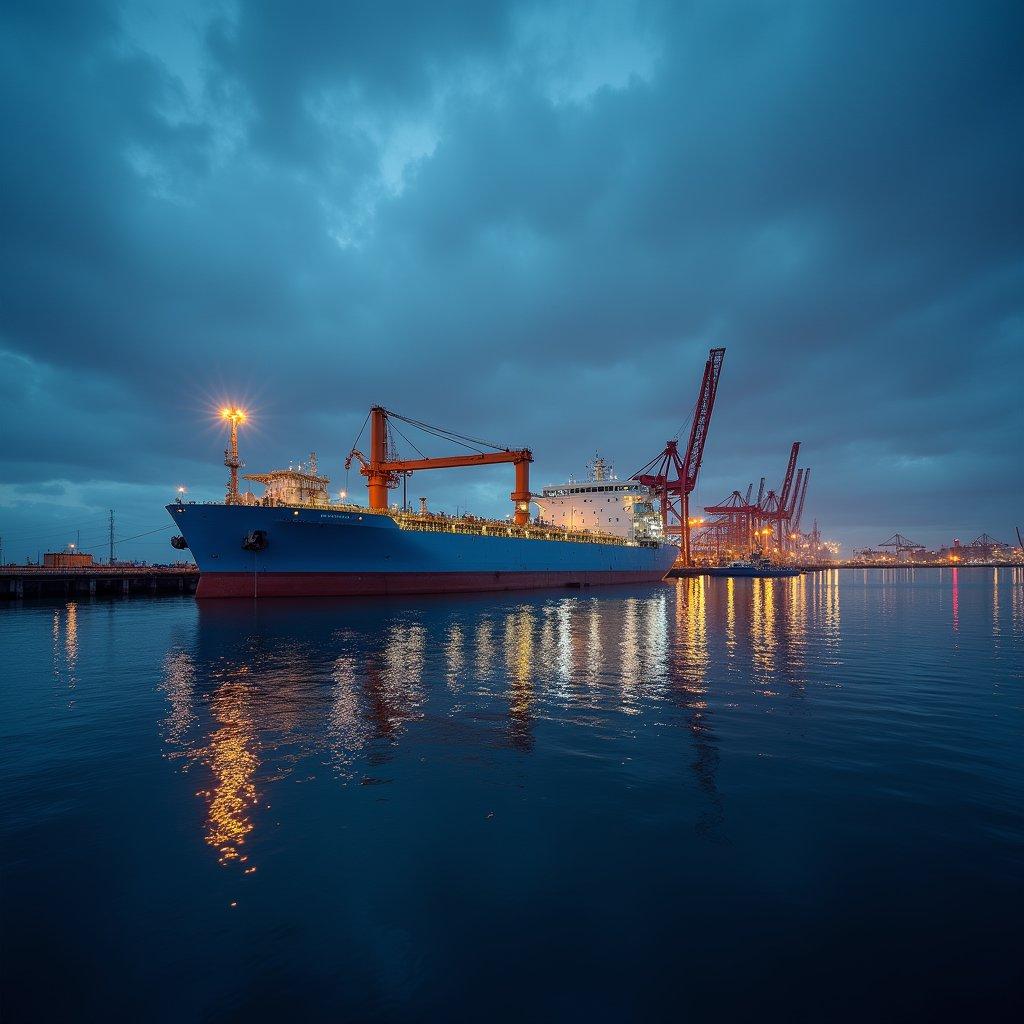
Navigating the Future: Qatar’s Optimal LNG Strategy in the 2025-2030 Global Energy Landscape

TABLE OF CONTENTS
- Executive Summary
- Introduction
- Global LNG and Natural Gas Market Trends (2025-2030)
- Geopolitical and Economic Factors Impacting LNG Markets
- Qatar’s LNG Export and Pricing Strategy Recommendations
- Conclusion
1. Executive Summary
This report presents a comprehensive analysis of the global liquefied natural gas (LNG) and natural gas markets, focusing on the transformative period from 2025 through 2030. It highlights significant expansions in LNG supply capacity—primarily driven by the United States and Qatar—against a backdrop of shifting regional demand patterns, particularly across Asia and Europe. These supply and demand dynamics are expected to modulate LNG pricing, with forecasts suggesting moderated but persistent price levels influenced by geopolitical volatility and market fundamentals. The geopolitical context reveals increasing complexity, notably the challenges to US dollar dominance in LNG pricing, escalating politicization of energy trade, and China’s growing strategic influence over energy governance. These elements collectively shape a volatile yet opportunity-rich environment for global LNG stakeholders.
In response to these evolving market and geopolitical conditions, Qatar stands poised to leverage its competitive advantages through strategic export and pricing approaches tailored to sustain and enhance its market leadership. With ambitious capacity expansions in the North Field and a growing regional market share, Qatar’s export strategy must strike a balance between scaling volumes and maintaining market stability amid intensified competition. Pricing strategies will need to be dynamic and flexible, incorporating regional benchmarks and diversified contract currencies to mitigate geopolitical risks. Furthermore, robust risk management frameworks are critical to navigating potential oversupply cycles and complex political landscapes. Qatar’s proactive engagement with key buyers and adaptive commercial policies will be pivotal in securing long-term resilience and value creation in the global LNG arena.
Overall, the interplay between expanding LNG capacity, nuanced demand shifts, and evolving geopolitical climates demands a sophisticated and agile strategic posture. This report synthesizes detailed market intelligence, macroeconomic risk assessment, and tailored policy recommendations, providing actionable insights for Qatar to optimize its LNG export trajectory. By aligning its national strategy with global market realities and geopolitical trends, Qatar is well-positioned to navigate the future LNG landscape confidently, ensuring sustainable growth, profitability, and energy sector leadership through 2030 and beyond.
2. Introduction
The global LNG and natural gas markets are undergoing unprecedented transformation as the world approaches the mid-2020s. Anticipated expansions in supply capacity—most notably from the United States and Qatar—coupled with evolving regional demand profiles and increasingly complex geopolitical tensions, are reshaping market fundamentals. This dynamic context necessitates a strategic reevaluation of national LNG export and pricing policies, particularly for leading producers aiming to sustain competitive advantage amid an environment characterized by growing oversupply risks, shifting buyer preferences, and pricing pressures.
This report, titled 'Navigating the Future: Qatar’s Optimal LNG Strategy in the 2025-2030 Global Energy Landscape,' systematically explores the critical trends and external forces influencing LNG trade over the forecast horizon. It begins with a detailed assessment of the global LNG supply-demand landscape and pricing forecasts, moves to an examination of geopolitical factors including currency dynamics and political risks, and culminates in strategic recommendations tailored specifically to Qatar’s unique resource position and market opportunities. The holistic approach ensures that Qatar’s LNG policy framework is informed by robust market intelligence and geopolitical awareness, enabling sustainable growth and enhanced market resilience.
By integrating data-driven market analysis with nuanced geopolitical insights, the report aims to provide Qatar’s policymakers and industry stakeholders a clear roadmap for optimizing LNG export volumes, pricing mechanisms, and risk mitigation actions. This forward-looking perspective is critical in navigating the LNG sector's volatility while capitalizing on emerging opportunities associated with regional energy transitions, shifting power balances, and evolving global governance structures. Ultimately, the report positions Qatar to maintain and strengthen its critical role in the world’s evolving energy architecture.
3. Global LNG and Natural Gas Market Trends (2025-2030)
The global liquefied natural gas (LNG) and natural gas markets are poised for substantial transformation over the 2025-2030 horizon, primarily driven by robust supply growth and evolving regional demand patterns. An unprecedented wave of LNG export capacity expansions, amounting to over 350 billion cubic meters (bcm) by 2030, is set to reshape the supply landscape. The United States and Qatar emerge as the principal contributors to this surge, together accounting for the majority of new liquefaction projects. The U.S. is expected to expand its LNG export capacity by approximately 85%, supported by multiple greenfield developments and upgrades to existing terminals, while Qatar’s ambitious North Field expansion positions it to command nearly a quarter of global LNG export volumes by decade’s end. This significant rise in export capacity anticipates alleviating the supply tightness that has characterized recent years, particularly in the aftermath of the 2022 energy crisis precipitated by geopolitical disruptions. However, such rapid growth also raises concerns over potential oversupply dynamics and the resulting implications for market pricing and investment viability.
Regional demand outlooks exhibit marked heterogeneity, underscoring critical geopolitical and economic factors shaping LNG consumption patterns. Asia, led by China, India, and Southeast Asian nations, continues to underpin LNG demand growth, driven by their accelerating transition from coal to cleaner energy sources and the expanding power and industrial sectors. China alone recorded a 7.2% increase in natural gas consumption in 2023, cementing its position as the largest LNG importer globally. Conversely, Europe is experiencing a strategic reorientation of its gas market. While overall European gas consumption declines—by nearly 7% in recent years—the region’s LNG imports remain integral to energy security strategies aimed at reducing reliance on pipeline gas, particularly from Russia. The European market’s pivot towards diversified LNG suppliers and long-term contractual engagements signals a sustained, albeit evolving, role for LNG amid its broader renewable and nuclear energy integration. Middle Eastern demand growth also contributes meaningfully, with regional states like Saudi Arabia adopting natural gas to fuel power generation as part of energy transition initiatives.
Price trajectories over the period reflect the interplay between mounting supply capacity, fluctuating demand, and persistent market uncertainties. Following the extreme price volatility and record-high levels observed during the 2022 energy crisis, global LNG prices have generally moderated but remain above pre-crisis norms. The forthcoming supply surge is forecasted by authoritative bodies such as the IEA and OIES to exert downward pressure on spot and contract prices, potentially stabilizing Asian and European LNG prices in the $7–8/MMBtu range by 2029-2030. Prolonged periods of price suppression, however, may jeopardize investment incentives, sowing risks of supply tightening post-2030 should demand growth accelerate beyond current expectations. Price fluctuations will continue to be sensitive to geopolitical developments, seasonal demand shocks driven by weather extremes, and the evolving regulatory environment. Notably, the mix of long-run and short-run marginal cost pricing mechanisms underpinning LNG contracts will shape price resilience and volatility, requiring market participants to maintain agile risk management frameworks to navigate the impending market complexity.
3-1. Projected LNG Supply Growth: Key Contributors and Capacity Expansions
The LNG supply side is undergoing a historic expansion phase, with global liquefaction capacity expected to grow by more than 45% from 2022 to 2030. The United States leads this expansion, with an addition of nearly 160 bcm of export capacity driven by projects such as Sabine Pass, Corpus Christi, and Calcasieu Pass, supported by favorable regulatory frameworks and robust capital investment. Qatar’s North Field expansion stands second in scale, aiming to augment production capacity by over 60 bcm annually through phased development of its world's largest natural gas field. This expansion is supported by significant infrastructure investments, including an expanded fleet of LNG carriers and long-term supply contracts with major global buyers. Other contributors include emerging producers in Canada and Mexico, albeit still in earlier development stages, as well as constrained growth prospects in Australia due to reservoir depletion. Despite these impressive capacity additions, supply-side challenges persist, including potential project delays linked to labor, regulatory hurdles, and geopolitical risks, which could intermittently affect market balance and liquidity.
3-2. Regional Demand Outlook: Asia and Europe’s Strategic Shifts
Demand growth remains concentrated in Asian markets, which collectively account for around two-thirds of incremental LNG imports through 2030. China’s post-pandemic industrial and power sector recovery bolsters its LNG appetite, supported by national policies to curb coal dependency and reduce carbon emissions. India and Southeast Asian countries also contribute significantly to demand expansion as their economies grow and electrification accelerates. Notably, the trend towards securing flexible LNG procurement terms, including a mix of spot and long-term contracts, reflects growing buyer sophistication and a desire for supply diversification.
Europe’s LNG demand presents a contrasting dynamic, characterized by a decline in overall natural gas consumption due to aggressive deployment of renewables and energy efficiency measures. However, the continent’s strategic imperative to diversify away from pipeline gas—especially Russian supplies—ensures robust LNG import demand remains. European countries are investing in import infrastructure upgrades and establishing new regasification terminals to sustain this transition. The evolution towards bundled, multi-year LNG supply agreements with global producers demonstrates a commitment to supply security, simultaneously influencing global market liquidity and contractual practices.
Middle Eastern demand growth, although smaller in relative scale compared to Asia, plays a pivotal role in supporting the global LNG market through regional shifts from oil to gas in power generation, aligning with climate goals while sustaining economic growth.
3-3. Price Forecast Trends and Market Volatility Drivers
The LNG price environment between 2025 and 2030 is expected to be shaped by the interplay of escalating supply capacity and evolving demand metrics, within a context of residual geopolitical uncertainties. Following the pronounced price spikes during the 2022 energy crisis, forecasted LNG prices are set to gravitate towards more moderate levels, with spot prices in Asia and Europe projected to stabilize between $7 and $8 per million British thermal units (MMBtu) by the late 2020s. This moderation reflects the anticipated oversupply engendered by the significant addition of liquefaction capacities, particularly from the US and Qatar.
Nevertheless, the market remains susceptible to episodic volatility triggered by factors including seasonal demand spikes due to extreme winter weather, supply disruptions related to geopolitical tensions, infrastructure constraints, and regulatory shifts. Additionally, the pricing dynamics are expected to continue reflecting a hybrid of long-run marginal cost and short-run marginal cost structures embedded in LNG contracts, which could temper both downside risk and upside potential. Prolonged low-price scenarios may reduce capital expenditure momentum towards new projects, thereby sowing the possibility of future supply deficits if demand accelerates beyond conservative projections. This underscores the necessity for market stakeholders to integrate comprehensive risk management and resilient contract frameworks to navigate fluctuating pricing environments.
4. Geopolitical and Economic Factors Impacting LNG Markets
The global LNG market in the period from 2025 to 2030 is poised at the confluence of significant geopolitical and economic shifts that extend far beyond simple supply-demand fundamentals. Central to these dynamics is the enduring dominance of the US dollar in LNG pricing and settlement mechanisms, which remains a critical pillar of liquidity and market stability. However, growing initiatives by major energy consumers and producers—including China, India, and Russia—to transact LNG and other energy commodities in alternative local currencies or bilateral trade agreements are challenging this norm. This emerging multipolar currency approach reflects strategic efforts to mitigate exposure to US financial sanctions and reduce dependency on dollar-clearing systems, potentially undermining the primacy of US dollar-denominated price benchmarks. The implications for LNG contract design and pricing reference frameworks are profound, raising questions about market transparency, liquidity fragmentation, and the evolution of regional pricing hubs that could reshape contract negotiation dynamics and risk profiles for exporters and buyers alike.
Political risks have intensified as geopolitical tensions and the politicization of energy trade increasingly permeate LNG markets. The US has leveraged its unique position as the dominant supplier of financial clearance and sanctions enforcement by deploying unilateral and secondary sanctions to influence the behavior of importing countries and competing exporters. While intended to secure geopolitical objectives—such as curbing adversaries’ access to LNG—these measures introduce heightened uncertainty in supply security and contract enforceability. Moreover, the aggressive foreign policy stance of the US, aiming to expand its LNG market share, risks alienating potential buyers who may seek to diversify sources and avoid entanglements in export-related political disputes. At the same time, energy exporting countries face the challenge of navigating a fragmented global order where energy supply chains are vulnerable to disruptions, sanction-induced countermeasures, and valorization of energy within broader geopolitical rivalries. These developments call for more nuanced risk management strategies across the LNG value chain to safeguard supply continuity and contractual reliability amidst volatile diplomatic landscapes.
China’s strategic initiatives further complicate the global LNG geopolitical landscape. As one of the world’s largest LNG importers, China is actively recalibrating its energy diplomacy to secure supply resilience and exert influence in global energy governance. The Belt and Road Initiative (BRI) continues to underpin substantial investment in upstream and midstream gas infrastructure across Asia, Africa, and the Middle East, solidifying alternative supply routes less susceptible to Western-aligned sanction regimes. Concurrently, China is advancing a multi-tiered energy governance agenda shaped by its dual goals of energy security and climate commitments. This includes fostering regional cooperative frameworks, diversifying LNG suppliers, and promoting blue hydrogen and clean energy technologies domestically and abroad. China's engagement in international standard-setting bodies and efforts to develop alternative pricing mechanisms underscore a strategic intent to gradually assert greater sway over the future architecture of global LNG markets. These trends, set against the backdrop of US-China rivalry, signal a more fragmented and contested geopolitical environment influencing LNG trade flows, contract structures, and long-term investment decisions.
The evolving geopolitical dimension coincides with shifts in the architecture of global energy governance, which is increasingly characterized by fragmented regionalism and competing policy regimes. Traditional multilateral governance frameworks face challenges accommodating heterogeneous national energy transition pathways, diverging strategic priorities, and complex geopolitical rivalries. This fragmentation manifests in varied decarbonization commitments, trade policies, and regulatory environments across consuming and producing regions, which ultimately affect LNG market access, pricing flexibility, and investment appetites. The political economy of energy is further complicated by the contested role of fossil fuels, with natural gas caught between climate imperatives and energy security concerns. The growing politicization of natural gas in foreign policy contexts challenges market predictability and necessitates robust scenario planning for LNG exporters and importers to anticipate geopolitical shocks, regulatory constraints, and shifts in global climate governance that will shape LNG’s role through 2030 and beyond.
4-1. US Dollar Dominance and Emerging Currency Diversification
The US dollar’s role as the dominant currency in global LNG trade continues to underpin market liquidity, price discovery, and financing. Price benchmarks such as the Henry Hub and indices linked to the US dollar serve as critical references for most LNG contracts globally, ensuring relative transparency and facilitating cross-border transactions. However, substantial geopolitical pressures and strategic calculations have inspired key energy consumers and producers—most notably China, India, and Russia—to pursue alternative arrangements that reduce dollar dependency. These countries are increasingly negotiating LNG contracts denominated in their local currencies or using bilateral currency swaps, a deliberate strategy to insulate their LNG trade from fluctuations and potential US-led sanctions risks linked to dollar clearing mechanisms.
This shift toward currency diversification poses challenges for the prevailing LNG pricing architecture. The fragmentation could lead to the emergence of regional pricing hubs denominated in multiple currencies, which may complicate global price benchmarking and increase basis risk for exporters and buyers accustomed to dollar-based contracts. Liquidity pools could become segmented, affecting contract standardization and potentially elevating trading and settlement costs. For Qatar, as a leading LNG exporter deeply integrated into global markets, such trends necessitate careful monitoring and adaptive pricing policies that consider evolving currency risks and contract flexibility. Collaborations with key importers on developing transparent, alternative pricing frameworks could become essential to sustaining competitive market access and mitigating currency-related transactional risks.
4-2. Political Risks: Sanctions and Energy Politicization
The politicization of LNG trade has intensified, especially under policies aimed at leveraging energy exports as a tool of foreign policy. The US has wielded its sanctions regime extensively, applying primary and secondary sanctions to restrict the ability of sanctioned countries or entities to import LNG or to engage with third-party suppliers that might enable sanctioned transactions. These actions have introduced heightened uncertainty about LNG supply security and contractual enforceability, as counterparties may risk punitive measures or reputational damage.
This politically charged environment has repercussions for global LNG market dynamics. Buyers wary of exposure to sanctions may seek to diversify suppliers and contract structures, while exporters face elevated risks of demand volatility and potential supply chain interruptions. In addition, the credibility of long-term supply contracts is undermined when geopolitical considerations supersede commercial terms. This environment requires flexible contractual frameworks with robust force majeure clauses and dispute resolution mechanisms. For Qatar, maintaining a reputation as a politically neutral, commercially reliable supplier is critical for preserving and potentially expanding market share amidst such politicization. Furthermore, engagement with international legal and diplomatic channels to promote market stability and contest overly restrictive trade measures is advisable.
4-3. China’s Strategic Energy Initiatives and Global Governance Trends
China’s energy strategy is marked by a dual approach of securing diversified LNG supplies and promoting participation in shaping evolving global energy governance structures. Domestically, China’s commitments to carbon peaking by 2030 and carbon neutrality by 2060 have intensified its investments in cleaner gas technologies, including blue and green hydrogen, while ensuring continued reliance on LNG imports given the projected growth in gas demand over the next two decades. Internationally, China’s Belt and Road Initiative facilitates diversification of gas supply routes through infrastructure investments spanning pipeline projects and LNG terminals across Eurasia, Africa, and the Middle East. These strategic investments reduce China’s vulnerability to potential geopolitical disruptions and US-led sanction regimes targeting energy supply chains.
At the governance level, China advocates for more inclusive and multipolar energy institutions that reflect emerging market interests and support its normative vision of energy security and sustainable development. These efforts challenge traditional Western-led governance models and create a more complex regulatory landscape for global LNG trade, with implications for standard-setting, pricing mechanisms, and cross-border cooperation. Qatar’s awareness and engagement in these shifts—balancing its partnerships with Western consumers alongside growing ties with Asian markets—will be critical to navigating the geopolitical terrain of LNG markets through 2030.
5. Qatar’s LNG Export and Pricing Strategy Recommendations
Positioned at the forefront of the global LNG industry, Qatar is uniquely equipped to capitalize on the expanding demand for liquefied natural gas throughout the Middle East and beyond. Projections indicate that the Middle East’s share of global LNG supply will rise significantly, reaching approximately 27% by 2050, with Qatar as the principal driver of this growth. To realize this potential, Qatar must strategically amplify its export capacity while reinforcing its regional influence. The nation’s ongoing and planned mega-expansion projects, particularly within the North Field, position it to control roughly a quarter of the global LNG market by the decade’s end. In doing so, Qatar can not only consolidate its role as a pivotal supplier for both Europe and Asia but also secure a scalable platform to influence regional pricing and supply arrangements. This expansive footprint will require calibrated export growth plans that balance volume augmentation with infrastructural sustainability and market responsiveness, thereby safeguarding Qatar’s long-term leadership amidst intensifying competition from emerging exporters and established players alike.
In the pricing domain, Qatar must pursue a dynamic and differentiated approach that responds astutely to evolving global supply-demand conditions and geopolitical uncertainties. The anticipated substantial increase in global LNG capacity, largely from US and Qatar expansions, risks cyclical oversupply and downward price pressures. Qatar’s pricing strategy should therefore leverage its competitive advantages as a low-cost producer and its versatile shipping fleets to offer flexible contract structures. These can include indexed pricing formulas that reflect regional market realities and allow for periodic adjustments tied to benchmark natural gas prices or alternative energy commodities. Moreover, in light of geopolitical risks such as sanctions on competitors and currency shifts, Qatar should diversify its pricing and contract currencies beyond the US dollar where feasible, thereby mitigating currency exposure and enhancing customer retention. Long-term, Qatar can strengthen value capture by complementing commodity pricing with integrated services, such as supply-chain reliability guarantees, and by exploring premium pricing for environmentally certified LNG volumes aligned with the global energy transition narrative.
To safeguard against market volatilities inherent in the LNG sector, Qatar must implement robust risk mitigation frameworks tailored to potential oversupply scenarios and intensifying competition. A prudent strategy includes phased capacity ramp-ups calibrated against observed market absorption rates, avoiding precipitous volume flooding that could depress global prices and erode margins. Additionally, Qatar should maintain strategic spare capacity and leverage its substantial LNG carrier fleet to optimize delivery timing and regional market targeting, enabling agile responses to fluctuating demand patterns. Strengthening alliances with key buyers through long-term contracts, exemplified by the recently secured 27-year agreements with major European and Asian utilities, provides a reliable revenue base and reduces exposure to spot market cycles. Furthermore, Qatar should continue investment in advanced market intelligence and scenario planning capabilities to anticipate competitive moves and regulatory changes promptly. By fostering collaborative partnerships and maintaining a flexible commercial posture, Qatar can effectively navigate geopolitical uncertainties and maximize resilience in a highly competitive, dynamic global LNG market.
6. Conclusion
The period from 2025 to 2030 presents both significant opportunities and complex challenges for global LNG markets and Qatar’s pivotal role within them. Substantial LNG export capacity increases, led by the United States and Qatar’s North Field expansion, are set to alter supply dynamics profoundly. Concurrently, regional demand trends diverge noticeably—Asia continues its robust growth trajectory driven by decarbonization and economic expansion, while Europe pursues strategic diversification amid declining overall gas consumption. These foundational shifts establish a more competitive environment characterized by greater market liquidity but also price moderation and volatility risks. Qatar’s strategic response must therefore carefully calibrate export volume growth to avoid exacerbating oversupply, while maintaining high operational efficiency and market flexibility.
Geopolitical and economic factors add layers of complexity that demand proactive strategic engagement. The dominance of the US dollar as the LNG trade’s settlement currency faces increasing challenge from alternative currency arrangements pursued by major consumers and producers. Political risks tied to sanctions regimes and the increasing politicization of energy trade heighten market uncertainties and contract risks. China’s expanding energy diplomacy and influence over global governance frameworks further underscore the need for agile and diversified commercial and diplomatic strategies. For Qatar, maintaining neutrality and reliability as a supplier, while exploring adaptive pricing and contract structures, will be critical in mitigating these external risks and preserving market access across diverse regions.
To optimize its LNG export and pricing strategy under these conditions, Qatar must leverage its unique position as a low-cost, high-capacity producer with substantial infrastructure and shipping assets. Recommendations include pursuing a phased and market-responsive capacity ramp-up aligned with observed demand growth and price signals, coupled with diversified pricing mechanisms incorporating regional benchmarks and alternative currencies to enhance resilience to geopolitical shifts. Strengthening long-term contracts with key Asian and European buyers, supported by integrated services emphasizing supply security and sustainability credentials, will enhance Qatar’s value proposition. Additionally, robust scenario planning and risk management frameworks must be institutionalized to navigate potential oversupply cycles and geopolitical volatility effectively.
In conclusion, Qatar’s successful navigation of the 2025-2030 LNG landscape hinges on its capacity to integrate comprehensive market intelligence, geopolitical acuity, and flexible commercial policies into a coherent strategic roadmap. By balancing growth ambitions with prudent risk mitigation and adaptive pricing strategies, Qatar can sustain its leadership as a global LNG supplier. This will not only maximize economic returns but also position Qatar as a resilient, trusted partner amid a rapidly evolving energy environment shaped by technological advancements, policy shifts, and geopolitical realignments through the decade ahead.