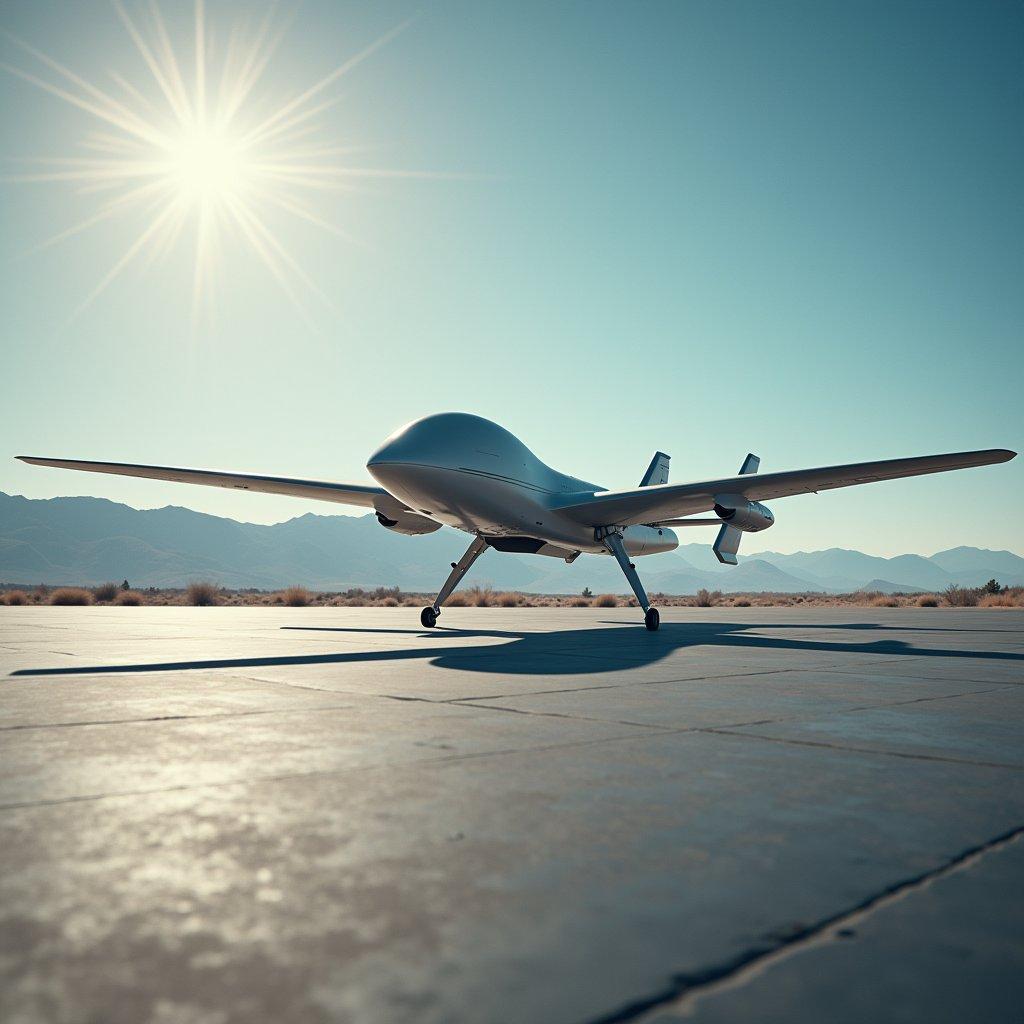
Unlocking the Potential of VTOL Aircraft and Drones for Mapping and Surveying

TABLE OF CONTENTS
- Executive Summary
- Introduction
- Market Overview and Future Outlook of Electric VTOL Aircraft
- Comparative Analysis of VTOL Drones for Mapping and Surveying
- Fundamentals and Operational Insights of VTOL Drones
- Conclusion
1. Executive Summary
This comprehensive report investigates the burgeoning market and technological landscape of Vertical Takeoff and Landing (VTOL) aircraft and drones, with a concentrated focus on mapping and surveying applications. The global eVTOL market is experiencing exponential growth, forecasted to expand from $1.5 billion in 2025 to $15 billion by 2032, driven by groundbreaking advancements in electric propulsion, battery technologies, and autonomous flight systems. Leading aerospace manufacturers and innovative startups are pioneering diverse VTOL platforms, each uniquely positioned to serve urban mobility and specialized aerial survey needs across varied geographies. This report synthesizes these market trends with a detailed comparative analysis of prominent VTOL drones—specifically WingtraOne and Quantix—evaluating their technical capabilities, operational efficiencies, and cost structures to inform optimal solution selection for professional surveyors.
Focusing on mapping and surveying functionalities, the analysis highlights the crucial operational advantages of VTOL drones arising from their hybrid flight profiles, which combine vertical takeoff and landing flexibility with the endurance benefits of fixed-wing aerodynamics. WingtraOne emerges as a premium professional-grade choice offering extended flight time, long-range coverage, and versatile payload options suitable for large-scale, high-precision tasks. Conversely, the Quantix drone delivers a more accessible, cost-effective alternative tailored for smaller or less complex operations, emphasizing ease of use and rapid deployment. A deep dive into the cost-benefit dynamics reveals that investment decisions should weigh total lifecycle costs and project scope, supporting strategic acquisition that aligns with both financial prudence and operational requirements.
To complement the market and product insights, the report elucidates VTOL drone fundamentals, clarifying operating principles, differentiating VTOLs from traditional multirotor and fixed-wing UAVs, and outlining broader application domains beyond surveying. Technological innovations in autonomous control, energy storage, and lightweight materials are accelerating VTOL utility across industries, underscoring the transformative potential of these platforms. Collectively, this layered examination equips stakeholders with a nuanced understanding necessary to navigate the complex interplay of market dynamics, technical capabilities, and strategic implementation in leveraging VTOL aircraft and drones for mapping and surveying excellence.
2. Introduction
The advent and rapid evolution of Vertical Takeoff and Landing (VTOL) aircraft and drones represent a paradigm shift in aerial mapping and surveying technologies. As urbanization intensifies and demand for precise geospatial data escalates, VTOL drones offer unprecedented operational flexibility and efficiency by merging the vertical lift capabilities of multicopters with the extended endurance of fixed-wing aircraft. This report is structured to provide in-depth insights into the current VTOL market dynamics, scrutinize leading drones engineered specifically for mapping and surveying, and illuminate the technological underpinnings shaping their deployment.
Beginning with a comprehensive market overview, the report delineates the significant growth trajectory of the electric VTOL (eVTOL) segment, identifying principal manufacturers and regional adoption trends shaping future accessibility and innovation. Recognizing that mapping and surveying requirements necessitate distinct operational profiles, we conduct a focused comparative evaluation of two industry-leading VTOL drones—WingtraOne and Quantix—assessing their specifications, mission capabilities, and economic considerations. This practical analysis is intended to aid professionals in aligning drone choice with project complexity and budget constraints.
Finally, to foster a holistic understanding, the report presents foundational knowledge of VTOL drone mechanics and operational principles, bridging market intelligence with technical comprehension. This structured approach aims to empower stakeholders, including urban planners, survey professionals, investors, and technology adopters, with actionable insights and strategic guidance to capitalize on the growing opportunities offered by VTOL aircraft and drones in geospatial mapping applications.
3. Market Overview and Future Outlook of Electric VTOL Aircraft
The global electric Vertical Takeoff and Landing (eVTOL) aircraft market is experiencing unprecedented growth, driven by technological innovations and increasing interest in urban air mobility solutions. According to the latest market research, the eVTOL market size is projected to escalate significantly from an estimated $1.5 billion in 2025 to approximately $15 billion by 2032, registering a robust compound annual growth rate (CAGR) of 28%. This rapid expansion reflects growing adoption across diverse applications including urban transportation, emergency services, cargo delivery, tourism, and military operations. Geographically, North America currently dominates the market, largely due to early technology adoption, strong infrastructure, and significant investments by key industry players. Meanwhile, the Asia-Pacific region is poised to be the fastest-growing market, fuelled by rapid urbanization, government initiatives supporting smart mobility, and an expanding aerospace manufacturing base in countries such as China, Japan, and South Korea.
Prominent manufacturers and innovators are shaping the landscape of the eVTOL market with ambitious developments and strategic partnerships. Established aerospace giants, including Airbus (France), Boeing (USA), and Embraer (Brazil), leverage their extensive engineering expertise and supply chain networks to commercialize next-generation electric VTOL platforms. Concurrently, agile startups such as Joby Aviation (USA), Lilium (Germany), Volocopter (Germany), and EHang (China) are challenging conventional paradigms through pioneering designs and autonomous flight technologies. These players focus on enhancing flight efficiency, noise reduction, and safety, along with modular aircraft configurations tailored for passenger and cargo segments. Regional manufacturers, including Hyundai (South Korea) and Pipistrel (Slovenia), further diversify the competitive landscape, emphasizing hybrid powertrains and sustainable materials to address evolving regulatory and environmental imperatives.
Key drivers propelling the eVTOL market stem from advancements in electric propulsion technologies, battery energy density improvements, and integration of autonomous flight systems. Progressive reductions in lithium-ion battery costs and breakthroughs in solid-state batteries are extending operational ranges while reducing the weight and emissions associated with traditional rotorcraft. Additionally, the growing urgency to alleviate urban congestion, coupled with heightened environmental awareness, positions eVTOL solutions as a sustainable alternative to ground transportation. Regulatory frameworks and air traffic management protocols are also gradually adapting to facilitate safe and scalable urban air mobility ecosystems. Investment flows into infrastructure development—such as vertiports and charging stations—complement technological progress, collectively lowering barriers to commercialization. Nonetheless, challenges remain, including certification complexities, public acceptance, and cost-efficiency trade-offs, which industry participants are actively addressing through collaboration and iterative design refinement.
Regional segmentation underscores diverse market maturity and adoption dynamics. North America, spearheaded by the United States, benefits from concentrated R&D investments, a mature aerospace sector, and supportive federal and state policies that encourage urban air mobility pilot programs. Europe follows closely with significant government-led initiatives and safety regulations fostering innovation hubs, especially in Germany, France, and the United Kingdom. Asia-Pacific stands out for its rapid urbanization rates and governmental endorsement of smart city projects, which enhance receptivity to disruptive transport modalities in markets like China, South Korea, and Japan. Emerging markets in Latin America, the Middle East, and Oceania are anticipated to participate in downstream growth phases, driven primarily by cargo applications and tourism. These regional nuances necessitate tailored deployment strategies, with manufacturers optimizing designs to meet local regulatory, infrastructural, and market conditions.
Looking forward, the outlook for electric VTOL aircraft is characterized by sustained innovation and escalating market integration. Strategic collaborations between traditional aerospace companies, technology startups, and regulatory bodies are expected to accelerate certification pathways and scale production capabilities. As battery and autonomous flight technology mature, next-generation eVTOL platforms will achieve higher payload capacities, extended flight endurance, and improved cost-effectiveness. The convergence of these advances will unlock new urban mobility models, including air taxis and on-demand cargo transport, ultimately transforming multimodal transportation networks. Stakeholders—including investors, urban planners, and operators—should prioritize adaptive strategies that leverage evolving regulatory landscapes and infrastructure ecosystems. This proactive engagement will be essential to capitalize on the explosive potential of eVTOL aircraft and secure competitive advantage in this fast-emerging sector.
4. Comparative Analysis of VTOL Drones for Mapping and Surveying
The field of aerial mapping and surveying has increasingly benefited from the integration of VTOL (Vertical Takeoff and Landing) drone technology, which combines the maneuverability of multicopters with the efficiency of fixed-wing flight. Among the notable drones tailored for these applications are the WingtraOne and the Quantix, both leveraging VTOL capabilities but serving distinctly different operational profiles. For surveying professionals, understanding the nuanced differences between these systems is crucial to optimizing project outcomes. This section provides a focused comparison of these two leading VTOL drones, analyzing their technical specifications, operational advantages, and cost implications in the context of professional mapping and surveying tasks.
WingtraOne stands out as a high-performance professional-grade VTOL drone designed specifically for large-scale, precision surveying. It features an extended flight endurance of up to 59 minutes, allowing coverage of extensive areas without interruption. Its maximum range of 10 kilometers enables operations in remote or otherwise difficult-to-access environments, meeting the demands of complex surveying missions. The drone’s payload capacity of up to 800 grams supports the integration of advanced imaging sensors such as the Sony RX1R II, facilitating high-resolution orthomosaic maps and 3D models. Conversely, the Quantix drone, while also incorporating VTOL technology, often prioritizes ease of use and rapid deployment for smaller-scale or less complex surveys. Its operational profile typically includes shorter flight times and more limited payload options, making it better suited for quick reconnaissance or less data-intensive mapping tasks.
The operational advantages of VTOL drones for surveying derive from their hybrid design, which enables vertical takeoff and landing in constrained spaces without the need for runways, while achieving efficient and stable forward flight typical of fixed-wing models. This dual capability allows surveyors to deploy drones in varied terrain and urban environments where traditional fixed-wing UAVs are impractical. Comparing WingtraOne’s hybrid fixed-wing VTOL design against the versatile but less endurance-optimized Quantix underscores the importance of matching drone capabilities to project scale and complexity. WingtraOne’s longer flight times and better payload flexibility justify its premium cost for enterprises requiring high data fidelity and operational efficiency over large terrains. In contrast, Quantix’s simpler system offers a cost-effective solution where budget constraints or mission simplicity take precedence.
Cost considerations are a pivotal factor influencing VTOL drone selection, balancing upfront investment against potential time and resource savings on surveying projects. While professional drones like WingtraOne command a higher purchase price due to advanced avionics, payload options, and endurance, they often translate into significant project efficiencies—fewer flights needed, reduced personnel hours, and higher-quality data output. These benefits reduce overall project costs, especially for large-scale or repeat surveying operations. Meanwhile, lower-cost drones such as Quantix appeal to organizations with limited budgets or less demanding surveying needs, though they may incur higher operational overhead due to shorter flight durations and less autonomous functionality. Therefore, a comprehensive cost-benefit analysis tailored to project requirements is essential to ensure strategic investment and maximum return.
In summary, selecting the optimal VTOL drone for mapping and surveying demands a careful appraisal of drone specifications against project demands. WingtraOne represents the apex of professional surveying solutions, offering superior flight endurance, range, and sensor support that significantly enhance operational efficiency and data quality. Quantix, while more accessible in terms of cost and operational simplicity, is best suited for smaller projects or rapid deployment scenarios where high precision is less critical. Survey professionals are encouraged to align their drone choice with their unique project scopes, budget constraints, and data quality expectations to maximize both operational performance and financial prudence.
4-1. VTOL Drone Types and Operational Advantages for Surveying
VTOL drones are broadly categorized into multicopter designs and hybrid fixed-wing models. Multicopter VTOL drones rely primarily on rotors to achieve vertical lift and sustained hover, with simple transition capabilities. They excel in environments requiring precise maneuvering and station-keeping but often suffer from limited endurance and slower forward flight speeds. Hybrid fixed-wing VTOL drones, like WingtraOne, integrate vertical lift rotors with fixed wings optimized for efficient cruising flight. This combination allows them to take off and land in confined spaces while sustaining longer flight times and higher coverage speeds. For surveying applications, where covering large geographical areas with high-resolution data collection is paramount, hybrid VTOLs offer a compelling operational advantage by reducing mission time and improving data consistency.
The vertical takeoff and landing feature uniquely positions VTOL drones to operate in diverse and constrained environments, such as mountainous terrain, urban canyons, and areas without prepared landing zones. This flexibility eliminates the logistical challenges associated with conventional fixed-wing drones that require runways, enabling faster deployment and safer operations. Moreover, the stable hovering capability allows for precise image capture and data acquisition in targeted zones, enhancing the spatial accuracy of survey outputs. By balancing hover precision and efficient cruise flight, VTOL drones effectively address the varied demands of mapping, from detailed site inspections to regional topographic surveys.
Operational efficiency is further amplified by onboard autonomous flight systems integrated within advanced VTOL UAVs. Features such as automated mission planning, obstacle avoidance, and return-to-home protocols increase reliability and reduce operator workload. WingtraOne, for instance, incorporates sophisticated avionics allowing for consistent autonomous flights, minimizing human error and maximizing safety. These technological advancements translate into reduced downtime and higher throughput, critical for professional surveyors managing multiple or time-sensitive projects.
4-2. Cost Implications and Project Efficiency in VTOL Drone Selection
Initial acquisition costs of VTOL drones vary significantly, with professional-grade models like WingtraOne positioned at the higher end of the price spectrum, reflecting their advanced capabilities and robust construction. These higher upfront expenses are offset by increased operational efficiency; longer flight durations mean fewer sorties are required to cover equivalent survey areas, speeding up data collection and reducing labor costs. High-quality sensor integration ensures that data gathered meets stringent accuracy and resolution standards, thereby minimizing the need for repeat flights or supplementary ground surveys.
On the other hand, entry-level VTOL drones such as Quantix are considerably more affordable, lowering barriers to entry for smaller surveying firms or projects with constrained budgets. However, these models often entail trade-offs, including limited payload flexibility, shorter flight times, and potentially less sophisticated autonomation. This can increase the cumulative operational expenses over time due to more frequent deployment cycles and potentially lower data quality, which might necessitate additional post-processing or supplemental data collection strategies.
A strategic approach to VTOL drone procurement should incorporate a lifecycle cost analysis rather than focusing solely on purchase price. Factoring in aspects such as maintenance, training, software subscriptions, and project-specific efficiencies will yield a more accurate assessment of total cost of ownership. For organizations with recurring mapping needs, investing in high-end VTOL systems tends to improve overall project efficiency and financial outcomes, while for ad hoc or smaller-scale projects, more economical drones may provide sufficient performance without overextending resources.
5. Fundamentals and Operational Insights of VTOL Drones
Vertical Takeoff and Landing (VTOL) drones represent a distinctive category of unmanned aerial vehicles (UAVs) that integrate the vertical takeoff and landing capabilities of multirotor drones with the aerodynamic efficiency of fixed-wing aircraft. Unlike traditional multirotor drones, which rely solely on rotors to generate lift and enable vertical ascent and descent, VTOL drones incorporate fixed wings that provide lift during horizontal flight, resulting in significantly enhanced endurance and range. This hybrid design allows VTOL drones to operate without the need for runways or launch mechanisms, offering unparalleled deployment flexibility across diverse environments. The transition from vertical hover to forward flight involves complex aerodynamic and propulsion adjustments, often managed by advanced flight control systems, enabling seamless flight modes and optimizing energy use during missions. This combination extends operational capabilities beyond the inherent limitations of classic drone types, particularly for applications requiring long-distance coverage and rapid deployment.
To contextualize the advantages of VTOL technology, it is important to differentiate VTOL drones from conventional multirotor and fixed-wing platforms. Multirotors are celebrated for their vertical takeoff and landing capabilities and high maneuverability, making them ideal for confined or complex environments; however, they suffer from relatively short flight durations due to continuous rotor-driven lift. Fixed-wing drones, conversely, leverage aerodynamics for energy-efficient, sustained forward flight but require runways or catapult launches, limiting accessibility in urban or rugged terrain. VTOL drones effectively bridge this gap, combining vertical lift for flexible launches and landings with fixed-wing lift for extended flight endurance. Consequently, VTOL drones offer a versatile solution that mitigates the operational constraints associated with either traditional drone type, thereby expanding mission profiles and enhancing data acquisition efficiency, particularly where access to launch sites is constrained.
The practical applications of VTOL drones have broadened considerably, catalyzed by rapid technological advancements across propulsion systems, materials engineering, and autonomous flight controls. Mapping and surveying remain flagship use cases due to VTOL drones’ capacity to cover extensive terrain efficiently while providing high-resolution data via integrated sensors such as LiDAR and multispectral cameras. Beyond geospatial tasks, these drones have demonstrated growing utility in agriculture for precision crop monitoring, infrastructure inspection for energy and transportation sectors, emergency response for rapid situational assessment, and parcel delivery, where extended range and urban deployment flexibility are critical. Moreover, recent innovations including hybrid electric propulsion, modular payload designs, and AI-enabled flight autonomy have enhanced reliability, reduced operational complexity, and improved safety. These advances are paving the way for broader adoption of VTOL drones in both commercial and industrial applications.
Despite their operational advantages, VTOL drones present unique challenges that impact deployment strategies and user proficiency requirements. Their hybrid nature necessitates dual flight mode management—vertical hover and fixed-wing cruise—which increases the complexity of flight control systems and demands higher operator skill levels compared to conventional UAVs. This complexity can translate into longer training times and the need for specialized pilot certifications, factors that organizations must consider when integrating VTOL platforms into existing operations. Additionally, the incorporation of multiple propulsion and lift components often adds to the drone’s weight and mechanical complexity, imposing limits on payload capacity and overall endurance beyond a certain threshold. These trade-offs underscore the importance of mission-specific VTOL drone selection and emphasize the critical balance between operational versatility and system complexity.
From an operational perspective, best practices for VTOL drone deployment emphasize thorough pre-flight planning, pilot training, and maintenance regimes tailored to the hybrid technology. Organizations should leverage autonomous flight planning software that accommodates VTOL transition dynamics and mission conditions to optimize flight paths and energy consumption. Additionally, selecting VTOL drones equipped with redundancy features, such as backup power systems and fail-safe protocols, enhances mission reliability, especially in critical surveying or inspection tasks where data integrity is paramount. Integrating sensor calibration and real-time telemetry monitoring further supports mission success and data quality. Ultimately, a comprehensive understanding of VTOL fundamentals, matched with industry-specific operational protocols, will maximize the efficacy and return on investment of VTOL drone deployments across the increasingly diverse use cases highlighted in this report.
5-1. Defining VTOL Drones: Operating Principles and Key Characteristics
VTOL drones operate by leveraging a hybrid aerodynamic approach that incorporates vertical lift via rotors and forward thrust generated by fixed wings. At takeoff and landing, rotors provide the necessary lift and stability for vertical ascent and descent, allowing these drones to operate in confined spaces without runways. Upon reaching operational altitude, the flight control system initiates transition to fixed-wing flight by reorienting propulsion or gradually shifting aerodynamic surfaces to generate lift efficiently during forward motion. This transition phase is typically intricate, requiring precise control to maintain stability and momentum. VTOL designs vary, including tailsitters, tilt-rotors, and convertible types, each implementing different mechanical configurations to switch between vertical and horizontal flight. The net result is a UAV that harnesses the agility and access flexibility of rotorcraft while achieving the endurance and speed advantages of fixed-wing drones.
5-2. Differentiation from Traditional Drone Architectures
Traditional multirotor drones, characterized by multiple rotors fixed in orientation, excel in hover precision and agile maneuvering but are constrained by rapid battery depletion due to continuous power consumption needed to keep rotors spinning for lift. Fixed-wing drones, designed similar to miniature aircraft, exploit aerodynamic lift via wings, enabling longer flight durations but demanding elaborate launch and recovery logistics. VTOL drones integrate these aspects by employing rotor systems exclusively for vertical takeoff and landing phases and using wings for lift during horizontal flight, substantially conserving energy over multirotor formats. This duality addresses critical operational limitations, particularly in environments where launch infrastructure is unavailable or expansive area coverage is required. However, these benefits come with increased system complexity and cost, necessitating careful operational planning and pilot expertise.
5-3. Diverse Applications and Technological Innovations Enhancing VTOL Utility
The versatility of VTOL drones underpins their deployment across a wide array of sectors beyond the mapping and surveying domains prominently discussed in preceding sections. In agriculture, VTOL UAVs facilitate precision farming techniques by collecting multispectral data to monitor crop health, irrigation needs, and pest infestations over large plots efficiently. Infrastructure inspection leverages VTOL drones’ ability to cover extensive linear structures like pipelines and power lines while accessing tight inspection sites due to vertical lift capability. Emergency response operations benefit from rapid deployment agility and prolonged flight times to survey disaster zones or search for missing persons over challenging terrain. The emerging drone delivery sector views VTOL aircraft as a solution to payload range limitations of multirotors, enabling longer distance deliveries with minimal takeoff/landing footprint. Technological advancements such as AI-driven autonomous piloting, improved battery chemistry, lightweight composite materials, and real-time sensor integration further expand the capabilities and reliability of VTOL drones, encouraging their adoption in complex mission contexts.
6. Conclusion
The VTOL aircraft and drone sector presents a compelling convergence of rapid technological innovation and expanding market opportunities, especially within the mapping and surveying domain. This report’s comprehensive market analysis underscores an accelerating eVTOL market driven by advancements in electric propulsion, battery technology, and autonomous flight capabilities, with substantial investments from established aerospace giants and agile startups worldwide. The scalable growth forecast, particularly across North America, Europe, and Asia-Pacific, affirms the strategic imperative for stakeholders to engage proactively in adoption and innovation to harness competitive advantages in urban air mobility and geospatial data acquisition.
The comparative evaluation of VTOL drones tailored for surveying highlights the critical importance of aligning drone capabilities with project specifications. Professional-grade solutions like WingtraOne maximize operational efficiency and data quality through extended endurance, sophisticated payload compatibility, and autonomous functionalities, justifying their premium cost for large or recurring surveys. Conversely, platforms such as Quantix serve niche roles where operational simplicity and budget constraints dominate, albeit with trade-offs in flight duration and sensor flexibility. This nuanced understanding enables organizations to optimize investment by conducting thorough cost-benefit and lifecycle analyses, avoiding suboptimal procurements that compromise project outcomes or inflate operational expenses.
Technical insights into VTOL drone operating principles and differentiations from conventional UAV platforms further enrich the strategic perspective necessary to fully leverage these technologies. The hybrid VTOL design uniquely reconciles deployment flexibility with flight efficiency, expanding feasible mission profiles while introducing complexities in flight management and training. Continued advancements in AI-driven autonomy, battery chemistry, and materials science are anticipated to mitigate these challenges progressively, facilitating broader adoption and integration across industries beyond surveying, including agriculture, inspection, emergency response, and delivery services.
Looking ahead, the sustained evolution of regulatory frameworks, infrastructure development—including vertiports and charging networks—and collaborative innovation ecosystems will be pivotal in unlocking the full potential of VTOL aircraft and drones. Stakeholders are encouraged to adopt adaptive strategies that integrate market intelligence, technical knowledge, and operational best practices. Such an integrated approach will not only drive enhanced mapping and surveying capabilities but also position organizations at the forefront of a transformative sector poised to redefine aerial data acquisition and urban air mobility landscapes.