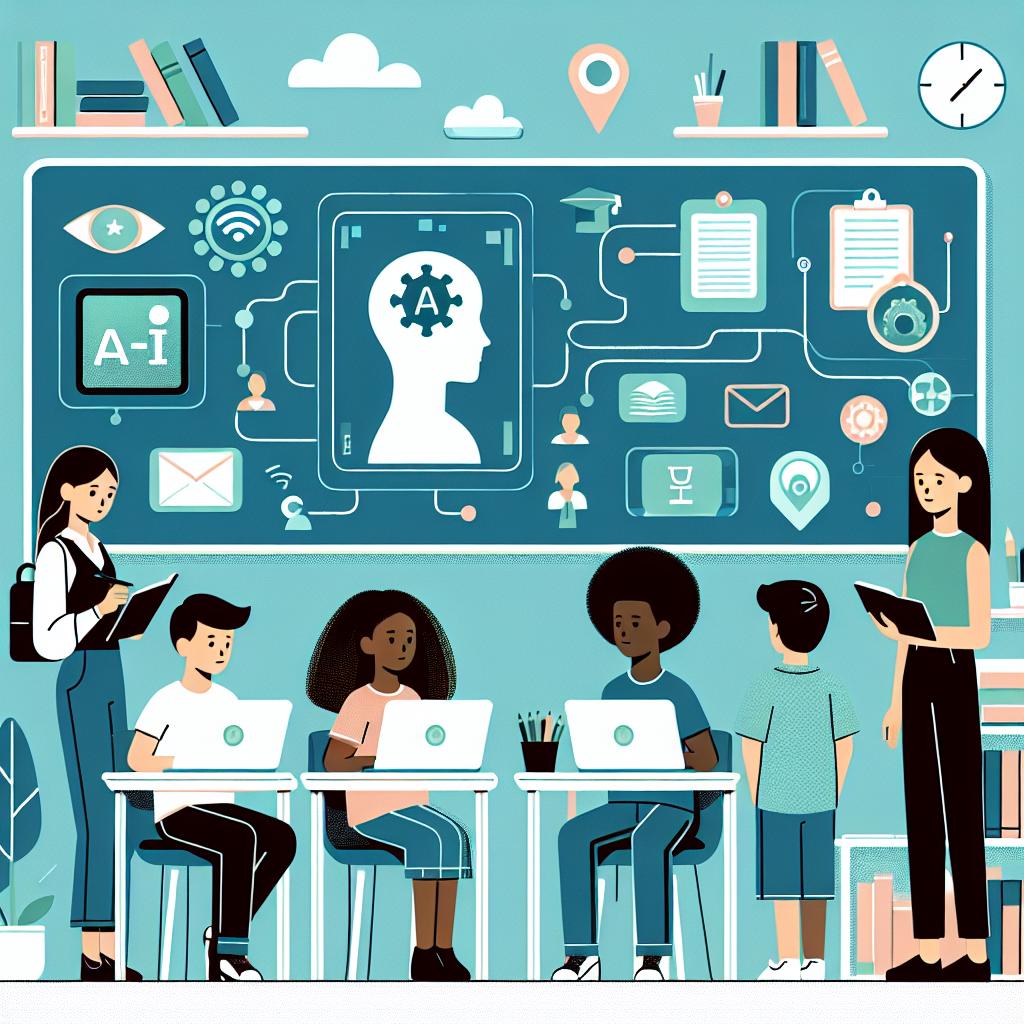
Navigating Ethical Risks of AI in Education: Privacy, Bias, Integrity, and Access

TABLE OF CONTENTS
- Data Privacy and Student Confidentiality
- Algorithmic Bias and Educational Inequality
- Academic Integrity and Plagiarism Concerns
- Digital Divide and Access Disparities
- Impact on Teacher Roles and Dependency
- Conclusion
1. Summary
As artificial intelligence (AI) integrates deeper into classroom practices and educational tools, educational institutions face critical ethical challenges that require immediate attention. This examination focuses on pressing risks associated with AI in education, notably student data privacy breaches, algorithmic bias, academic dishonesty, inequalities in access, and the evolving roles of educators. By reviewing studies, student use of AI, and institutional initiatives through August 7, 2025, critical insights reveal how the benefits of AI can be balanced against the ethical dilemmas they pose. The research highlights the necessity for educational frameworks to adapt to the changing landscape, addressing data security concerns while ensuring compliance with regulations like GDPR and FERPA. By fostering transparency in data practices, institutions can navigate the complexities surrounding student privacy and third-party AI service risks effectively.
Additionally, algorithmic bias presents a profound challenge, as AI systems designed to personalize education may inadvertently reinforce existing inequities. The reliance on historical data in adaptive algorithms risks perpetuating discriminatory outcomes for underrepresented groups, thus highlighting an urgent need for mitigation strategies. Ongoing studies emphasize employing diverse training data and inclusive designs as critical methods for reducing bias, thereby ensuring equitable educational experiences for all students. In the context of academic integrity, the wide use of AI-generated content prompts institutions to devise robust detection methods and new assessment models that uphold academic honesty while striking a balance with the convenience AI tools offer. Reports indicate that student overreliance on generative tools is a growing concern, underscoring the importance of instilling critical thinking alongside technological support.
Finally, access disparities necessitate comprehensive action to address the digital divide, requiring targeted funding, public-private partnerships, and inclusive technology access initiatives. Ensuring all students have equitable opportunities to engage with AI educational tools is paramount, as highlighted by commitments from major tech companies. Empowering educators through ongoing professional development and competency frameworks is equally critical to navigate the evolving teaching landscape. By processing these findings, educational stakeholders can develop strategies and policies that not only leverage AI's potential but also prioritize ethical considerations, ensuring a fair educational environment that fosters equity, privacy, and academic integrity.
2. Data Privacy and Student Confidentiality
2-1. Collection and storage of sensitive student data
The collection and storage of sensitive student data have become critical concerns in the educational sector, especially with the increasing integration of AI tools in learning environments. Educational institutions now frequently handle vast amounts of personal data, including academic records, identification details, and behavioral data. The challenge lies in balancing the benefits of data utilization for personalized learning with the imperative to maintain student privacy. As outlined in various studies and implementations, schools and universities are being urged to adopt higher standards of data protection and management to prevent breaches that could lead to the unauthorized disclosure of student information. Existing frameworks are being scrutinized and often require updates to ensure compliance with contemporary privacy and security standards as systemic AI use in education matures.
2-2. Third-party AI service risks
The reliance on third-party AI services raises significant risks concerning student data privacy. Many educational tools are developed and managed by external vendors, which can lead to challenges regarding data governance and control. As highlighted in recent analyses, institutions are advised to conduct comprehensive risk assessments concerning vendors' data handling practices. There is a pressing need for educational institutions to establish stringent contracts that encapsulate data protection measures and compliance with regulations such as GDPR and FERPA. These regulations mandate transparency concerning data collection and sharing, emphasizing the need for institutions to ensure that third-party services adhere to the same privacy standards they are obliged to follow.
2-3. Regulatory compliance and GDPR/FERPA considerations
Educational institutions must navigate a complex landscape of regulatory compliance, particularly in relation to the General Data Protection Regulation (GDPR) and the Family Educational Rights and Privacy Act (FERPA). GDPR affirms the rights of individuals over their personal data and obliges organizations to uphold high standards of data protection. Conversely, FERPA grants parents and students rights concerning access to educational information and its confidentiality. As of August 8, 2025, numerous studies indicate a prevalent struggle amongst institutions to reconcile the operational demands of AI implementation with these layered regulatory obligations. Institutions are increasingly recognizing the importance of creating dedicated compliance teams to monitor adherence to these regulations and implement robust data protection policies that aim to mitigate risks associated with AI technologies in schools.
2-4. Informed consent and transparency measures
Informed consent is a foundational principle in protecting student privacy, especially when employing AI technologies that collect or analyze personal data. Educational institutions are increasingly called to develop transparent processes that not only inform students and parents about what data is being collected and how it is used but also empower them to provide consent actively. This necessitates clear communication channels and educational initiatives that help the student body understand their rights and the implications of their data sharing. Contemporary studies emphasize that successful informed consent practices incorporate regular updates and feedback mechanisms, fostering an ongoing dialogue between institutions and students regarding data privacy. By adhering to these transparency measures, institutions not only enhance student trust but also align themselves with best practices in ethical data use.
3. Algorithmic Bias and Educational Inequality
3-1. Bias in adaptive learning algorithms
Adaptive learning algorithms, designed to tailor educational experiences to individual student needs, have come under scrutiny for potential biases that can exacerbate educational inequality. These algorithms often rely on historical data to personalize learning paths, but if the underlying data reflects systemic biases—such as those based on race, socio-economic status, or gender—these biases can be perpetuated and even amplified in adaptive learning environments. Research indicates that models trained on skewed data sets may favor the learning patterns of predominantly represented demographics while disadvantageously affecting underrepresented groups. For instance, if an algorithm predominantly trained on data from affluent students encounters learners from less privileged backgrounds, it might fail to provide them with the necessary support or relevant challenges, thus widening the existing educational gap.
3-2. Demographic disparities in AI adoption
Demographic disparities in AI adoption across educational contexts highlight significant divides that can perpetuate inequality. A recent study conducted in Germany in 2025 revealed notable differences in AI tool usage among various demographic groups, primarily defined by age and educational background. Younger individuals—particularly those aged 18-29—showed markedly higher engagement with AI tools compared to older adults, particularly those over 65. This generational gap indicates that younger learners are more likely to experience the benefits of AI-enhanced educational resources, potentially leading to skill disparities in the workforce. Gender disparities also emerged, with men more likely to utilize AI tools than women, suggesting that systemic barriers may restrict women's access to these transformative technologies.
3-3. Impact on underrepresented student groups
The impact of algorithmic bias is particularly pronounced on underrepresented student groups, often resulting in unequal educational outcomes. Students from minority backgrounds and low-income families may face compounded challenges when AI systems prioritize experiences and needs reflected in the dominant demographic's data. For example, in adaptive learning scenarios where AI seeks to optimize individual learning paths, the absence of diverse data can lead to less effective learning experiences for these students, thereby reinforcing existing societal inequities. Furthermore, systemic misconceptions about the capabilities of these groups can result in lower expectations from educators and AI systems alike, effectively diminishing the support provided to enhance their educational journeys.
3-4. Strategies for bias detection and mitigation
To address the challenges posed by algorithmic bias and its impact on educational inequality, several strategies for detection and mitigation are essential. Firstly, it is crucial to implement regular audits of AI models to assess their decision-making processes and the fairness of their outcomes. Utilizing diverse training data sets that encompass various demographic representations can significantly reduce biases inherent in machine learning models. Furthermore, engaging stakeholders—including educators, students, and community representatives—in the design and evaluation of AI tools can ensure that these systems are attuned to the needs of all learners. Finally, education institutions must foster an environment of transparency around AI use, allowing for feedback and iterative improvements of algorithms based on user experiences and outcomes.
4. Academic Integrity and Plagiarism Concerns
4-1. AI-generated content and originality verification
As of August 2025, the growing prevalence of AI-generated content in educational settings has sparked significant debates about originality and academic integrity. With tools like ChatGPT and other generative models being frequently utilized by students—over 92% of whom have reported using AI tools—educators are faced with the challenge of distinguishing between genuine student work and AI-assisted submissions. Originality verification systems are becoming crucial in this context. Institutions are increasingly investing in technological solutions that employ advanced algorithms to detect AI-generated text against human-produced content. These systems are designed to analyze patterns and linguistic features inherent in texts produced by AI, thereby assisting educators in upholding standards of academic honesty.
4-2. Student overreliance on generative tools
As highlighted in recent surveys, the dependency of students on AI tools for their academic tasks has risen sharply. Student reports indicate that while AI is an advantageous resource for simplifying homework and research projects, this convenience is also leading to overreliance. In fact, approximately 21% of students have admitted to using AI technologies to aid in passing exams, a practice that raises concerns regarding the ethical implications of their educational experiences. The availability of instant answers has the potential to stifle critical thinking and independent learning as students might opt for quick solutions rather than engaging with the material deeply.
4-3. Detection methods for AI-assisted plagiarism
Educational institutions are actively developing strategies to combat AI-assisted plagiarism. Current methods include using specialized software that can differentiate between student and AI-generated work, as well as leveraging machine learning algorithms to analyze writing styles and structure. The implementation of detection technologies is essential to preserve academic integrity, as reliance on generative tools can facilitate unethical behaviors among students. Additionally, training and awareness programs are being initiated to guide students on the responsible use of AI, emphasizing the importance of engaging with content authentically to enhance learning outcomes.
4-4. Balancing support and assessment fairness
The challenge of balancing the benefits of AI support with the need for fair assessments is a pressing concern in education. As institutions continue to integrate AI tools into the classroom, they must also establish guidelines that maintain equity in student evaluations. This can involve creating assessment structures that account for the potential use of AI, such as open-book formats or assignments designed to prioritize critical thinking over rote knowledge. Furthermore, professional development efforts are underway to equip educators with the skills to design assessments that recognize the value of AI as a supplementary tool while ensuring that it does not undermine the core principles of learning and integrity.
5. Digital Divide and Access Disparities
5-1. Unequal access to AI resources across regions
The integration of artificial intelligence (AI) in education has highlighted significant regional disparities in access to resources. Reports indicate that while AI tools proliferate in educational institutions across developed countries, many regions, especially in developing nations, suffer from inadequate infrastructure and limited access to technology. A recent study revealed stark contrasts in adoption rates, emphasizing that younger demographics in urban areas engage significantly more with AI than their counterparts in rural or underfunded educational systems. Moreover, students in countries such as the United States and Japan are now utilizing advanced AI tools at accelerated rates, bolstered by initiatives like Google's commitment to providing free AI resources to college students. Conversely, students in less affluent regions often do not have reliable internet access or access to the necessary devices, further exacerbating the digital divide and limiting their ability to benefit from AI education tools.
5-2. Cost barriers and institutional support programs
Economics play a crucial role in gaps in access to AI resources in educational institutions. The cost of technology, including hardware and software, can be prohibitive for many educational institutions, especially in economically disadvantaged areas. A recent announcement by Google emphasizes a substantial commitment of $1 billion over three years to enhance the educational infrastructure in the United States, which aims to alleviate some cost barriers by offering free AI tools to college students. While such initiatives are a positive step, they primarily focus on students in select countries, indicating the need for similar programs widely throughout underrepresented regions. Institutional support programs, which may offer financial aid or subsidized access to technology, remain crucial to ensuring that all students, regardless of economic background, can access necessary AI educational resources.
5-3. Device and connectivity gaps
Recent surveys have documented significant discrepancies in both device access and internet connectivity among students, influencing the effectiveness of AI in education. A comprehensive report on student AI usage indicated that in the United States alone, 92% of students use some form of AI tool in their studies; however, this number masks the reality of those who lack access. Many students in rural or underserved urban areas remain without reliable internet connectivity or adequate devices capable of supporting modern AI tools. This technological gap shapes students' educational experiences and outcomes, and schools should prioritize bridging this divide through investments in infrastructure and partnerships with tech companies to ensure equitable access to AI technologies.
5-4. Inclusive policies for equitable AI integration
To foster inclusive educational environments, it is essential that policymakers create and implement inclusive policies that address the digital divide. Increased funding for AI literacy programs and technology access initiatives can help ensure that every student has the opportunity to engage with these transformative educational tools. Current trends, such as the demand for AI in curriculum development and gaps in demographic usage patterns, highlight the necessity for targeted initiatives aimed at diverse populations. Inclusive policies should focus not only on access to technology but also on equipping both students and educators with the necessary skills to utilize AI effectively, thereby promoting an equitable educational landscape where all learners can thrive.
6. Impact on Teacher Roles and Dependency
6-1. Shifting pedagogical responsibilities
The integration of artificial intelligence (AI) in education has necessitated a reevaluation of teacher roles. Teachers are transitioning from traditional instruction models to new pedagogical responsibilities that focus on facilitating learning through technology. This shift requires educators to become adept at integrating AI tools into their teaching, which enhances engagement and personalizes learning. For instance, AI can provide tailored feedback to students, enabling teachers to concentrate on higher-order instructional tasks rather than merely delivering content.
Moreover, as AI continues to evolve, some routine tasks traditionally performed by teachers—such as grading and administrative functions—are being increasingly automated. This change allows teachers to spend more time on personalized instruction and student interaction, fostering a more transformative learning environment. However, it imposes the responsibility on educators to develop new skills and competencies to effectively utilize AI tools in their classrooms.
6-2. Teacher digital literacy and trust in AI
The success of AI integration in educational settings heavily relies on teachers' digital literacy, which includes their ability to understand and utilize new technology effectively. Recent studies emphasize that teachers who possess both theoretical and practical knowledge about AI are more likely to integrate these tools successfully in their teaching. This digital literacy enables educators not only to leverage AI for enhanced student engagement but also to critically assess the technology's implications on learning outcomes.
Trust in AI systems also plays a significant role in shaping teachers' willingness to adopt and research these tools. Educators are more likely to use AI when they believe it enhances teaching effectiveness and addresses their concerns, such as data privacy and the reliability of AI outputs. Building trust involves providing transparent information about AI’s functionality and establishing robust support systems within educational institutions.
6-3. Professional development and competency frameworks
Effective professional development is crucial for fostering the necessary competencies among teachers in an AI-enhanced educational landscape. Current literature suggests a need for comprehensive training programs that not only improve digital literacy but also equip educators with the skills to navigate the ethical implications of AI in education. These programs must encompass both introductory and advanced courses to accommodate varying levels of expertise among teachers.
Competency frameworks should be designed to guide teachers in developing their AI integration skills incrementally. Such frameworks can help identify essential skills ranging from basic AI understanding to advanced pedagogical strategies that harness AI effectively, ensuring ongoing support for teachers as they adapt to these evolving roles. As highlighted in recent findings, institutional backing is fundamental to this development, as it provides the necessary resources and encouragement for educators to engage with AI technologies.
6-4. Maintaining human oversight in AI-driven instruction
Despite the considerable benefits of integrating AI in education, maintaining human oversight in AI-driven instruction is vital to safeguarding educational integrity and student welfare. Educators must critically assess the outputs generated by AI tools to ensure they align with pedagogical goals and ethical standards. This oversight helps prevent overreliance on AI technologies that could undermine the teaching profession by potentially diminishing the human elements of empathy and critical thinking that are essential in educational settings.
Furthermore, as AI tools evolve, teachers must be vigilant against potential biases in AI-generated content, which could adversely affect student learning and outcomes. By establishing a robust framework for oversight that includes ongoing professional development and a culture of critical engagement with AI, educators can leverage the benefits of AI while preserving the core values of teaching and learning. In summary, the role of the teacher is increasingly becoming that of a facilitator and guide, ensuring technology serves educational purposes effectively without compromising human oversight.
Conclusion
In summary, while AI presents transformative potential for enhancing personalized learning and administrative efficiency in educational contexts, it concurrently introduces significant ethical challenges that must be proactively addressed. As of August 8, 2025, it is clear that to safeguard student privacy, educational institutions must establish robust governance frameworks that incorporate clear consent protocols, secure data storage practices, and transparent agreements with third-party vendors. Moreover, mitigating algorithmic bias requires the integration of diverse training datasets, regular algorithmic audits, and fostering inclusive design approaches that consider all student demographics. Upholding academic integrity in the face of AI's proliferation mandates the implementation of sophisticated detection tools, real-time monitoring, and revision of assessment models to ensure they reflect genuine student understanding while accommodating technological assistance.
Moreover, bridging the digital divide remains a pressing concern, necessitating targeted funding initiatives, strategic public-private collaborations, and comprehensive institutional support programs to ensure that all learners have equal access to AI resources. The empowerment of teachers through specialized training and a clear competency framework will be essential for maintaining human oversight and ensuring that technological advancements serve educational purposes without compromising ethical standards. Looking ahead, stakeholders must prioritize the establishment of multidisciplinary ethics boards to govern AI applications in education while promoting standardized certification practices for AI educational technologies. By embedding ethical considerations throughout all stages—from design to deployment and continuous evaluation—educational systems can responsibly capitalize on AI's benefits, fostering an environment of equity, integrity, and trust among educators and learners alike.