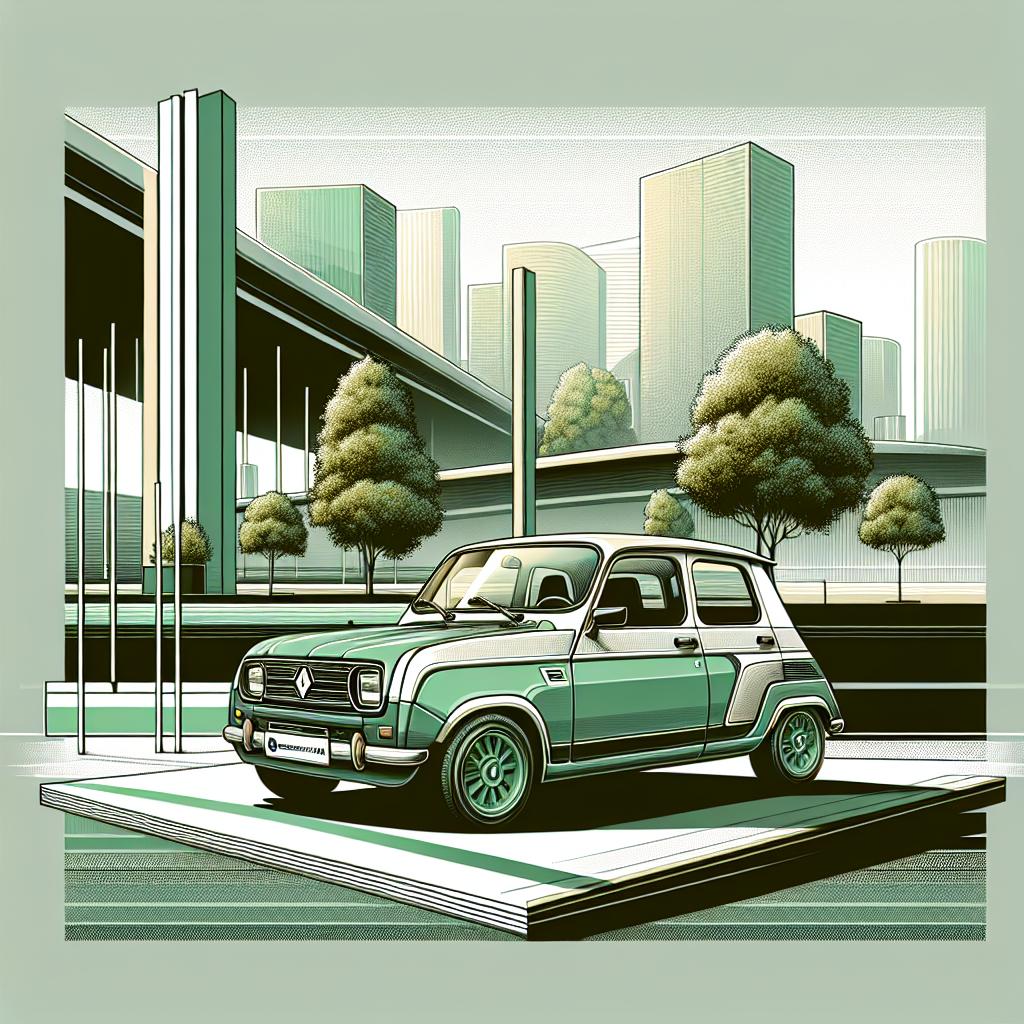
Renault 5 E-Tech vs. Competitors: Urban Dynamics and Design Legacy

TABLE OF CONTENTS
- Executive Summary
- Introduction
- Competitive Benchmarking
- Urban Performance Analysis
- Design Significance and Brand Impact
- Conclusion
1. Executive Summary
This report provides a comprehensive evaluation of the Renault 5 E-Tech, juxtaposed against its competitors in the small electric vehicle (EV) market, particularly focusing on urban dynamics and design legacy. Key findings indicate that the Renault 5 E-Tech, priced at £22,995, offers a competitive edge with a range of up to 215 miles and a robust power output of 148bhp. Compared to rivals like the Nissan Micra and Fiat Grande Panda, it not only meets but exceeds expectations in terms of features and performance, making it a compelling choice for urban drivers.
Furthermore, this analysis suggests that the Renault 5 E-Tech’s blend of nostalgia and modern innovation appeals to a demographic increasingly concerned with sustainability and historical significance in design. Future directions include further exploring consumer perceptions of design nostalgia in the EV market and how these sentiments impact purchasing decisions.
2. Introduction
In a rapidly evolving automotive landscape where electric vehicles (EVs) are ushering in a new era of transportation, the return of classic models infused with modern technology captures significant attention. The Renault 5 E-Tech is a prime example of this trend, offering a unique blend of nostalgic charm and cutting-edge performance tailored to urban lifestyles. With cities steering towards sustainable transport solutions, understanding how the Renault 5 E-Tech stands against its rivals is essential for decision-makers in both consumer and fleet markets.
Why is the revival of the Renault 5 significant? The classic model evokes memories from its heyday but has been reimagined for contemporary consumption in an era focused on zero emissions and smart design. This report aims to delve into the Renault 5 E-Tech's competitive positioning within the small EV segment, offering data-driven benchmarks that highlight its performance in urban settings compared to key competitors, including the Nissan Micra and Fiat Grande Panda.
Moreover, by analyzing urban driving metrics and evaluating the impact of its neo-retro design, the report underscores the importance of blending history with innovation. The subsequent sections will provide insights not only into the vehicle’s specifications and market positioning but also into its practical usability within city environments—a critical consideration as urbanization continues to reshape consumer preferences.
3. Competitive Benchmarking
In an era where electric vehicles (EVs) dominate market discourse, understanding the nuances of competitive positioning becomes crucial for informed consumer and fleet manager decisions. The Renault 5 E-Tech exemplifies a poignant fusion of nostalgia and modernity, positioned against competitive benchmarks that define the upper echelons of the small EV segment. By meticulously evaluating technical specifications, pricing strategies, and market positioning, one can discern not merely numbers but a complex narrative of consumer choice, innovation, and the shifting paradigm of urban mobility.
As the automotive landscape continues to transition towards electrification, the importance of comparative assessments in this burgeoning market cannot be overstated. Metrics such as price, battery specifications, range capabilities, and unique features serve as pivotal decision-making factors for potential buyers. This analysis reveals not only how the Renault 5 E-Tech stands against its rivals but unravels the strategic implications of its design revival, emphasizing a core question: how does nostalgia reconcile with innovation in the minds of contemporary consumers?
3-1. Side-by-side comparison of price, range, battery capacity, power output, and features vs. key rivals
A thorough comparison of the Renault 5 E-Tech against key competitors in the small electric vehicle segment—such as the newly unveiled Nissan Micra and the Fiat Grande Panda—illuminates critical distinctions in pricing, range, battery capacity, power output, and essential features. The Renault 5 E-Tech is offered at a competitive starting price of £22,995, mirroring the entry-level proposition of the Nissan Micra, which employs a 40kWh battery that achieves approximately 198 miles of range. In contrast, both models provide consumers with the option to upgrade to more powerful versions, with the Micra topping out at £26,995 for a version utilizing a 52kWh battery that extends its range to 260 miles.
Examining the specifications further, the Renault 5 E-Tech incorporates a balanced blend of performance and efficiency, featuring a range of up to 215 miles on a full charge with the 52kWh battery variant. Furthermore, a notable power output of 148bhp places the Renault 5 E-Tech at a competitive advantage, particularly in urban environments where acceleration and agility are paramount. The Nissan Micra's entries, offering slightly lower power outputs for corresponding battery capacities, may not cater as effectively to the dynamic expectations of urban drivers. Meanwhile, the Fiat Grande Panda shines with a unique combination of style and functionality, although its limited range of 199 miles positions it as a less favorable option in terms of everyday usability compared to the Renault 5 E-Tech.
Beyond numerical comparisons, the feature sets of these vehicles also bear consideration. The Renault 5 E-Tech is replete with user-friendly innovations, including a prominent infotainment system enabled by Google that not only enhances the driving experience but reinforces the vehicle’s connectivity and responsiveness in urban settings. Furthermore, the vehicle also supports rapid DC charging capabilities, which reduce downtime – a critical aspect for urban drivers navigating daily commutes. Ultimately, this side-by-side analysis underscores that while price remains a paramount consideration, consumers are increasingly inclined to weigh the significance of performance, range, and features when evaluating their investment.
3-2. Positioning of Renault 5 E-Tech within the A-segment EV market
Positioned strategically within the A-segment EV market, the Renault 5 E-Tech seeks not only to capture the imagination of drivers seeking small electric vehicles but also to evoke a sense of nostalgia among those familiar with its predecessor. This approach sets it apart as a symbol of innovation steeped in history—a narrative that resonates particularly well within urban environments where compact, efficient cars flourish. The contemporary iteration of the Renault 5 celebrates its legacy while catering to the evolving demands of modern mobility, which emphasizes sustainability and design.
Market analysts note that the revival of the Renault brand's iconic model positions it favorably against competitors that lack such historical gravitas. The new Nissan Micra, while technologically advanced, does not carry the same cultural resonance—a factor that can heavily influence buyer decisions in the emotionally driven automotive landscape. By juxtaposing heritage with the newest technological advancements in battery power and connectivity, the Renault 5 E-Tech adeptly crafts a unique identity, appealing to both environmentally conscious consumers and those nostalgic for classic automotive designs.
Moreover, the Renault 5 E-Tech's competitive pricing strategy is not just about matching rivals but is also reflective of a broader brand strategy aiming for significant market penetration within the urban driving segment. With urban dwellers increasingly prioritizing compact EVs due to rising urbanization and related logistical challenges, the positioning of the Renault 5 E-Tech emerges as not only timely but also strategically sound. This synergy of heritage and modern functionality positions Renault favorably amidst a crowded field where practical performance and aesthetic appeal define consumer preferences.
3-3. Value-for-money analysis and feature highlights
When assessing the value-for-money proposition of the Renault 5 E-Tech, one must consider both tangible and intangible attributes. Priced competitively, it offers an impressive selection of features designed to enhance user experience and driving satisfaction, cementing its appeal in the competitive urban EV landscape. Examining its array of technological enhancements reveals a commitment to delivering exceptional value: from seamless infotainment integration powered by Google to essential safety features such as advanced driver-assistance systems, every aspect seems curated to meet the needs of the urban commuter.
Additionally, the Renault 5 E-Tech’s integration of sustainable materials in design plays a significant role in its value narrative. Committed to environmental stewardship, Renault has crafted a vehicle that not only performs well but also aligns with modern consumers' values, who increasingly seek products that contribute to sustainability efforts. This fundamental understanding of buyer ethos is complemented by a user-centric design philosophy that does not compromise on comfort or practicality, ensuring that interior and cargo spaces are utilized efficiently for city driving.
Furthermore, extensive market analyses indicate that the Renault 5 E-Tech's long-term operational costs are favorable compared to its competitors, owing to efficient battery management systems and low energy consumption profiles. These aspects should resonate particularly well with fleet managers looking to minimize total cost of ownership while simultaneously supporting sustainability targets. The amalgamation of aesthetic appeal, competitive pricing, robust features, and minimal operating costs not only positions the Renault 5 E-Tech as a frontrunner amongst small EVs but also reinforces Renault's commitment to redefining urban mobility.
4. Urban Performance Analysis
The urban landscape presents unique challenges for vehicles, especially as electric mobility becomes increasingly prominent in metropolitan areas. The new Renault 5 E-Tech, positioned as a compact city car, must navigate the complex dynamics of urban driving, distinguished by stop-and-go traffic, confined parking spaces, and varying infrastructure for charging. Understanding its performance in these environments is essential for discerning urban drivers contemplating the transition to electric vehicles (EVs). As cities worldwide adopt stricter emission regulations and prioritize sustainable transportation, evaluating the Renault 5's capabilities provides vital insights into its practicality and efficiency for city dwellers.
4-1. Real-world range and energy consumption in stop-and-go traffic
In urban driving, range anxiety looms large for potential electric vehicle users, particularly in stop-and-go traffic scenarios where energy consumption can drastically differ from highway driving. The real-world range of the Renault 5 E-Tech becomes a focal point when analyzing its suitability for city commuting. Equipped with a choice of a 40 kWh or a 52 kWh battery, the Renault 5's energy management system optimizes consumption to deliver an estimated range of 300 to 410 kilometers according to the WLTP standards. However, real-world observations reveal that actual range in city conditions can be significantly lower, often necessitating a reevaluation of expectations for potential owners.
The Renault 5 E-Tech benefits from advanced regenerative braking systems, which reclaim energy during deceleration, ultimately improving efficiency, particularly in urban environments characterized by repeated stopping. This feature not only enhances the vehicle's range but also mitigates energy waste, a crucial consideration in stop-and-go traffic that can drain battery life. In trials, the Renault 5 demonstrated a consumption rate that aligns well with urban demands, averaging approximately 13-15 kWh/100 km in congested driving scenarios. Comparatively, the performance metrics reflect a robust performance in energy efficiency rivaling competitors like the Mini Electric and Peugeot e-208, yet presenting a finely-tuned balance between battery size and vehicle dynamics.
4-2. Maneuverability, turning radius, and parking ease in dense city streets
The Renault 5 E-Tech's design strategically emphasizes agility and maneuverability, paramount for urban driving where space is at a premium. With a compact footprint measuring less than four meters in length, the E-Tech excels in navigating tight streets and crowded parking lots, allowing drivers to easily weave through city traffic. Notably, the vehicle's turning radius—a critical metric in urban environments—measures a competitive 10.5 meters, facilitating effortless U-turns and parking maneuvers. In contrast to larger electric vehicles, this nimbleness empowers the Renault 5 E-Tech to stand out in an increasingly congested automotive landscape.
Moreover, a well-configured 360-degree camera system combined with parking sensors enhances visibility and safety in challenging environments, ensuring that users can confidently execute tight parking scenarios typical of city life. The ergonomic layout of the vehicle's cabin further contributes to user experience, with an intuitive interface that allows for seamless functional control, thereby minimizing distraction while maneuvering. Reports from drivers indicate that the contemporary styling, which nods to the original Renault 5, does not compromise on practicality. Instead, it introduces modern features that augment the driving experience in bustling urban settings.
4-3. Charging behavior, regenerative braking effectiveness, and interior ergonomics for urban commutes
As the shift to electric mobility accelerates, understanding charging behavior becomes paramount for urban drivers who wish to transition seamlessly to electric vehicles. The Renault 5 E-Tech supports various charging options, including standard home and rapid charging solutions, with the capability to charge from 10% to 80% in just 30 minutes at a compatible fast charger (capable of up to 100 kW). Home charging at a 7 kW wallbox, meanwhile, allows for convenient overnight charging, aligning well with the lifestyle of urban dwellers who typically park at home overnight. Moreover, drivers have reported easy integration with existing charging infrastructures—an essential factor when assessing the viability of adopting electric vehicles for daily use.
The vehicle's interior ergonomics further amplify its appeal for urban commuting. Designers have incorporated high-quality materials and intuitive controls into the driving interface, ensuring that frequently used functions are easily accessible and minimizing the learning curve for new drivers. Special attention is given to seat comfort, especially for short urban trips, where speed and agility play crucial roles. The spacious interior accommodates passengers comfortably while retaining the small car's agile nature. These factors combine to create an ideal environment for drivers navigating the complexities of urban commutes, thereby enhancing the overall ownership experience.
5. Design Significance and Brand Impact
The revival of the Renault 5 E-Tech encapsulates not merely a return of a name or form, but a strategic repositioning of a brand's identity. In an era where electric vehicles (EVs) are becoming synonymous with modernity and sustainability, the Renault 5's reinvention represents a harmonious blend of nostalgia and innovative design. This revival beckons consumers not only to admire aesthetic improvements but also to engage with an eco-conscious automotive philosophy aimed at reducing carbon footprints while maintaining consumer appeal.
As urban environments evolve and car ownership models shift towards sustainability, design plays a crucial role in capturing market interest. The Renault 5 E-Tech is positioned as more than just a vehicle; it is a testimony of Renault’s commitment to electric mobility, marrying old-school charm with new-age sensibilities. By cultivating a narrative steeped in both historical significance and modern technological advancements, Renault aims to attract a broad spectrum of consumers, from nostalgic enthusiasts to eco-conscious urban dwellers.
5-1. Evolution of the classic Renault 5 aesthetic to a modern electric identity
The redesign of the Renault 5 for the electric age is a careful transformation that honors its iconic aesthetic while introducing contemporary elements tailored for the modern consumer. Key design features such as the distinctive front fascia, rounded edges, and retro-inspired color palette serve as a homage to the original model, which captured the hearts of many during its prominence in the 1970s. This reimagined identity, reminiscent of the classic Renault 5, is infused with elements that speak to today’s expectations of functionality and efficiency.
Notably, the overall dimensions of the Renault 5 E-Tech are compact yet cleverly spacious, measuring at 3,922 mm in length. The design preserves the company's longstanding tradition of maximizing utility without compromising style. The introduction of pop colors and playful lines reflects a youthful spirit, pivotal for engaging a demographic that desires innovation without sacrificing reminiscence. Furthermore, several design details, such as the sloping rear window and vertical taillights, not only retrofit classic aesthetics but also improve aerodynamic efficiency, enhancing the vehicle’s electric performance.
5-2. Award recognition and industry reception of the prototype’s styling
The significance of design is further emphasized by the accolades garnered by the Renault 5 prototype, notably being awarded the Concept Car of the Year. This prestigious recognition from a jury composed of top automotive designers signifies the prototype’s successful balance between innovative styling and practical functionality. The Renault 5's ability to evoke nostalgic emotions while simultaneously presenting cutting-edge electric technology has marked it as a standout in the fiercely competitive EV market.
Industry reception has mirrored this sentiment, with automotive experts and enthusiasts praising its workhorse capabilities adorned with a fresh aesthetic. The acknowledgment by notable automotive awards not only cements Renault’s position as a leader in EV design but also strengthens its brand image as a revolutionary entity that respects its roots even as it leaps into the future. Such industry recognition translates into increased consumer confidence and a burgeoning sense of community among Renault fans eager to see the new embodiment of an old favorite.
5-3. Functional design elements reinforcing brand nostalgia and sustainability messaging
Functional elements of the Renault 5 E-Tech are intricately designed to reinforce both nostalgia and sustainability. From the adoption of recycled materials in the interior to the advanced battery technology enabling an urban range of approximately 300 to 400 kilometers, every design decision underscores Renault's commitment to environmentally friendly manufacturing without sacrificing user experience. The seamless integration of technology within a retro framework allows the vehicle to appeal to both comfort and ecological awareness, capturing attitudes prevalent among today’s consumers.
For instance, the interior utilizes recycled components reminiscent of the fabric commonly used in the original Renault 5, presenting an innovative nod towards sustainability while recalling cherished memories. Coupled with user-friendly features like the dual-screen dashboard and connectivity options, the vehicle embodies a holistic approach to design. This reflects a larger trend within the automotive industry towards enhancing consumer loyalty through nostalgia while addressing pressing environmental challenges. By aligning modern expectations with the beloved characteristics of the original, Renault successfully cultivates a sustainable narrative that speaks to the larger zeitgeist surrounding eco-conscious lifestyles.
6. Conclusion
The Renault 5 E-Tech stands out in the competitive small EV market, aptly merging nostalgia with modern technological advancements. This report synthesizes critical insights into its pricing, performance, and design, revealing that the vehicle not only offers substantial value for urban drivers but also strengthens Renault's brand identity as a leader in sustainable mobility. The detailed benchmark analysis indicates that the 5 E-Tech excels in essential urban metrics such as range, efficiency, and maneuverability, effectively addressing the needs of city dwellers.
In a wider context, the findings highlight broader implications for the automotive industry, particularly the sustained importance of heritage in enhancing brand affinity and shaping consumer loyalty. The effective balancing act of nostalgic appeal with contemporary functionalities may pave the way for future vehicles that capitalize on consumers’ emotional connections to classic designs while meeting modern environmental expectations.
Looking ahead, further research could explore the evolving perceptions of heritage in automotive branding and the potential for other manufacturers to adopt similar revival strategies. As EV adoption accelerates, the Renault 5 E-Tech serves as a test case, illustrating how successful design integrations can resonate with both legacy enthusiasts and a new generation of eco-conscious drivers.