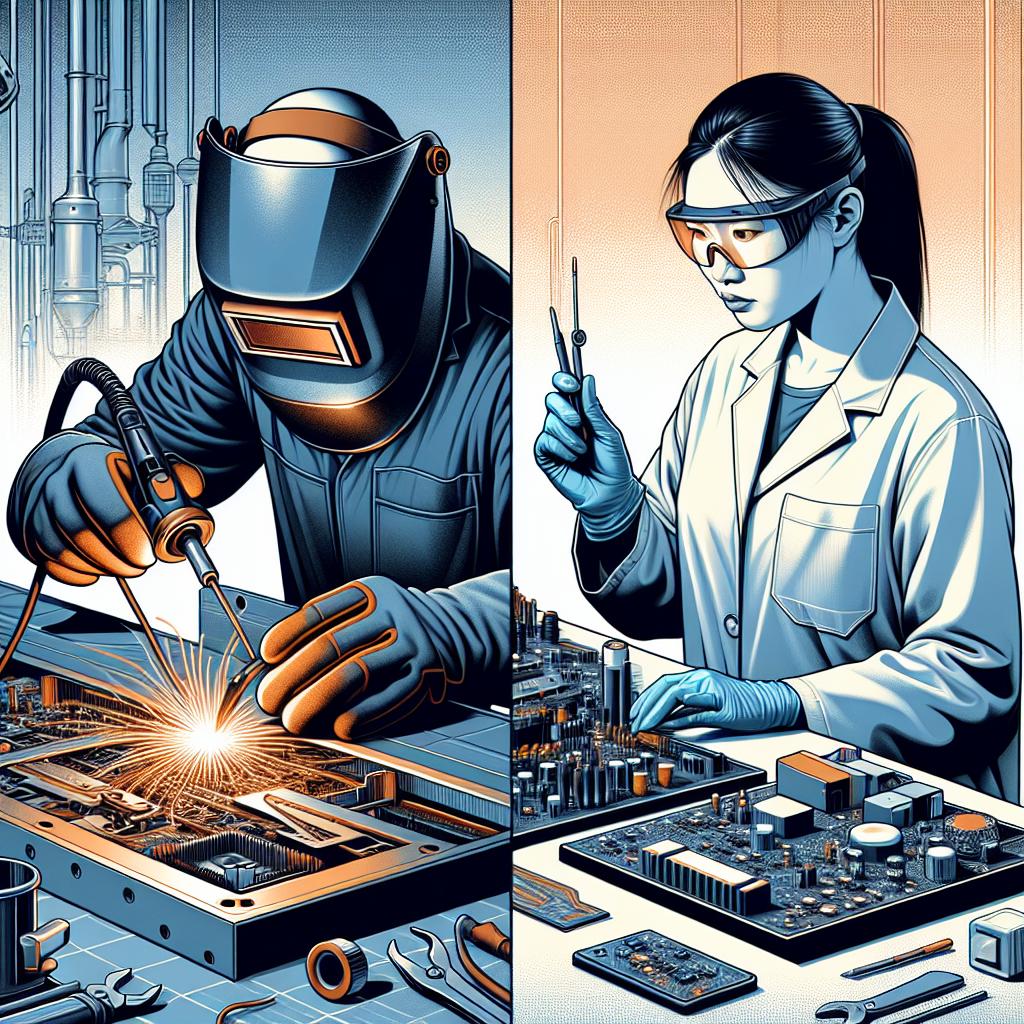
Current Landscape and Future Outlook of Welding and Electronics Research Careers

As of May 7, 2025, the landscape of welding and electronics research careers presents a complex interplay of ongoing challenges and emerging opportunities within various manufacturing sectors. Welding professionals continue to hold indispensable roles across critical industries, including shipbuilding, automotive, and machinery. However, the market is currently experiencing signs of short-term stagnation, particularly influenced by downturns in heavy industries and automotive sectors, which have traditionally been significant employers of welders. Recent analyses indicate that reduced manufacturing output and diminished investments in new projects are reshaping the demand for welding skills, engendering a cautious outlook for immediate job opportunities and salary growth in these fields.
Despite this stagnation in specific sectors, there is a discernible shift on the horizon. The aging workforce within the welding profession—characterized by a substantial percentage of workers nearing retirement—signals an impending labor gap that could foster renewed demand for skilled professionals. Moreover, advancements in specialized welding techniques and a potential resurgence in markets such as shipbuilding and aerospace are anticipated to drive future hiring needs. These sectors are primed for expansion due to increasing global demand for maritime transportation and stringent environmental regulations favoring innovative production methods.
On the electronics research front, while less data is available, there are promising indications of strength and growth potential in roles driven by automation and material innovation. Major employers, including Samsung Electronics and government-affiliated entities, continue to seek advanced research capabilities in areas such as renewable energy and AI technology. As the global economy evolves, the need for a workforce that can adapt to new technologies will be paramount, underscoring the vital intersection of welding and electronics research in maintaining the integrity of modern manufacturing.
Overview of Welding and Electronics Research Careers
Key Functions of Welding Professionals
Welding professionals play a crucial role across various manufacturing sectors, including machinery, shipbuilding, and automotive industries. As of May 7, 2025, these professionals are primarily responsible for the assembly and fabrication of metal structures, which involves joining materials through techniques such as arc welding, tig welding, and mig welding. Their expertise is indispensable for ensuring the structural integrity and quality of manufactured goods. With approximately 85% of incoming welders having a high school education or less, the emphasis on on-the-job skills and experience remains predominant in the field. As such, ongoing training and certification in specialized techniques are necessary to keep pace with evolving industry standards and technology advancements.
Additionally, the welding sector is experiencing shifts in workforce demographics, with a significant portion of the workforce being in their 50s and 60s. This trend suggests an impending need for workforce replacement as these senior welders retire. The sector is expected to see a slight increase in demand for welders in the mid-to-long term, particularly as growth is anticipated in shipbuilding and specialized welding applications.
Scope of Electronics Research Positions
Electronics research positions encompass a broad range of roles primarily located within large corporations, government-funded research institutions, and public entities. Major employers in this field, such as Samsung Electronics and Korea Electric Power Corporation, actively recruit both senior and entry-level researchers for a variety of specialized areas, including power systems, data analytics, and renewable energy technologies.
As of May 7, 2025, recent statistics indicate that graduates with advanced degrees in electronics engineering have a substantially higher employment rate; for instance, the average employment rate for recent master's graduates stands at 73.56%, compared to a mere 56.9% for those holding only a bachelor’s degree. This trend highlights the growing importance of advanced education and research skills in securing positions within the industry. Research roles often require expertise in fields like artificial intelligence, digital substations, and renewable energy systems, underscoring the necessity for a highly skilled workforce to meet the needs of modern technological advancements.
Strategic Importance in Manufacturing
The strategic importance of welding and electronics research careers is underscored by the significant role they play in maintaining the integrity and progression of the manufacturing sector. Welding is essential not only for structural applications but also for innovations in manufacturing processes. The link between welding technologies and advancements in automation is becoming increasingly significant as industries look to improve efficiency and reduce costs.
In tandem, electronics research contributes to developing new materials and processes that can enhance productivity across manufacturing processes. Notably, the integration of electronic systems into traditional manufacturing practices is creating new interdisciplinary roles that combine both fields. As sectors such as shipbuilding and aerospace gear up for a resurgence due to market demands, the necessary skilled workforce in welding and electronics is becoming a focal point for future growth strategies within these industries. Continuous investment in education and development in these fields is critical for aligning workforce capabilities with the technological advancements that are shaping the future of manufacturing.
Current Demand Trends in Welding Positions
Stagnation in Heavy Industry and Automotive
As of May 7, 2025, the welding job market is facing stagnation, particularly within the heavy industry and automotive sectors. This stagnation has been largely attributed to ongoing downturns in these industries, which have traditionally been major employers of welders. According to the latest findings from industry sources, demand has plateaued due to reduced manufacturing output and declining investments in new projects. The implications are significant; not only does this affect the number of available jobs but it also dampens the prospects for salary growth within these fields.
The data indicates that the heavy industry, which encompasses shipbuilding, construction, and manufacturing sectors, has seen a reduced hiring rate for welding positions. With many companies scaling back their operations amid an uncertain economic climate, the immediate outlook for welders in these sectors remains cautious. In the automotive industry, rapid shifts towards automation and electric vehicles have also contributed to a reevaluation of workforce needs, further complicating demand projections.
Short-Term Labor Market Analysis
In the short term, the labor market for welding professionals remains under pressure due to the confluence of sector-specific downturns and broad economic uncertainties. The market analysis suggests that while employers continue to seek skilled welders, particularly in specialized areas, the overall hiring pace has not significantly improved since the downturn began. This underscores a critical need for labor market stakeholders to adapt strategies that enhance workforce readiness and align skills with emerging demands.
Looking forward, projections regarding welding professionals indicate modest growth opportunities contingent upon industry recovery. Experts predict that while compensation levels are currently static, the eventual rebound in capital spending—especially in infrastructure projects—could catalyze re-employment in welding roles. However, this potential for recovery will hinge on the successful completion of ongoing policy initiatives aimed at revitalizing these key sectors.
Future Outlook and Growth Drivers
Expansion in Shipbuilding, Machinery, and Aerospace
As of May 7, 2025, industry forecasts indicate a promising outlook for the shipbuilding, machinery, and aerospace sectors. Following a period of stagnation in the heavy industries and automotive sectors, these fields are projected to experience significant growth. The anticipated increase in global demand for maritime transportation, coupled with rising investments in infrastructure, sets the stage for heightened shipbuilding activity. Additionally, advancements in machinery technology and the robust requirements of the aerospace industry suggest that skilled welding professionals will be crucial in meeting these demands.
The shipbuilding industry is expected to expand as environmental regulations push for more efficient vessel designs and production methods. This transition will likely require innovative welding techniques, particularly those that enhance structural integrity while minimizing material use. Moreover, as various nations prioritize local shipbuilding capabilities to support national security and trade interests, the demand for skilled workers in this domain is forecasted to rise significantly.
Replacement Demand from Retirements
A demographic shift is anticipated to further drive demand in the welding profession as significant numbers of seasoned workers retire. As detailed in the report on the current state of welding and electronics research careers, approximately 40% of workers in the welding sector are aged between 50 and 60. The estimated workforce reduction due to retirements indicates a critical need for new talent to fill these roles. Industry stakeholders must prepare for this impending gap by investing in training and apprenticeship programs aimed at attracting younger individuals into welding careers.
This replacement demand is not merely a matter of filling vacancies; it represents an opportunity for innovation and the integration of modern techniques in welding. New entrants, equipped with advanced training and a fresh perspective on technology, are likely to accelerate the adoption of novel welding practices. Thus, organizations that recognize and act upon this demographic challenge will be well-positioned to thrive in the revitalized market.
Advances in Special Welding Technologies
The ongoing developments in specialized welding technologies are poised to reshape the landscape of the welding profession. Innovations such as automation in welding processes and the integration of artificial intelligence are enhancing precision and efficiency. These technological advancements not only streamline operations but also improve safety standards across industries involved in manufacturing and construction.
Moreover, the growth of specialized welding techniques, particularly in high-demand sectors like aerospace and energy, is predicted to create more opportunities for specialized training and certifications. As industries increasingly adopt these technologies, the necessity for a workforce skilled in advanced welding methods will become paramount. The overall progress in welding technology presents a dual benefit: it addresses current labor shortages and equips the workforce with skills that are aligned with future industrial requirements.
Emerging Trends in Electronics Research Roles
Core R&D Focus Areas
As of May 7, 2025, the landscape of electronics research roles is significantly influenced by several core research and development focus areas. Notably, job opportunities in electronics research are thriving, particularly within large enterprises such as Samsung Electronics and various public institutions like Korea Electric Power Corporation (KEPCO). These organizations are actively recruiting professionals specializing in areas such as power systems, digital substations, data analysis, High Voltage Direct Current (HVDC) technology, and Energy Storage Systems (ESS).
The burgeoning research areas within electronics are increasingly oriented towards cutting-edge technologies, including Artificial Intelligence (AI), renewable energy integration, and advancements in digital substations. The emphasis on AI signifies a profound shift in the electronics domain, as professionals skilled in this area contribute to enhancing efficiency and developing smart systems capable of making autonomous decisions based on data.
Another influential aspect of this trend is the consistent recruitment of postgraduate researchers in non-profit research institutions, including the National Research Council of Science & Technology. These institutions are frequently seeking PhD candidates in materials, electronics, and energy sectors, aligning workforce capabilities with current technological advancements. This surge in R&D spending reflects a proactive approach within the electronics sector, aiming to foster innovation and address the challenges posed by evolving market demands.
Skills and Qualifications Outlook
The qualifications required for roles in electronics research continue to evolve, reflecting changes in technology and industry needs. As indicated in the latest data, the employment rate for graduate students in electronics engineering has reached an impressive 73.56%, surpassing the 56.9% rate for undergraduate degrees in the same field. This data highlights an increasing preference for advanced qualifications, with employers favoring candidates holding master's or doctoral degrees who can demonstrate relevant academic backgrounds and research experiences.
Skills that are becoming more sought after in the electronics research field include expertise in data science, alongside a firm foundation in traditional electronics principles. The ability to engage with emerging technologies such as AI and machine learning is critical, as these skills are essential for developing innovative solutions in various sectors, including power management and automation.
Moreover, professionals entering this field must be adaptable, not only to the technological landscape but to the collaborative formats that many research environments now employ. Effective communication skills, as well as the ability to work in interdisciplinary teams, are increasingly prized, particularly given the integrated nature of modern electronics R&D efforts. Thus, stakeholders, including educational institutions and vocational training providers, are urged to align curricula with these evolving industry demands to ensure that the workforce is adequately prepared for future challenges.
Wrap Up
In summary, the current landscape of welding roles is characterized by their pivotal importance to the manufacturing sector; however, they are simultaneously constrained by existing sectoral slowdowns. Looking ahead, demographic shifts resulting from an aging workforce, alongside projections of industrial revitalization particularly in shipbuilding and aerospace, are expected to create significant hiring needs in the coming years. As these sectors gain momentum, the demand for specialized welding technologies will require a new generation of upskilled talent equipped to embrace advanced methodologies and practices.
Additionally, the role of electronics research is similarly poised for growth, driven by ongoing innovations in automation and material sciences, despite the current limitations in accessible data. The ability for organizations to harness these trends will hinge on the strategic investment in targeted training programs aimed at equipping the upcoming workforce with the necessary competencies to meet evolving industrial demands. Stakeholders in both fields must prioritize collaboration between educational institutions, industry practitioners, and workforce development organizations to create a sustainable pipeline of skilled professionals who can thrive in the increasingly intertwined spheres of welding and electronics research. This proactive approach will be crucial in addressing labor shortages while innovating toward the future.