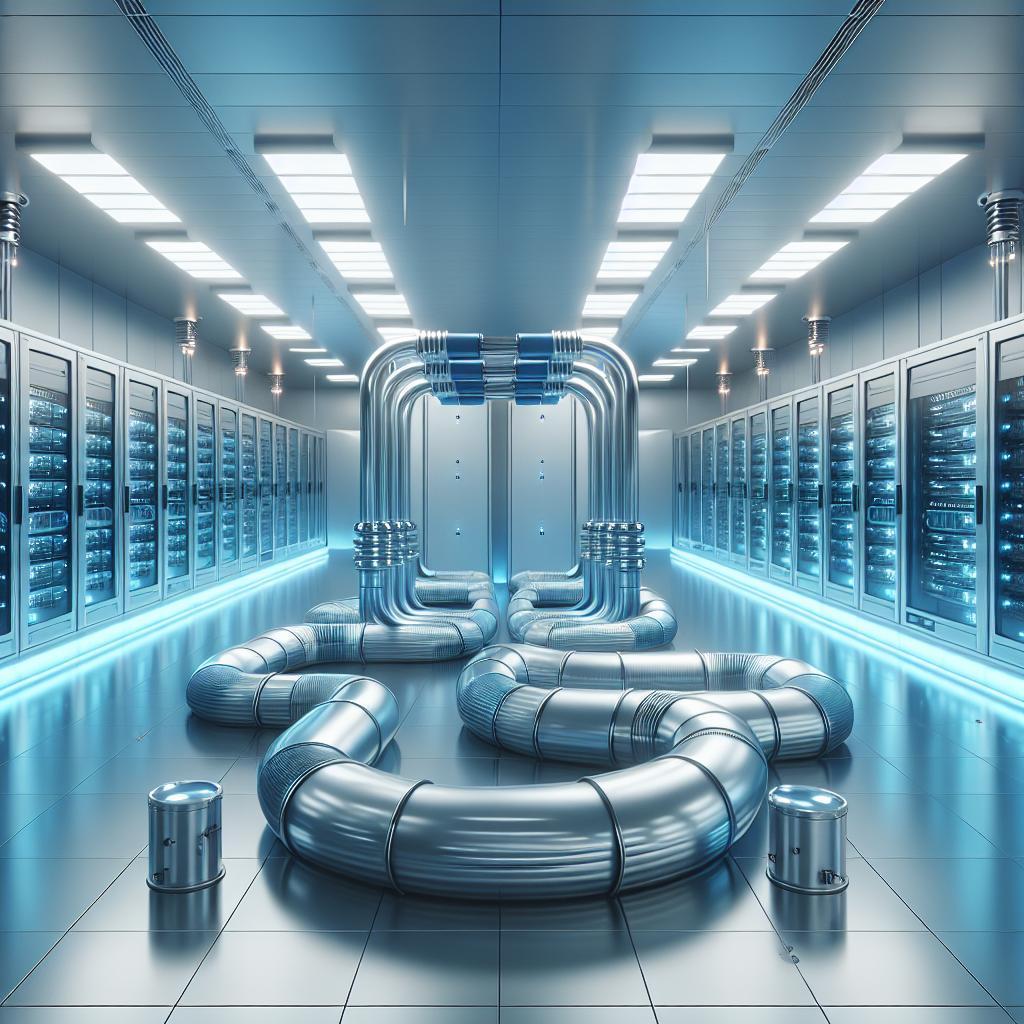
Liquid Cooling Revolution: Unveiling Key Advantages Shaping AI Data Centers

In the evolving landscape of artificial intelligence (AI) and high-performance computing, liquid cooling has emerged as a pivotal solution to the increasing thermal demands faced by modern data centers. The intersection of skyrocketing power densities due to sophisticated AI workloads has escalated the necessity for advanced cooling technologies, highlighting the limitations of traditional air cooling systems. As of May 4, 2025, the historical progression of liquid cooling technologies underscores their transformative role in achieving superior thermal management, improved energy efficiency, and optimized space utilization within data centers. Notably, studies have indicated that cooling can represent nearly 40% of a data center’s total energy consumption. This has underscored the urgent need for more sustainable alternatives such as liquid cooling, which can significantly reduce this burden. Emerging innovations in immersion cooling and direct-to-chip systems have demonstrated promising advancements, driving a trend towards these technologies among organizations seeking to mitigate operational costs and align with sustainability goals.
The core advantages of liquid cooling systems have become clear, particularly in sectors where heat output from AI processors can exceed 1,000 watts. These systems not only exhibit superior thermal management capabilities but also contribute to significant reductions in Power Usage Effectiveness (PUE). Enhanced energy efficiency, coupled with the ability to optimize rack-level densities, enables data centers to pack more servers into smaller physical spaces without compromising performance. Collaborative industry initiatives, including partnerships among major firms like Fujitsu and Supermicro, have been instrumental in bolstering these advantages through innovative energy conservation strategies. Furthermore, the market for liquid immersion cooling is projected to grow dramatically, with a burgeoning market size forecasted at approximately USD 6.9 billion by 2034, resulting from an increasing adoption of energy-efficient solutions. This reinforces the importance of liquid cooling as a key player in shaping future data center operations, underscoring its relevance amidst the rising computational needs driven by Artificial Intelligence.
As the current trajectory in technology and demand continues to evolve, the shift towards liquid cooling signifies not just an operational enhancement but also a crucial move toward sustainability in data management practices. With a keen eye on future opportunities, the ongoing development and integration of liquid cooling systems promise to redefine the cooling strategies central to modern infrastructure. Stakeholders must remain vigilant in addressing the challenges posed by integration and retrofitting, as well as the imperative of creating standardized protocols to facilitate this transition.
Evolution of Liquid Cooling Technologies in AI Data Centers
Historical drivers of adoption
The adoption of liquid cooling technologies in AI data centers has been significantly influenced by the rapid advancement of artificial intelligence (AI) and high-performance computing (HPC). As AI workloads became increasingly complex, the thermal demands placed on data center infrastructure outgrew the capabilities of traditional air cooling systems. Recent studies show that the energy consumption for cooling can constitute nearly 40% of a data center's total energy use, prompting the search for more efficient solutions. Moreover, with power densities rising and servers generating unprecedented amounts of heat, it became evident that liquid cooling was no longer a luxury but a necessary evolution in data center design. Trends indicate that as AI models scale to hundreds of billions of parameters, the demand for efficient heat management will only grow, further solidifying liquid cooling as the backbone of contemporary AI infrastructure.
Early immersion and direct-to-chip systems
The early iterations of liquid cooling technology primarily focused on two key systems: immersion cooling and direct-to-chip (D2C) systems. Immersion cooling involves fully submerging servers in thermally conductive liquids, providing exceptional heat transfer capabilities. Although effective, it raised concerns regarding hardware serviceability and the complexity of maintenance. Conversely, D2C systems utilized cold plates attached directly to processors and GPUs, circulating coolant to draw heat away efficiently. These systems have gained popularity due to their balance between performance and manageability, and are now extensively deployed in high-density AI data centers. By 2025, liquid-cooled setups have evolved to support the vastly increased thermal output generated by AI processors and GPUs, which can exceed 1,000W per chip, addressing challenges such as energy efficiency and reduced carbon footprint.
LLM training demands fueling design shifts
The rise of Large Language Models (LLMs) has dramatically influenced the design and infrastructure of data centers, making thermal management a fundamental concern. Training these models requires sustained high power and parallel processing capabilities, generating significant heat that traditional cooling methods struggle to manage. The demands of maintaining optimal operational temperatures have prompted a shift towards liquid cooling solutions, with many AI-focused enterprises reporting substantial improvements in Power Usage Effectiveness (PUE), often dropping to values like 1.1 or lower. As organizations face increasing operational costs tied to energy consumption, the emergence of liquid cooling technology has proven vital in enabling superior performance while managing energy expenditures and aligning with sustainability goals. Furthermore, this has initiated an accelerated shift in the data center landscape toward innovative and efficient cooling solutions, establishing liquid cooling as a key player in the future of AI infrastructure.
Core Advantages of Liquid Cooling Systems
Superior thermal management and high heat-flux removal
Liquid cooling systems have revolutionized the way data centers manage heat, particularly in the context of high-performance computing and AI workloads. These systems excel in superior thermal management by utilizing liquid as a heat transfer medium. Unlike air, which is significantly less effective at removing heat, liquids can absorb and transport heat more efficiently. For instance, water can conduct heat approximately 4,000 times more efficiently than air, providing the ability to handle much higher watt densities from advanced processors and GPUs. This capability is crucial as AI workloads often generate heat output that can exceed 1,000 watts per rack, necessitating robust cooling solutions for sustained performance and reliability.
Additionally, advancements such as Google's Project Deschutes highlight the benefits of liquid cooling systems. Known for achieving 99.999% uptime, these systems have been engineered to manage extremely high thermal loads by leveraging cold plates and flexible hoses. Such designs not only enhance reliability but also contribute to improved overall operational efficiency in hyperscale environments.
Energy efficiency and reduced PUE
One of the most compelling advantages of liquid cooling systems is their contribution to energy efficiency, which directly reduces Power Usage Effectiveness (PUE)—a key metric in data center performance. According to Flex's recent introduction of high-powered liquid cooling systems, these solutions can significantly cut energy consumption compared to traditional air-cooling methods. By utilizing a closed-loop system and eliminating the need for large, energy-consuming fans, liquid cooling can lower energy costs while maintaining optimal temperatures for machinery processing vast amounts of data.
Moreover, liquid cooling setups facilitate greater energy savings through a higher coefficient of performance (COP), meaning they effectively require less energy to provide the same cooling output as air systems. This is particularly beneficial as AI workloads continue to surge, pushing the energy demands of data centers to unprecedented levels.
Space optimization and rack-level density
As AI and high-density computing workloads increase, the need for space optimization within data centers is paramount. Liquid cooling systems provide a solution by allowing for higher rack density. Because they can effectively manage higher heat loads in smaller footprints, these systems enable data centers to pack more servers into the same physical space, maximizing utilization.
For instance, by adopting a liquid-cooled system, operators can redesign server layouts to accommodate more equipment, ultimately leading to improved performance without necessitating additional physical plant space. Google’s advancements in liquid cooling architecture also include designs that reduce server sizes, which further supports increased packing density while maintaining high thermal performance.
Enhanced reliability and reduced fan dependency
Reliability is a critical concern for data centers, especially those supporting mission-critical applications. Liquid cooling systems inherently enhance reliability by reducing dependency on mechanical fans, which are prone to failure and wear over time. By shifting to a liquid-based cooling approach, facilities can minimize moving parts, ultimately decreasing maintenance needs and increasing overall system longevity.
For instance, Google's liquid cooling distribution unit not only supports advanced temperature regulation but is also designed to deliver high availability. With fewer reliance on fans, the potential failure points within cooling systems are significantly lowered, leading to improved operational peace of mind for data center managers.
Market Trends and Growth Projections
Liquid immersion cooling market size and CAGR
The global liquid immersion cooling market is projected to experience substantial growth, with estimates suggesting a market size of approximately USD 6.9 billion by 2034. This marks a notable increase from USD 1.3 billion in 2024, reflecting a robust compound annual growth rate (CAGR) of 18.20% from 2025 to 2034. The strong demand for energy-efficient cooling solutions plays a critical role in driving this growth as data centers continue to evolve in response to rising computational needs, especially from AI workloads. According to industry analysis, North America currently holds the largest market share, accounting for over 36.1% in 2024, and this region is anticipated to sustain a leading position given its concentration of technology firms and high-performance computing applications.
Collaborative industry initiatives for efficiency
A significant trend in the liquid cooling sector is the collaborative efforts among key industry players to enhance energy efficiency. Notably, Fujitsu's partnership with Supermicro and Nidec aims to leverage their combined expertise to boost data center energy performance by as much as 40%. This initiative highlights how collaborations can yield innovative solutions that address operational inefficiencies associated with traditional air cooling systems. By integrating Fujitsu’s advanced software with Supermicro's high-density server technology and Nidec’s innovative cooling systems, these companies are paving the way for cleaner and more efficient data management practices. As such partnerships continue to reshape the industry, they exemplify a progressive approach towards sustainability and energy conservation in data center operations.
Regional investment strategies through 2034
Investment strategies across various regions are shifting towards liquid immersion cooling technologies as data centers seek to lower their carbon footprints and improve operational efficiencies. In particular, North America is leading the charge, driven by a combination of regulatory support and a mature market landscape that encourages operational innovation. For instance, major players are exploring eco-friendly initiatives, focusing on adopting advanced cooling technologies that integrate well with renewable energy sources. Furthermore, regions like Europe are expected to implement stricter environmental regulations aimed at enhancing energy efficiency in data centers, influencing investment decisions and driving the adoption of liquid cooling solutions. Overall, these regional strategies reflect an adaptive approach to emerging technologies and the pressing need for sustainability in data management.
Challenges and Future Directions
Integration and retrofitting obstacles
As liquid cooling technologies move to the forefront of data center infrastructure, integrating these systems into existing setups presents a significant challenge. Many current data centers were not originally designed to accommodate liquid cooling, which requires specialized piping, heat exchangers, and control systems. Consequently, retrofitting may involve extensive modifications to physical space, electrical distribution, and cooling management systems. This transition not only requires significant capital investment but also a careful planning process to minimize downtime during upgrades. However, companies like Google are paving the way with open-source solutions and robust design frameworks that will facilitate smoother integration and adaptation for various facilities. By proactively addressing these integration challenges, data center operators can enhance their infrastructures while capitalizing on the benefits of liquid cooling.
Safety and fire-suppression considerations
Safety remains a paramount concern in the deployment of liquid cooling systems, particularly regarding fire suppression. Traditional fire suppression methods often fall short when it comes to specialized fire risks associated with advanced cooling technologies and energy-dense systems. For instance, systems relying on immersion cooling might not fully comply with conventional fire safety measures, making the integration of innovative safety protocols crucial. Latest advancements, such as those outlined in the document discussing immersion cooling as a safer future for energy systems, highlight its ability to proactively manage thermal events. It emphasizes the importance of a dual approach that combines thermal management with encapsulated safety measures to prevent ignition and control fire spread. As a response to emerging risks, data center operators must prioritize safety mechanisms that protect both their assets and staff, fostering confidence in high-performance cooling technologies.
Standardization and interoperability needs
The transition to liquid cooling in data centers is further complicated by a lack of industry-wide standards and interoperability guidelines. As reported by Google in recent projects, like those under the Mt Diablo initiative, the call for standardized high-voltage power architecture reflects an understanding of the critical need for collaboration across different tech providers. The open sourcing of cooling solutions fosters innovation, encourages shared learning, and streamlines future deployments across various infrastructures. Greater adoption of standardized interfaces will ensure easier integration of cooling technologies, enabling seamless communication among devices, improving scalability, and reducing operational headaches. Data center stakeholders should engage in these collaborative efforts, supporting initiatives that promote standardization to drive greater efficiency and performance in liquid cooling implementations.
Outlook for next-generation cooling blueprints
The future of data center cooling is poised for transformation, driven by innovative technologies and the changing demands of AI workloads. As highlighted in discussions from the OCP 2025 EMEA Summit, initiatives like Google's Project Deschutes introduce next-generation cooling blueprints that promise to redefine how cooling is executed in complex environments. Features such as high-voltage power support, efficiency-focused architecture, and disaggregated cooling approaches exemplify the advancements that are on the horizon. Anticipated innovations will help alleviate existing thermal constraints, enabling data centers to meet the ever-increasing power densities associated with AI. Furthermore, these innovative cooling blueprints will likely incorporate enhanced data analytics and predictive monitoring systems to optimize performance dynamically. Embracing such futuristic perspectives will empower data center professionals to maintain competitive advantage while aligning with sustainability goals, establishing liquid cooling not just as a temporary solution but as a cornerstone of future data center operations.
Wrap Up
As of May 4, 2025, it is evident that liquid cooling has transitioned from a niche technology to a fundamental component of AI-driven data centers. This evolution is primarily characterized by its ability to deliver unmatched thermal control, significantly lower energy costs, and accommodate higher rack densities, which collectively address the critical challenges of contemporary data center infrastructure. The widespread adoption of liquid cooling technologies is pivotal for optimizing operational efficiency while aligning with sustainability objectives. However, for the full potential of liquid cooling to be realized, industry players must confront and overcome integration hurdles, establish robust safety protocols that prioritize fire suppression, and promote the development of open standards among vendors. Such initiatives are essential for the successful implementation of liquid cooling across varying data center environments.
Looking forward, data center operators and Original Equipment Manufacturers (OEMs) are encouraged to prioritize pilot projects that showcase the efficacy of these systems, invest in cross-industry frameworks for interoperability, and engage in collaborative efforts to validate safety precautions that ensure scalable and sustainable operations. As projections indicate substantial growth in the immersion-cooling segment, reaching an estimated market size of USD 6.9 billion by 2034, those positioned to tackle the outlined challenges will lead the charge in promoting energy-efficient, high-density computing environments. The future of data center cooling is promising, driven by innovative technologies and the continuous evolution of AI workloads, affirming the status of liquid cooling not merely as a temporary fix, but as an indispensable foundation for succeeding in next-generation data center performance.