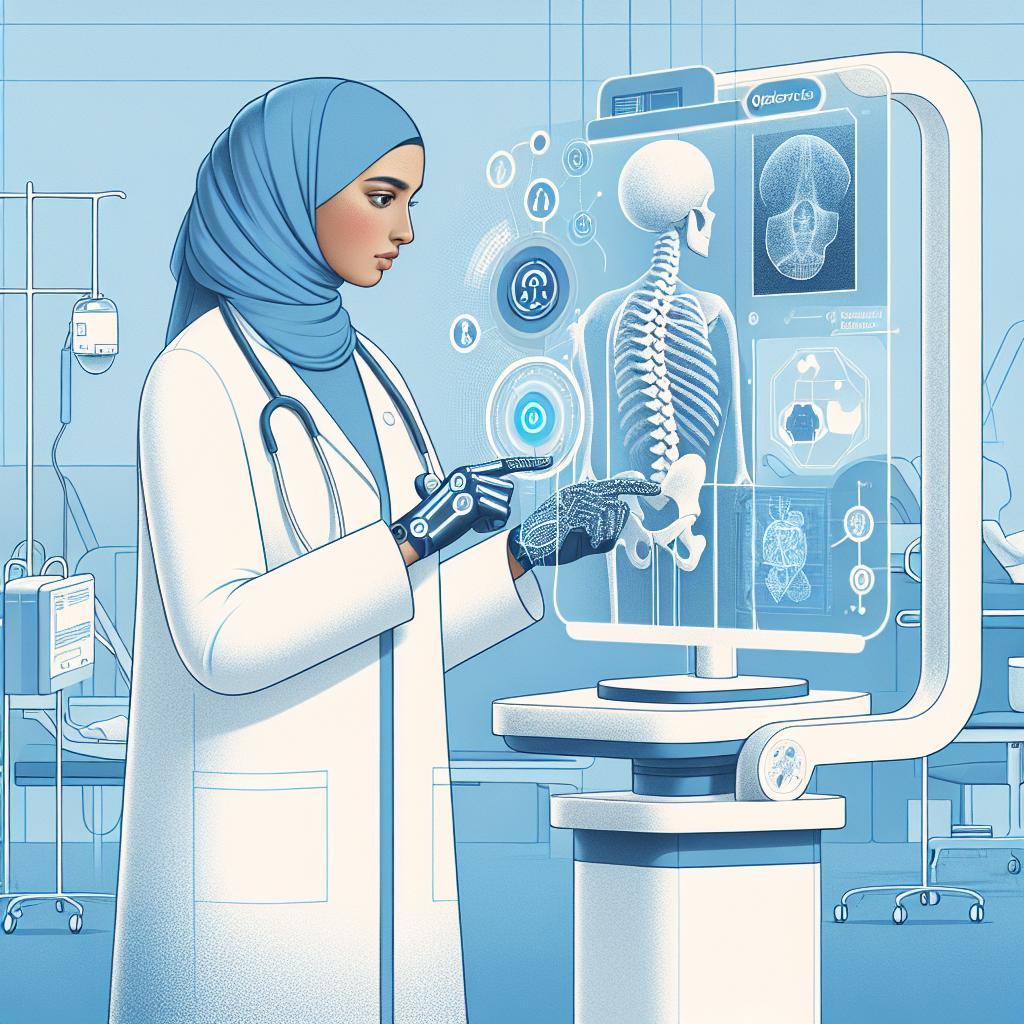
AI in Medical Imaging: Market Trends and Competitiveness of Lunit and Leading Players

The AI medical imaging sector has entered an era of remarkable growth, driven by substantial advancements in algorithmic technology, significant regulatory achievements, and strategic partnerships among key industry players. By May 2025, the global market for AI in medical imaging is projected to achieve a noteworthy valuation of USD 3.81 billion, a sharp increase from USD 2.8 billion in 2024, with expectations to reach USD 13.04 billion by 2032, bolstered by a staggering compound annual growth rate (CAGR) of approximately 34.6%. This upward trend is primarily fueled by an escalating demand for enhanced diagnostic precision, the burgeoning volume of medical imaging data, and the urgent need to improve workflow efficiencies in healthcare delivery systems. Additionally, the rapid evolution of deep learning algorithms, particularly in radiology, has substantially augmented the speed and accuracy of image interpretation, effectively creating a fertile ground for the proliferation of AI technologies in diagnostic applications.
Key drivers behind the thriving AI medical imaging landscape include groundbreaking innovations in deep learning processes and the increasing clinical acceptance of artificial intelligence tools among healthcare professionals. As of late 2023, it was reported that 75% of over 500 FDA-approved AI algorithms were focused on radiology, reflecting a significant rise from 70% in 2021. This trend points to a growing recognition within the healthcare community regarding the potential of AI to enhance diagnostic outcomes, optimize workloads, and streamline medical imaging workflows. Furthermore, the rising prevalence of chronic diseases necessitates the implementation of such innovations in clinical practices, thereby further stimulating market growth.
As the sector evolves, major regulatory milestones have significantly affirmed the credibility of AI in medical imaging, with Alibaba's Damo Panda recent acquisition of FDA breakthrough device designation for its cancer detection tool marking a critical endorsement for the industry. Lunit's strategic partnership with SimonMed Imaging highlights competitive dynamics, as it successfully unseats iCAD as a primary technology provider, indicating a shift in market power amongst leading firms. This period of transformation is characterized by an emphasis on improving diagnostic accuracy and patient outcomes. As stakeholders navigate this evolving landscape, understanding the complex interplay of market dynamics, regulatory frameworks, and technological advancements will be essential for future success.
Market Overview and Growth Projections
Global AI in medical imaging market size and forecast
As of May 2025, the global AI in medical imaging market has experienced significant growth, with a projected market size of USD 3.81 billion in 2025, reflecting a remarkable increase from USD 2.8 billion in 2024. The market is anticipated to continue its upward trajectory, reaching an estimated USD 13.04 billion by 2032, driven by a compound annual growth rate (CAGR) of approximately 34.6%. This growth trajectory can largely be attributed to the rising demand for enhanced diagnostic precision, increased volumes of medical imaging data, and a push for improved workflow efficiencies within healthcare systems. Furthermore, advancements in deep learning algorithms, particularly in the field of radiology, have significantly increased the accuracy and speed of image analyses, fostering a favorable environment for AI solutions to thrive in diagnostic settings.
Key drivers: algorithmic innovation and clinical adoption
The AI in medical imaging sector is propelled forward by several key drivers. Foremost among these are breakthroughs in deep learning and neural network technologies, which have enhanced image recognition, segmentation, and classification capabilities. For instance, innovations in these areas are enabling AI systems to interpret complex images with unprecedented accuracy, thereby supporting radiologists in diagnosing various medical conditions more effectively. Another crucial driver of market expansion is the increasing clinical adoption of AI tools. A notable trend observed is the integration of AI into existing clinical workflows, predominantly within radiology. As of late 2023, it was reported that 75% of over 500 FDA-approved AI algorithms are focused on radiology, marking a significant increase from 70% in 2021. This underscores a growing acceptance of AI among healthcare professionals as a means to improve diagnostic outcomes, manage workloads better, and streamline image acquisition and analysis processes. Consequently, the increasing prevalence of chronic diseases like cancer and cardiovascular conditions further fuels the necessity for such innovations in clinical environments.
CAGR projections through 2032 and beyond
The future outlook for the AI in medical imaging market remains robust, with projections indicating an ongoing strong CAGR through 2032 and beyond. According to recent forecasts, the market is expected to expand significantly, reaching values estimated at approximately USD 14.64 billion by 2029, reflecting a CAGR of 40.0%. This forecasted growth is predicated on several converging factors: the continuous integration of AI technologies with electronic health records (EHR), advancements in image-guided interventions, and a burgeoning emphasis on preventative healthcare practices. Furthermore, ongoing investments in telemedicine and digital health solutions are expected to foster the adoption of AI-driven imaging technologies across diverse healthcare settings. The AI in medical imaging market is thus gearing up for exponential growth, fueled by technological advancements, increasing global healthcare access, and the perpetual need for enhanced diagnostic accuracy. Stakeholders within this domain are advised to remain vigilant about emerging trends and innovations, as they present substantial opportunities for growth and market positioning in the coming years.
Regulatory and Technological Milestones
FDA breakthrough device designation for Alibaba’s cancer detection tool
On April 24, 2025, Alibaba Group received a significant authoritative endorsement from the U.S. Food and Drug Administration (FDA) for its cancer detection tool known as Damo Panda. This approval grants the tool a breakthrough device designation, facilitating an expedited review and approval process designed to enhance its market entry speed. Damo Panda is a cutting-edge deep learning model that effectively identifies pancreatic cancer by analyzing abdominal non-contrast CT scans. Research indicates this tool has a detection sensitivity that surpasses traditional radiologists, being 34.1% more effective in identifying the disease among asymptomatic patients.
Alibaba's deployment of Damo Panda includes trials conducted in China, where it has screened 40,000 individuals in Ningbo, yielding six early-stage cancer diagnoses, notably including cases overlooked by standard examinations. The FDA's clearance is poised to enhance market confidence in AI-driven solutions, reaffirming the potential of such technologies to revolutionize early cancer detection and patient outcomes.
Impact of regulatory approvals on market confidence
Regulatory approvals, such as the FDA designation for Alibaba's Damo Panda, significantly influence market dynamics and stakeholder confidence within the AI medical imaging sector. These endorsements serve as validated benchmarks of efficacy and safety, fostering trust among healthcare professionals, investors, and end users. The respected seal of approval from regulatory bodies not only augments the credibility of new technologies but also accelerates their adoption across clinical settings, propelling companies that gain such approvals ahead in competitive markets.
The rapid acceptance of AI tools in medical imaging can be attributed to these approvals, which mitigate apprehensions regarding the reliability of artificial intelligence in critical diagnostics. As more companies achieve similar regulatory milestones, the market is likely to experience a de facto norm where AI-assisted technologies are expected standard practices in medical diagnostics and patient management.
Emerging technologies shaping clinical workflows
The landscape of clinical workflows is undergoing profound transformation through the integration of emerging technologies in medical imaging. These innovations leverage artificial intelligence to enhance the speed and accuracy of diagnostic processes, streamline the workflow for radiologists, and ultimately lead to accelerated patient care. AI models are now capable of analyzing scans in mere minutes—tasks that previously took human experts hours or even days—allowing for timely interventions.
Moreover, advancements such as machine learning algorithms not only assist in diagnosis but also enrich image quality, maximizing visibility of potential abnormalities. Systems that integrate AI capabilities support radiologists by providing clinical insights that help prioritize cases based on urgency, thereby optimizing patient throughput in busy clinical environments.
Additionally, the continual evolution of AI technologies, combined with cloud computing and big data analytics, allows for vast amounts of patient data to be processed, resulting in predictive capabilities that can identify at-risk individuals and personalize treatment plans. As the healthcare sector adapts to these innovations, the implications for improved clinical outcomes and patient experiences are becoming increasingly apparent.
Profiles of Leading Companies
Lunit–SimonMed Imaging alliance and its market implications
The Lunit–SimonMed Imaging alliance represents a transformative moment in the U.S. breast cancer diagnostics landscape. Announced in May 2025, this partnership sees SimonMed Imaging, one of the largest private radiology networks in the United States, replacing its previous vendor, iCAD, with Lunit's advanced AI technologies and those of its subsidiary, Volpara Health. SimonMed, which operates approximately 170 imaging centers across 11 states, aims to enhance its clinical workflow and provide more accurate breast cancer screenings through the deployment of Lunit's INSIGHT DBT—a solution recently cleared by the FDA in 2023—along with Volpara's analytics capabilities. Through this partnership, Lunit solidifies its foothold in the lucrative U.S. breast cancer market, which is experiencing increased demand for AI-driven diagnostic solutions. Lunit's CEO, Brandon Suh, emphasizes that this collaboration is not merely transactional; it represents a strategic shift towards integrating AI into everyday clinical practice, aligning with a broader trend of seeking precision and efficiency in healthcare delivery. As SimonMed implements Lunit's technologies as part of its Personalized Breast Cancer Detection program, the implications for Lunit are profound, particularly as they seek to outpace competitors like RadNet, which remains a strong presence in the imaging market.
iCAD’s prior market position and recent displacement
iCAD, once a prominent player in the AI breast cancer diagnostics arena, has seen its position weaken significantly due to a recent partnership shift involving SimonMed Imaging. Prior to this alliance, SimonMed had used iCAD’s 'ProFound AI' since 2019. However, following iCAD's acquisition by RadNet, SimonMed opted for Lunit's solutions, indicative of a critical realignment within the competitive landscape. While iCAD had previously emphasized innovation with features such as short-term risk prediction and breast arterial calcification detection, concerns about Lunit's ability to attract iCAD's customer base remain. Market analysts suggest that performance differences among AI tools may not be substantial, indicating that decisions to switch vendors will increasingly hinge on workflow efficiencies and how well these technologies address clinical pain points. Despite iCAD's historical standing, the alliance between Lunit and SimonMed signals a potential shift in market leadership that may favor Lunit, particularly as it seeks to expand beyond breast cancer imaging and address broader healthcare needs.
Alibaba’s Damo Academy tool and commercial prospects
Alibaba's Damo Academy has achieved a notable milestone with the FDA's breakthrough device designation for its Damo Panda model, an artificial intelligence-powered tool designed for early detection of pancreatic cancer. This advancement underscores Alibaba’s commitment to integrating AI into cancer diagnostics, marking a significant step for the Damo Academy since its inception in 2017. The Damo Panda model utilizes deep learning algorithms trained on a large dataset of abdominal non-contrast CT scans and has demonstrated a sensitivity that surpasses traditional radiological methods by over 34%. Currently deployed in trials across China, Damo Panda has screened a significant number of patients and successfully identified several early-stage cancers. As Alibaba plans to broaden the model's reach through domestic and international partnerships, the potential for Damo Panda to impact cancer screening practices globally is significant. This initiative aligns well with a growing global trend leveraging AI for enhancing diagnostic capabilities in healthcare, positioning Alibaba as a strong contender in the competitive landscape of medical AI technologies.
Competitiveness Analysis: Lunit Versus Other Players
Strategic advantages of Lunit’s AI solutions
Lunit's strategic partnership with SimonMed Imaging positions it favorably within the U.S. AI diagnostics market. By fully replacing iCAD’s 'ProFound AI' with its own technologies, Lunit is benefitting from enhanced visibility and credibility in a market that continues to experience disruptions following significant acquisitions, such as iCAD's acquisition by RadNet. The integration of Lunit’s proprietary AI solution INSIGHT DBT into SimonMed’s clinical workflows not only bolsters Lunit’s product offerings but also provides data-driven insights that can further improve diagnostic accuracy. This partnership highlights Lunit's commitment to advancing personalized medical imaging solutions, catering directly to market demands for more effective and tailored breast cancer screening services. Moreover, Lunit's collaboration with Volpara Health adds a layer of operational efficiency and quality assurance to its offerings, promoting an integrated approach to imaging diagnostics.
Comparative performance against iCAD incumbents
Despite Lunit's strategic maneuvers, a comprehensive comparison with incumbent iCAD reveals that Lunit still trails in overall market share, particularly as iCAD continues to innovate its product line. Experts caution that while Lunit's partnership with SimonMed is a significant step in establishing a foothold, the U.S. breast AI diagnostics market remains fragmented with no single dominant player. iCAD's recent advancements, like features for short-term risk prediction and the detection of breast arterial calcification, illustrate competitive strengths that could be leveraged once fully integrated under RadNet's operations. The competition thus remains intense, as customers assess performance nuances and essential workflow efficiencies, which Lunit has yet to clearly demonstrate against iCAD’s more established capabilities.
Emerging competition from assorted technology entrants
The landscape of AI in medical imaging is witnessing the emergence of numerous technology entrants, further complicating Lunit's ambitions to consolidate market leadership. Companies such as DeepHealth, ScreenPoint, and Therapixel are also vying for positions in this rapidly evolving field, each employing diverse strategies that resonate with clinical challenges faced by radiologists. Firms like RadNet have the advantage of existing infrastructure and a vast network of imaging centers which sustain competitive advantages not easily replicable by newer entrants. As these competitors continue to innovate, Lunit's capacity to adapt and respond with superior workflow solutions, along with its strategic alignments with healthcare networks, will be essential in navigating a crowded marketplace where technological capabilities can often blend into homogeneity.
Wrap Up
As of May 2025, the AI in medical imaging market stands at a pivotal moment poised for continued expansion, undergirded by robust CAGR forecasts, crucial regulatory endorsements, and transformative strategic partnerships. The alliance between Lunit and SimonMed, prominently noted in the report, signifies not just a competitive maneuver but the potential for a broader renaissance in the landscape of breast cancer diagnostics. Additionally, Amazon's FDA breakthrough designation for its Damo Panda model reaffirms the increasing validation of AI solutions within clinical settings and their potential to reshape patient care paradigms.
Stakeholders in this dynamic sector are encouraged to closely monitor emerging clinical studies and harness the momentum of strategic collaborations while prioritizing pathways to regulatory approval. Such actions will be critical in capitalizing on forthcoming growth opportunities as the market evolves. Looking ahead, research focusing on the real-world performance of AI technologies, the establishment of interoperability standards, and the integration of multimodal artificial intelligence into existing healthcare infrastructures will be paramount in enhancing diagnostic accuracy and ensuring market relevance.
The interplay of innovation, regulation, and strategic partnerships will ultimately shape the future of AI in medical imaging. As companies strive to gain competitive advantages, the emphasis on creating effective, efficient, and reliable AI-driven diagnostic solutions will likely become a defining characteristic of the industry. The unfolding narrative within this sector suggests an exciting horizon, filled with the promise of transformative healthcare solutions and improved patient outcomes.