Transforming the Life Logistics Service Industry: Market Trends, Technological Innovations, and Growth Strategies

TABLE OF CONTENTS
- Summary
- Market Landscape and Forecast
- Parcel and Freight Delivery Evolution
- On-Demand and Mobile Logistics Services
- Automation and Emerging Technologies
- Sustainability and Supply Chain Resilience
- Strategies for Growth and Competitive Advantage
- Conclusion
1. Summary
As of April 24, 2025, the life logistics service industry is undergoing a transformative phase that integrates advancements in technology and the evolving demands of the global market. Central to this transformation is the remarkable growth trajectory of the logistics market, projected to experience a compound annual growth rate (CAGR) of 7.2%, culminating in a market size of approximately USD 518.08 billion by 2032. This growth is predominantly driven by globalization, the acceleration of e-commerce, and the digitalization of logistics operations through the incorporation of Internet of Things (IoT) devices and artificial intelligence (AI). The e-commerce fulfillment service market is characteristically following suit, expanding swiftly as businesses seek to meet consumer expectations for rapid delivery. Companies are increasingly opting for third-party logistics solutions to streamline their supply chains and improve service efficiency. Moreover, the fast-developing smart logistics market, expected to reach USD 201 billion by 2032 with a CAGR of 20.7%, exemplifies the integration of innovative technologies that facilitate real-time visibility, inventory management, and route optimization. The rise of last-mile delivery services is positioned to grow substantially, driven by soaring e-commerce demands and advanced delivery solutions involving drones and autonomous vehicles. As traditional carriers witness a shift in market share to alternative delivery options, the focus on delivering agility and lower costs is paramount. On the technological frontier, automation has moved from a conceptual phase to an integral aspect of operations. Companies are investing heavily in robotics and automated systems that promise not only efficiency gains but improvements in customer service delivery. Moreover, sustainability has emerged as a critical consideration, with electrification of freight vehicles and innovative supply chain strategies being adopted to address environmental concerns and ensure supply chain resilience against global disruptions. The current landscape thus calls for a recalibrated approach where stakeholders must harness technological advancements, adapt to consumer expectations, and embrace sustainable practices.
2. Market Landscape and Forecast
2-1. Global logistics market size and CAGR to 2032
As of April 2025, the logistics market is projected to experience considerable growth, with estimates indicating a CAGR of 7.2% from 2025 to 2032. This expected growth translates to a market size reaching approximately USD 518.08 billion by the end of the forecast period. This increase is primarily driven by globalization, the expansion of e-commerce, and advancements in technology. The ongoing digital transformation within logistics operations, including the implementation of IoT and AI, is pivotal in enhancing efficiencies and reducing operational costs. Furthermore, regions like North America and Asia-Pacific are expected to lead in market expansion due to their technological advancements and large-scale adoption of smart logistics solutions.
2-2. E-commerce fulfillment service growth
The e-commerce fulfillment service market is set to witness significant growth over the coming years, projected to expand rapidly until 2032. With a shift towards online shopping, businesses are increasingly reliant on third-party fulfillment providers to improve delivery speeds and efficiency. Consumer demand for faster, same-day, and next-day deliveries is incentivizing companies to optimize their supply chains and outsource logistics to specialized providers. This transition is further supported by advancements in technology, including automation and data analytics, which are crucial for streamlining operations and enhancing customer experience.
2-3. Smart logistics market projections
The smart logistics market is projected to reach a valuation of USD 201 billion by 2032, growing at a remarkable CAGR of 20.7%. This surge is largely attributed to the rapid integration of IoT, AI, and big data analytics in logistics and supply chain management. These technologies facilitate real-time visibility, improve inventory management, and optimize transport routes, ultimately enhancing operational efficiencies. North America currently leads this market segment due to its advanced technological adoption, but Asia-Pacific is emerging as a significant growth region fueled by the escalating demands of the e-commerce sector.
2-4. Automotive logistics market trends
The automotive logistics sector is anticipated to grow substantially, with forecasts estimating the market will reach USD 495.54 billion by 2033, reflecting a CAGR of 5.17% from 2025. This growth is driven by globalization, increased vehicle production, and evolving consumer preferences towards electric and hybrid vehicles. The industry is witnessing trends such as the adoption of green logistics practices and the integration of advanced technologies like AI and IoT for enhanced supply chain visibility. Moreover, the rise of online vehicle sales necessitates streamlined logistics solutions to meet consumer expectations for fast and efficient delivery services.
3. Parcel and Freight Delivery Evolution
3-1. Role of real-time parcel tracking
In today’s logistics landscape, real-time parcel tracking has transitioned from a desirable service to an expected standard among consumers. Companies like Estafeta in Mexico have exemplified this evolution by offering comprehensive tracking methods powered by technology. Estafeta Rastreo, for instance, enables users to monitor their packages at each step of the delivery process: from pickup to final delivery. This system utilizes barcode and QR code scanning alongside IoT devices for GPS tracking, which ensures accurate updates for both logistics operators and customers. Such technologies not only enhance customer satisfaction but also support operational efficiency by reducing the need for customer service inquiries.
3-2. Shift in market share from legacy carriers
The parcel delivery market is witnessing a significant shift in share away from traditional carriers such as FedEx, UPS, and the U.S. Postal Service. A report by ShipMatrix released in April 2025 highlights that alternative carriers and retailers' in-house teams successfully increased their market share from 7% to 10% in 2024, delivering over 2.3 billion packages domestically. This trend reflects a growing consumer preference for agility and lower costs, driven in part by innovations during the COVID-19 pandemic that prompted businesses to diversify their delivery options. Major retailers like Walmart and Target have leveraged their extensive networks to provide efficient delivery solutions that further challenge the dominance of established carriers.
3-3. Growth of last-mile delivery market
The last-mile delivery segment is entering a phase of rapid expansion, projected to grow from approximately $31.42 billion in 2023 to around $106.42 billion by 2030, exhibiting a CAGR of 19.01%. This growth is fueled largely by the surge in e-commerce, where customer expectations for speed and efficiency have never been higher. The increasing demand for sophisticated logistics solutions has led to the integration of advanced technologies such as drones and autonomous vehicles, significantly enhancing delivery capabilities. As companies strive to keep pace with consumer expectations, investments in real-time tracking, route optimization, and eco-friendly delivery options are likely to dominate the market landscape. Additionally, emerging markets are expected to play a critical role, as infrastructure development and internet penetration create new opportunities for last-mile logistics services.
4. On-Demand and Mobile Logistics Services
4-1. Gig-economy platforms in delivery
The rise of gig-economy platforms has profoundly transformed the logistics landscape. Companies like Uber have set benchmarks by leveraging technology to connect consumers with local service providers through user-friendly apps. These platforms have been particularly successful in adapting to the varied demands of consumers who increasingly expect rapid delivery options. For instance, Uber Direct has found that a substantial 52% of consumers are willing to pay a premium for goods to be delivered within two hours. However, this swift shift has not been uniformly matched by retailers, as only 22% have adopted on-demand delivery services, indicating potential growth avenues for logistics firms willing to navigate operational challenges.
This disparity highlights the level of consumer interest versus retailer readiness to provide immediate delivery solutions. With more than half of consumers showing a willingness to pay for expedited service, it is evident that gig-economy platforms are capitalizing on a lucrative niche. As these platforms continue to evolve, their integration into the logistics ecosystem promises to enhance delivery speed while offering competitive advantages to businesses adept at utilizing such technologies.
4-2. Consumer willingness to pay for rapid retail delivery
The willingness of consumers to pay for rapid retail delivery underlines a significant trend in consumer behavior that logistics operators must address. According to a recent study published by Uber Direct and Retail Economics, a majority of consumers (52%) expressed readiness to spend extra for goods delivered swiftly, particularly when the value of their purchase is substantial, such as spending over £100. This growing consumer expectation is reshaping the logistics and retail landscape, where traditional delivery windows of one to two days are no longer deemed sufficient.
Despite the slow expansion of on-demand services within the retail sector — only 22% of retailers currently offer such delivery options — the demand signals a burgeoning opportunity for logistics companies. Retailers must find ways to tackle the barriers to delivering faster services, which include operational challenges and cost implications. By cooperating with established delivery providers, retailers can unlock the potential of on-demand services, ensuring customer satisfaction in an increasingly impatient consumer market.
4-3. Startup playbooks for fleet tracking
Startups aiming to thrive in the on-demand logistics arena can draw valuable insights from established players like Uber. A significant component of Uber’s success is its sophisticated fleet management through advanced fleet GPS tracking technology. This technology not only ensures operational efficiency by monitoring vehicle locations in real-time but enhances customer experiences through timely updates on delivery statuses and estimated times of arrival (ETAs). For startups, adopting a robust GPS tracking system is essential—not merely for compliance, but as a strategic asset that elevates service quality and operational accountability.
Emphasizing the importance of real-time data, startups can utilize this information for dynamic decision-making, such as rerouting delivery vehicles based on traffic conditions, which directly impacts service speed. Moreover, efficient fleet tracking contributes to better driver performance assessments, offering a dual advantage of operational improvement and risk management. The key takeaway for startups is to recognize that effective fleet tracking can help create competitive advantages by not only streamlining deliveries but also enhancing customer trust through transparent delivery processes.
5. Automation and Emerging Technologies
5-1. Strategic adoption of automation in operations
In 2025, forward-thinking logistics companies are increasingly focusing on strategic automation as a means to enhance operational excellence and drive cost optimization. Key industry players such as Arnott’s Group and Coles have made significant investments in automation technologies, with Arnott’s Group allocating $65 million to establish an Automated Distribution Centre that increases storage capacity and streamlines logistics processes. Coles has likewise committed $1 billion to build robotic warehouses designed to maximize distribution efficiency. These moves illustrate the industry's recognition that automation is not merely about replacing human workers; instead, it is viewed as an essential tool for augmenting workforce capabilities. As logistics firms navigate complex operational environments, decision-makers are encouraged to identify high-impact automation opportunities. This involves thoroughly evaluating where automation can yield the greatest benefits, be it through cost reduction, process optimization, or enhancement of customer service. This strategic outlook ensures that companies can leverage automation to improve operational workflows while maintaining a skilled labor force.
5-2. Growth of logistics automation market
The logistics automation market is experiencing robust expansion, anticipated to reach USD 25 billion by 2030, with a compound annual growth rate (CAGR) of 11.21%. The significant growth is largely attributed to the increasing demand for efficient supply chain management and the necessity to create safe working environments, especially in light of recent trends emphasizing heightening workplace safety standards. In recent years, the proliferation of e-commerce has further catalyzed this growth, as companies strive to meet consumer demand for rapid fulfillment and delivery services. As warehouses expand to accommodate a growing variety of products, the urgency of adopting automated solutions has intensified. As noted in a report by Report Ocean, logistics automation is evolving from mechanized support systems to more advanced operator-free technologies, representing a maturation process within the industry. Moreover, the ongoing advancements in robotics and automated vehicle technologies are foreseen to expand applications in logistics and warehousing significantly, unlocking a broader range of opportunities for adoption in the sector.
5-3. Impact of drones and robots on quick commerce
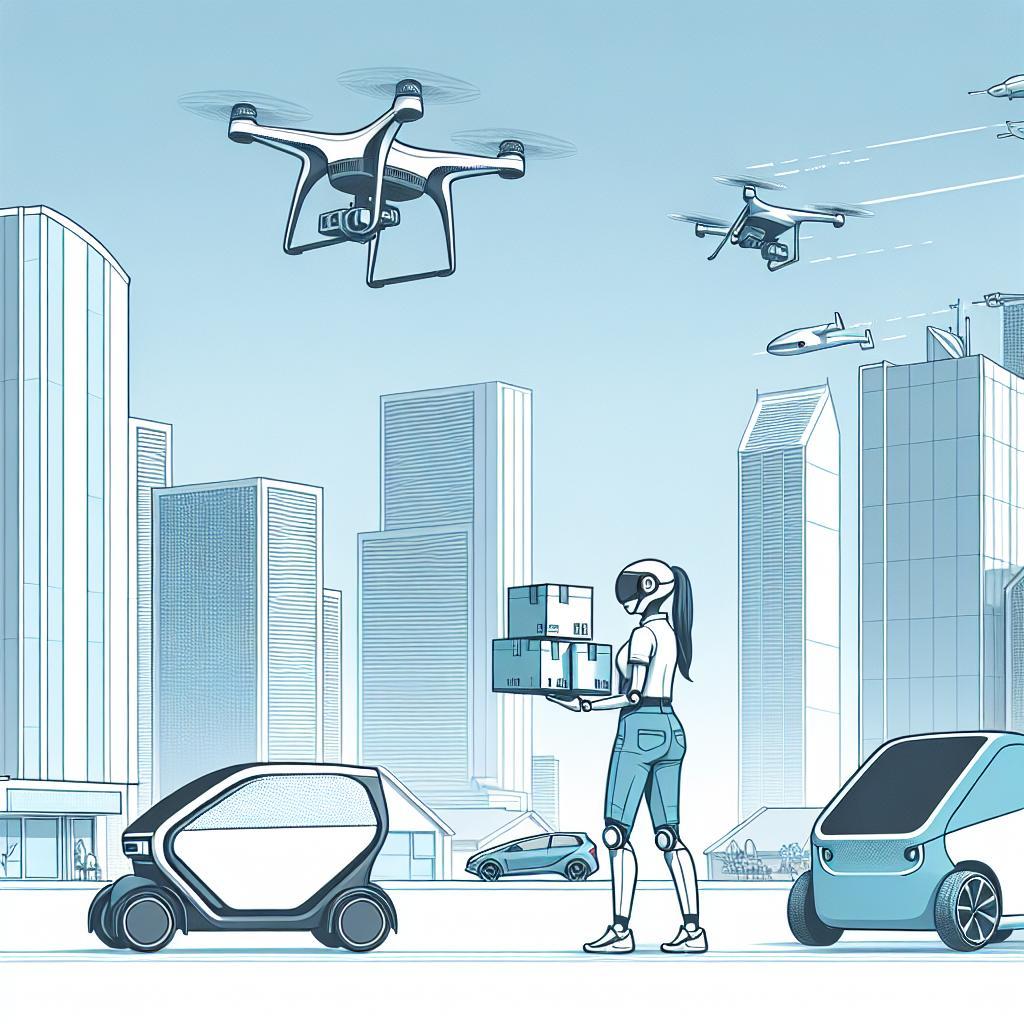
The rise of quick commerce is revolutionizing the last-mile delivery landscape, with drones and robots playing pivotal roles in this transformation. Quick commerce, revolving around the delivery of goods within stringent time frames—often within the hour—leans heavily on the capabilities of these emerging technologies to fulfill consumer demands for immediacy and reliability. Drones, equipped with the ability to navigate urban landscapes and bypass traffic congestion, are particularly suited for reducing delivery times significantly. Their use represents a paradigm shift in accessing hard-to-reach areas rapidly compared to conventional delivery methods. The environmental advantages of drones are noteworthy as well; they typically have a lower carbon footprint than traditional delivery vehicles, aligning with corporate sustainability objectives. On the ground, autonomous delivery robots are making significant strides in efficiency as they traverse sidewalks and urban pathways to deliver orders. Their capacity to carry multiple orders simultaneously allows for continuous operation, thereby enhancing overall delivery efficacy. However, the adoption of these technologies is not without challenges—including safety concerns, infrastructure needs, public acceptance, and stringent regulatory frameworks. Businesses must navigate these hurdles while capitalizing on the myriad benefits that drones and robots can offer, thereby positioning themselves competitively in a rapidly evolving market.
6. Sustainability and Supply Chain Resilience
6-1. Electrification of freight trucking
The electrification of freight trucking is rapidly emerging as a pivotal component in the United States' efforts to decarbonize its transportation sector. As of April 2025, the transportation sector has overtaken electricity generation as the leading source of greenhouse gas emissions in the U.S., with heavy-duty trucking contributing significantly to this crisis. According to a strategic analysis report released in April 2025, electric trucks have been recognized as a more carbon-efficient option than traditional rail transport in eight states, demonstrating a shift that could challenge long-standing logistics paradigms. Current challenges to electrification include outdated electrical grid infrastructures and the operational complexities associated with deploying high-powered electric truck charging stations. These challenges have led to significant delays and constraints in scaling electrification efforts. For example, logistics hubs frequently encounter grid connection delays that impede the rapid rollout of necessary infrastructure. To overcome these limitations, recent proposals advocate for modular microgrid solutions that can facilitate faster deployment through localized, renewable energy sources and battery buffering. This approach not only mitigates dependency on the broader electrical grid but also helps offset the high energy demands from electric trucks, making it a crucial strategy for logistics firms aiming to transition to electric fleets. Companies like PepsiCo have begun implementing these microgrid systems, showcasing their ability to manage high charging loads with significantly reduced operational costs. The adaptation of dynamic pricing models further allows operators to optimize charging times based on energy cost fluctuations, providing a financial incentive for early adoption and extensive use of electric trucks.
6-2. Building resilient supply chains through technology and diversification
In light of recent global disruptions, enhancing supply chain resilience has become imperative for companies across various sectors, including FMCG (Fast-Moving Consumer Goods). A report published in April 2025 emphasizes that organizations need to employ advanced technologies, strategic planning, and diversification strategies to withstand unforeseen challenges. One of the critical findings from this report is the escalating costs of raw materials and logistics, highlighting the urgency for firms to innovate and streamline their operations to align with rising expenses. The report indicates that the FMCG sector has experienced a significant increase in disruptions, with a 38% uptick in incidents recorded in 2024. These disruptions have been attributed to geopolitical tensions, environmental challenges, and cybersecurity threats. To navigate this complex landscape, firms are advised to prioritize business-critical functions and engage in scenario-based planning to bolster their responsiveness to potential disruptions. Additionally, diversifying supply sources is crucial. By reducing reliance on high-risk suppliers—particularly those in geopolitically unstable areas—companies can build a more robust supply chain capable of withstanding shocks. Technology plays a vital role in this endeavor, with innovations such as AI and IoT being leveraged to improve visibility and interconnectivity across supply chains. This enhanced collaboration can lead to more agile operations, enabling firms to adapt quickly to changing market conditions and consumer demands. As organizations continue to grapple with the lessons learned from previous supply chain disruptions, the transition from a reactive to a proactive approach is essential. By focusing on resilience-building strategies, firms can better position themselves for sustainable growth in an increasingly unpredictable environment.
7. Strategies for Growth and Competitive Advantage
7-1. Leveraging data-driven decision making
In an increasingly data-centric world, leveraging data-driven decision making has become essential for logistics companies aiming to enhance their competitive stance. By effectively utilizing analytics, companies can streamline operations, improve customer engagements, and make informed strategic choices. This approach enables them to identify market trends, optimize supply chain management, and refine customer service processes. Furthermore, companies like Uber have illustrated how data can transform logistics operations, providing real-time insights that enhance operational responsiveness. Startups and established firms alike are encouraged to adopt data platforms that allow them to aggregate and analyze vast amounts of information to derive actionable insights.
7-2. Integrating real-time visibility solutions
The integration of real-time visibility solutions is pivotal for logistics providers to maintain a competitive edge. These solutions enable companies to gain comprehensive insights into their supply chain processes, from production to delivery. Technologies such as GPS tracking, IoT devices, and advanced analytics platforms allow firms to monitor inventory levels, track delivery statuses, and manage fleet operations more effectively. According to insights derived from recent analyses, businesses that implement these technologies can significantly reduce delays, improve customer satisfaction, and enhance overall operational efficiency. Implementing systems that provide continuous updates not only strengthens a company's tracking capabilities but also fosters greater trust with clients who expect transparency and timely information regarding their shipments.
7-3. Balancing cost, speed, and sustainability
Achieving a balance between cost, speed, and sustainability is a complex yet crucial challenge for logistics providers. As consumer expectations evolve, firms must strive to deliver services that are not only efficient and cost-effective but also environmentally friendly. The logistics sector is distinctly positioned to address these needs by adopting practices that minimize carbon footprints while maintaining rapid delivery times. Recent reports emphasize the importance of investing in electrification of fleets and sustainable logistical practices, which not only comply with growing regulatory pressures but also appeal to environmentally conscious consumers. Companies are increasingly recognizing that sustainability can serve as a unique selling proposition, distinguishing their services in a crowded marketplace.
Conclusion
In conclusion, the life logistics service industry stands at a crucial juncture characterized by significant market growth and increased technological integration. The surge in e-commerce and a heightened focus on digital transformation underscore the need for traditional parcel and freight carriers to adopt real-time visibility solutions and diversify their offerings to maintain competitive advantage. As on-demand platforms and quick commerce evolve, the reliance on agile mobile delivery fleets backed by consumer-driven pricing strategies will become increasingly critical. The advantages offered through automation—such as cost efficiency driven by robotics, speed improvements via drones, and enhanced operational workflows powered by AI—represent clear pathways for stakeholders to optimize their logistics operations. Concurrently, the push toward sustainability is reshaping industry standards, as electrification and resilient supply chain designs address the dual pressures of regulatory compliance and risk management. With the strategies identified, stakeholders are urged to embrace a holistic approach: invest in interoperable platforms, emphasize sustainable infrastructure, and enhance data-driven operations. Such measures represent not just a reaction to current market dynamics but a proactive strategy to unlock enduring value and bolster competitiveness as the logistics industry ventures toward 2030 and beyond. This forward-looking perspective will ensure that stakeholders are well-equipped to navigate the complexities of an ever-evolving landscape.