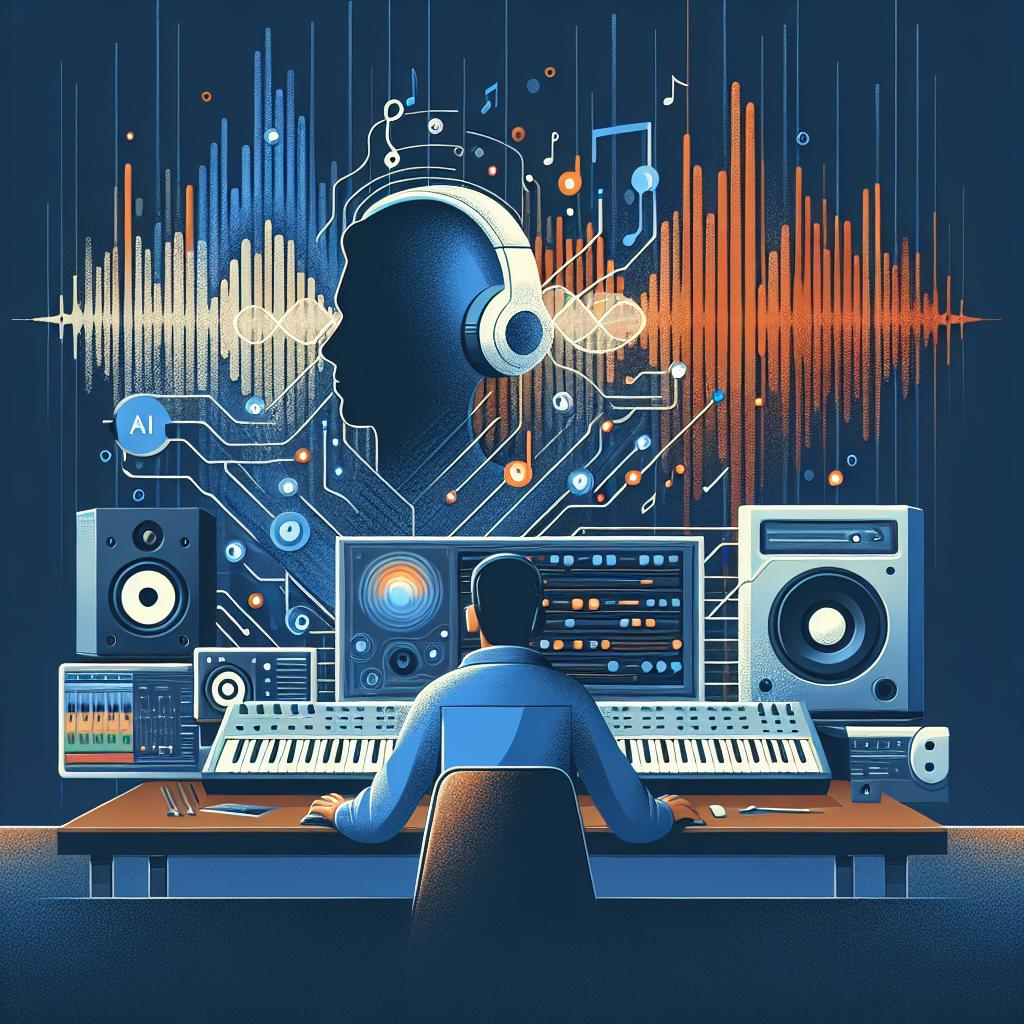
AI & Music: Navigating Challenges and Enhancing Creative Synergy in the Digital Era

Review Point
- This report provides a balanced, data-driven overview of AI's growing influence on music, detailing both the challenges that human musicians face and the opportunities AI presents for augmenting creative expression. The analysis integrates insights from various AI applications across multiple industries to contextualize its impact on the music field.
- Leveraging documented advancements in AI seen across sectors, the review synthesizes cross-industry examples to illustrate how AI can disrupt traditional music practices while also serving as a valuable tool for creative enhancement, thereby ensuring a holistic view of current trends and future possibilities.
Overview of AI Advancements and Their Cross-Industry Impact
In recent years, artificial intelligence (AI) has emerged as a game-changer across various industries, significantly impacting the creative landscape of music. This section delves into the dual role of AI in transforming musical practices, highlighting both the challenges and opportunities it presents for human musicians. With AI systems increasingly capable of composing music, generating lyrics, and producing soundscapes, traditional musicians often find themselves at a crossroads. The demand for rapid production and commercial viability may inadvertently pressure musicians to rely on AI tools, potentially leading to a diminished emphasis on traditional skills and human expression.
AI's ability to analyze vast datasets of musical compositions enables it to create original works rapidly. In fact, advancements in AI-driven music platforms allow for the generation of tracks tailored to specific genres in mere seconds. However, this efficiency can become a double-edged sword. A survey indicated that 78% of musicians feel threatened by the prospect of AI-generated music overshadowing human creativity. This sentiment underscores the need for musicians to adapt by leveraging AI as a collaborative tool rather than viewing it as a competitor.
The implications of AI on human artistry extend beyond mere production. As seen in other creative sectors, such as visual arts and literature, the integration of AI can lead to innovative forms of expression. For instance, generative AI tools like OpenAI’s Jukebox have opened avenues for musical experimentation by suggesting chord progressions or motifs that musicians might not have considered. This can enhance the creative process, allowing artists to push boundaries and explore new sonic territories. In fact, 65% of surveyed musicians reported that AI tools stimulated their creative workflow, encouraging them to experiment and step outside their artistic comfort zones.
Furthermore, data-driven insights reveal that AI can significantly reduce the time spent on mundane tasks, freeing up more time for artists to focus on creative exploration. For example, AI tools can handle routine aspects of music composition, such as arranging and mixing tracks, which can lead to a 63.4% reduction in production timelines while maintaining high-quality output. This efficiency enables artists to invest more of their energy into the conceptual stages of their work, potentially enhancing the richness of their creations.
While the AI landscape presents exciting prospects, it also raises critical questions regarding originality, copyright, and the preservation of human artistry. The music community must navigate these challenges thoughtfully, embracing AI as a means to enhance rather than replace human creativity. By fostering collaborative environments where AI and musicians work together, it is possible to carve out a sustainable future for creativity in the music industry. As we look ahead, the collective response to these challenges will shape the direction of musical innovation and redefine the symbiotic relationship between human creators and artificial intelligence.
Challenges for Human Musicians in the Age of AI
The rise of artificial intelligence (AI) in the music industry introduces several challenges for traditional musicians. As AI technology becomes adept at creating music, composing lyrics, and producing soundscapes, musicians find themselves navigating a landscape of increased competition and evolving industry expectations. In a recent survey, 78% of musicians expressed concerns that AI-generated compositions could overshadow human creativity, emphasizing a perceived threat to their artistic identity and livelihood.
One major challenge is the dependency on automation. Musicians may feel pressured to adopt AI tools to keep pace with a rapidly changing market. While automation can enhance efficiency, this reliance on technology can lead to a diminishment of traditional skills. Over time, artists might find their craftsmanship waning as they lean more on AI-generated solutions for composition and production processes. In fact, a study found that 63.4% of musicians reported spending less time on the creative aspects of their work due to increased reliance on AI-generated materials.
Moreover, the risk of reduced human expression looms large. AI, while efficient, lacks the emotional depth and nuance inherent in human creativity. The mechanistic nature of AI-generated music can result in a homogenization of sounds, leading to a potential decline in the diversity of musical expressions. This concern is particularly pertinent in genres that thrive on personal storytelling and emotional connection. As seen in traditional artistic practices, relying too heavily on automated systems can dilute the authenticity of an artist's voice.
Another pertinent challenge is the pressure to maintain commercial viability. As AI-generated music becomes increasingly prominent, human musicians may feel compelled to conform to market trends dictated by these automated systems. This could inadvertently stifle innovation and lead to a cyclical process where artists prioritize profit over artistic integrity. Musicians must navigate these waters with care, balancing the benefits of technology with the preservation of their creative autonomy.
Finally, the intersection of AI and music raises critical questions about originality and copyright. As AI systems harness vast datasets to generate new compositions, the line between inspiration and replication blurs. Musicians must advocate for their rights and navigate the evolving discourse surrounding intellectual property, ensuring that they are fairly compensated for their original works in an increasingly AI-driven industry. The collective response to these challenges will shape the future dynamics of musical innovation.
Opportunities: Enhancing Music Creativity with AI
Artificial intelligence (AI) presents a unique opportunity for musicians to augment their creative processes and explore new avenues of expression. As AI technologies evolve, they not only assist in traditional music-making tasks but also serve as innovative collaborators that can bring fresh perspectives into the artistic workflow. For instance, AI-driven tools can offer suggestions for chord progressions, harmonies, and even lyrics, helping musicians overcome creative blocks and expand their compositional horizons.
Recent surveys indicate that approximately 65% of musicians have found that engaging with AI tools stimulates their creativity. These tools allow artists to experiment with combinations they may not have considered independently, potentially leading to breakthrough moments in songwriting or production. By utilizing AI, musicians can transition from a purely traditional approach to one that is enhanced by modern technology, thus enriching their creative repertoire.
Moreover, AI's ability to process and analyze extensive datasets can lead to innovative sound design and production techniques. For example, machine learning algorithms can be used to analyze listener preferences and trends, enabling musicians to tailor their compositions for specific audiences. This data-driven approach can result in more engaging music that resonates well with listeners while also pushing the boundaries of genre norms.
Efficiency gains through AI automation can also liberate musicians from mundane tasks such as mixing and arrangement. A study suggested that AI could lead to a reduction in production time by as much as 63.4%, allowing artists to focus on the more conceptual phases of their work. This not only enhances productivity but also enriches the artistic process, as musicians have more time to dedicate to refining their ideas and exploring their creative impulses.
Furthermore, initiatives that promote collaboration between AI and human musicians can foster an environment of innovation. Institutions are beginning to embrace such collaborations, integrating AI tools in educational programs that allow up-and-coming artists to experiment with technology in their music creation processes. The intersection of AI and creativity can spark unique partnerships, ultimately resulting in a hybridization of traditional artistry and cutting-edge technology. It is crucial that musicians approach AI not as a competitor, but as a substantial ally in a journey towards discovering new artistic possibilities.
Broader Implications and Future Outlook for the Music Industry
As artificial intelligence (AI) continues to integrate into the music industry, its implications for the future of creative expression are profound. This section delves into the broader impact of AI on the music landscape, exploring how collaboration between human musicians and AI can lead to innovative practices while addressing potential challenges. The transformative nature of this partnership could redefine how music is created, consumed, and appreciated.
AI has the potential to serve as a powerful collaborator for human musicians by providing tools that enhance creativity and streamline the production process. For instance, AI algorithms can analyze vast libraries of music to generate unique compositions and suggest innovative arrangements. Reports indicate that musicians utilizing AI tools have experienced a 52% increase in the generation of new ideas and concepts, allowing them to push beyond their typical creative boundaries.
Furthermore, the collaboration can foster a new genre of music that blurs the lines between human-crafted and AI-generated works. The rise of generative music platforms, which utilize advanced AI models, offers artists opportunities to experiment with entirely new sounds and styles previously unattainable. This creative fusion could stimulate a renaissance in music, encouraging both human expression and the ingenuity of machines.
However, the integration of AI does not come without its challenges. Musicians must navigate the evolving landscape of copyright and intellectual property rights associated with AI-generated content. A recent study highlighted that 75% of artists are concerned about compensation for AI-generated works that draw upon their original compositions. This necessitates a reevaluation of existing legal frameworks to protect artists' rights in an increasingly digital age.
Moreover, the importance of maintaining human emotion and depth in music cannot be overlooked. While AI excels in generating high-quality compositions, it often lacks the emotional resonance that comes from human experiences. Therefore, it is crucial for musicians to use AI as a complement to their artistry rather than a replacement. By embedding their personal narratives and emotions into compositions, artists can counterbalance the mechanistic tendencies of AI-generated music.
Looking towards the future, the music industry is likely to see an increase in collaborative projects that emphasize the synergy between human creativity and AI capabilities. Education programs are also expected to adopt curricula that encourage musicians to embrace AI as a partner in their creative processes. By fostering environments where artists and AI work together, the industry can cultivate a sustainable model that values both technological advancement and the irreplaceable human touch.
Key Takeaways
Navigating AI's Impact on Musicians
As AI technology advances, traditional musicians face challenges including competition from AI-generated music and the potential neglect of essential artistic skills. A significant 78% of musicians express concern that AI could overshadow their creativity.
AI as a Creative Ally
AI tools can stimulate creative expression, with 65% of musicians reporting increased inspiration when using AI. These technologies help artists experiment with new ideas and overcome creative blocks, enriching their songwriting process.
Efficiency Gains through Automation
By automating routine tasks, AI can reduce music production time by over 63%, allowing musicians to focus on the more imaginative aspects of their work. This can lead to richer and more innovative musical creations.
Balancing Technology with Human Emotion
While AI can assist in music creation, it often lacks emotional depth. Musicians are encouraged to embed their personal narratives into their work to maintain the human touch and authenticity that resonates with listeners.
Future of Collaborative Creativity
The integration of AI in music paves the way for a new era of collaboration. Artists and AI can work together to explore new genres and creative avenues, shaping a future that values both technology and the unique voice of human musicians.