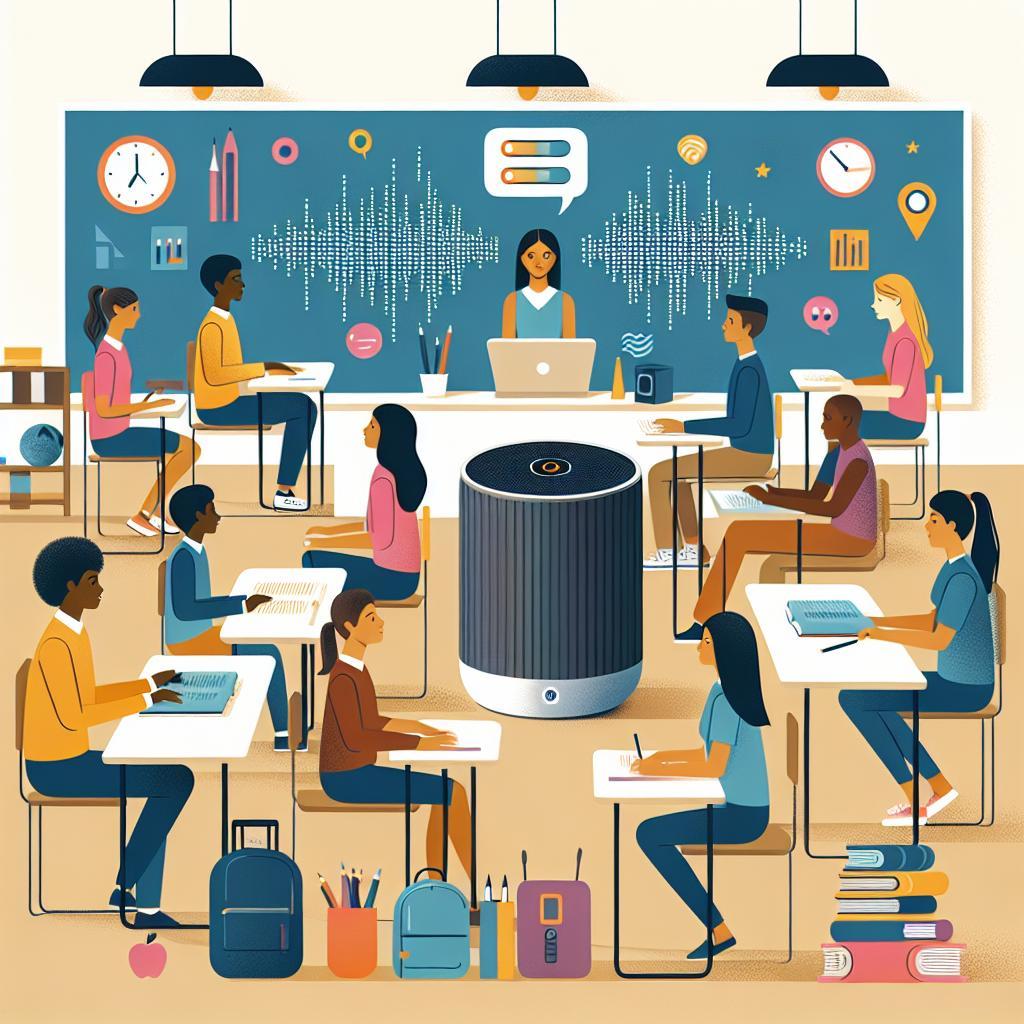
Can AI Voice Generation Replace Human Voice in Learning Environments?

The field of AI voice generation technology is rapidly evolving, presenting significant potential for educational applications that mimic human-like dialogue. This exploration delves into the multifaceted capabilities of AI voice generation, particularly its advancements compared to earlier text-to-speech systems, paving the way for its integration into diverse learning environments. Through a thorough analysis of these technologies, we uncover their capacity to enhance educational experiences, focusing on significant advancements such as emotional intelligence and contextual understanding, which have evolved due to sophisticated machine learning models like GPT-4.5.
In addition to examining the capabilities, this discussion emphasizes the applications of AI voice technology within education, demonstrating its effectiveness in language learning programs, personalized instruction, and accessibility for learners with disabilities. Furthermore, the exploration outlines real-world instances where AI voice tools create engaging learning environments that adapt to student needs, illustrating the potential for AI to revolutionize educational methodologies.
Despite the promise of AI voice generation technology, it is essential to critically assess its limitations, particularly concerning emotional connection, contextual understanding, and ethical concerns surrounding its integration in educational settings. The inability of AI to fully replicate the nuance and empathetic engagement found in human interaction raises questions regarding its role in fostering meaningful educational experiences. By addressing these limitations, we open a dialogue about the ideal coexistence of AI voices and human instructors, setting the stage for a future where AI enhances rather than replaces human touch in the learning process.
The Rise of AI Voice Generation Technology
Introduction to AI voice generation
The advent of AI voice generation technology marks a significant milestone in the evolution of artificial intelligence, particularly in its interaction capabilities. AI voice generation refers to the ability of computers to synthesize speech in a way that mimics human conversation. This technology utilizes complex algorithms and neural networks to produce voice outputs that are not only intelligible but also emotionally resonant. Over the past few years, advancements in machine learning, particularly through models like GPT-4.5, have played a vital role in enhancing the expressiveness and intelligibility of AI-generated speech.
Historically, voice generation technologies began with basic text-to-speech (TTS) systems, which produced robotic-sounding speech. However, contemporary systems have evolved into more sophisticated platforms that can express a range of emotions and tones, making them suitable for diverse applications—from virtual assistants to educational tools. As these technologies have improved, they have raised critical discussions around their implications for communication, particularly in environments traditionally predicated on human interaction.
Key advancements in technology
Recent advancements in AI voice generation are anchored around the development of large language models (LLMs) such as OpenAI's GPT-4.5. This model has demonstrated a remarkable capability to engage users with improved emotional intelligence and a more comprehensive knowledge base. One of the pivotal upgrades in GPT-4.5 is its ability to recognize and emulate conversational cues, which facilitates more natural and contextually appropriate interactions. Furthermore, the introduction of enhanced pattern recognition and relationship understanding marks a departure from earlier technologies that primarily focused on basic speech synthesis.
Additionally, GPT-4.5's efficiency is notable; it boasts ten times the computational efficiency of its predecessors, leading to faster processing and less energy consumption. Such advancements not only improve performance but also reduce operational costs, making this technology more accessible for various applications in industries including education, customer service, and entertainment. The ongoing refinement of these models exemplifies the rapid evolution of AI voice technology, which is poised to significantly alter how humans and machines communicate.
Comparison with previous models
The transition from earlier TTS systems to current AI voice generation technologies illustrates a clear trajectory of enhancement in both quality and functionality. Earlier models were characterized by limited vocabulary and inflexible intonation, which often resulted in a monolithic and monotonous user experience. The newer models, such as those developed using algorithms in GPT-4.5, exhibit dynamic speech capabilities that can adjust pitch, pace, and emotion to match the context of the conversation.
Compared to previous iterations, modern AI voice generators show vastly improved performance in areas like contextual understanding and user intent recognition. For instance, GPT-4.5’s advancements in emotional intelligence allow for more empathetic interactions, something that was largely unattainable with previous models that lacked depth. This comparative assessment highlights the technological leap and points to the potential for AI voice technologies to enhance human-AI interactions further, suggesting that they are becoming increasingly equipped to handle complex conversational demands in a diverse range of applications.
Capabilities of AI Voice Compared to Human Voice
Nuances of Human Voice
The human voice is characterized by a rich array of nuances and emotional depth that plays a significant role in communication. Factors such as pitch, tone, inflection, and speed create a unique vocal signature for each individual, allowing for emotional conveyance and the ability to express complex sentiments. Humans can instinctively adjust their vocal patterns according to context, using subtleties to enhance meaning. For instance, a slight change in intonation can transform a statement from a declaration to a question, altering the listener's response. Furthermore, non-verbal cues, such as pauses and breath sounds, enrich the auditory experience, creating an organic flow in conversation that AI-generated voices often struggle to replicate. Although AI voice technologies have made strides in mimicking human speech, they frequently fall short in conveying the deeply contextual and emotional layers that are naturally inherent in human voices.
Research indicates that listeners can easily discern differences in emotional expression and meaning between human voices and AI-generated ones. For example, subtle changes in stress patterns or emotional tone can significantly influence comprehension and engagement in educational settings. While AI voice generation technology can produce clear and coherent speech, its limitation in replicating the full spectrum of human emotional expression is a critical factor in its capability to engage learners effectively. Thus, the nuanced human voice remains a vital element in interpersonal communication and learning environments.
Technical Achievements of AI Voice Technology
In recent years, AI voice technology has achieved remarkable technical feats, utilizing advancements in machine learning and natural language processing (NLP) to create realistic speech patterns. Tools such as deep learning algorithms enable AI to analyze vast amounts of data, producing voices that can closely mimic human speech in terms of clarity and naturalness. Notable systems utilize text-to-speech synthesis techniques that incorporate prosody and emotion modeling, allowing for a greater range of vocal expression. Companies like Google and Amazon have developed voice assistants that adapt their speech patterns based on user interactions, making the experience more personalized and engaging.
These technical advancements also include the ability to create voices in multiple languages with regional accents and dialects, essentially broadening accessibility for diverse user populations. Furthermore, AI voice technologies can maintain consistent quality over long durations of speech, which is particularly advantageous in applications like audiobooks or educational lectures. Nevertheless, the technological prowess of AI has limitations; it may generate unnatural or robotic-sounding speech in certain contexts. Computer-generated voices may struggle with the complexities of human emotions and relationships, leading to challenges in using AI voice as a complete substitute for human interaction in learning scenarios.
Situations Where AI Excels Over Humans
AI voice technology excels in certain scenarios where consistency, efficiency, and scalability are paramount. For instance, automated customer service lines often deploy AI voices to handle routine inquiries, providing quick, accurate responses without the need for human intervention. In educational settings, AI-driven instructional tools can deliver personalized learning experiences at scale, accommodating various learning paces and styles. By adjusting the content delivery based on real-time feedback, AI can enhance the learning experience, particularly in environments with large numbers of students.
Moreover, AI voices are particularly effective for individuals with speech disabilities. Voice synthesis technology can provide these users with a communicative tool that ensures their voices are heard, thus promoting independence and participation in educational and social settings. Additionally, AI-generated voices can be programmed to maintain an even temperament and avoid the fatigue associated with human instructors delivering lengthy content, ensuring a consistent educational product. However, it is crucial to note that these advantages do not negate the importance of human interaction, especially in nuanced learning situations that demand empathy and emotional connectivity, emphasizing that AI excels contextually rather than universally.
Applications of AI Voice Generation in Learning Environments
Use cases in education
AI voice generation technology has been increasingly integrated into educational settings, offering numerous use cases that enhance learning experiences for students. One notable application is the use of AI-generated voices in language learning programs. These tools not only provide correct pronunciations but also adapt to the learner's progress, simulating conversational practice with native speakers. Programs like Duolingo use AI voice technology to help learners construct dialogues, offering immediate feedback, which results in a more interactive and effective learning setting. Moreover, AI voice generation can significantly enhance accessibility in education. For students with visual impairments or reading disabilities, AI-driven reading assistants can convert textual content into spoken words. This technology enables these learners to access educational materials that may otherwise be challenging to engage with. Software such as ReadSpeaker and Kurzweil 3000 not only read text but can also adjust speech rates, accents, and other vocal characteristics to suit user preferences, thereby promoting an inclusive learning environment. Additionally, classrooms are leveraging AI voice generation for personalized learning experiences. AI chatbots, utilizing voice technology, can provide tailored tutoring sessions based on individual student assessment results. These bots engage students in conversational interactions, making learning feel less isolating and more engaging. For instance, tools like IBM's Watson or Google's Dialogflow enable educational institutions to create customized learning companions that can interact with students through voice, making the learning journey more conversational and adaptive.
Benefits of AI voices for learners
The integration of AI voice generation technology in learning environments offers a plethora of benefits that cater to diverse learner needs. One significant advantage is the immediacy of feedback. AI voice systems can provide instant pronunciation corrections and conversational cues, allowing learners to improve their oral skills in real time. Such immediate responsiveness fosters a continual learning loop where students can practice and refine their language skills without the anxiety of traditional peer interactions. Furthermore, AI voices can be customized to deliver diverse learning styles. This adaptability ensures that auditory learners are particularly engaged, as they can interact with content through spoken language, deepening their comprehension. AI voice systems can also vary their tone and inflection, mimicking human-like interaction, which can enhance learners' emotional engagement, making lessons feel more alive and interactive. This customization communicates a sense of personal attention that traditional text-based learning does not provide. Additionally, AI voices can help mitigate language barriers. In multilingual classrooms, AI-generated voices can speak in different languages or accents, accommodating students from varied linguistic backgrounds. This function is essential in fostering inclusivity and ensuring that all students can participate in learning activities comfortably, regardless of their language proficiency. Studies demonstrate that students exposed to AI voices in their native languages show improved engagement and performance in academic tasks.
Integration into traditional learning methods
Integrating AI voice generation technology into traditional learning methods has proven to be effective in enriching the educational experience. Educators are increasingly incorporating AI voice tools into existing curricula, transforming conventional lessons into interactive sessions. For example, teachers can use AI-generated narratives or stories in literature classes to bring texts to life, enhancing students' understanding and retention through auditory storytelling. Moreover, AI voice generation complements existing classroom technologies such as smart boards and interactive presentations. Teachers can incorporate AI voices to narrate slide presentations or provide ongoing commentary during instructional videos, keeping students engaged and focused. This integration not only diversifies teaching methods but also caters to various learner preferences—especially benefitting auditory and visual learners simultaneously. Furthermore, integrating AI voices into traditional learning can extend beyond active classroom instruction. For instance, educators can assign AI-generated audio content as homework or supplementary material, allowing students to learn at their own pace. This approach promotes autonomous learning and gives students the flexibility to review materials that they might find challenging. Through platforms utilizing this technology, such as audio-boosting programs or flipped classroom models, students can gain a deeper understanding of concepts and engage more thoroughly with the material, showing that the synergy between traditional and AI-driven methods has the potential to elevate current educational paradigms.
Limitations and Challenges of AI Voice Generation
Emotional connection and empathy deficits
One of the most significant limitations of AI voice generation technology lies in its inability to produce authentic emotional connections and express true empathy, which are central to human-to-human communication. Despite advancements in voice synthesis and tone modulation, AI-generated voices often lack the nuanced emotional expressions that characterize human speech. Studies have shown that emotional intelligence plays a crucial role in effective learning environments, as instructors who can convey empathy and understanding tend to foster better student engagement and motivation. AI voice assistants, while capable of mimicking certain intonations, do not possess genuine feelings and thus cannot replicate the complex emotional cues that humans naturally convey. This deficit raises concerns about the effectiveness of AI in scenarios where emotional depth is crucial, such as counseling or social learning.
Moreover, learners often seek validation and emotional support from educators. The lack of authentic emotional interaction in AI voice technologies may lead to a feeling of disconnection among students. This could hinder their motivation and engagement, creating a barrier that AI technologies cannot overcome. While AI developers continue to enhance voice synthesis to include emotional inflections, these adaptations still fall short of true emotional resonance, prompting educators and technologists to contemplate the roles of empathy and connection in education.
Contextual understanding and subtleties
Another considerable challenge faced by AI voice generation systems is their limited contextual understanding and difficulty in grasping subtleties inherent in human communication. While AI has made significant strides in linguistic processing, it largely relies on pre-defined algorithms and datasets, which can lead to misunderstandings in communication. For instance, AI might misinterpret idiomatic expressions, cultural references, or humor that require situational awareness and nuanced understanding. This limitation can lead to confusion among learners, who may require clarification or elaboration on concepts presented by AI-generated voice technologies.
Furthermore, context plays a crucial role in effective teaching. Human instructors can adapt their responses and explanations based on specific classroom dynamics and students' emotional cues. In contrast, AI systems often lack this adaptability, resulting in a rigid and one-dimensional interaction style. Although natural language processing tools are improving, they still struggle to process layered meanings or emotional cues, which could significantly impact the quality of educational experiences. Consequently, the current interpretation limitations mean that AI voice generation cannot fully replicate the rich, dynamic interactions required in learning environments.
Ethical concerns regarding reliance on technology
The ethical implications of increasing reliance on AI voice generation technologies present significant challenges. As educational institutions integrate AI for various functions, including voice-assisted learning, concerns emerge about data privacy, agency, and the consequences of technology dependency. The collection and utilization of students' data by AI systems raise serious privacy issues, especially when sensitive information is involved. There is a pressing need for transparency about how data is gathered, stored, and used, as inadequate protections can lead to misuse or breaches of privacy.
Additionally, there exists a broader ethical concern regarding the risk of over-reliance on technology in educational settings. The promotion of AI voice as a stand-in for human interaction may diminish the value placed on interpersonal skills and relationships among learners. This shift poses the question of whether educational environments are becoming overly mechanistic, potentially impeding the development of critical social skills necessary for success in the workplace. To mitigate these ethical dilemmas, stakeholders must strive to create frameworks that prioritize both the enhancement of educational experiences and the protection of individual rights, ensuring a balanced coexistence of AI technology and human-centered learning.
The Future of AI Voice in Education
Predictions for AI Voice Adoption in Classrooms
As educational institutions increasingly integrate technology into their frameworks, the adoption of AI voice generation in classrooms is anticipated to rise significantly over the coming years. Predictions suggest that AI voice capabilities will become commonplace in educational settings, enhancing both teaching methods and learning experiences. The introduction of advanced AI models capable of emotional engagement and nuanced communication is likely to pave the way for more personalized learning environments. The next few years will see AI voice technologies evolving to support diverse learning needs, offering unique adaptations for students with disabilities or language challenges. AI voices will likely start functioning as virtual tutors providing tailored lessons, instant feedback, and encouragement. This versatility will enrich student interactions, fostering a more inclusive educational landscape where AI complements the efforts of human instructors. Moreover, as research and development continue, we can anticipate more integration of AI systems within existing educational technologies, such as Learning Management Systems (LMS), further streamlining lesson delivery. With AI voices providing multi-modal interactions, lessons can be made more engaging, thus potentially improving retention and understanding among students.
Potential Enhancements to AI Technology
The future of AI voice in education hinges on continuous enhancements in AI technology. Recent advancements have demonstrated AI's increasing ability to mimic human-like interactions, as seen in models such as GPT-4.5. This model reflects a shift towards greater emotional intelligence, as it can recognize social nuances and respond with more empathy—a critical aspect of effective teaching. Future AI voices are expected to become even more sophisticated, boasting improved context-awareness that allows them to interpret and respond to students’ queries with tailored responses. Enhanced machine learning algorithms will help AI develop better emotional responses based on user input, creating an environment where students feel understood and valued. Moreover, integrating Artificial General Intelligence (AGI) into AI voice technologies could significantly transform educational methodologies. AGI's ability to learn broadly and adapt dynamically presents an opportunity for AI to engage students not just as passive listeners, but as active participants in a dialogue, sparking curiosity and deeper understanding.
Coexistence with Human Instructors
Despite the advancements in AI voice generation technologies, the future of education will not hinge solely on technology. A significant aspect of the educational landscape will be the coexistence of AI voice systems with human instructors. While AI voices can provide support, streamline administrative tasks, and offer personalized learning, they are unlikely to completely replace the vital roles of human educators. Human instructors bring irreplaceable qualities such as emotional connections and complex contextual understanding that AI currently lacks. The nuances of empathy, creativity, and the ability to inspire are inherently human traits that foster a productive and encouraging learning environment. Thus, the role of AI will likely evolve into that of a supportive tool that enhances the teaching process while human educators focus on mentorship, moral guidance, and critical thinking development. In conclusion, as AI voice technologies develop and integrate within educational frameworks, a hybrid learning environment is expected to emerge. This environment will leverage the strengths of both AI and human instructors, encouraging a symbiotic relationship that enhances educational outcomes while preserving the essential human elements of teaching.
Wrap Up
Reflecting on the potential of AI voice generation technology reveals that while it shows remarkable capabilities, it cannot fully transcend the intricate dynamics of human communication. The findings suggest a complementary relationship between AI and human interaction in learning environments, where AI tools can provide tailored support and personalized learning experiences without supplanting the essential emotional and cognitive engagement that educators provide.
As the landscape of education continues to evolve with technological advancements, it is vital to foster a balanced integration of AI voice technologies. By leveraging the strengths of AI, educational institutions can create enhanced learning platforms that allow for more individualized learning experiences while preserving the inherently human qualities of empathy and connection that are foundational to effective teaching. It will be crucial for stakeholders to remain vigilant in navigating the ethical challenges and ensuring that AI is utilized to support, without overshadowing, the human elements critical to education.
In conclusion, as we look toward the future of AI voice technologies in educational settings, continued research and development will be necessary to refine these tools. This journey will undoubtedly lead to innovative solutions that enrich learning experiences while simultaneously valuing the irreplaceable contributions of human educators. Future discussions will further address how these technologies will shape pedagogical strategies and alter the fabric of learning itself.