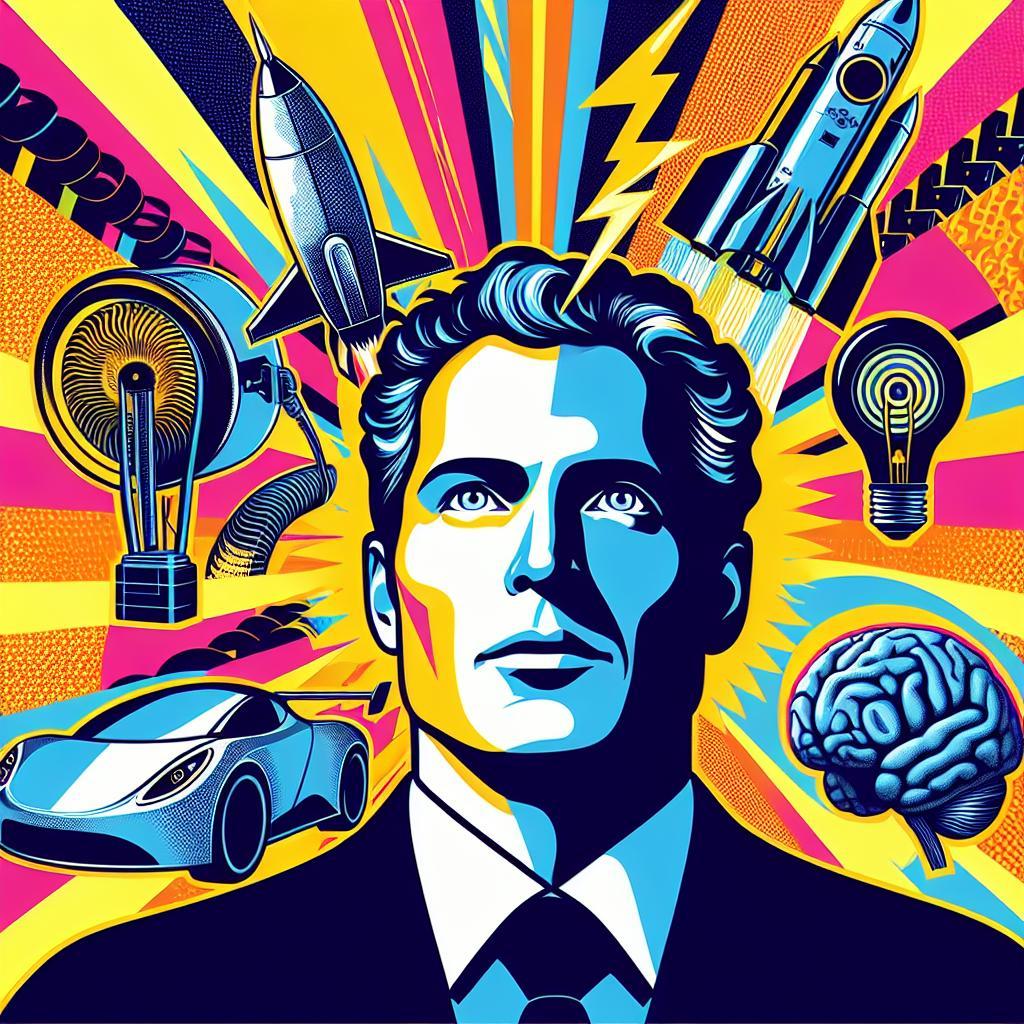
Elon Musk: The Visionary Behind Revolutionary Companies and Technologies

TABLE OF CONTENTS
- Summary
- Introduction to Elon Musk's Profile
- Overview of His Entrepreneurial Journey
- Detailed Analysis of Major Companies Founded by Musk
- Discussion on Their Impact in Relevant Industries
- Conclusion
1. Summary
Elon Musk stands as a pivotal figure in the intersection of technology and business innovation, characterized by his relentless pursuit of groundbreaking ventures that aim to alter the fabric of society. His entrepreneurial journey spans various industries, from automotive to aerospace, where he has established himself as a transformative force. At the center of his narrative is Tesla, Inc., which has not only redefined what electric vehicles can achieve but has also catalyzed an imperative transition towards sustainable energy. Tesla’s success illustrates Musk’s vision of integrating advanced technology with environmental responsibility, effectively shifting public perception and consumer behavior towards electric mobility and renewable energy solutions. This aspect of Musk's work underscores a broader commitment to combating climate change through innovation, which resonates deeply with global audiences seeking ecological solutions. Furthermore, his founding of SpaceX in 2002 marked a significant milestone in aerospace history as it has successfully challenged the traditional paradigms of space exploration. The company has made remarkable advancements, including the development of reusable rockets, which have drastically reduced launch costs. Not only does SpaceX aim to facilitate private space travel, but it also harbors the ambitious goal of enabling human life on Mars, thus, framing a long-term vision for interplanetary colonization. In addition to these ventures, Musk’s establishment of Neuralink exemplifies his forward-thinking approach to merging technology with human biology. By aspiring to develop brain-computer interfaces, Neuralink represents a potential revolution in how humans can interact with machines and address neurological disorders, thereby enhancing the quality of life for countless individuals. Musk's initiatives extend further into urban infrastructure with The Boring Company, aimed at solving the persistent challenges of urban traffic congestion through innovative tunneling systems. Collectively, these enterprises encapsulate Musk’s innovative spirit and willingness to tackle some of humanity's most pressing challenges, reinforcing his status as a quintessential modern entrepreneur. As various sectors experience the ripple effects of Musk's endeavors, the implications for technological advancement and societal transformation are profound and far-reaching.
2. Introduction to Elon Musk's Profile
2-1. Overview of Musk's early life and interests
Elon Reeve Musk was born on June 28, 1971, in Pretoria, South Africa. From an early age, he exhibited a profound interest in technology and entrepreneurship, characteristics that would later define his career. Raised in a relatively affluent family, Musk's mother, Maye, was a dietitian and model, while his father, Errol, was an electromechanical engineer. This exposure to creative and technical fields likely contributed to his diverse interests. Formative experiences included self-learning computer programming at the age of ten, where he taught himself through a VIC-20 manual, and selling his first video game, 'Blastar,' at the age of twelve for about $500, signaling the emergence of his entrepreneurial spirit. Musk's education played a crucial role in shaping his worldview. He attended various schools in South Africa, finishing at Pretoria Boys High School. Seeking to escape South Africa's mandatory military service and its apartheid regime, Musk emigrated to Canada in 1989, acquiring citizenship through his mother. He later moved to the United States, enrolling at the University of Pennsylvania, where he earned dual degrees in physics and economics. These academic and personal experiences laid the groundwork for Musk’s ventures in technology and innovation, demonstrating his early commitment to blending theory with practical applications to solve real-world problems. This indicates that he was not only academically inclined but also someone who sought to break conventional barriers, setting the stage for his future endeavors in groundbreaking technologies.
Musk's childhood was marked by challenges, including bullying and personal family issues, which may have fostered a sense of resilience and a desire to succeed against the odds. For instance, after enduring a severe beating at a wilderness school—a difficult experience he often reflects on—Musk developed a steely determination that would become a hallmark of his personality. Additionally, he was deeply influenced by his love for science fiction literature, particularly works like 'The Hitchhiker's Guide to the Galaxy,' which inspired his imaginative vision for the future. These elements of his early life highlight a critical combination of intellect, ambition, and the capacity to navigate adversity, paving the way for his eventual status as a visionary entrepreneur.
2-2. His emergence as a tech entrepreneur
Musk's journey into entrepreneurship began in earnest in 1995 when he co-founded Zip2, a software company aimed at helping newspapers create online city guides. This innovative venture was pivotal as it showcased Musk’s ability to foresee the internet's impact on traditional industries. After Zip2 was sold to Compaq for approximately $307 million in 1999, Musk used the proceeds to co-found X.com, an online payment company that would later evolve into PayPal after a merger. PayPal's success culminated in its acquisition by eBay for $1.5 billion in stock in 2002, marking Musk's first major financial success and establishing his reputation as a leading internet entrepreneur. With substantial financial backing, Musk turned his attention to groundbreaking fields. In 2002, he founded SpaceX, intending to revolutionize the aerospace industry by significantly reducing spacecraft launch costs. Musk's vision extended beyond mere commercial success; he aspired to enable human colonization of Mars, a goal that has served as the company's driving ethos. Under his leadership, SpaceX has successfully developed pioneering technologies, including the Falcon 1 and Falcon 9 rockets, eventually achieving the monumental milestone of landing the first stage of the Falcon 9 rocket back on Earth—an achievement that changed the landscape of space travel and opened the door to possibilities for more sustainable and affordable space exploration. Concurrently, Musk joined Tesla in 2004, shortly after its founding, initially as an investor and later as CEO. His direction helped transform Tesla from a niche electric vehicle manufacturer into a global leader in the automotive industry, significantly impacting consumer perceptions of electric vehicles. Tesla's success is attributed to Musk’s vision, innovative technology, and dedication to sustainability. As he famously stated, the mission of Tesla is "to accelerate the world's transition to sustainable energy," which captures the essence of his entrepreneurial ethos. Musk's emergence as a tech entrepreneur is marked by his relentless pursuit of innovation, his capacity to mobilize talent, and his commitment to solving significant global challenges through advancements in technology. This indicates that he has not only reshaped industries but has also inspired a generation of entrepreneurs who view technology as a means to effect transformative change.
3. Overview of His Entrepreneurial Journey
3-1. Timeline of Musk's Career Milestones
Elon Musk's entrepreneurial journey is characterized by a series of significant milestones that not only highlight his innovative spirit but also map the trajectory of his impact across various industries. Musk began his foray into the tech landscape in 1995 with the creation of Zip2, an online city guide software for newspapers, which he co-founded with his brother Kimbal. The sale of Zip2 in 1999 for approximately $300 million marked the beginning of Musk's rise as a prominent figure in the technology sector. In 1999, Musk shifted focus to online banking by co-founding X.com, which eventually became PayPal after a merger with Confinity in 2000. The company went public in 2002, and shortly after, eBay acquired it for $1.5 billion. This was a formative experience that equipped Musk with the acumen necessary for his future ventures. In 2002, Musk founded SpaceX with a mission to reduce space transportation costs and enable the colonization of Mars. The company's first milestone was the successful launch of the Falcon 1 rocket in 2008, making it the first privately developed liquid-fueled rocket to reach orbit. Following this achievement, SpaceX continued to innovate with reusable rocket technology, significantly reducing the costs associated with space travel. Musk joined Tesla Motors in 2004, leading the Series A investment round. Under his CEO leadership, Tesla launched the roadster in 2008 and has since expanded its offerings to include several highly successful electric vehicles, solar products, and battery systems. The company's market valuation reached approximately $860 billion by mid-2024, illustrating its profound influence not just on the automotive industry but on sustainable energy initiatives globally. In 2015, he co-founded OpenAI, emphasizing the importance of developing friendly AI. The significant success of his various companies laid the groundwork for other ventures like Neuralink, which he co-founded in 2016 to create advanced brain-machine interfaces, and The Boring Company, also launched in 2016 to tackle urban transportation challenges quickly and cost-effectively. Notably, Musk acquired Twitter (now X) in 2022, integrating it into his expansive portfolio of companies and continuing to push for innovation in social media spaces.
3-2. Inspiration Behind His Ventures
The inspiration behind Elon Musk's ventures stems from a combination of his personal experiences, a vision for the future, and a desire to address some of humanity's most pressing challenges. Musk's journey into entrepreneurship is deeply rooted in his childhood curiosity about technology. Growing up in South Africa, he displayed an early interest in computing, leading to the creation of a video game at the age of 12. This initial spark ignited a lifelong passion for innovation. Musk's ambitions have often been influenced by his overarching goal of ensuring the survival of humanity. His foray into space with SpaceX is driven by a profound belief that humankind must become a multi-planetary species to avoid existential threats from Earth-based perils. Musk has frequently articulated thoughts about catastrophic risks, such as climate change and potential technological disasters, which serve as a rationale and motivator behind his ventures in space exploration and sustainable energy. Additionally, Musk's vision of a sustainable future has been instrumental in shaping his endeavors within Tesla. The automotive industry is a significant contributor to global warming, and Musk aims to revolutionize transportation through electric vehicles and renewable energy technologies. His decision to open Tesla’s patents to the public was a bold move aimed at accelerating the adoption of sustainable energy technologies, further underscoring his commitment to environmental stewardship. Each of Musk’s companies reflects a facet of his desire to innovate in ways that enhance human capabilities and improve quality of life. From Neuralink's work on brain-computer interfaces to The Boring Company’s initiatives aimed at alleviating urban congestion, Musk’s diverse portfolio demonstrates a converging aspiration: to leverage technology to better humanity's prospects for survival and prosperity.
4. Detailed Analysis of Major Companies Founded by Musk
4-1. SpaceX: Revolutionizing space travel
Founded in 2002, SpaceX, or Space Exploration Technologies Corp., was established by Elon Musk to reduce space transportation costs and ultimately enable the colonization of Mars. Musk's vision for SpaceX began with the 'Mars Oasis' concept, which aimed to create a self-sustaining colony on the red planet by deploying a greenhouse on Mars. Understanding the potential costs involved in purchasing refurbished missiles, Musk decided it would be more feasible to build rockets independently, thus leading to the inception of SpaceX with an initial investment of $100 million from his own funds. By early 2024, SpaceX was valued at approximately $200 billion, reflecting its significant market presence and innovative advancements.
SpaceX became the first privately-funded company to produce a rocket (Falcon 1) that achieved orbit in 2008. This marked a milestone in the aerospace industry, as it demonstrated the capabilities of privately-owned enterprises to engage in complex space missions traditionally reserved for governmental agencies. One of SpaceX's paramount achievements was the development of the Falcon 9 rocket, which made history by landing its first-stage booster successfully, paving the way for reusability in rocket technology. In June 2024, the company completed a crucial test flight of the Starship spacecraft, affirming its readiness for missions aimed at Mars and long-duration space travel. SpaceX's role in launching astronauts aboard its Crew Dragon spacecraft has also been transformative, improving safety standards and efficiency in human spaceflight.
SpaceX's innovations extend beyond launch vehicles; it also operates the Starlink satellite constellation, which aims to provide global broadband coverage. By deploying thousands of satellites, Starlink seeks to furnish internet access even in the most remote areas worldwide. The company has made substantial strides in cost reduction for launching payloads into orbit, with many contracts with NASA and commercial clients underlining its effectiveness and reliability.
Overall, SpaceX is recognized not only for its remarkable technological advancements but also for redefining the landscape of space exploration, challenging monopolies held by government space agencies, and encouraging international and private sector investments in the space economy.
4-2. Tesla: Leading the electric vehicle market
Founded initially in 2003, Tesla, Inc., has emerged as a towering force in the electric vehicle (EV) market, primarily due to Elon Musk's involvement since he led the Series A investment round in 2004. Musk has since served as CEO and product architect, instrumental in steering Tesla towards its mission to accelerate the world's transition to sustainable energy. As of mid-2024, Tesla's worth is approximated at $860 billion, a testament to its market leadership and innovative capabilities across electric vehicles and energy solutions.
Tesla's portfolio includes several groundbreaking electric vehicles, such as the Model S, Model 3, Model X, and Model Y, known for their cutting-edge technology, performance, and sustainability. The myriad features integrated into these vehicles, including advanced autopilot systems that enable semi-autonomous driving capabilities, highlight Tesla's commitment to innovation. In addition to EVs, Tesla produces solar panels and commercial energy storage solutions through products like Powerwall, Powerpack, and Megapack, further augmenting its green energy mission.
Musk's proclivity for innovation also led to strategic decisions aimed at enhancing Tesla's production capabilities, such as establishing Gigafactories globally. These factories not only streamline the manufacturing process of electric cars but also work on large-scale battery production to meet the skyrocketing demand for renewable energy solutions. In 2014, Musk famously invited competitors to use Tesla's technology patents in good faith to promote greater EV adoption, underscoring his vision of a sustainable future.
Significantly, Tesla continues to face challenges, such as heightened competition in the EV market and regulatory pressures. Nevertheless, its lasting impact on reshaping public perceptions about electric vehicles and its role in enhancing energy sustainability is undeniable, marking Tesla as a landmark company in Musk's career.
4-3. Neuralink: Advancing brain-computer interface technology
Neuralink, founded in 2016, represents Elon Musk's ambitious foray into neurotechnology with the aim of developing brain-machine interfaces (BMIs). Neuralink’s mission is to create devices that will enable direct communication between the human brain and computers, potentially offering profound implications for treating neurological disorders and enhancing human cognitive abilities. By mid-2023, Neuralink had garnered a valuation of approximately $5 billion and was amidst pivotal human trials following successful animal testing.
The transformative technology developed by Neuralink aims to assist individuals with disabilities to control devices simply by thinking, thus revolutionizing the way humans interact with machines. The company's innovative approach includes designing ultra-thin threads that can be implanted into the brain with precision to record neuronal activity. The potential applications of such technology are vast, ranging from restoring motor functions to exploring the dynamics of human thought processes more robustly.
In early 2024, Neuralink achieved a historic milestone by successfully implanting its brain chip in human patients, following FDA approval for clinical trials. This significant movement forward showcases Neuralink's commitment to not just technological advancement but also ethical considerations surrounding the implications of BMI technology. Funding of around $158 million initially supported the company's development, with Musk himself contributing $102 million.
Overall, Neuralink stands at the forefront of neurotechnology, poised to make groundbreaking strides that could change the fabric of human interaction with technology. The ongoing trials and developments underscore the potential for neural engineering to significantly enhance quality of life for individuals with severe medical conditions.
4-4. The Boring Company: Innovating infrastructure solutions
Established in 2016, The Boring Company was born out of Musk's desire to alleviate urban transportation congestion through innovative tunneling solutions. The company's endeavors aim to reduce travel times in major cities by creating underground transit systems that enable rapid point-to-point transportation. This unique approach to infrastructure seeks to address the growing challenges of congestion in urban areas and introduce efficient alternatives that minimize surface traffic.
The Boring Company's projects include a 1.7-mile tunnel connecting the Las Vegas Convention Center, which became operational in July 2023, demonstrating the practicality of Musk's vision. As of 2024, The Boring Company continues to advance its tunneling technology, focusing on improvements in efficiency and cost reduction. The company's forthcoming projects aim to establish more extensive tunnel networks in Las Vegas, which would significantly reshape regional transport dynamics.
Financially, The Boring Company has achieved substantial funding, with estimates of its value at approximately $5.7 billion as of early 2022. The firm not only emphasizes infrastructure innovation but also aspires to integrate its projects with the Hyperloop concept, which envisions high-speed travel in low-pressure tubes, further revolutionizing public transportation.
Through The Boring Company, Musk illustrates yet another facet of his innovative vision, targeting real-world issues like traffic congestion, and seeks to implement effective solutions that bridge technological advancements with urban design challenges.
5. Discussion on Their Impact in Relevant Industries
5-1. Impact of Tesla on Sustainable Energy and Transportation
Tesla, Inc. has fundamentally transformed the automotive industry and the broader landscape of sustainable energy. The company's mission is to accelerate the world's transition to sustainable energy, and it has done so through the development of electric vehicles (EVs) that are not only environmentally friendly but also high-performance. Tesla's models, such as the Model S, Model 3, Model X, and Model Y, set new benchmarks in safety, technology, and driving experience. This indicates that Tesla has made electric vehicles a viable alternative to traditional gasoline-powered cars, leading to a significant increase in EV adoption worldwide.
Furthermore, Tesla's innovations extend beyond vehicles. The company has pioneered the development of energy storage systems, particularly through its Powerwall, Powerpack, and Megapack products, which enable homes and businesses to store and utilize renewable energy efficiently. This strategic integration of solar products acquired through SolarCity aims to create a comprehensive renewable energy ecosystem, thereby reducing reliance on fossil fuels. Such initiatives have influenced government policies and corporate strategies globally, fostering an environment that favors sustainable alternatives over carbon-heavy technologies.
5-2. SpaceX's Advancements in Space Exploration
SpaceX has revolutionized the space industry by significantly reducing costs and increasing access to space. Founded with the ambitious goal of enabling human colonization of Mars, SpaceX has successfully developed a number of groundbreaking technologies, including the Falcon 1, Falcon 9, Falcon Heavy rockets, and the Dragon spacecraft. This indicates a substantial shift in capabilities as SpaceX became the first private company to send cargo to the International Space Station (ISS) and later transported astronauts, marking a new era in commercial space travel.
The development of reusable rocket technology is perhaps SpaceX's most significant contribution to space exploration. By successfully landing and reusing the first stage of its rockets, SpaceX has dramatically cut the costs of launch services, making space more accessible not only to governmental agencies but also to commercial entities and research institutions. The Starlink project further exemplifies SpaceX's impact, providing global broadband internet coverage through a constellation of satellites, thereby bridging digital divides and enhancing global communications.
5-3. Neuralink's Potential Impact on Medical Technology
Neuralink is at the forefront of neurotechnology, aspiring to create implantable brain-machine interfaces (BMIs) that can help individuals with severe disabilities. By enabling direct communication between the brain and external devices, Neuralink aims to restore functionality to patients with spinal cord injuries, neurological disorders, and even cognitive impairments. The potential implications for medical technology are profound; this indicates that patients could regain lost capabilities, enhancing their quality of life significantly.
Furthermore, Neuralink's ambitious goal of achieving a symbiosis with artificial intelligence poses intriguing possibilities for the future. The ability to enhance human cognition and interplay with advanced AI can lead to groundbreaking advancements in healthcare, potentially enabling real-time monitoring of brain health, personalized treatment plans, and the ability to preemptively address neurological conditions. This frontier in medical technology promises not only to revolutionize treatment modalities but also to redefine our understanding of cognitive capabilities.
5-4. The Boring Company's Influence on Urban Transport Solutions
The Boring Company was founded with the objective of addressing urban traffic congestion through innovative tunneling solutions. By constructing underground transportation systems, such as the Las Vegas Convention Center Loop and intended projects across major cities, the company aims to facilitate faster, more efficient transit options that reduce the need for surface-level roadways. This indicates a potential paradigm shift in urban transport infrastructure, moving towards more sustainable and less congested city designs.
Moreover, the Boring Company's focus on developing new tunneling technologies—like the Prufrock machine—promises to increase the speed and efficiency of tunnel construction. This has significant implications for urban development; by minimizing surface disruption and providing new pathways for transportation, cities can reallocate land towards green spaces and residential areas. The innovative solutions posed by The Boring Company might pave the way for smarter, more resilient urban environments that prioritize transit efficiency and sustainability.
Conclusion
In conclusion, the journey of Elon Musk through his diverse range of ventures underscores a remarkable narrative of innovation, resilience, and transformative vision. His endeavors serve as a testament to the potential of entrepreneurship to reshape industries and inspire future generations. The breakthroughs achieved by his companies—Tesla, SpaceX, Neuralink, and The Boring Company—are not merely technological feats; they epitomize the fusion of ambition with practical efforts to address global challenges. Musk's ability to foresee trends and mobilize resources towards their realization is a powerful model for contemporary and aspiring entrepreneurs alike, demonstrating that with tenacity and innovation, significant hurdles can be overcome. As we look towards the future, the trajectory of Musk’s ventures lays the groundwork for ongoing advancements that are poised to redefine societal norms and improve lives worldwide. The anticipated developments in electric mobility, space exploration, neurotechnology, and urban infrastructure herald a new era of progressive change. Observers and stakeholders across industries must remain vigilant as these innovations unfold. The implications of Musk's work go beyond profitability and market disruption; they encourage a broader discourse on sustainability, human enhancement, and the ethical dimensions of technology. More than ever, it is clear that the legacy of Elon Musk will continue to challenge us to think differently, act boldly, and embrace the potential of human ingenuity to craft a brighter future.