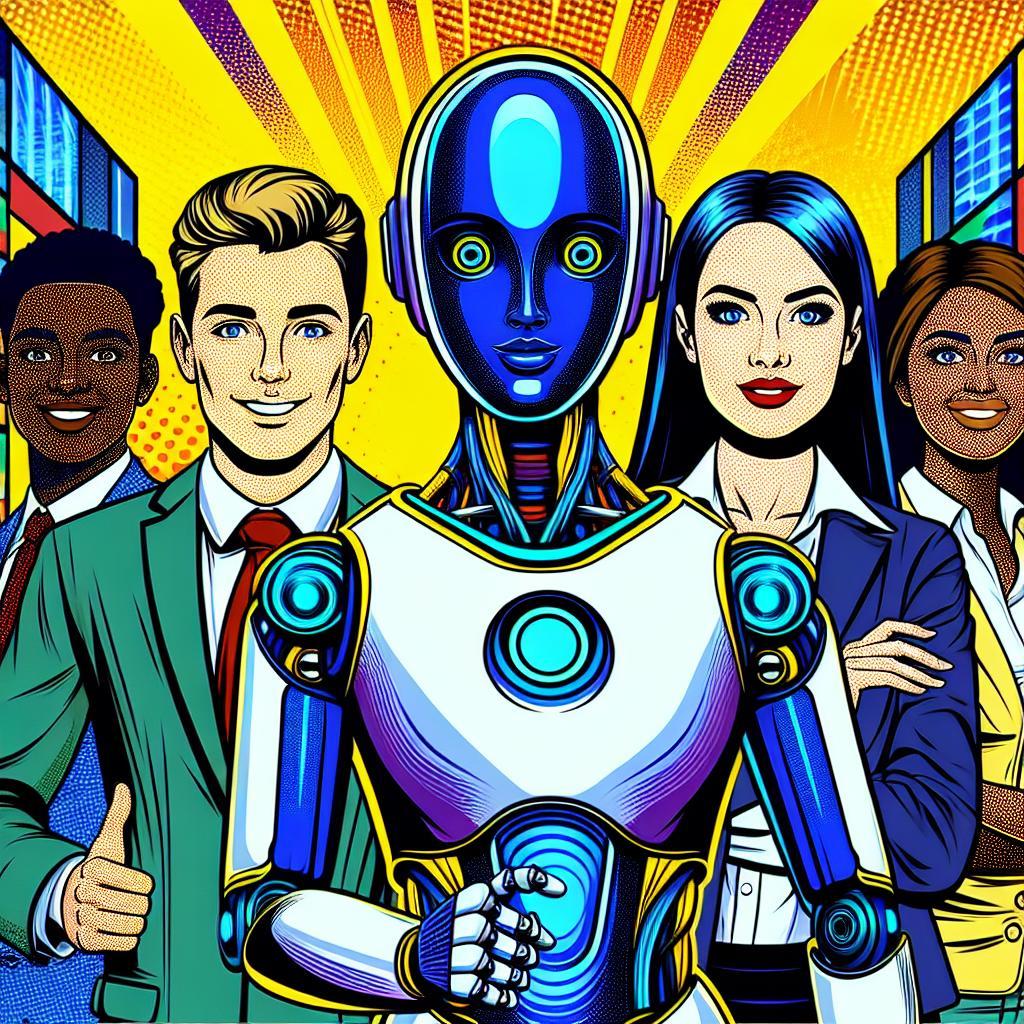
Harnessing AI Agents for Transformative Business Solutions in 2025

TABLE OF CONTENTS
- Summary
- Understanding AI Agents and Their Significance
- Market Growth and Trends in AI Agents
- Applications of AI Agents Across Industries
- Forecasting the Future of AI Agents
- Conclusion
1. Summary
In an era where technological advancement is accelerating at an unprecedented pace, AI agents have emerged as transformative forces reshaping business landscapes and operational efficiencies. These autonomous systems, designed to perceive their surroundings, make informed decisions, and execute specific actions, have progressed significantly from simple rule-based programs to highly sophisticated entities powered by machine learning and natural language processing. The report explores the critical role AI agents play in modern enterprises, highlighting their potential to enhance workflows across various sectors such as customer service, healthcare, and finance.
The current market for AI agents, valued at approximately $5.1 billion as of early 2025, is projected to experience exponential growth, soaring to an estimated $47.1 billion by 2030. This surge is attributed to the increasing recognition of the value AI agents offer in improving operational efficiency and facilitating data management. As businesses integrate these advanced technologies, we see substantial adoption rates, with healthcare alone showing an impressive 90% utilization of AI agents to optimize patient care and administrative processes. Such a rapid ascent underscores the immense potential these systems hold for revolutionizing industries through automation.
Furthermore, the report delves into the various applications of AI agents across sectors, illustrating their significance in elevating customer experiences, improving financial accuracy, and enhancing healthcare outcomes. Their capacity to personalize interactions and streamline complex tasks positions AI agents as invaluable assets for organizations aiming to achieve competitive advantages in today's dynamic market. As we examine the broader implications of AI agent integration, it becomes imperative for business leaders and technologists alike to grasp their transforming power and the innovative solutions they will continue to deliver.
2. Understanding AI Agents and Their Significance
2-1. Definition of AI Agents
Artificial Intelligence (AI) agents are autonomous systems engineered to perceive their environment, make decisions, and execute actions aimed at achieving specific goals. Unlike conventional software programs, AI agents operate dynamically, giving them the ability to learn from experience and adapt to new situations without the need for constant human guidance. These agents integrate various components, such as perception modules that gather input from sensors, processing units that analyze data, and action modules that facilitate task execution. In essence, AI agents function as intelligent entities that interact with users and systems to streamline operations across multiple domains, including customer support, healthcare, finance, and logistics.
The evolutionary journey of AI agents has moved from rudimentary rule-based systems to sophisticated models powered by machine learning and large language models (LLMs). Early AI agents typically relied on predefined rules that limited their adaptability and learning capabilities. Today's AI agents, however, incorporate advanced algorithms that enable them to engage in complex decision-making processes and facilitate continuous improvement through feedback and reinforcement learning. As the market for AI agents experiences rapid growth—expected to jump from USD 5.1 billion in 2024 to a staggering USD 47.1 billion by 2030—the significance of these systems in enhancing operational efficiency and driving innovation cannot be overstated.
2-2. The Evolution from Chatbots to AI Agents
Historically, chatbots served as the entry point for businesses looking to leverage AI for customer interactions. These rudimentary interfaces were limited to providing scripted responses to user inquiries. However, as the technology landscape has evolved, so too has the sophistication of AI agents. The transition from simple chatbots to more autonomous AI agents has been marked by the integration of advanced machine learning techniques, natural language processing (NLP), and sophisticated data analytics capabilities. This evolution reflects a broader shift within the industry towards embracing intelligent systems that can manage complex workflows autonomously and responsively.
The current generation of AI agents encompasses multiple classifications based on their functionality and intelligence. Simple reflex agents operate solely on defined rules, whereas model-based reflex agents maintain a mental model of their environment, allowing for more nuanced reactions based on past interactions. Goal-based agents add another layer of complexity; they strategize their actions based on specific objectives, evaluating potential outcomes before execution. Early implementations may have focused primarily on customer queries, but the modern AI agent landscape includes functionalities that range from automated marketing solutions to advanced predictive analytics in healthcare, showcasing a convergence of AI technology that dramatically enhances the way businesses function.
2-3. The Role of AI Agents in Modern Business
AI agents have become instrumental in transforming various business operations. Their ability to automate repetitive tasks not only increases operational efficiency but also allows human employees to focus on more strategic initiatives. In customer-facing roles, AI agents can provide reliable 24/7 service, responding to queries instantaneously and resolving issues with minimal human intervention. For instance, in e-commerce, AI agents automate tasks such as order processing, shipment tracking, and personalized product recommendations, significantly enhancing the customer experience and driving sales.
Beyond customer service, AI agents are making significant strides in sectors such as finance and healthcare. In finance, they are used for algorithmic trading, real-time risk assessment, and fraud detection, thereby playing a crucial role in maintaining security and maximizing investment outcomes. In healthcare, AI agents assist with diagnostic processes, treatment recommendations, and patient management by analyzing vast amounts of medical data and providing insights that support clinical decision-making. These applications underscore the critical role AI agents play in facilitating data-driven decision-making, ultimately leading to improved outcomes and greater competitiveness in the marketplace.
3. Market Growth and Trends in AI Agents
3-1. Current Market Valuation
As of early 2025, the AI agent market is valued at approximately $5.1 billion, with a steep expected trajectory that is anticipated to reach $47.1 billion by 2030. This rapid growth reflects a burgeoning recognition of AI agents' critical role across various industries, driven by advancements in machine learning technologies, large language models, and increased automation capabilities. The integration of these technologies has enabled AI agents to perform more complex tasks, making them essential tools for enhancing operational efficiency and data management in businesses.
The robust growth in the AI agent sector is notable in various industries. For instance, healthcare shows a high adoption rate of 90%, significantly improving patient care outcomes. Similarly, human resources and retail have seen adoption levels of 75% and 69%, respectively, leading to better efficiency in candidate selection processes and revenue enhancement through personalized services. Predictions suggest that, across the board, the demand for AI agents will only continue to rise as organizations seek innovative solutions to optimize workflows.
3-2. Projected Growth of the AI Agent Market
Analysts predict an exponential increase in the AI agent market, with estimates forecasting growth from $5.1 billion in 2024 to $47.1 billion by 2030. The factors contributing to this meteoric rise include advancements in AI technologies such as deep learning and natural language processing (NLP), which enhance the capabilities and applications of AI agents. Businesses are rapidly adopting these technologies not only to stay competitive but also to streamline operations and reduce costs.
Moreover, as demonstrated by general adoption trends, 2025 is poised to be a pivotal year. Several sectors are reported to show significant potential in AI agent adoption, notably healthcare, finance, and retail, with each experiencing substantial operational improvements and revenue growth attributed to AI integration. This anticipated growth trajectory highlights the shifting landscape of business operations where effective decision-making tools are increasingly critical.
3-3. Factors Driving Growth
Multiple factors are propelling the growth of AI agents. Chief among them are technological advancements in machine learning and automation, which empower AI agents with enhanced learning and decision-making capabilities. This has made them invaluable in areas such as predictive maintenance in manufacturing, where they can help reduce downtime by up to 40%, and in finance, where they enable improved fraud detection and risk assessment.
Additionally, the growing trend of integrating AI with blockchain technologies highlights a new frontier where AI agents can enhance the efficiency of decentralized applications. The emergence of DeFAI (Decentralized Finance + AI) represents a novel synergy, providing AI agents the ability to autonomously interact with blockchain applications, opening opportunities for automated investment strategies and improved asset management.
Lastly, the increasing economic pressures faced by businesses to improve efficiencies and enhance customer experiences are pushing organizations to adopt AI agents. The ability of these agents to automate routine tasks, generate insights from vast datasets, and provide personalized user experiences are compelling reasons for organizations to invest in this technology.
4. Applications of AI Agents Across Industries
4-1. AI Agents in Customer Service and Support
AI agents have significantly transformed the landscape of customer service and support. These Autonomous systems can engage with customers through various channels, such as chat, email, and even voice. By leveraging advanced natural language processing (NLP) and machine learning algorithms, AI agents can interpret and respond to customer queries, effectively reducing waiting times and improving satisfaction levels. In a report highlighting trends in AI adoption, it was noted that companies utilizing AI agents reported enhanced service personalization leading to increased revenue. Retailers, for instance, have seen a revenue growth of up to 69% attributed to AI-assisted customer interactions that provide tailored recommendations based on previous behaviors and preferences.
The operational efficiency provided by AI agents extends beyond mere query resolution. These systems can automatically escalate complicated issues to human agents when certain thresholds are met, ensuring a seamless customer experience. Additionally, AI agents continuously learn from interactions, allowing them to refine their responses and adapt to common queries, enhancing their effectiveness over time. Notably, companies have integrated AI agents for tasks like automated troubleshooting and order tracking, ensuring that customers receive real-time updates on their inquiries or issues.
4-2. Automation in Finance and Accounting
In the finance and accounting sectors, AI agents play a crucial role in enhancing accuracy and efficiency while mitigating risks associated with human error. Tasks such as transaction processing, fraud detection, and risk assessment can be effectively managed by AI agents that analyze data patterns and make predictive assessments. This capability has culminated in a reported 38% increase in profits for organizations adopting AI agents in finance, primarily due to better fraud prevention mechanisms and more precise financial forecasting.
For instance, AI agents can analyze vast amounts of transactional data in real-time to detect unusual patterns indicative of fraud, enabling quicker responses than traditional methods. Furthermore, in accounting, these agents can automate repetitive tasks such as invoice generation, expense management, and financial reporting. This automation not only saves significant time but also allows finance teams to focus on strategic decision-making rather than mundane paperwork.
4-3. Enhancements in Healthcare Operations
The healthcare industry has witnessed remarkable advancements through the integration of AI agents, now adopting these technologies at a rate of 90%. AI agents are being deployed to manage a range of operations from patient care to administrative tasks. By automating processes such as eligibility verification and claims management, healthcare organizations can significantly decrease operational bottlenecks, thereby enhancing patient care outcomes.
Moreover, AI agents utilize advanced data analysis to assist healthcare providers in diagnosing conditions. They can analyze patient data against extensive medical databases to offer diagnostic suggestions, thereby empowering physicians to make more informed decisions. As a result, not only is there an increase in operational proficiency, but patients also enjoy a higher standard of care, marked by timely interventions and personalized treatment plans.
4-4. AI Agents in Supply Chain Management
In supply chain management, AI agents have emerged as instrumental in optimizing logistics and inventory management. These systems can analyze data from various sources—including market trends, weather patterns, and consumer behavior—to forecast demand more accurately. This predictive capability allows businesses to adjust their strategies in real-time, thereby reducing waste and improving efficiency.
AI agents collaborate across different facets of the supply chain, coordinating tasks that involve inventory tracking, order fulfillment, and shipping logistics. For example, businesses leveraging AI in supply chains have reported a reduction in downtime by up to 40% through the implementation of predictive maintenance strategies that anticipate equipment failures before they occur. Furthermore, multi-agent systems are becoming popular for managing complex workflows where various procedures must be synchronized for optimal operation, indicating a trend towards greater cooperative intelligence in supply chain solutions.
5. Forecasting the Future of AI Agents
5-1. Innovations on the Horizon
As we look towards the future, the development of AI agents is poised to accelerate significantly, driven by advancements in technology and changing business needs. One of the most exciting innovations on the horizon is the increased autonomy of AI agents. Predictions indicate that by 2025, AI agents will be capable of making complex decisions with minimal human intervention, thereby increasing operational efficiencies across various sectors. The integration of advanced machine learning algorithms will enable these agents to learn from vast amounts of data more effectively, adapting their behavior in real time to optimize outcomes.
In addition, the adoption of hyper-personalization techniques will allow AI agents to offer tailored services that meet individual user preferences and needs. For instance, AI agents in e-commerce may predict customer interests based on their online behavior and proactively recommend products, creating a more seamless shopping experience. Advances in large language models and contextual understanding will further enhance the interaction between humans and AI agents, making conversations more natural and intuitive.
Another trend expected to emerge is the rise of self-healing systems. These AI agents will be designed to continuously monitor their environment, identify issues as they arise, and autonomously implement solutions to maintain optimal performance. This aligns with current efforts to integrate AI agents into critical infrastructure, where reliability and uptime are paramount.
5-2. Potential Challenges and Ethical Considerations
While the future of AI agents is promising, it is essential to recognize the potential challenges and ethical considerations that may arise. As AI agents gain capabilities that allow them to operate independently, questions pertaining to accountability and decision-making processes will become increasingly relevant. Without a clear framework governing their actions, there is a risk of misuse or unintended consequences, particularly in sensitive areas such as healthcare or finance where decisions have significant impacts.
Moreover, the potential for bias in AI algorithms remains a concern. As AI agents are trained on historical data, there is a risk that they could perpetuate or even exacerbate existing societal biases. Ensuring that AI development is governed by ethical principles that prioritize fairness, transparency, and accountability will be crucial in mitigating these risks. Organizations may be compelled to adopt ethical AI frameworks and conduct regular audits of their AI systems to prevent these issues.
Furthermore, as automation increases, there may be significant socio-economic implications, including job displacement and the transformation of labor markets. It is vital for stakeholders to prepare for these changes by investing in reskilling and upskilling initiatives, ensuring that the workforce can adapt to the evolving job landscape that AI agents create.
5-3. The Role of AI Agents in Shaping Future Work Environments
AI agents are set to transform the future work environment by redefining job roles, enhancing productivity, and facilitating new ways of collaboration. With capabilities to automate routine tasks, AI agents will allow employees to focus on more strategic, value-added activities. According to projections, by 2025, a significant percentage of organizational tasks will be performed by these agents, enabling an increase in overall efficiency and productivity.
Additionally, AI agents will foster more collaborative work environments by serving as facilitators that integrate various tools and platforms. For instance, in hybrid work settings, AI agents could manage schedules, coordinate meetings, and streamline communications across dispersed teams. This level of automation will not only enhance collaboration but also improve clarity and communication within teams.
Moreover, the emergence of multi-agent systems will significantly contribute to better decision-making processes. By allowing various AI agents to work collaboratively, organizations can harness diverse inputs and perspectives, ultimately driving innovation. These systems will be particularly valuable in complex operational frameworks, such as supply chain management, where various agents can optimize different components of the operation simultaneously.
As businesses increasingly embrace AI agents, a cultural shift towards a more integrated approach to technology and human collaboration will likely occur. This shift will fundamentally alter how we perceive roles, responsibilities, and workflows in the workplace, paving the way for a future where humans and AI coalesce to achieve greater objectives.
Conclusion
The exploration of AI agents reveals their potential to dramatically influence business operations by fostering innovation and enhancing efficiency across various sectors. As businesses prepare to navigate a landscape increasingly characterized by automation and sophisticated decision-making, the insights drawn from this report indicate that adoption of AI agents will be fundamental to sustained competitive advantage. Leaders are encouraged to thoughtfully integrate these technologies into their operational frameworks, ensuring a proactive approach in adapting to the dynamic market environment.
Looking ahead, the trajectory for AI agents indicates a growing demand for further innovation and application. With experts projecting significant advancements that will enable AI agents to operate with greater autonomy and sophistication, organizations must remain vigilant in developing strategies that embrace these changes. Ethical considerations and accountability will play critical roles in this evolution, necessitating transparent governance frameworks that prioritize fairness and mitigate potential biases that could arise from AI deployment.
As the role of AI agents continues to evolve, their impact on future work environments becomes increasingly clear. These systems are poised not only to redefine workflows but also to transform traditional role perceptions within organizations. It is crucial for stakeholders to prepare for a cultural shift that facilitates collaboration between humans and AI, paving the way for innovative practices that drive greater productivity and strategic value.