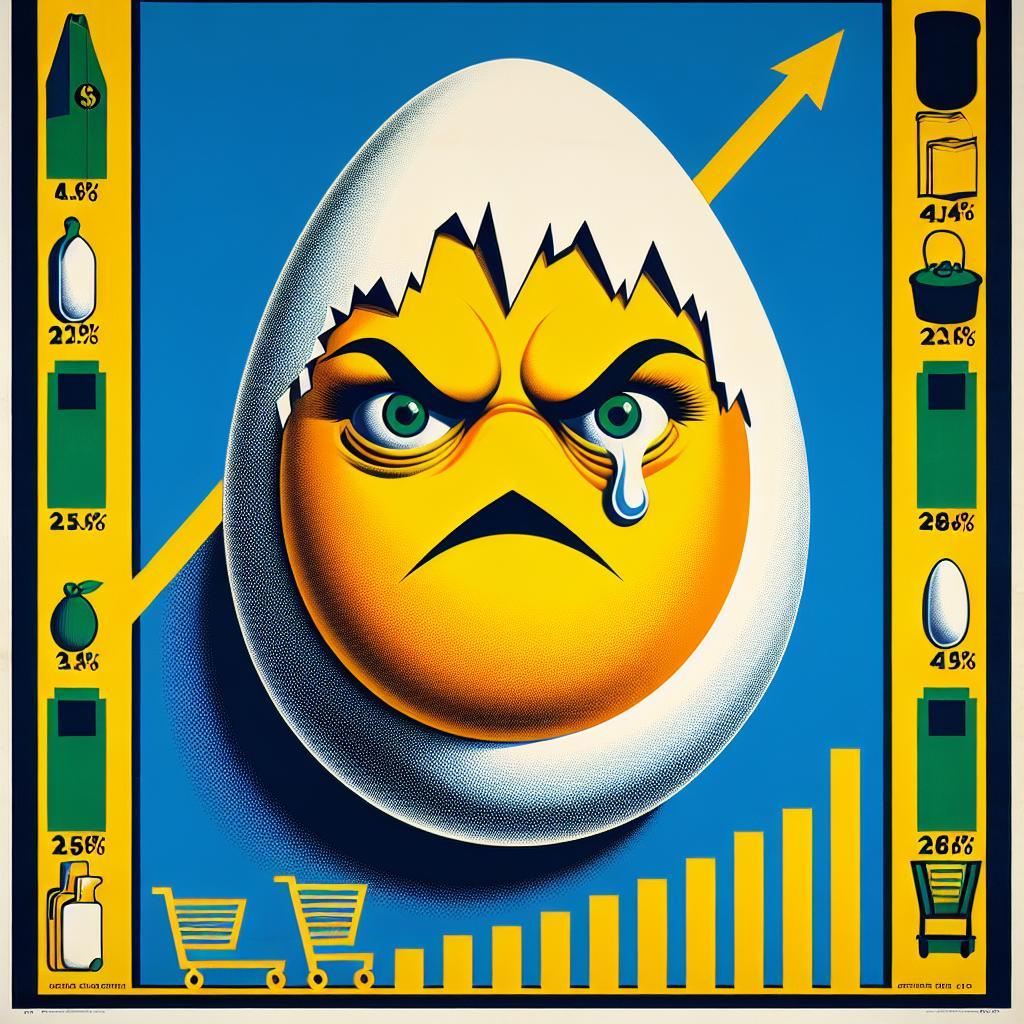
The Egg Crisis of 2025: Understanding the Surge in Prices and Its Impacts

TABLE OF CONTENTS
- Summary
- Context of the Egg Price Crisis
- Contributing Factors to Price Increases
- Consumer and Retail Impact
- Case Studies: Responses from Retailers
- Forecasting the Future of Egg Prices
- Conclusion
1. Summary
In early 2025, the egg market encounters an unprecedented crisis characterized by soaring prices driven by a confluence of impactful factors, predominantly the resurgence of highly pathogenic avian influenza (HPAI) and overarching inflationary trends. An alarming escalation has seen average costs reach approximately $4.95 for a dozen Grade A eggs, representing a staggering 65% hike compared to December 2024, when prices were around $2.50. This sharp surge illustrates not only an immediate economic phenomenon but also signifies a deeper discourse on the fragility of the food supply chain and the implications it bears for various stakeholders, from consumers to retailers and policymakers alike.
The dynamic landscape of egg pricing is not merely a reflection of current market conditions but an integral part of the broader economic narrative concerning food affordability and supply resilience. Retailers have responded to these pressures by implementing purchasing limits, with many supermarkets restricting customers to one dozen eggs per day. This tactic underscores the severe allocation challenges posed by HPAI outbreaks that have led to immense depopulation of egg-laying hens, an action that exacerbates shortages and fuels consumer frustration. Market analysts predict that the egg price trajectory could maintain an upward trend, with forecasts from the U.S. Department of Agriculture suggesting a further increase nearing 20% throughout 2025.
Several case studies illuminate how businesses maneuver through this crisis. For instance, Waffle House has introduced a surcharge on egg dishes to account for rising procurement costs, while Trader Joe's has focused on direct supplier relationships to stabilize prices for consumers. This divergence in strategies draws attention to the critical role of effective supply chain management in navigating the tempestuous market conditions. As egg prices reach unprecedented highs, understanding the complexities behind this crisis becomes essential for all stakeholders seeking to mitigate the exceptional economic burden placed upon American households.
2. Context of the Egg Price Crisis
2-1. Current price trends in eggs
The egg price crisis of 2025 is underscored by a dramatic surge in prices, with the average cost of a dozen Grade A eggs reaching $4.95 in January 2025, a considerable increase from the previous year's prices. This figure indicates a 65 percent hike compared to December of the prior year, where prices averaged $2.50. The phenomenon represents a broader trend within the food industry, exacerbated by inflationary pressures and supply shortages caused by the widespread impact of highly pathogenic avian influenza (HPAI). Retailers, facing a dire supply situation, have resorted to limiting the quantity of eggs customers may purchase, reflecting the acute imbalance between supply and demand. Many consumers express frustration as they navigate the high costs, with reports highlighting significant declines in egg availability in supermarkets across major metropolitan areas like Washington, D.C. and Florida. Such scarcity has only intensified consumer shock and concern about budgeting for this dietary staple, which is a core part of the American diet, especially for breakfast.
The U.S. Department of Agriculture projects the average egg prices to continue rising, potentially increasing by nearly 20% throughout 2025. As consumer habits adapt to soaring prices, the demand fluctuates, leading some grocers to keep prices elevated to suppress demand. The combination of economic factors, including rising costs across other food categories, compels consumers to assess their purchasing behaviors critically. The price fluctuations witnessed since late 2024 have fundamentally altered the egg market dynamics, establishing a scenario where consumers have to contend with unprecedented costs for what was once a relatively inexpensive grocery item.
2-2. Historical context of egg prices
Historically, egg prices have exhibited significant variability due to numerous factors, including seasonal production shifts, feed costs, and outbreaks of disease among poultry flocks. For context, the price of eggs in January 1980 was just 88 cents per dozen, reflecting the relatively stable economic conditions of the time. However, as U.S. consumers' demand for eggs surged, prices peaked at $2.97 in 2015, only to experience another surge in 2023, when prices reached $4.83. The current crisis represents the most acute and multifaceted challenge yet, as the confluence of inflation and disease-related supply disruptions has taken a steep toll on historical price stability.
In recent years, the poultry industry has been profoundly affected by avian influenza outbreaks, which first emerged as a significant issue in the United States in 2022. The recent resurgence of HPAI in late 2024 led to the depopulation of significant numbers of egg-laying hens, translating to a considerable impact on production levels. The estimated losses from these outbreaks have created a cascading effect on prices, pushing them farther beyond the realm of recent historical norms. Comparatively, the industry is now experiencing severe strain similar to that seen during previous outbreaks; however, the simultaneous influence of general inflation has created a more complex landscape than has been observed previously.
2-3. Impact of avian influenza outbreaks
Avian influenza (HPAI) has emerged as a critical influence on the current egg price crisis. The outbreaks have prompted widespread 'depopulation' among commercial laying flocks, which according to the USDA, resulted in the loss of more than 21 million hens throughout 2025, with another 13.2 million impacted by December 2024 alone. Key states such as Ohio, North Carolina, and Missouri have borne the brunt of these outbreaks, severely hampering the nation's egg-laying capacity. As poultry experts note, the lack of egg-laying hens directly translates into a supply shortage, driving prices higher in an environment already strained by inflationary pressures.
Furthermore, this year's outbreaks have not been limited to poultry; concerns around the virus spreading to other livestock and even humans continue to loom, albeit with a relatively low public health risk. Despite this, consumer confidence has been shaken, as many are alarmed by the possible ramifications on food safety and availability. For consumers, the increase in prices—often accompanied by reduced availability in stores—has turned everyday purchases into a strategic endeavor. Supermarkets and restaurants alike are grappling with the compound pressures of limited supply and soaring costs, forcing many to implement purchasing limits to manage overall demand effectively. With forecasts indicating further disruptions in 2025, the poultry industry faces a challenging path ahead as it seeks to stabilize production and restore consumer trust.
3. Contributing Factors to Price Increases
3-1. Resurgence of avian flu and its impact on poultry
The resurgence of highly pathogenic avian influenza (HPAI) has become the primary driver of egg price increases in the U.S. In 2022, the first significant outbreak disrupted poultry farms across the nation. As of early 2025, the ongoing implications of this epidemic have led to the euthanasia of over 21 million egg-laying hens, primarily in agricultural states like Ohio, North Carolina, and Missouri. This drastic reduction in poultry population has significantly impacted the egg supply chain, creating an acute shortage that is directly influencing consumers' costs. In the face of such a supply shortage, basic economic principles dictate that prices will rise dramatically due to the imbalance of supply and demand. Jada Thompson, a poultry specialist at the University of Arkansas, succinctly encapsulated this by stating that the lack of hens to lay eggs results in an inevitable price surge. Furthermore, data from the USDA indicates that the average price of a dozen eggs soared by 65% in December, climbing from $2.50 to $4.15 compared to the previous year, underscoring the crisis at hand. Stores are now enacting stricter purchase limits in response to these challenges, revealing the broad-reaching implications of the avian influenza resurgence on everyday consumers.
The impact of HPAI is not limited solely to the reduction in the poultry population. The disease continues to pose risks, with transmission also noted in other livestock such as dairy cows, intensifying fears regarding the broader health of the livestock sector. Given the resurgence of the virus, various regions are experiencing sporadic outbreaks, which further destabilizes the market. As supermarkets attempt to manage their inventory effectively, they often hold prices at record highs intentionally to temper demand amidst these shortages. Thus, the convergence of extensive poultry loss due to HPAI and attempts to stabilize demand has culminated in an unprecedented crisis for egg prices in the United States.
3-2. Inflation and economic factors affecting food prices
Inflation is another significant component contributing to the dramatic increase in egg prices. In the early months of 2025, inflation rates have continued to exert pressure on food prices across the board. The Federal Reserve's measures to control inflation have inadvertently elevated costs throughout the food supply chain, including production, logistics, and ultimately retail prices. The average price of a dozen eggs, which was $4.95 in January 2025, reflects the ongoing challenge faced by consumers and retailers alike. Families are grappling with tighter budgets and higher expenditures as they contend with basic necessities becoming more costly.
Economic factors interwoven with inflation complexities also affect consumer behavior. Prices are increasing not only due to external economic pressures but also due to rising operational costs for producers and retailers. From the feed required for poultry to transportation costs, these factors contribute to an escalated price tag for consumers. Restaurants, notably Waffle House, have been compelled to adapt to these rising costs by implementing surcharges on their menu items, further highlighting how inflation compounds the issues stemming from HPAI. As such, the atmospheric economic environment in conjunction with supply chain disruptions intensifies the financial burden on consumers seeking affordable food options.
3-3. Supply chain disruptions and limitations in egg production
Supply chain disruptions have exacerbated the situation surrounding egg prices in 2025, rendering an already precarious market even more volatile. The effects of HPAI combined with inflation have created an environment where production limitations cannot be effectively addressed due to pre-existing logistic challenges faced by the agricultural sector. Supply chain weaknesses emerged as critical vulnerabilities during the pandemic, revealing how vulnerable certain sectors of food production can be to sudden shocks. These overarching disruptions are manifesting in varied ways, from logistics bottlenecks to supplier shortages, deeply influencing egg availability on grocery store shelves.
To further compound the issue, demand patterns have remained inconsistent, oscillating as consumers react to ongoing price changes and shortages. These fluctuations reflect the difficulty of addressing the supply challenges posed by the crisis while attempting to keep pace with changing consumer habits. As a result, many retailers have started to implement purchase limits on egg quantities, which is emblematic of the broader supply challenges impacting the food landscape. For instance, grocery chains across the U.S. have begun to manage customer purchases to mitigate stockouts, revealing just how precarious the situation remains. Given these interrelated challenges of HPAI repercussions, fueled by inflationary pressures and supply chain deficiencies, stakeholders must focus on sustainability and resilience to navigate the food crisis.
4. Consumer and Retail Impact
4-1. Effects on consumers and purchasing behaviors
The surge in egg prices has significantly impacted consumer purchasing behaviors, with the average price reaching $4.95 per dozen in January 2025. This increase, driven primarily by the bird flu outbreak and ongoing inflation, has forced consumers to reassess their grocery budgets. Many families are foregoing egg-based meals or altering recipes to accommodate higher prices. Indeed, a year-on-year increase of 53% in egg prices, far exceeding the general inflation rate of 2.9%, illustrates the heightened anxiety among consumers over breakfast costs and overall food affordability. Consumers are adapting by seeking alternative protein sources or purchasing eggs less frequently. The drastic rise in prices has prompted comparisons between different retailers, with many seeking out discounts or loyalty programs to mitigate costs.
With the scarcity of eggs exacerbated by avian influenza, consumers are also facing limitations on purchases. Retailers like Trader Joe’s have implemented a one-dozen limit per customer per day, reflecting a broader trend amongst supermarkets to manage inventory amid supply constraints. This has led to increased frustration and disappointment among consumers, particularly those who rely on bulk buying for meal planning. Further adjustments in consumer behavior can be observed as some individuals turn to online shopping platforms and apps for digital coupons and discounts, while others explore alternatives to traditional grocery stores.
4-2. Retail strategies to manage rising costs
As consumer demand persists despite rising prices, retailers have been compelled to adopt various strategies to navigate the egg crisis. Many grocery chains are working to establish more direct supply lines to manufacturers to reduce the impact of wholesale price increases. For instance, Trader Joe's has managed to keep their prices relatively lower compared to national chains by purchasing directly from suppliers and limiting brand selections, a strategy that mitigates cost fluctuations. Such practices have proven effective in offering consistent prices to consumers amidst instability.
Moreover, retailers are doubling down on their loyalty programs and promotional discounts, which have been instrumental in driving foot traffic in stores. Some chains launch limited-time offers to incentivize purchases despite high prices, ensuring that consumers remain engaged and willing to buy. Communication regarding price changes and supply issues is also strategically employed to maintain transparency and trust between retailers and consumers, reinforcing loyalty even in challenging economic times.
4-3. Limits imposed on egg purchases by supermarkets
In response to the ongoing shortages caused by avian influenza, many supermarkets have imposed limits on egg purchases to ensure fair distribution among consumers. Trader Joe's has notably set a limit of one dozen eggs per customer daily, a practice in line with other grocery chains like Costco that have adopted similar measures. This approach aims to prevent panic buying and hoarding, which exacerbates shortages and could lead to inflated prices even further.
Additionally, such restrictions not only reflect the urgency of managing limited supply but also highlight the retailers' efforts to foster consumer trust during these uncertain times. By communicating the reasons behind purchase limits, retailers aim to temper frustration among consumers, emphasizing that these measures are in response to a temporary crisis rather than an attempt to exploit market conditions. As supermarkets continue to grapple with fluctuating supply and demand dynamics, it remains critical for them to balance access and affordability while navigating the complexities of the egg price crisis.
5. Case Studies: Responses from Retailers
5-1. Waffle House's surcharge strategy
In response to the significant increase in egg prices, Waffle House has implemented a temporary surcharge of $0.50 per egg. This decision was primarily motivated by the dramatic hikes driven by the avian influenza outbreak, which has severely limited the supply of poultry in the United States. As reported, egg prices surged more than 20% in the preceding year, influenced by the need to cull entire flocks to prevent infection. This approach by Waffle House reflects a broader trend within the restaurant industry, seeking to manage soaring costs while maintaining service and quality.
The decision to impose a surcharge indicates Waffle House's proactive approach to price management amidst fluctuating market conditions. The restaurant chain has committed to continuously monitor the dynamics of egg pricing and has expressed a willingness to adjust or remove the surcharge as market conditions evolve. This adaptive pricing strategy underscores the challenges retailers face in forecasting costs and maintaining profitability during periods of economic instability. Waffle House's actions serve as a case study in the restaurant sector on navigating supply chain disruptions while managing consumer expectations.
5-2. Trader Joe’s approach to maintaining lower prices
Contrasting with the approach taken by Waffle House, Trader Joe’s has successfully maintained comparatively low prices for eggs, retailing a dozen for around $3.49. This achievement is attributed to the chain's direct purchasing strategy from suppliers. By minimizing the number of intermediaries, Trader Joe’s is able to control costs more effectively, circumventing the price markups that often accompany brand-name products. Additionally, the store's reliance on private-label goods helps to stabilize prices, providing customers consistent value amidst broader market volatility.
Trader Joe's commitment to maintaining low prices amidst escalating egg prices demonstrates an effective business model in the grocery retail sector. Their strategy includes fewer product variations, thereby reducing operational complexities and costs. It is significant to note that the current average cost for a dozen eggs in the U.S. reached around $4 in early 2025 due to the ongoing avian influenza crisis, highlighting the resilience of Trader Joe's pricing strategy. Furthermore, the chain emphasizes transparency, stating it only adjusts prices when its costs change. This reliability builds customer trust and encourages loyalty, a crucial factor in a time of rising food prices.
5-3. Comparison of retailer responses to egg price surges
The responses from Waffle House and Trader Joe’s illustrate the diverse strategies retailers are employing to navigate the egg price crisis. While Waffle House adopted a surcharge to manage immediate cost increases directly associated with egg prices, Trader Joe’s leveraged its supply chain advantages to maintain lower prices and thus attract and retain customers despite the inflationary pressures affecting the broader market. This strategic divergence showcases how different retail configurations and operational models can significantly impact customer experience and business sustainability during crises.
Additionally, other retailers, like Market Basket and Publix, have implemented purchasing limits on eggs to manage the scarcity and ensure equitable distribution among consumers. These limits indicate a reactive necessity within the retail sector to not only address consumer demand but also to quell potential panic buying behaviors that often accompany supply shortages. The overall landscape illustrates a complex interplay between pricing strategies, supply chain management, and consumer response—each critical in forming the contemporary retail approach to managing price surges amid an ongoing crisis.
6. Forecasting the Future of Egg Prices
6-1. Predictions on egg prices for the remainder of 2025
The landscape for egg prices in 2025 looks challenging, largely due to ongoing disruptions caused by the resurgence of avian influenza, which has decimated local poultry populations. Economists predict that egg prices could rise further throughout the year, with the U.S. Department of Agriculture (USDA) forecasting an average increase of approximately 20.3%. However, this estimation might prove conservative; some analysts suggest that prices could soar as much as 45.3% if current conditions persist. Already, by January 2025, the average price of a dozen Grade A eggs climbed to $4.95, marking a staggering 53% increase compared to the previous year. This dramatic escalation is attributed to both the supply constraints resulting from high pathogenic avian influenza (HPAI) outbreaks and persistent inflationary pressures, creating a perfect storm that could further strain consumer budgets.
In light of these trends, consumers are advised to expect fluctuations in egg prices, potentially leading to higher costs for basic grocery items as eggs remain a staple in American diets. Retailers may also respond to these price surges with limited supply policies, as seen with Trader Joe’s approach of restricting purchases to one dozen per customer per day. This dynamic illustrates how the economic implications of avian flu can ripple throughout the marketplace, resulting in scarcity that compounds price inflation.
6-2. Long-term implications for the egg supply chain
The long-term implications of the current egg price crisis are profound, affecting not just pricing but also the entire supply chain's operational viability. As avian influenza continues to threaten poultry health and output, the capacity for egg production is stymied, prompting a reevaluation of practices within the industry. Over 21 million egg-laying hens have been euthanized recently due to HPAI, leading to a significant drop in population and, therefore, production capabilities. Experts suggest that this decline may result in a paradigm shift in how producers approach flock management and biosecurity measures to mitigate the risk of future outbreaks.
Furthermore, the increasing unpredictability of egg supply could stimulate greater investment into more resilient production models, such as alternative egg production systems or diversifying access to domestic and international egg sources. The emphasis on biosecurity measures will likely escalate, reshaping how poultry farms operate and interact with regulatory bodies. With such systemic changes necessary, stakeholders might witness an evolution in the egg supply chain that balances the challenges posed by disease outbreaks against consumer demand and market volatility.
6-3. Consumer adaptation to fluctuating prices
With egg prices projected to escalate, consumer behavior is anticipated to adapt to this new economic reality. The significant increase has already prompted shifts in purchasing habits, as some consumers reduce their consumption or seek alternatives, such as purchasing eggs in bulk or exploring egg substitutes. Reports indicate consumers are becoming increasingly price-sensitive and discerning about where and how they buy eggs—shifts in sales trends may favor discount grocers or bulk retailers.
Additionally, consumers may embrace more seasonal and locally sourced options that could potentially mitigate the financial impact of rising prices. This trend could foster a renewed interest in local farming initiatives and community-supported agriculture programs, underscoring a potential behavioral shift toward sustainability and food resiliency. The ongoing egg price crisis seems to not only test current consumer loyalty to traditional purchasing methods but also encourages innovative solutions to cope with economic pressures in a way that could have lasting effects on eating habits and purchasing decisions in the future.
Conclusion
The egg crisis of 2025 poignantly highlights the intricate challenges embedded within the food supply chain, exacerbated by the potent forces of avian influenza and relentless inflation. As the fluctuation in egg prices continues to create ripples throughout the economy, stakeholders—ranging from retailers to policymakers—must exhibit agility in adapting to these changes. Emphasis must be placed on developing innovative strategies not only to meet consumer needs but also to ensure the stability of supply chains in the face of ongoing disruptions.
With current forecasts indicating potential further price escalations, the immediate need for proactive measures has never been clearer. Retailers are encouraged to enhance transparency regarding their pricing strategies and inventory management while exploring alternative sourcing models to alleviate future market shocks. Policymakers hold a critical role in supporting affected farmers and stabilizing the agricultural infrastructure essential for resilient food production. Without significant strides towards effectively managing these systemic threats, the landscape of egg pricing is expected to remain precarious, requiring continuous adaptation from both consumers and industry players.
As the conversation around food security and economic vulnerability intensifies, this crisis serves as an urgent call to action for all involved parties to reevaluate their practices and collaborative efforts. The capacity for resilience in the egg supply chain hinges on the collective actions taken to navigate the complexities of modern agriculture and consumer expectations, promising a transformative journey in the way food supply issues are addressed moving forward.