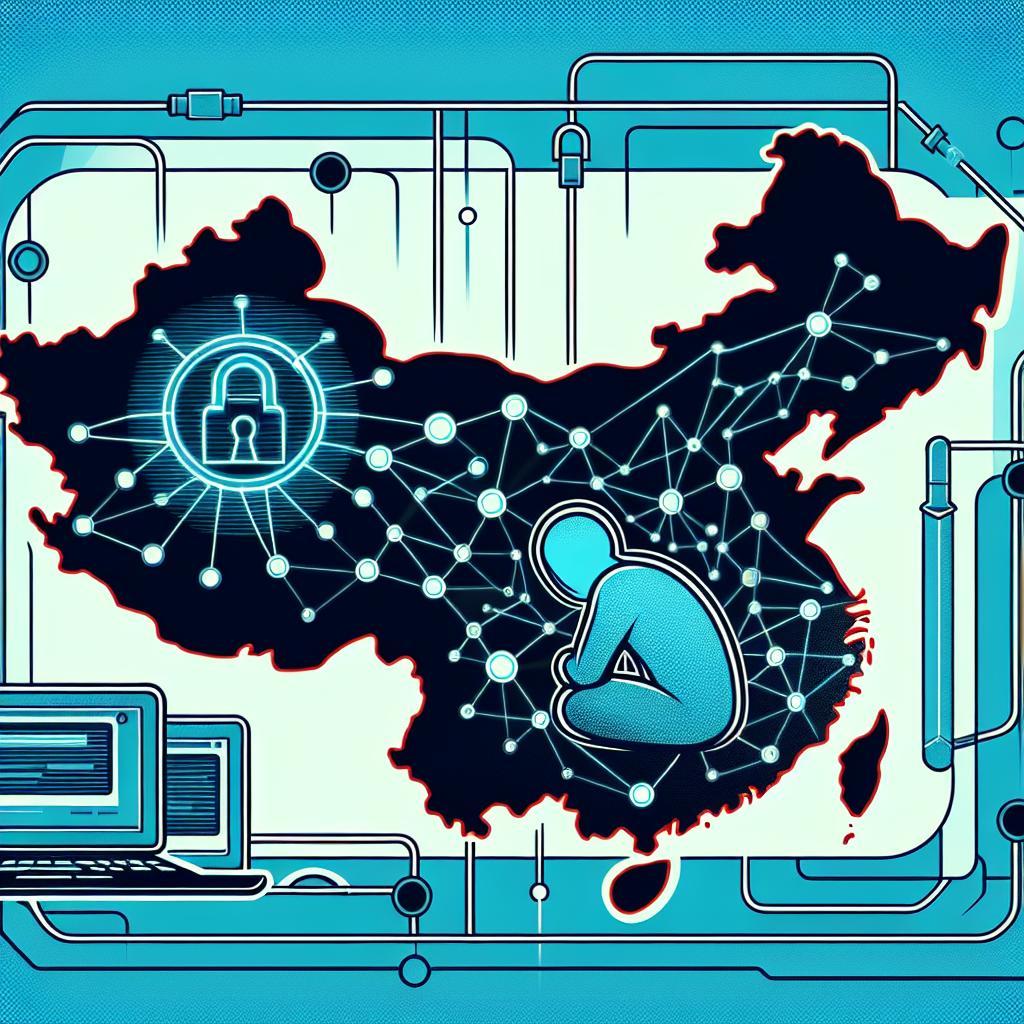
Navigating the Great Firewall: Impacts of Internet Censorship on a Generation in China

TABLE OF CONTENTS
- Summary
- Historical Context and Internet Adoption in China
- Understanding the Great Firewall and Its Mechanisms
- Censorship's Impact on Society and Discourse
- Potential Reforms and Future Implications
- Conclusion
1. Summary
The intricate landscape of internet censorship in China, particularly as shaped by the Great Firewall, presents a multifaceted challenge that has significant implications for Chinese society. Since the advent of the internet in the 1990s, governmental strategies have evolved, leading to a robust framework of state control over information that affects not only access to diverse viewpoints but also public belief systems and the discourse surrounding important societal issues. Beginning with early policies aimed at fostering economic growth, the state's strategies quickly adapted to address growing public sentiment and dissent. The phenomenon of public opinion incidents has necessitated an increasingly strict censorship regime to maintain social stability and government authority.
Examining the implications of censorship reveals a landscape where vital topics often remain obscured, profoundly impacting individual freedoms and public awareness. Case studies, including notable incidents during the COVID-19 pandemic, highlight how the redirection of public sentiment can stifle healthy discourse and create an environment saturated with misinformation. For instance, the adverse reactions faced by citizens attempting to speak out against government narrative underscore how censorship can lead to self-censorship, effectively silencing legitimate grievances and inhibiting constructive dialogue. Additionally, moments of crises, such as the silencing of Dr. Li Wenliang, reflect the broader societal ramifications of state-controlled information and demonstrate a generational shift in awareness and response to governance issues.
As calls for reform gain traction, exploring pathways to enhance information access holds promise for a future where citizens may engage more freely in discussions about the state and their rights. Strategies that encourage transparency and reduced censorship could instigate a transformation in public discourse, potentially curbing the extensive self-censorship currently experienced. These dynamics underscore the need for an ongoing evaluation of China's internet governance policies, as the interplay of technology, state control, and societal engagement continues to evolve.
2. Historical Context and Internet Adoption in China
2-1. China's internet adoption during economic reforms
The adoption of the Internet in China can be traced back to the significant economic reforms initiated in the late 20th century. Following the policies of openness implemented by Deng Xiaoping, the government recognized the potential of information and communication technology as a catalyst for modernization. As a result, China embarked on an ambitious path toward integrating the Internet into its economy and society. The early 1990s marked a turning point, with the establishment of the first publicly accessible Internet connections in major cities, facilitated by both government investments and emerging private enterprises. This integration was not merely technological; it was part of a broader strategy to attract foreign direct investment, enhance global competitiveness, and foster domestic innovation. Over the subsequent decades, the Internet rapidly evolved from a niche communication tool to a ubiquitous fixture in Chinese life, enabling various sectors from e-commerce to governance to flourish. As of 2024, China boasts over 730 million Internet users, reflecting a significant shift in the socio-economic landscape, characterized by the rise of digital commerce, which now accounts for 40 percent of global e-commerce transactions.
2-2. Early motivations behind state adoption of the internet
The Chinese government’s early motivations for adopting the Internet were multifaceted, shaped by a desire for economic modernization, state control, and social stability. Initially, the government viewed the Internet as a strategic asset that could enhance China’s engagement with the global economy, facilitate the flow of information, and boost domestic innovation. However, as the Internet expanded, it also emerged as a double-edged sword, creating unforeseen challenges in the form of rising public discourse and unrest. Notably, the Internet became a platform for what officials termed 'public opinion incidents,' a phenomenon where grievances regarding corruption, pollution, and societal inequalities were voiced publicly and sometimes escalated into protests. This necessitated a re-evaluation of governance strategies, leading to heightened censorship and the implementation of greater state controls to manage public sentiment and curb dissent. Under Xi Jinping’s leadership, the emphasis shifted toward reaffirming control over the Internet, recognizing its dual role as a tool for public engagement and a potential catalyst for unrest.
2-3. The intersection of internet technology and state control
As Internet technology evolved, it became increasingly intertwined with state mechanisms of control. The Chinese government’s approach to Internet governance reflects a complex relationship where the benefits of connectivity are harnessed while simultaneously mitigating risks associated with uncontrolled information flow. This is exemplified by the development and implementation of the Great Firewall, a formidable system designed to regulate and restrict access to foreign websites while promoting state-approved content. The state has ingeniously utilized the Internet not only for economic growth but also as a means of consolidating power, conducting surveillance, and engaging in digital censorship. This paradox highlights a form of governance characterized by a blend of authoritarian oversight and technological innovation. For instance, while the state actively encourages public feedback through official social media platforms, such as Weibo and WeChat, it simultaneously monitors these discussions closely, allowing for a selective response to public sentiment. This method of 'authoritarian deliberation' underscores how the government seeks to maintain the guise of responsiveness while effectively controlling the narrative and preempting potential dissent.
3. Understanding the Great Firewall and Its Mechanisms
3-1. Overview of the Great Firewall's structure and function
The Great Firewall (GFW) of China represents a sophisticated combination of technical and legislative measures that the Chinese government employs to regulate and censor the Internet domestically. Officially referred to as the Internet censorship system, it was initially conceived under the Golden Shield Project, launched in 1998, which aimed to create a comprehensive network of surveillance and control. At its core, the GFW effectively filters and blocks access to websites and content deemed undesirable or harmful to the state's narrative.
Functionally, the GFW operates by utilizing a variety of technologies, including deep packet inspection, DNS spoofing, and IP address blocking. These mechanisms allow the government to inspect the data packets that traverse the domestic Internet, looking for keywords or sensitive phrases related to political dissent, human rights, or critiques of the Communist Party. Notably, if a packet is flagged due to these concerns, more links and connections from the same source may be blocked, creating a cascading effect of censorship. Through this system, many foreign platforms, particularly those associated with social media and communication, such as Google and Twitter, are rendered inaccessible within China's borders.
The GFW also involves active monitoring of user behavior online, with millions of Internet police tasked with enforcing censorship regulations. This extensive oversight not only limits access to information but also encourages self-censorship among users, who may fear repercussions for sharing or even accessing restricted content.
3-2. Legislative actions and technologies used in censorship
The legislative framework supporting the Great Firewall is deeply rooted in the broader context of the Chinese government's Internet policies. Beginning with the enactment of regulations as early as 1997, the framework has been expanded to include laws that restrict various types of online communication, primarily geared towards maintaining state security and social stability. Major legal tools include the Computer Information Network and Internet Security, Protection and Management Regulations established by the State Council, which outlines prohibited online activities, such as inciting resistance against the state and disseminating material that undermines national unity.
Technologically, the GFW utilizes a plethora of methods to enforce these regulations. These include keyword filtering, IP blacklisting, and the modification of search results to erase unfavorable information from visibility. The state has employed advanced technologies, such as artificial intelligence, to enhance its content moderation capabilities, allowing for real-time censorship of potentially sensitive online discussions and the swift removal of unauthorized content from domestic platforms. Additionally, significant collaborations with foreign technology firms have historically provided the infrastructural backbone for these surveillance initiatives, albeit under a regime of stringent local oversight.
Moreover, the GFW is continually evolving; as users find ways to circumvent restrictions—often through VPNs or proxy servers—the government develops new strategies to track, identify, and punish users who attempt to access blocked content, thereby perpetuating a cycle of adaptation in its censorship tactics.
3-3. The philosophy behind internet regulations in China
The ideological underpinnings of the Great Firewall reflect a broader philosophy known as "Internet sovereignty," a concept championed by the Chinese government that maintains that the Internet within China's borders should be governed according to its laws and regulations. This notion links back to Deng Xiaoping's famous saying, "If you open the window for fresh air, you have to expect some flies to blow in," which encapsulates the government's desire to control external influences while embracing limited economic engagement with foreign entities.
At a deeper level, the philosophy behind China's internet regulations is fundamentally about preserving the authority and stability of the Chinese Communist Party. This worldview sees the free flow of misinformation and dissent as direct threats to the political order. By tightly controlling the narrative available to the public, the government attempts to mitigate the risks posed by any organized opposition or unrest. As seen in the aftermath of the Arab Spring and other international movements, the Chinese state fears that unfettered access to global communication networks could inspire similar upheavals domestically.
Furthermore, this mindset reflects a broader historical context where the state has consistently prioritized its version of 'social harmony' over individual freedoms. While the Chinese populace is tech-savvy and possesses a strong desire for information, the government limits this in the name of national security and societal stability, presenting censorship as a protective measure against harmful ideologies and external destabilization efforts.
4. Censorship's Impact on Society and Discourse
4-1. Effects of censorship on public awareness and information access
Censorship in China profoundly impacts public awareness and information access, shaping the landscape in which citizens engage with diverse viewpoints and critical information. The government's stringent control over online content restricts access to a wide range of topics, including governmental accountability, social issues, and global events. This limitation hinders the ability of citizens to form informed opinions or engage in constructive dialogue. A stark example is the coronavirus outbreak, where local reporting, such as the detailed diary by writer Fang Fang, would typically represent a means of public reflection and critique. However, her decision to publish internationally revealed not only the government's cover-up of early virus implications but also sparked a backlash from a nationalist segment of the online population. This response underscores how censorship generates an environment where even moderate criticism can evoke significant social consequences, effectively stifling open discourse.
Moreover, the mechanisms of internet censorship, commonly referred to as the Great Firewall, employ sophisticated technologies that filter and obstruct access to information. Tactics such as DNS spoofing and IP blocking make it difficult for users to access foreign news outlets or dissenting opinions. These measures contribute to a phenomenon known as 'information asymmetry,' wherein citizens are deprived of crucial news that shapes their understanding of both domestic and international matters. As noted, even while access to information has increased significantly since the 1990s, the content that is permissible remains tightly regulated, creating a superficial sense of enlightenment while perpetuating ignorance on critical issues.
4-2. Notable censorship incidents and their societal implications
Several incidents of censorship in recent years exemplify the profound societal implications of state-controlled information. One stark event was the public reaction to the COVID-19 pandemic, particularly surrounding the fate of Dr. Li Wenliang, who was punished for alerting colleagues about the virus outbreak. His subsequent death ignited anger throughout the country, a sentiment amplified by social media within the constraints of the Great Firewall. Such expressions revealed a generational shift among young Chinese, who, once seen as vehicles for reforming thoughts, began attacking critics of the state. This incident highlights the chilling effect of censorship on public consciousness, where awareness of governmental failures is quickly suppressed through targeted disinformation campaigns and online harassment of dissenters.
Similarly, the backlash against online content that challenges the state narrative, such as nationalistic portrayals in media or statements by public figures, reiterates the state’s efforts to maintain ideological conformity. Users criticizing figures like Fang Fang for purportedly discrediting the government's actions amid the pandemic reaffirm how state narratives redirect group sentiment away from legitimate grievances towards loyalty to the state. As accusations of being 'anti-China' proliferate, many are deterred from expressing dissenting opinions or seeking independent information, thus perpetuating a cycle of suppression and compliance.
4-3. Case studies of significant events suppressed by state censorship
The Chinese government's response to the Arab Spring in 2011 serves as a notable case study in its aggressive censorship strategies. In reaction to online calls for similar protests, authorities swiftly cracked down on any potential activism by detaining critics and suppressing discussion across social media. The ramifications of this event have been far-reaching, exemplifying how the state fortifies its grip on power through fear and repression. This episode demonstrates the severe risk individuals face when voicing dissent in any form, effectively silencing a generation that might have engaged in collective activism.
Another significant case is the suppression of discussions surrounding the Tiananmen Square protests. The state's ongoing censorship of this pivotal event is illustrative of its broader strategy to erase memory of dissent from public discourse. Educational curricula and media references to Tiananmen are rigorously controlled, ensuring that most citizens grow up without any knowledge of this critical moment in their nation's history. As a result, the lack of dialogue around such significant events stifles societal development, limiting critical evaluation of governmental actions and policy-making. Students and educators alike are conditioned to avoid topics that could lead to uncomfortable inquiries about state power and accountability.
5. Potential Reforms and Future Implications
5-1. Discussion of proposed reforms to internet governance
Proposals for reforming internet governance in China are increasingly gaining attention as the state grapples with the dual pressures of managing public discontent while fostering economic innovation. One prominent suggestion is the introduction of more transparent regulatory frameworks that would empower citizens by enhancing their freedom to access information. This approach may involve reassessing the scope of the Great Firewall and exploring alternatives that sacrifice less on civil liberties while still addressing government concerns regarding national security and social stability. Some advocates suggest implementing a framework similar to the European Union's General Data Protection Regulation (GDPR), which emphasizes transparency and accountability in data management and internet governance. These reforms could facilitate a more open interchange between the government and citizens, fostering an environment where public discourse can thrive without compromising state interests. Furthermore, Chinese Internet companies have begun to voice calls for a regulatory landscape that would provide them more leeway for innovation without extensive government oversight. This balance aims to protect domestic industries while promoting global competitiveness. The ongoing developments surrounding international collaborations on cybersecurity and data management could also influence China’s regulatory practices, nudging them towards approaches that adopt international standards and best practices. However, historically, significant reforms in governance often meet resistance from entrenched interests within the state apparatus.
5-2. What changes could mean for citizens' rights and freedoms
The potential for reforms in internet governance holds significant implications for citizens' rights and freedoms in China. If the government eases censorship and allows greater access to information, it may empower citizens to engage more actively in public discourse and civic participation. An increased flow of information could lead to better-informed citizenry who are capable of discussing and advocating for their rights more effectively. Moreover, such changes could help diminish the culture of self-censorship that pervades many aspects of daily life. The normalization of discussing sensitive issues online could encourage a more diverse range of opinions in both social and traditional media, ultimately leading to a more vibrant public sphere. However, discussions around reforms must also consider the historical context of state control over personal freedoms in China. Many citizen engagements, including vocal criticisms of the government or discussions surrounding sensitive topics, remain under the constant watch of authorities. Thus, any reforms would need to be carefully structured to safeguard against potential backlash or repressive measures from the state. For example, enhancing the protection of digital rights and privacy could accompany reforms, allowing citizens to navigate online spaces with a heightened sense of security and agency.
5-3. The potential role of international pressure and cooperation
International pressure and cooperation could play pivotal roles in influencing China's internet governance reforms. The interplay between global dialogue on digital rights and China's state-centric model may foster environments conducive to limited reform. Countries and international organizations advocating for enhanced internet freedoms could collaborate with Chinese civil society and internet stakeholders to promote shared goals around transparency, privacy, and security in cyberspace. Furthermore, diplomatic relationships can leverage trade agreements to encourage adherence to digital rights principles. For instance, trade partnerships often include clauses addressing intellectual property and market access that reference compliance with human rights standards, potentially impacting China's internet policies through economic incentives. International cooperation in cybersecurity and digital governance standards could also serve as a model for China to adopt best practices while maintaining its ideological stance. By observing how other nations implement similar frameworks—without compromising state security—China could selectively integrate those practices into its own governance strategy. Nonetheless, this would require significant negotiation efforts and a willingness to engage constructively with the international community, considering China's historical reluctance to align with external influences. The complex dynamics of these interactions highlight the need for proponents of reform to engage creatively and pragmatically in their negotiations with both the Chinese government and international actors.
Conclusion
The analysis of internet censorship dynamics in China, particularly through the framework established by the Great Firewall, highlights the significance of understanding the intersection between state control and individual freedoms. The profound consequences of these policies on public engagement and access to information necessitate a critical approach to governance reforms. Notably, the potential for increased transparency and engagement invites examination of how these changes might empower citizens, foster public awareness, and enhance their participation in societal discourse.
Moreover, the discussions surrounding proposed reforms suggest a pivotal moment for internet governance that could redefine the landscape of civil liberties in China. As the global community continues to advocate for human rights and digital freedoms, the pressure for change may create viable pathways towards a more open internet that balances state interests with individual rights. Reflecting on the evolving nature of public discourse amid stringent regulatory frameworks reveals the need for persistent vigilance and advocacy in promoting freedom of expression. The path forward, while fraught with challenges, holds the potential to empower a generation increasingly aware of their rights and capable of effecting meaningful change.
In conclusion, the call for reform is not merely about mitigating censorship but is significant as it reflects the aspirations of a society yearning for greater accountability and open engagement. The future of internet governance in China will likely become a crucial touchpoint in the ongoing global conversation around digital rights, underscoring that the journey towards a more liberated and informed citizenry is both necessary and inevitable.
Glossary
- Great Firewall [Concept]: The Great Firewall (GFW) is China's internet censorship system, established to regulate access to foreign websites and control the flow of information within the country, ensuring it aligns with state narratives.
- Public Opinion Incidents [Concept]: Public Opinion Incidents refer to instances where citizens express grievances regarding various societal issues, potentially escalating into larger protests, prompting government censorship and control.
- Authoritarian Deliberation [Concept]: Authoritarian Deliberation describes a governance approach where the state appears responsive to public feedback while maintaining strict control over discussions and information, ultimately curbing dissent.
- Internet Sovereignty [Concept]: Internet Sovereignty is the principle that a nation governs its internet according to its laws, emphasizing control over information to protect national stability and security.
- Golden Shield Project [Document]: The Golden Shield Project is the foundational initiative launched by the Chinese government in 1998 to develop a comprehensive system for internet surveillance and censorship.
- Deep Packet Inspection [Technology]: Deep Packet Inspection is a form of data filtering that inspects packets of data as they pass through a network, allowing for the identification of specific content and enforcement of censorship.
- VPN (Virtual Private Network) [Technology]: A Virtual Private Network (VPN) is a technology that creates a secure connection over a less secure network, often used to bypass censorship and access restricted content in China.
- IP Address Blocking [Technology]: IP Address Blocking is a censorship technique where access to specific websites or servers is restricted based on their IP address, preventing users from reaching certain online destinations.
- Fang Fang [Person]: Fang Fang is a Chinese writer known for her diary detailing the experience during the COVID-19 outbreak, which highlighted issues of censorship and government transparency in China.
- Dr. Li Wenliang [Person]: Dr. Li Wenliang was an ophthalmologist who was punished for warning others about the COVID-19 virus outbreak, becoming a symbol of the harsh repercussions of censorship in China.
Source Documents
- How Chinese Authorities and Individuals Use the Internethttps://www.hoover.org/research/how-chinese-authorities-and-individuals-use-internet
- In China, the ‘Great Firewall’ Is Changing a Generationhttps://www.hrw.org/news/2020/09/01/china-great-firewall-changing-generation
- Great Firewall - Wikipediahttps://en.wikipedia.org/wiki/Great_Firewall
- Internet censorship in China - Wikipediahttps://en.wikipedia.org/wiki/Internet_censorship_in_China