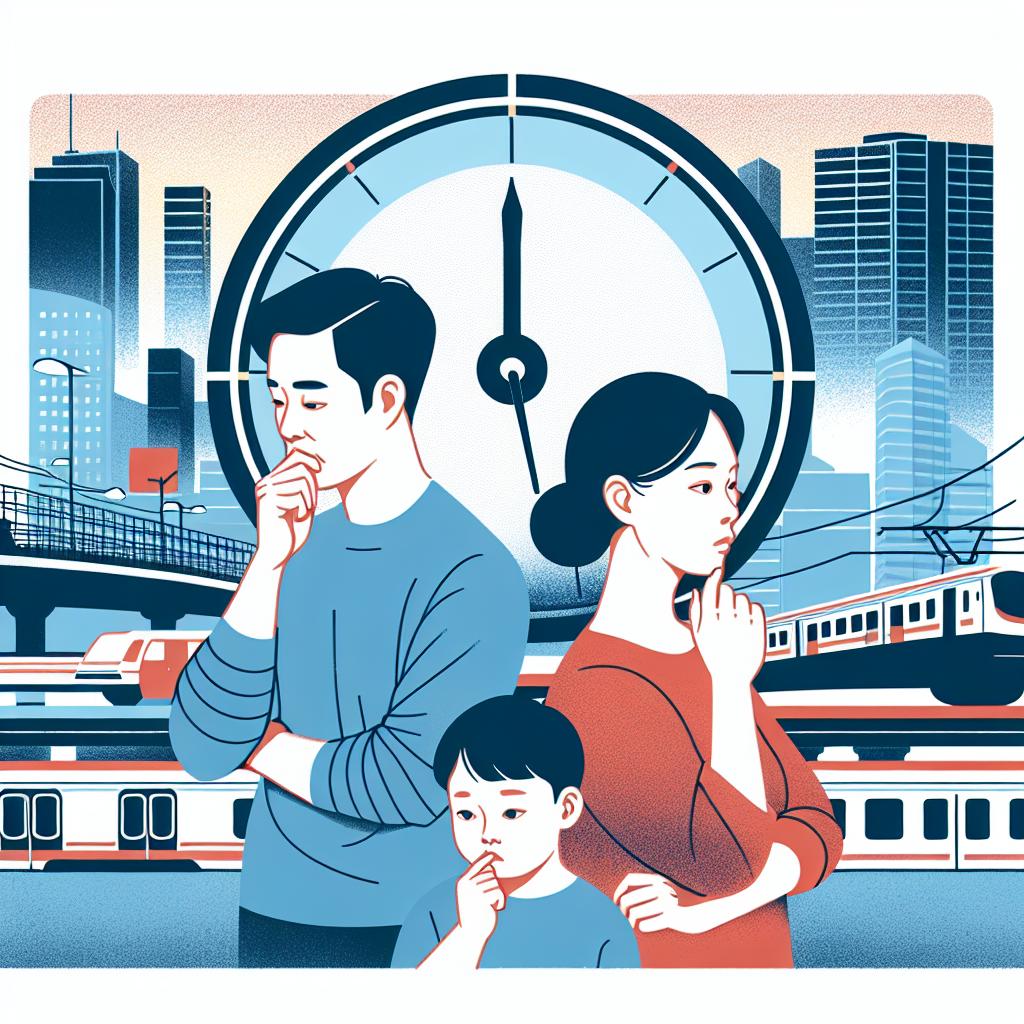
The Impact of Commuting Times on South Korea's Declining Birth Rates: Unpacking the Links

TABLE OF CONTENTS
- Summary
- Understanding Commuting Times in South Korea
- Time Scarcity and Childbearing Decisions
- Economic Burdens Associated with Long Commutes
- Work-Life Balance and Family Planning
- Psychological Stress and Its Effects on Family Dynamics
- Policy Recommendations to Address the Issue
- Conclusion
1. Summary
In South Korea, a profound relationship exists between extended commuting times and the troubling decline in birth rates. The intricacies of familial decisions surrounding childbearing are significantly impacted by various sociocultural factors, including time scarcity, economic pressures, disruptions in work-life balance, and increasing mental stress. This exploration delves deeply into how the challenges of long commutes, which average 68 minutes one way, play a pivotal role in shaping the life choices of the younger population. Many individuals find that long hours spent traveling not only exhaust their physical energy but also consume precious time that could otherwise be dedicated to nurturing personal relationships and familial ties, leading to delayed marriages and childbearing decisions.
Moreover, the phenomenon of urban migration exacerbates commuting challenges, significantly contributing to the growing population density in major metropolitan areas like Seoul. As more individuals flock to these urban centers for professional opportunities, the resultant strains on public transportation lead to longer and more stressful commutes, further complicating work-life balance. The comparison with other nations highlights how South Korea's commuting crisis stands out, prompting questions about effective urban planning and transportation infrastructure. Thus, a multifaceted approach is necessary, encompassing both improved public transportation systems and supportive policies that encourage a more manageable work-life integration.
As this analysis unfolds, it emphasizes the detrimental impact of commuting on leisure time and family engagements. Coupled with rising economic burdens, particularly transportation costs, the financial implications create a formidable barrier for potential parents. Young families are increasingly confronted with the harsh reality that the cost of raising children amidst stagnant wages and exorbitant living expenses renders family planning a daunting prospect. Consequently, this crisis calls for urgent policy recommendations aimed not only at alleviating these economic stresses but also at fostering a nurturing environment conducive to family growth.
2. Understanding Commuting Times in South Korea
2-1. Average commuting time statistics
Commuting in South Korea has become a significant aspect of daily life, reflecting the nation's rapid urbanization and economic development. According to recent surveys, the average commuting time for South Korean workers has steadily increased over the past decade, with the current average pegged at approximately 68 minutes one way. This figure is notably higher than the global average, positioning South Korea among the countries with the longest commuting durations. Notably, commuters in metropolitan areas such as Seoul and Busan experience even longer travel times, often exceeding 80 minutes. These statistics underscore the increasing strain placed on individuals, impacting their professional and personal lives.
The rise in commuting times can be attributed to several factors, including the concentration of job opportunities in urban centers, coupled with the trend of suburban living. Families often choose to reside in suburban areas for affordability, while daily commuting becomes a necessary routine to access employment. As a result, the dual pressures of increased travel time and job demands place additional burdens on workers, reshaping their daily schedules and life choices.
2-2. Trends in urban migration and its impact on commuting
Urban migration in South Korea has been a pivotal factor influencing commuting patterns, with many individuals gravitating towards metropolitan hubs in search of better employment opportunities and amenities. This trend has led to significant demographic shifts, as the population density in cities continues to rise. The influx of residents into areas like Seoul not only exacerbates commuting difficulties due to increased traffic congestion but also strains public transportation systems, which are already operating at full capacity during peak hours. Consequently, long waiting times and overcrowded transit options contribute to the stress experienced by commuters.
Additionally, as more individuals migrate to urban centers, the disconnect between housing availability and job locations has widened, compelling many to undertake lengthy commutes daily. This shift creates a cyclical problem where increasing commuting times discourage further migration into cities, potentially affecting economic growth and labor market dynamics. Furthermore, the trend is notable among younger generations, who are increasingly prioritizing job stability and career advancement, even at the cost of extensive travel times.
2-3. Comparative analysis with other countries
When compared to other countries, South Korea's commuting times are strikingly high. For instance, while Japan also has a reputation for lengthy commutes due to its advanced metropolitan systems, the average commuting time in Japan is approximately 53 minutes. Similarly, many European countries, such as Germany and France, report average commutes of around 40 to 45 minutes. These statistics raise important questions about the effectiveness of urban planning and transportation infrastructure in South Korea, suggesting that investment in efficient public transport systems could alleviate some of the pressure on commuters.
Analysis of commuting patterns in different cultural contexts reveals that countries with shorter commuting times often benefit from policies that prioritize work-life balance and promote regional economic development. For example, in cities like Copenhagen, Denmark, policy initiatives aimed at establishing compact urban centers with integrated public transportation options have led to reduced commuting durations. In contrast, South Korea's current infrastructure demands urgent reassessment and innovation to address the ongoing transit challenges and improve the quality of life for its citizens.
3. Time Scarcity and Childbearing Decisions
3-1. Impact of long commuting on personal time
In South Korea, long commuting times significantly diminish personal time, posing a barrier to family planning and childbearing decisions. The average commuting duration can exceed two hours daily, leaving individuals with scant opportunities for leisure, family engagement, or self-care. This time scarcity inherently limits the ability of young couples to find time for one another, let alone consider the prospect of raising children. Consequently, many young Koreans experience a conflict between career aspirations and family desires, often resulting in delayed marriages and postponed childbirth. This struggle is exacerbated by the societal pressures to excel professionally, further entrenching a culture where personal fulfillment is often prioritized over family expansion.
The psychological toll of these long commutes cannot be overlooked. As individuals dedicate extensive hours to travel, they are fatigued by the time wasted, which further diminishes their capacity for personal and familial relationships. Young couples report feeling overwhelmed, noting that the limited personal time available is generally consumed by exhaustion rather than leisure activities or meaningful interpersonal connections. This erosion of quality time translates into a hesitance to embark on the journey of parenthood, underlining a pervasive belief that raising children requires a dedicated, nurturing environment that is currently unattainable due to time constraints.
3-2. Effects on leisure and family engagement
The impact of extended commuting on leisure activities can severely constrain family interactions and overall quality of life. Research indicates that leisure time is a crucial component for fostering strong familial bonds, yet the relentless nature of long work commutes robs families of these invaluable moments together. As commuting dissipates energy and time, parents find it increasingly challenging to partake in family-centered activities, which are essential for emotional connection and child development. Consequently, this lack of engagement may result in children feeling isolated or detached from their parents, further complicating the equation of modern parenting.
Moreover, as reported in recent studies, negative emotions surrounding family formation, such as fear and sadness, significantly correlate with the burdens associated with inadequate family engagement due to time scarcity. The societal expectation to fulfill both professional responsibilities and familial duties can create a cycle of stress and anxiety, where family activities are deprioritized and perceived as secondary obligations. This emotional strain can deter young couples from even exploring parenthood, as they fear inadequate time and resources will prevent them from being effective as both partners and parents.
3-3. Time allocation challenges for prospective parents
With increasing responsibilities tied to both professional and personal domains, prospective parents in South Korea encounter daunting time allocation challenges that significantly complicate their childbearing decisions. The pursuit of a stable career is often seen as a prerequisite for family formation; however, the time investment required for commuting transforms into a double-edged sword. Young adults wrestle with the idea that their careers must take precedence, heightening the perception that the ideal time for childbearing is perpetually 'just around the corner.' A recent study highlighted this phenomenon, revealing that financial anxieties closely intertwine with fears regarding time availability for raising children. Almost 28.9% of discussions about marriage emphasized financial concerns, indicative of how intertwined economic issues are with the desire to start a family.
This dilemma is further compounded by the societal pressures to achieve financial stability before embarking on parenthood. As a result, many young individuals choose to delay having children, perpetuating the cycle of low birth rates. Despite government incentives aimed at encouraging families, the overarching issue of time scarcity, rooted in lengthy commuting times, ultimately stifles any desire to change current family planning trajectories. The ongoing struggle to balance work and family life leaves prospective parents navigating a confusing landscape, where the prospect of growing their family seems increasingly unattainable.
4. Economic Burdens Associated with Long Commutes
4-1. Increased Transportation Costs
In South Korea, extended commuting times significantly contribute to higher transportation costs, which can strain the financial capacity of households, particularly young families. Monthly public transport expenses, which encompass bus and subway fares, can accumulate to a hefty sum, often ranging from 100,000 to 200,000 KRW (approximately $85 to $170) for individuals commuting frequently. For families that must transport more than one individual, these costs rise substantially. The financial burden of commuting can deter couples from making decisions about childbearing, as a sizable portion of their income is redirected toward transportation, diminishing their available funds for childcare and education expenses.
Furthermore, owning a vehicle—a common alternative among those with long commutes—can exacerbate economic pressures. With the cost of fuel, maintenance, insurance, and parking, monthly expenses can easily surpass the costs associated with public transportation, especially in urban settings where parking fees can be exorbitant. Consequently, the cumulative financial pressure from both public and private commuting options can lead to significant economic strain, pushing potential parents to reconsider their readiness to start a family. This situation is compounded by the high cost of living in key metropolitan areas, where commuting is often essential.
4-2. Financial Implications for Young Families
The burden of long commutes extends beyond direct transportation costs to include broader financial implications affecting young families. As young couples face stagnant wages coupled with rising living costs, the economic viability of raising children becomes increasingly questionable. The financial instability created by long commuting times is further exacerbated by high housing expenses in urban areas, which have skyrocketed in recent years. The considerable portion of income required for housing leaves little flexibility for families aiming to save for future expenses associated with children, such as education and healthcare.
Additionally, long commutes may necessitate the need for additional childcare arrangements, further increasing monthly expenditures. Young parents often find themselves juggling work schedules with childcare logistics, which can lead to employing extra caregivers or enrolling children in after-school programs—costs that add up quickly. Research indicates that households spending more than 30% of their income on housing tend to have lower birth rates; this phenomenon is increasingly observable in cities like Seoul, where housing prices are among the highest in the world. As financial pressures mount, family planning becomes a luxury that many young Koreans feel they cannot afford.
4-3. Economic Pressures Deterring Childbearing
A crucial linkage between long commute times and declining birth rates in South Korea involves the pervasive economic pressures that discourage young couples from pursuing parenthood. The economic landscape has shifted dramatically; whereas traditionally, the responsibilities of childrearing were often mitigated by extended family support, modern societal trends show a move towards nuclear families who bear the full brunt of child-related financial commitments. High levels of personal debt, resulting from educational loans or housing arrangements, further complicate the decision-making process regarding childbearing.
The economic fears of young couples are amplified by a perception of job insecurity, with many in unstable employment relationships or in roles that do not provide sufficient benefits or a safety net for family growth. This fear is bolstered by the fact that the average fertility rate in South Korea is currently at an unprecedented low, with statistics indicating a total fertility rate of just 0.75 as of the previous year. Consequently, the perception of inadequate support for families, stemming partly from the economic burdens generated by long commuting hours, contributes to a culture where potential parents delay or entirely forgo having children. As a result, these economic pressures not only influence immediate decisions regarding family planning but also create a long-term demographic challenge for the nation.
5. Work-Life Balance and Family Planning
5-1. Challenges to achieving a healthy work-life balance
In contemporary South Korea, achieving a healthy work-life balance presents significant challenges, particularly for young couples contemplating marriage and family. The extended work hours prevalent in many industries, coupled with long commuting times, create a landscape where personal time is scarce. The notion of a balance between work commitments and family responsibilities becomes blurred, with many employees feeling compelled to prioritize their professional obligations over personal life. This imbalance is exacerbated by a rigid labor market that frequently promotes a culture of overwork, which is detrimental to employees’ mental well-being and family cohesion.
The impact of work culture on family planning is pronounced. Young professionals often find themselves torn between career ambitions and desires for parenthood, leading to delays in marriage and childbearing. The societal expectation to excel in a career can overshadow the importance of family life, compelling many individuals to postpone significant life milestones until they feel more established professionally. This phenomenon contributes to a declining birth rate, as evident from studies indicating that young adults often associate marriage and childbirth with anxiety due to financial and social pressures.
5-2. Influence on marriage and childbirth timing
The pressures of achieving a successful career have distinctly influenced marriage and childbirth timing in South Korea. Many young people perceive marriage not as a source of joy but as a substantial financial and emotional burden. Research shows that nearly one-third of discussions regarding marriage reflect sadness or fear, a sentiment closely tied to concerns about financial stability. Young adults increasingly view marriage as a prerequisite to childbearing but hesitate to make that commitment due to the perceived economic strains associated with raising a family.
Moreover, the rising costs of living, particularly in urban areas like Seoul, compel many to delay marriage and subsequently childbirth. As individuals prioritize economic security, delays become commonplace, resulting in a demographic trend that sees a larger portion of the population opting to remain single or childless. This directly correlates with the historically low fertility rates documented by the Korea Institute for Health and Social Affairs, which fell to an alarming 0.72 in 2023. The continuous deferral of marriage and childbearing exacerbates the issue of declining birth rates, highlighting the urgent need for societal and policy shifts that support family-oriented decisions.
5-3. Cultivating a family-friendly work environment
To address the challenges of work-life balance, organizations in South Korea must cultivate a more family-friendly work environment. This requires a systemic change in corporate culture that values flexibility, support, and inclusivity for employees' family needs. Companies should implement policies that promote parental leave, flexible work hours, and childcare support, enabling employees to fulfill both their professional roles and personal responsibilities effectively.
The success of family-friendly initiatives depends not only on corporate policies but also on the active participation of management in advocating for work-life balance. Research indicates that when employers take a proactive stance in creating supportive environments, employee morale and productivity increase, leading to a more engaged workforce. By aligning corporate objectives with the needs of families, businesses can contribute positively to reversing the trend of declining birth rates. Collaborative efforts between the government and private sector can create sustainable policies aimed at alleviating economic pressures, thus creating a conducive environment for young couples considering parenthood.
6. Psychological Stress and Its Effects on Family Dynamics
6-1. Connection between commuting stress and mental health
In South Korea, escalating commuting times have been increasingly recognized as a significant source of psychological stress, directly impacting the mental health of individuals and families. Extended periods spent commuting—often exceeding two hours daily—can lead to heightened anxiety, fatigue, and overall dissatisfaction with life. A study conducted by the Korea Peninsula Population Institute for Future noted that young adults express an overwhelming sense of negativity associated with marriage and childbirth, with financial and emotional stresses frequently cited as major deterrents to family planning. Given that long commutes consume precious time that could be dedicated to personal relationships or self-care, the psychological toll becomes more pronounced at a familial level, where individuals may find themselves less emotionally available for their partners and children after enduring a taxing travel experience.
The mental strain of long commuting not only affects the individual commuter but can also lead to cascading effects within family dynamics. As stress levels rise, parents may exhibit irritability or emotional withdrawal, which could strain marital relationships and reduce quality time spent with children—factors that are critical for fostering secure family bonds. The disconnection felt among family members due to stress can create a cycle of emotional unavailability, where the pressures of daily life further inhibit positive familial interactions.
6-2. How stress impacts family planning
The interplay between psychological stress and family planning decisions is multifaceted, particularly in the context of South Korea’s unique societal pressures. As outlined in various reports, the fear of financial instability significantly influences young couples’ attitudes toward marriage and parenthood. Mental health issues stemming from psychological stress — often exacerbated by long commuting times and economic uncertainty — lead individuals to delay or forgo family formation altogether. This trend reflects a broader cultural shift wherein traditional values regarding marriage and family are increasingly overshadowed by individual aspirations and economic realities.
Research conducted by the Korean Peninsula Population Institute for Future confirms that discussions surrounding childbirth frequently include themes of economic support and declining birthrates, indicating that psychological concerns about financial readiness are paramount. The negative emotional responses associated with the prospect of adding children to financially strained circumstances result in many young people postponing these milestones or opting out of parenthood entirely. Furthermore, the stigma surrounding mental health issues can deter couples from seeking help, perpetuating cycles of stress and indecision regarding family planning.
6-3. The psychological toll of long commutes
The cumulative effects of long commutes manifest as an overwhelming psychological burden on individuals, which can significantly deter family formation and child-rearing. Commuters report feelings of isolation, disconnection, and dissatisfaction, which, when compounded over time, lead to more profound mental health issues such as depression and anxiety. The study conducted by the Korean Peninsula Population Institute for Future highlighted that a large portion of young people's online discourse around marriage and childbirth features negative emotions like sadness and fear, many of which stem from the anxieties associated with their daily commute.
Moreover, as the pressure mounts and the psychological toll increases, the potential for conflict within families rises. Stress-induced irritability may lead to heightened disputes between partners, adversely affecting mutual support which is crucial in planning and engaging in family life. Consequently, the impact of long commuting times extends beyond the individual to deeply affect the family unit, hindering effective communication, emotional bonding, and overall relational satisfaction. As parents grapple with the consequences of their commuting experiences, the implications stretch into their roles as caregivers, creating an environment where parenting may become viewed as an additional burden rather than a fulfilling aspect of life.
7. Policy Recommendations to Address the Issue
7-1. Strategies to reduce commuting times
Reducing commuting times is essential to alleviate some of the pressures that contribute to South Korea's declining birth rates. A multi-faceted approach that includes improving public transportation infrastructure, implementing flexible work hours, and promoting remote work is necessary. Enhanced public transport services can significantly reduce the average daily commute for many workers. For instance, expanding metro lines and optimizing bus routes can lead to shorter travel durations and increased accessibility. Furthermore, implementing policies that encourage companies to adopt more flexible work schedules, such as staggered start times or compressed workweeks, could help employees better manage their professional and personal lives. This flexibility could facilitate a better work-life balance, allowing couples to invest time in family planning and associated activities, which is crucial in a society where parental leave and childcare options have not fully reversed the trend of declining fertility rates.
7-2. Creating family-friendly policies
To effectively combat the demographic crisis, it is vital to create family-friendly policies that can ease the economic and social burdens faced by young families. The current financial strain of raising children in South Korea, where high education costs and housing expenses loom large, necessitates increased government investment in affordable childcare, housing subsidies, and education cost control. Programs aimed at reducing the high costs of private education, which consume a significant portion of household income, need to be expanded. Additionally, policies should be tailored to support both parents equitably, encouraging fathers to take parental leave and participate actively in child-rearing. This could involve enhanced parental leave schemes that are not only equitable but also culturally promoted to reduce stigma against fathers taking time off work for familial responsibilities. Simultaneously, public campaigns highlighting the shared responsibility of parenting could contribute to changing societal norms surrounding gender roles, making it easier for young couples to balance professional aspirations with family life.
7-3. Long-term implications for birth rates and demographics
The long-term implications of reduced commuting times and improved family-friendly policies are substantial for South Korea's birth rates and overall demographic trends. A healthier workforce that enjoys improved work-life balance is likely to contribute positively to family formation rates. As commuting stress diminishes, families may feel more capable of pursuing the financial and lifestyle commitments necessary for raising children. Sustained focus on creating a supportive environment will also be crucial in addressing the rising old-age dependency ratio projected for the coming decades. Without intervention, social insurance systems could face irreparable strain as the population ages and the workforce shrinks. Therefore, the commitment to implement these strategies must reflect urgency, given the expected demographic shifts. As young people find it feasible to balance career aspirations with family life without the burdens of outdated societal expectations, a gradual uptick in birth rates could signal the reversal of the current trend, securing the social and economic fabric of South Korean society for future generations.
Conclusion
The insights drawn from examining the intricate ties between prolonged commuting times and declining birth rates in South Korea elucidate a pressing issue requiring immediate and sustained attention. As evidenced by the findings, reducing commuting times alongside alleviating economic burdens presents a dual approach that could reshape family planning decisions and create a more favorable environment for potential parents. The urgency of implementing innovative policies, such as enhanced public transportation services and equitable family-oriented practices, is paramount to reversing this demographic trend. Additionally, promoting flexible work arrangements that allow for a better work-life balance must become a central focal point for both governmental and corporate policies.
Furthermore, the long-term implications of these interventions could pivotally enhance the quality of life for South Korean citizens, ultimately contributing to the revival of birth rates and the stabilization of demographics in the face of aging population challenges. As societal norms evolve alongside supportive policy frameworks, young couples may increasingly find themselves empowered to navigate their personal and professional lives harmoniously. The path forward necessitates collaborative efforts across various sectors to cultivate environments that prioritize both career fulfillment and family well-being. In doing so, South Korea can aspire to create a future where parenthood is viewed not as a burden but as a cherished milestone, enriching both individual lives and the broader societal fabric.
Glossary
- Commuting Time [Concept]: The duration spent traveling to and from work, which in South Korea, averages around 68 minutes one way, impacting personal and family time.
- Urban Migration [Concept]: The trend of individuals moving from rural areas to urban centers, driven by job opportunities and amenities, significantly influencing commuting patterns in South Korea.
- Work-Life Balance [Concept]: The equilibrium between professional duties and personal life, which is increasingly difficult to achieve in South Korea due to long commuting times and work expectations.
- Time Scarcity [Concept]: The limited availability of personal time for leisure and family interactions, often resulting from long commuting durations.
- Economic Pressures [Concept]: Financial burdens encountered by young families, which deter them from childbearing and are exacerbated by high commuting costs and living expenses.
- Psychological Stress [Concept]: Mental health challenges stemming from various pressures, including long commuting times, which can negatively affect familial relationships and decisions regarding parenthood.
- Family-Friendly Policies [Concept]: Policies aimed at alleviating economic and social burdens for families, such as flexible work arrangements and parental support, crucial for encouraging family growth.
- Demographic Trends [Concept]: Patterns in population changes, including declining birth rates in South Korea, linked to societal and economic factors exacerbated by commuting issues.
Source Documents
- An Investigation of Learning English as a Second Language in Koreahttps://www.ejpbl.org/journal/view.php?number=80
- Korea’s birth rate rebounds, but quality of life factors may determine if upswing persistshttps://english.hani.co.kr/arti/english_edition/e_national/1184589.html
- Birth Rate Transition in the Republic of Korea: Trends and Prospects - PMChttps://pmc.ncbi.nlm.nih.gov/articles/PMC9623034/
- Translate English to Korean online with Typing Keyboardshttps://translate.typingkeyboards.com/english-korean/
- Issues in English Language Education at Korean Elementary Schoolshttps://www.academia.edu/65582886/Issues_in_English_Language_Education_at_Korean_Elementary_Schools
- What we can learn from Korea’s demographic meltdown | CEPRhttps://voxeu.org/voxeu/columns/what-we-can-learn-koreas-demographic-meltdown
- Policy Reference | PUBLISH : Korea Institute for International Economic Policyhttps://www.kiep.go.kr/gallery.es?mid=a20304000000&bid=0001&tag=&nPage=2
- Marriage – The Grand Narrativehttps://thegrandnarrative.com/category/korean-sexuality/marriage-korean-sexuality/
- Determinants of international Korean language promotion: A cross-country analysis - PMChttps://pmc.ncbi.nlm.nih.gov/articles/PMC10590977/
- The Birth Dilemma: Why South Korea’s Fertility Rate is the Lowest in the World | Otherhttps://www.devdiscourse.com/article/other/3306236-the-birth-dilemma-why-south-koreas-fertility-rate-is-the-lowest-in-the-world
- South Korean Youth View Marriage and Childbirth with Fear, Study Findshttp://koreabizwire.com/south-korean-youth-view-marriage-and-childbirth-with-fear-study-finds/309305
- 2023-2024 Best international Schools in Seoul - Expat Children in KOREAhttps://expatguidekorea.com/international-schools-in-seoul-reviews/k:at-seoul
- Korean | College of Liberal and Fine Artshttps://colfa.utsa.edu/modern-languages/languages/korean.html
- Neoliberalism as language policy | Language in Society | Cambridge Corehttps://www.cambridge.org/core/journals/language-in-society/article/neoliberalism-as-language-policy/B004843736D4B07EDC694E97836CAF97