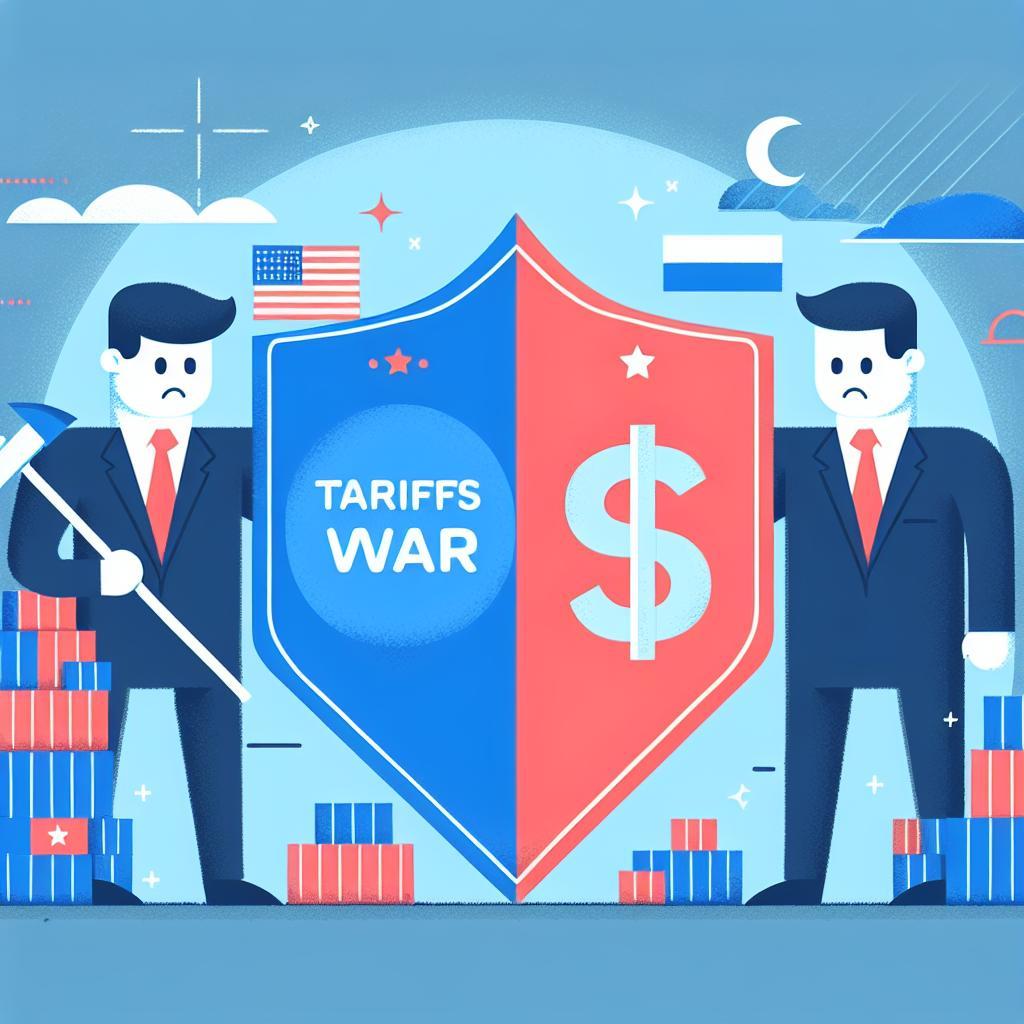
Unpacking Trump's Tariff War: Motivations, Impacts, and Economic Ramifications

This analysis delves into the ongoing tariff war initiated by President Trump's recent policies, exploring the motivations behind these tariffs, particularly regarding China, Canada, and Mexico. The piece examines how these trade tensions are not only reshaping international relations but also impacting consumers and various economic sectors within the U.S. The potential outcomes and implications of these tariffs for global trade and domestic markets are discussed, providing a comprehensive overview for policymakers and stakeholders.
Motivations Behind the Tariff War
Political Context of Tariff Implementations
The political context surrounding the implementation of tariffs is multifaceted, particularly in the case of the recent U.S.-China trade war under President Trump's administration. The Trump administration initiated tariffs as a strategic maneuver that aligns with an 'America First' philosophy aimed at reshaping international trade relationships. Trump's initial imposition of tariffs on China aimed to address trade imbalances and the alleged unfair practices employed by the Chinese government in trade negotiations. These tariffs, starting with a 10% duty on all imports from China, sought to leverage U.S. economic power to compel China to adhere to fair trade practices, particularly concerning the trade of fentanyl and other illicit drugs. This approach illustrates a broader political strategy to rally domestic support by framing tariffs as a protective measure for American workers and industries. Moreover, the political unpredictability associated with Trump's trade policies—often highlighted by sudden announcements and shifting demands—has created an atmosphere of uncertainty. This unpredictability was evident when Trump postponed the implementation of a 25% tariff on Mexican and Canadian imports, which had been part of a negotiation tactic aimed at securing border security concessions. This maneuver highlights the intertwining of trade policies with immigration and security policy under the current administration, further complexifying the political motivations behind tariff implementations.
Economic Goals: Protecting Domestic Industries
At the heart of the tariff war lies a clear economic goal: the protection and revitalization of domestic industries. President Trump's tariffs have been portrayed as a means to shield American manufacturers from foreign competition, particularly services and goods produced at lower costs in countries like China and Mexico. The tariffs on imports are intended to level the playing field for U.S. manufacturers, encouraging them to retain production within the United States and potentially leading to job creation. However, the economic ramifications of these tariffs have raised significant concerns. For instance, the Peterson Institute for International Economics estimates that the tariffs could cost the average American family up to $1,200 annually due to higher prices for imported goods. Analysts argue that while tariffs aim to support local industry, they can also lead to increased costs for consumers, especially in sectors heavily reliant on foreign production inputs. Goods such as electronics, automotive parts, and consumer goods are particularly affected, as demonstrated by increases in prices for products like sneakers and appliances—which are heavily imported from China. As businesses grapple with the challenge of passing these costs onto consumers without sacrificing sales, there remains an ongoing debate about the efficacy of tariffs in achieving their intended economic outcomes. Moreover, the anticipated economic benefits of stimulating domestic growth are hindered by global economic interdependencies, where U.S. companies rely on global supply chains that benefit from efficient and cost-effective foreign production. Therefore, while the stated objective of protecting domestic industries is clear, the actual implications suggest a complex interplay between intended economic protectionism and the unintended consequences of raised prices and disrupted supply chains.
National Security Concerns Related to Trade
National security concerns have significantly influenced the motivations behind the tariff war, particularly in relation to perceived threats from foreign nations such as China. Trump's administration has positioned trade policies as an essential component of national security strategy, with tariffs viewed as necessary to safeguard U.S. interests against economic adversaries. A primary justification for tariffs on Chinese imports has been the assertion that such measures are necessary to mitigate the risks arising from economic espionage and the potential control of critical supply chains by foreign powers. For instance, controversies surrounding the production and supply of pharmaceuticals and components for high-tech goods have underscored vulnerabilities in relying on foreign sources, particularly from a strategic competitor like China. The recent tariffs are argued to strengthen U.S. resilience and capacity by encouraging domestic manufacturing, particularly in key sectors crucial for national defense and economic stability, such as semiconductor production and pharmaceuticals. In addition to this, there are broader implications relating to the geopolitical landscape. The imposition of tariffs is not merely an economic tool but a geopolitical maneuver intended to leverage U.S. negotiating power in broader strategic dialogues with nations like China, addressing not only trade issues but also interlinked challenges in cybersecurity, regional stability, and military technologies. Consequently, while tariffs serve an economic purpose, they also reflect a complex relationship between trade policy, national security interests, and geopolitical strategy—elements that are crucial to understanding the motivations behind the ongoing tariff war.
Impacts on U.S. Consumers and Economy
Price Hikes on Everyday Goods
The introduction of tariffs has begun to significantly impact U.S. consumers, primarily through price increases on a broad range of goods imported from China and other affected countries. As the United States started implementing a 10% tariff on all Chinese imports, analysts warned that the costs would inevitably ripple through various sectors, including footwear, apparel, and electronics. For instance, approximately 30% of U.S. clothing and over half the footwear sold in the country is sourced from China. The increased tariffs on these products mean higher retail prices for consumers, with footwear prices expected to rise by as much as 20% due to the cumulative effect of multiple tariffs already in place. Importantly, while some retailers might absorb portions of these costs to remain competitive, a significant burden will likely be passed on to consumers, who can expect to pay anywhere from $18 to over $20 more per pair of midrange sneakers due to these tariffs. Analysts also predict that the price of clothing may increase by about 2% overall, reflecting the cascading effect of tariffs along the supply chain. Moreover, industries heavily reliant on imported goods, such as cosmetics and technology, are bracing for inevitable price hikes, with companies like e.l.f. Beauty indicating a possible 3% increase in product prices if costs cannot be offset through negotiations or adjusting sourcing strategies.
Beyond direct price increases, the uncertainty surrounding the future of tariff policies adds complexity for retailers, who find it challenging to plan pricing strategies in an environment characterized by fluctuating observations of duties and potential retaliatory measures from trading partners. For example, in anticipation of increased tariffs, U.S. companies have noted upcoming shifts in how they manage inventories and pass costs to consumers, revealing that decisions made now may significantly impact market pricing in the months to come.
Consumer Sentiment and Economic Sensitivity
Consumer sentiment in the U.S. is closely tied to economic stability, and tariff-related changes have begun to affect consumer confidence. As tariffs on essential goods contribute to a rise in prices, household expectations regarding inflation may become more pronounced, potentially diminishing overall spending. Increased costs due to tariffs could lead consumers to reassess their budgeting and spending behaviors, particularly in discretionary categories, which might result in reduced retail sales overall. Moreover, if inflation rates spike due to prolonged tariff implementations, this could push the Federal Reserve toward tightening monetary policy, further impacting consumer behavior and borrowing costs.
A recent analysis from Wells Fargo suggested that the combination of trade policies and rising consumer prices may lean the economy toward stagflation, characterized by stagnation in economic growth amidst rising inflationary pressures. Such conditions can lead to a decrease in consumer confidence, causing cautious spending to overshadow consumer exuberance. In the context of tariffs, heightened prices create an environment where consumers feel financially strained, thus impacting their willingness to purchase non-essential goods and services, which could lead to a broader economic slowdown.
Inventory and Supply Chain Disruptions
The imposition of tariffs has not only affected pricing but also caused significant disruptions in inventory management and supply chain logistics. Many companies have begun to reevaluate their supply chain strategies, often looking to diversify sourcing options to mitigate risks associated with heavy reliance on tariffs prone countries like China. This shift could result in increased costs due to the complexities of establishing new supplier relationships or altering production lines. As companies scramble to adjust their supply chains to cope with the new tariff realities, they may face delays and increased shipping times, compounding the pressure on inventory levels.
In sectors such as electronics and automotive, where components may need to be sourced globally, the resulting tariffs could lead to increased overall production costs and supply shortages. For instance, if semiconductor chips are subjected to tariffs, manufacturers may see their production timelines extended while also grappling with increased costs. Moreover, with U.S. businesses bracing for retaliatory actions from trading partners, the uncertainty pervading supply chains may lead to volatility in pricing, further complicating efforts to maintain stable inventory and ensure timely delivery to consumers. As we continue to observe the evolving impacts of tariffs on supply chains, the potential for long-term shifts in sourcing and production practices will likely create new economic challenges for U.S. businesses and consumers.
International Reactions and Retaliatory Measures
China's Response: Retaliatory Tariffs
In response to President Trump's contentious tariff impositions, which began with a 10% levy on Chinese imports, China has taken decisive retaliatory actions. Effective from February 10, the Chinese government responded with retaliatory tariffs ranging from 10% to 15% on several American products. Notably, these measures included specific goods such as agricultural equipment and coal. This act of retaliation signifies not only a standard economic response but also an assertion of China's strategic position in the trade conflict. Analysts have suggested that this course of action from China reflects a dual motive — demonstrating readiness for confrontation while simultaneously extending an implicit invitation for negotiations. This nuanced stance underscores China's prioritization of diplomacy over outright trade war escalation. Moreover, in an effort to further combat perceived trade injustices, China initiated investigations into major U.S. companies, targeting entities such as Google and their handling of antitrust issues. Such actions can be interpreted as both a defensive maneuver to shield Chinese markets and an offensive posture to signal to the U.S. that it too possesses leverage in this ongoing dispute. Overall, experts indicate that while China has the capability to withstand the economic pressures imposed by U.S. tariffs, its approach thus far emphasizes strategy, flexibility, and a desire for negotiated outcomes rather than unyielding retaliation.
Canada and Mexico's Strategic Responses
In the face of escalating tensions and potential tariffs from the U.S., both Canada and Mexico have adopted strategic maneuvers aimed at mitigating adverse impacts on their economies. Following initial tariff threats made by President Trump, which included a staggering 25% on certain imports, both nations reacted through calculated pause measures intended to foster dialogue and negotiation. Notably, Trump announced a temporary halt on tariff implementations for 30 days to provide an opportunity for negotiations focused on border security and drug trafficking commitments, demonstrating the importance of diplomacy in these intricate trade relationships. Canadian Prime Minister Justin Trudeau publicly committed to cooperative measures, including the appointment of a 'fentanyl czar' and the mobilization of a joint task force aimed at addressing organized crime and drug trafficking. This proactive approach exemplifies Canada’s strategy to align closely with U.S. concerns while diluting the likelihood of trade conflicts. Similarly, Mexico's response highlighted immediate border enforcement actions, where President Claudia Sheinbaum signaled her intent to reinforce security at the U.S.-Mexico border. These actions not only seek to appease American tariffs but reflect a broader commitment to maintaining crucial economic ties. The U.S. has historically viewed Canada and Mexico as key trading partners, and their respective actions suggest a well-calibrated response to the threat of trade war, emphasizing collaboration over confrontation.
Global Economic Uncertainty Due to Tariffs
The imposition of tariffs by the U.S. has incited a wave of uncertainty rippling through the global economy. Both investments in and the operational strategies of various international markets have come under scrutiny as stakeholders weigh the implications of prolonged trade tensions. Financial analysts have noted that the escalating trade dispute, particularly between the U.S. and China, creates an environment fraught with unpredictability. Businesses worldwide are wary of future tariff implementations, and the fluctuations in consumer prices are likely to affect sales strategies across multiple sectors. One significant arena impacted by these tensions is the U.S. consumer market, where price hikes on everyday goods are anticipated as tariffs strain supply chains. Companies dependent on imported goods from China and other affected regions are faced with either absorbing costs or passing them along to consumers, leading to potential decreases in consumer spending. Furthermore, the global trading landscape is adapting, with countries like India potentially positioning themselves to capture market shares vacated by disrupted trade routes. However, these shifts come with their own set of challenges as nations must navigate a careful balance to avoid provoking further protectionist measures from leading economies. The uncertainty engendered by tariffs continues to compel policymakers and businesses to reconsider their operational strategies in anticipation of an unpredictable economic landscape.
Long-term Implications and Economic Outlook
Potential for Stagflation and Economic Slowdown
The potential for stagflation in the U.S. economy as a result of President Trump's trade policies is increasingly evident. According to Wells Fargo economists, the ongoing tariff implementations are projected to suppress economic growth while simultaneously boosting inflation. This scenario embodies the classic definition of stagflation: stagnation coupled with inflation. Economists estimate that with the imposition of a 10% tariff on Chinese imports and the potential for further tariffs on goods from Canada and Mexico, the U.S. GDP could be approximately 1% smaller by the end of 2026 under targeted limitations, escalating to 1.5% smaller in a global context of retaliatory tariffs. Such a downturn has implications not just for growth metrics but also for employment rates and wage stagnation, threatening overall economic health.
Additionally, current tariff measures may induce higher consumer prices by an estimated half-percentage point by year-end, further exacerbating inflationary pressure. The uncertainty surrounding the longevity and specific implementation of these tariffs complicates forecasting, making it challenging for businesses to strategize and for consumers to feel secure in their purchasing power. Historical precedents suggest that economic contraction often follows tariff enactments, particularly when retaliatory measures lead to reduced trade volumes and supply chain disruptions, consequentially amplifying cost pressures in various sectors.
Shifts in Trade Relationships and FDI
The tariff war has precipitated significant shifts in international trade relationships, especially as nations seek to navigate the evolving landscape of U.S. policies. Countries like China have responded with retaliatory tariffs that not only impact U.S. exports but also provoke a reevaluation of foreign direct investment (FDI) strategies. The immediate effects include a reduction in U.S. competitiveness in key markets, which could lead to long-term consequences for American businesses. Sectors heavily reliant on exports, such as agriculture and certain high-tech industries, are particularly vulnerable to these shifts.
Furthermore, nations such as India may partially benefit as companies look for alternative manufacturing bases to avoid tariff repercussions. Sectors like textiles, apparel, and consumer electronics may see increased investment as firms attempt to capitalize on the competitive edge against Chinese goods. While this may seem beneficial for some economies, the overall environment remains fraught with uncertainty, driven by escalated tariffs and retaliatory measures that could discourage global partnerships. The long-term ramifications of these changes may redefine the global trading order, compelling countries to rethink their reliance on U.S. markets and encouraging a diversification of their trade relationships.
Forecasting the Future of Tariff Policies
Looking ahead, the trajectory of tariff policies is closely tied to forthcoming political and economic decisions. As evidenced by ongoing negotiations and fluctuating agendas, the possibility of further tariffs looms significantly. Trump's administration has explicitly indicated that tariffs are not merely fiscal tools but also leverage in achieving broader geopolitical objectives, particularly concerning immigration and drug trafficking. The uncertainty surrounding policy enforcement is likely to persist, rendering any long-term economic forecasts tenuous at best.
Analysts suggest that while immediate tariff implementations induce tactical advantages, they may erode trust in U.S. commitments to international trade agreements. If these dynamics continue, expect a shift in how foreign governments structure their economic strategies in relation to the U.S. In practical terms, stakeholders must prepare for potential escalation or mitigation of tariffs based on diplomatic negotiations, economic pressures, or electoral considerations. The delicate balance of international trade policy navigating through this intense phase will ultimately be dictated by how effectively the U.S. administration can engage with other nations to foster mutually beneficial agreements while managing domestic economic pressures.
Wrap Up
The analysis concludes that while the tariffs may have been initiated under specific political and economic motivations, the broader implications indicate a shift towards potential economic instability and higher consumer prices. Furthermore, the interactions among the involved nations suggest a complicated and precarious future for global trade relationships. Policymakers are urged to consider these ramifications carefully, weighing the benefits of protective measures against the potential for adverse economic outcomes. Fostering dialogue to de-escalate trade tensions remains a priority for achieving stability in international markets.