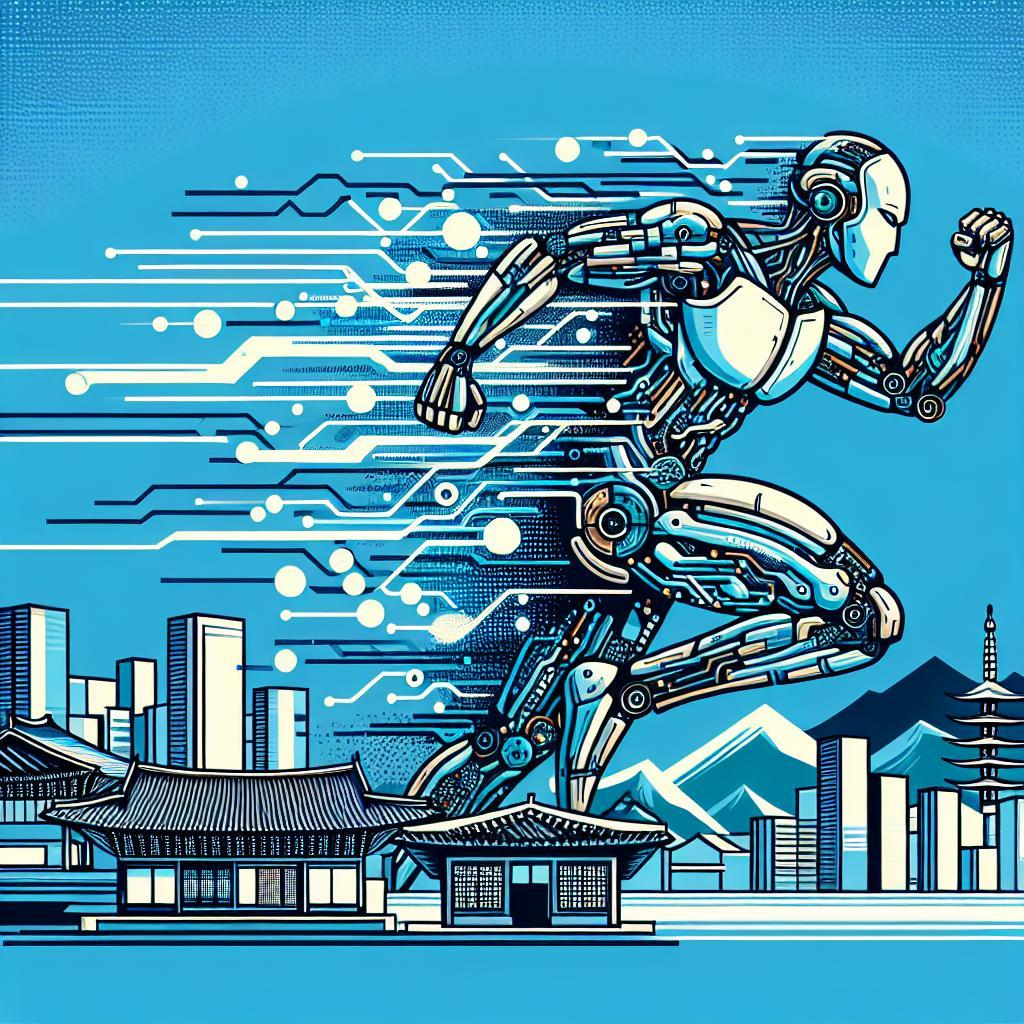
AI Transforming South Korea's ICT Landscape

In an era where technology shapes our daily lives, South Korea's Information and Communication Technology (ICT) sector is poised at the cusp of a groundbreaking transformation powered by artificial intelligence (AI). The ambition of leading telecom giants like SK Telecom, KT Corporation, and LG Uplus to pivot towards AI-enhanced operations stands as a testament to the competitive spirit driving the nation forward. With each company positioning itself uniquely—from SK Telecom's quest for global leadership in AI to KT's integration of AI within its B2B services and LG Uplus's focus on product innovation—readers are surely left curious about the implications of such rapid advancements. This report delves into the progressive AI adoption within South Korea’s ICT landscape, exploring both the bold initiatives undertaken by these companies and the multifaceted challenges they face. Expect to glean insights about the current state of AI integration, the corporate strategies that are shaping the marketplace, and the future possibilities that AI holds for digital transformation across diverse sectors. Join us as we unravel the evolving narrative of South Korea's ICT evolution through the lens of artificial intelligence and consider what lies ahead for this dynamic industry.
Harnessing AI: South Korea's Strategic Leap in the ICT Sector
How is AI Revolutionizing South Korea's ICT Industry?
The introduction of artificial intelligence (AI) has become a central theme within South Korea's Information and Communication Technology (ICT) industry as of 2025. Major telecom companies, including SK Telecom, KT, and LG Uplus, have declared clear objectives to transform into AI companies. They aim to leverage their existing telecommunication networks and data centers to support this transition. Amidst external challenges such as political changes and economic downturns, the success of these firms in utilizing AI to achieve a 'quantum leap' is closely monitored.
Who are the Key Players Committed to AI Adoption?
Major players in South Korea's ICT sector are showcasing a strong commitment to AI adoption. SK Telecom aspires to become a 'Global AI Company,' while KT is positioning itself as an 'AICT (AI + ICT) Company.' Additionally, LG Uplus is focused on evolving into a 'Growth Leading AX (AI Transformation) Company.' In 2025, these companies introduced structural changes, including the establishment of dedicated divisions for AI development and applications. Investments in AI infrastructure, partnerships with global firms, and strategic collaborations with AI technology providers, such as Microsoft's partnership with KT, illustrate their dedication to embedding AI into their operations.
What is AI's Role in Boosting B2B Revenue?
AI is strategically positioned as a crucial element in generating B2B revenue across South Korea's ICT sector. The telecom companies, despite facing challenges in their core communication businesses like 5G saturation and regulatory pressures, are focusing on monetizing AI capabilities. Specific initiatives include SK Telecom's establishment of various AI-focused business units aimed at revenue generation and KT's collaborative investments to develop Korea-specific AI solutions. These efforts signify a robust push towards integrating AI into business-to-business transactions, enhancing competitiveness, and finding new growth avenues.
Navigating the Challenges of AI Implementation in South Korea
Why Is AI Adoption So Slow Among South Korean Companies?
As of 2024, only 30.3% of South Korean companies are utilizing artificial intelligence (AI) technologies and services. This figure, while a slight uptick of 2.3 percentage points from the previous year, reflects a noticeably sluggish pace of AI adoption across the business landscape. The disparity in AI utilization is stark among various sectors: for instance, a commendable 52.4% of financial and insurance firms are employing AI, compared to a mere 16.6% in the transportation and storage sector. This highlights the uneven progress and signals a pressing need for enhanced activity in advancing AI technologies among South Korean businesses.
Are Infrastructure and Talent Shortages Holding Back AI Progress?
One of the most significant hurdles for AI adoption in South Korea is a lack of essential infrastructure and a shortage of skilled information technology (IT) personnel. Companies consistently cite these 'infrastructure and talent shortages' as primary obstacles to implementing AI solutions. Additionally, larger companies face escalating economic costs, creating a deterrent effect against adopting AI innovations. The government has acknowledged this pressing demand for improved infrastructure and skilled labor, making it clear that addressing these challenges is critical for widespread AI adoption across the nation.
How Are Economic Pressures Affecting AI Investments?
Economic pressures play a pivotal role in restraining AI investments in South Korea. Smaller firms, particularly those with employee counts between 10 and 49, exhibit reluctance in adopting AI solutions due to financial constraints, with 28.5% pointing to this as a significant barrier. Larger firms are not immune either, as 41.7% of companies with over 250 employees also feel similarly hindered. The current economic climate encourages a cautious approach to AI investments, posing a challenging balancing act between the imperative for innovation and existing financial realities.
Corporate Strategies and Innovations in South Korea's AI Revolution
How Are Naver and Kakao Enhancing E-commerce with AI?
Naver and Kakao have rolled out innovative AI-driven strategies that are reshaping their e-commerce platforms. By utilizing machine learning algorithms, they are personalizing shopping experiences for their users, which not only enhances engagement but also streamlines operations. This strategic focus on AI is crucial for maintaining competitiveness in a rapidly evolving market while also aiming to boost overall revenue generation.
What Is LG Uplus Doing to Innovate with AI?
LG Uplus is making significant strides by focusing on AI product development. Their initiatives involve integrating AI technologies into customer service and operational processes, fundamentally aimed at improving user satisfaction and driving business growth. This commitment highlights a continuous effort to enhance their service offerings through the latest technological advancements.
Why Are South Korean Companies Partnering with Global Tech Firms?
South Korean corporations are actively forming partnerships with global technology firms in order to enhance their AI capabilities. These collaborations are designed to leverage the expertise, technologies, and resources of established players in the global market. By embracing these strategies, South Korean companies are positioned to accelerate their AI initiatives, ultimately improving their competitive standing in the ICT sector.
Exploring AI's Transformative Influence on South Korea's ICT Landscape
What Insights Can We Gather from Corporate New Year Speeches on AI?
Corporate New Year speeches in South Korea revealed a compelling vision for the future, underscoring the pivotal role of artificial intelligence (AI) in shaping strategic directions for the year ahead. Major companies are committing to integrating AI technologies, reflecting a unified perspective on leveraging AI to enhance operational efficiencies and consumer engagement. This alignment among corporate leaders signals a strong belief in AI's potential to drive growth and innovation in an increasingly competitive market.
How is AI Driving Digital Transformation in South Korea's ICT Sector?
AI has established itself as a cornerstone for digital transformation across various sectors within South Korea's ICT landscape. Companies are harnessing AI to innovate service offerings and optimize internal processes, ultimately gaining a competitive edge. This trend indicates that organizations are actively adapting to the digital environment, fueled by AI advancements, paving the way for a more dynamic and technology-driven marketplace.
What Strategies Are South Korean Firms Utilizing for Global Market Expansion with AI?
In their pursuit of global market expansion, South Korean firms are prominently incorporating AI technologies into their strategies. These efforts include enhancing product offerings and service delivery through AI, while also establishing partnerships with international companies to tap into broader markets. Such strategies highlight a proactive approach to international competitiveness, positioning AI as a crucial enabler for growth and expansion in the global arena.
Exploring the Impact of AI on South Korea's ICT Sector: Upcoming Events and Innovations
What Can We Expect from CES 2025 and AI Innovations?
CES 2025 is set to shine a light on the forefront of artificial intelligence (AI) advancements. This premier event gathers top technology companies and innovators, showcasing groundbreaking AI solutions that emphasize AI's pivotal role in enhancing both technology and consumer experiences. With numerous exhibitors eager to demonstrate their innovations, CES 2025 promises to be an exciting exploration of how AI continues to shape the future.
How Are South Korean Companies Making Their Mark at International Tech Events?
South Korean companies are not just participants but champions in various international tech events, including the highly anticipated CES 2025. Their active involvement illustrates a strong commitment to showcasing their technological expertise and innovation. By stepping onto the global stage, these companies enhance South Korea's reputation in the competitive ICT landscape, signaling the country's rising influence within the AI sector.
What Advancements in AI Technology Will Be Shown at CES?
At CES, expect to be wowed by South Korean firms as they unveil their latest advancements in AI technology. Attendees will witness exciting demonstrations of AI applications spanning multiple sectors, showcasing how these technologies are seamlessly integrated into products and services. Such showcases not only highlight revenue-driving innovations but also enrich customer experiences. This event serves as a vital platform for these companies to reaffirm their dedication to AI innovation in the face of industry challenges.
Wrap Up
The journey of integrating AI into South Korea’s ICT landscape showcases a significant leap toward modernization and operational innovation. With ambitious goals set by key players such as SK Telecom, KT Corporation, and LG Uplus, the landscape is rapidly evolving as these companies leverage AI for enhanced service delivery and fruitful B2B revenue generation. As they navigate challenges related to infrastructure and talent shortages, the steadfast commitment from these corporations highlights the importance of collaborative strategies and government support to overcome these hurdles. Reflecting on the insights gained from this report, it's clear that while the path to widespread AI adoption is scattered with challenges, the strategic endeavors of companies like Naver and Kakao in AI-driven projects further underscore the necessity of innovation in maintaining competitive advantage. The upcoming CES 2025 event is expected to be a pivotal moment for showcasing advancements in AI, signaling a bright future for the sector. For companies and stakeholders, it may be prudent to invest in training programs and infrastructure improvements that can support a more expansive rollout of AI technologies. By doing so, South Korea's ICT industry can not only enhance its current operational capabilities but also set the stage for a robust global presence in the rapidly evolving tech landscape.