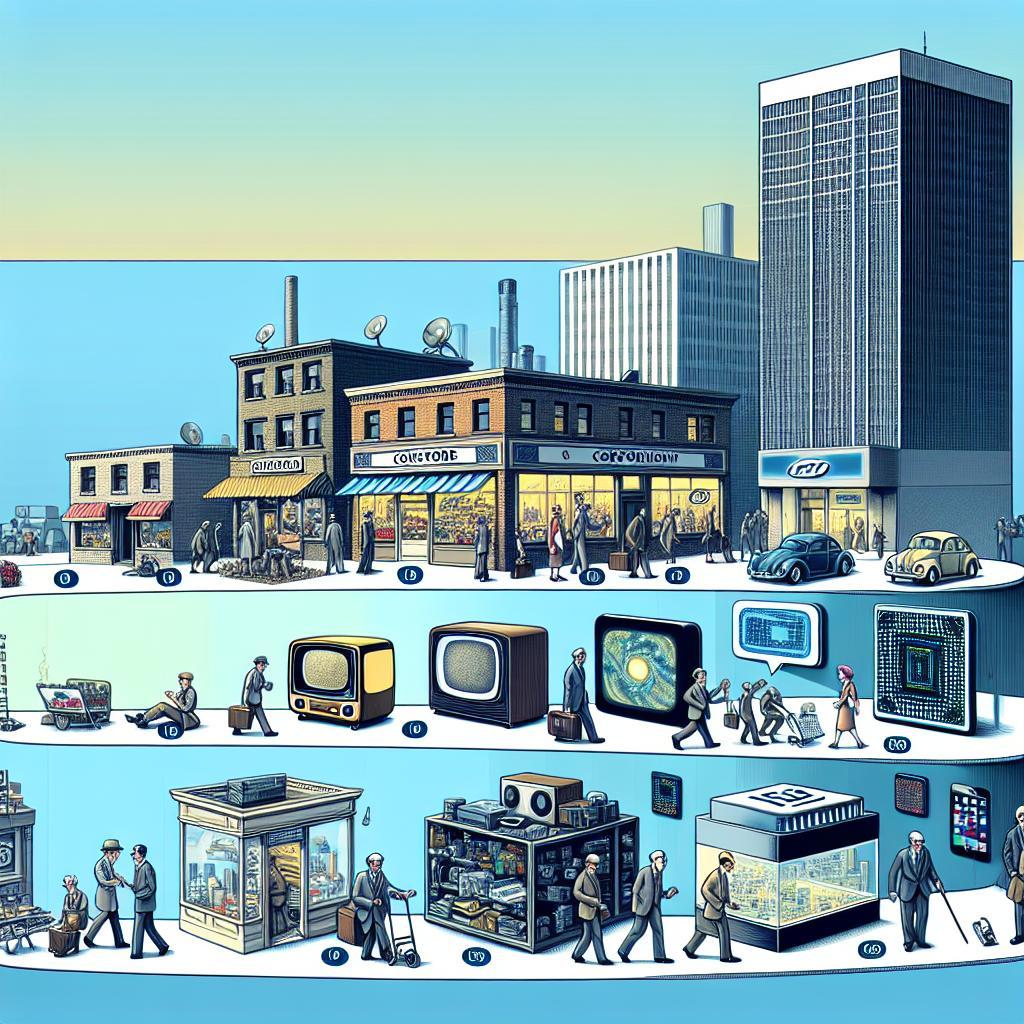
The Evolution of Samsung Group: From a Trading Company to a Global Technology Leader

TABLE OF CONTENTS
- Summary
- Historical Overview
- Key Achievements
- Current Position and Impact in the Global Market
- Conclusion
1. Summary
Samsung Group has rapidly transformed from its humble beginnings in 1938 as a trading company into one of the world's most significant technological conglomerates. Renowned for its innovation and product diversity, Samsung's influence spans numerous industries, making it a household name. This report delves into Samsung's historical development, highlighting key achievements and its current position in the global market.
2. Historical Overview
2-1. Founding and Early Years (1938-1960s)
Samsung was founded on March 1, 1938, in Taegu, Korea, by Lee Byung-chul. The company began its journey as a modest trading entity, employing just 40 workers. During its initial years, Samsung engaged in the trade of groceries, dried-fish, and noodles, capitalizing on locally sourced goods. The name "Samsung" translates to "three stars" in Korean, symbolizing the ideals of greatness, prosperity, and longevity that the company aspired to represent. In the late 1950s and early 1960s, Samsung diversified its operations into various sectors, including insurance, textiles, and retail, thus laying the groundwork for future expansion.
The year 1969 was particularly significant as Samsung established Samsung-Sanyo Electronics, marking its entry into the electronics sector. This momentous step signaled the beginning of its transition from a trading company to a more diversified corporation. By 1970, the company had produced its first product in the electronics realm: a black-and-white television. This pivotal move into manufacturing not only diversified Samsung’s portfolio but also aligned with its long-term vision of becoming a key player in the technology industry.
2-2. Diversification and Growth (1970s-1990s)
The 1970s heralded a period of significant diversification for Samsung, elevating its stature across various industries. As the company expanded, it entered sectors such as shipbuilding, petrochemicals, and aerospace, establishing Samsung Heavy Industries, Samsung Shipbuilding, and Samsung Precision Company (later known as Samsung Techwin). Concurrently, Samsung Electronics continued to broaden its product line, venturing into home appliances like refrigerators and air conditioning units, which solidified its manufacturing capabilities.
The formation of Samsung Electronics in 1974 marked a key milestone in the company's history, particularly with its pivot towards semiconductor production. This strategic decision would ultimately prove to be vital, as semiconductors became an essential component in global technology. By the late 1980s, after the passing of Lee Byung-chul in 1987, his son Lee Kun-hee took the helm and further consolidated Samsung's focus on electronics and telecommunications. Under his leadership, Samsung introduced its first mobile phone, the SH100, in 1988, marking an important foray into the telecommunications market.
The 1990s emerged as a turning point for Samsung as it evolved into a global leader in technology innovation. Massive investments in research and development facilitated major advancements; notably, the introduction of memory chips and liquid crystal display (LCD) technology. In 1992, the launch of the first 64M DRAM chip underscored Samsung's competitive edge in the semiconductor industry. Additionally, Samsung’s foray into high-quality LCD screens in 1995 positioned it as a formidable competitor in the burgeoning display market, culminating in substantial revenues and enhanced market share.
2-3. Emergence as a Technology Powerhouse (2000s-Present)
As the new millennium approached, Samsung increasingly solidified its position as a technology powerhouse, marked by continual innovation and aggressive competition. The launch of the Galaxy series of smartphones in the early 2000s, particularly the Galaxy S in 2010, set a new benchmark in consumer technology and positioned Samsung as a substantial rival to industry leader Apple. Alongside mobile innovation, Samsung maintained its edge by introducing the first LED TV in 2009 and the first curved UHD TV in 2014, showcasing its commitment to redefining entertainment technology.
In addition to consumer electronics, Samsung retained prominence in the semiconductor and display panel sectors, where products such as memory chips and OLED displays became integral to various devices, solidifying its standing across several key markets. The company’s approach included the establishment of the largest smartphone manufacturing facilities and the introduction of pioneering technologies, like the first commercial 5G equipment.
Although Samsung faced challenges, including the recall of the Galaxy Note 7 in 2016, its resilience has been remarkable. The company has learned from missteps, honing its processes and cementing its reputation in the industry. Furthermore, Samsung’s commitment to corporate social responsibility and sustainability outlines its forward-thinking approach; it is now investing in artificial intelligence, 5G, the Internet of Things (IoT), and robotics to innovate solutions that enhance the quality of life and promote sustainable growth. Today, Samsung stands as a testament to strategic evolution, technological advancement, and global impact.
3. Key Achievements
3-1. Innovations in Consumer Electronics
Samsung has established itself as a leader in the consumer electronics sector, known for its relentless commitment to innovation. The company entered the electronics market in 1969 when it began producing black-and-white televisions, transitioning to color models by the mid-1970s. This early success laid the groundwork for its future dominance in home entertainment. By introducing a variety of products including refrigerators, washing machines, and digital displays, Samsung significantly broadened its consumer electronics portfolio. In the 2000s, Samsung furthered its reputation by launching the Galaxy smartphone series, which has become synonymous with quality and innovation in mobile technology. The Galaxy S series, initiated in 2010, showcased advanced features such as high-resolution cameras and powerful processors, cementing Samsung's position as the largest smartphone manufacturer globally. Through continuous innovations, including the development of foldable screens and 5G capable devices, Samsung has set benchmarks in design and functionality that competitors strive to meet. Further contributions to innovation include pioneering efforts in home appliances, integrating smart technology across its product lines. Smart devices from Samsung enable connectivity and automation, allowing for enhanced user control and energy efficiency, marking a significant shift in consumer expectations toward home technology.
3-2. Leadership in Semiconductor Production
Samsung is recognized not only for its consumer electronics but also as a titan in the semiconductor industry. The company began its semiconductor operations in the early 1980s and has since become the largest manufacturer of memory chips in the world, particularly DRAM and NAND flash memory. This strategic focus allowed Samsung to play a crucial role in supplying components critical for smartphones, computers, and a myriad of electronic devices. Innovations in semiconductor technology have positioned Samsung at the forefront of microchip production. The company is noted for its significant investments in research and development, which have led to the introduction of cutting-edge technologies, including 3D NAND architecture, which improves storage density and performance while reducing power consumption. By maintaining a competitive edge in the semiconductor market, Samsung has not only strengthened its financial stability but also provided vital components to other leading tech firms, enhancing its status within the technology supply chain. The company’s ability to innovate within this field established a reputation for quality and reliability, leading to numerous accolades and recognition from industry observers and competitors alike. As a result, Samsung's semiconductor business has become a critical backbone for both its own products and a wide array of global technology markets.
3-3. Pioneering Technologies in Telecommunications
Samsung has played a crucial role in shaping the telecommunications industry through groundbreaking advancements in technology. The company’s entry into the telecommunications market began with manufacturing telecom equipment and has evolved remarkably to become a leading provider of mobile communication technologies. The launch of the first 3G phone in 2002 signaled Samsung's ambition to remain at the forefront of mobile communications technology. Following this, Samsung was instrumental in the rollout of 4G LTE technology, and it has been a pioneer in developing 5G networks globally. The company’s extensive research and investment in mobile networks have allowed it to lead in the 5G space, offering extensive capabilities that enhance mobile internet performance and capabilities, revolutionizing the way consumers and industries engage with technology. As 5G technology continues to develop, Samsung has focused on creating a robust infrastructure that supports faster speeds, greater connectivity, and low-latency applications. Moreover, Samsung's collaborations with telecom providers worldwide to facilitate 5G deployment reflect its commitment to shaping the future of telecommunications, impacting industries beyond just mobile communications, including automotive, healthcare, and smart cities. With a broad vision of digital convergence, Samsung is setting the stage for future technological interactions and expanding the possibilities of connectivity.
4. Current Position and Impact in the Global Market
4-1. Market Share and Competitiveness
Samsung Group holds a leading position in the global market, especially in the consumer electronics sector. According to industry reports, Samsung Electronics, as a subsidiary of the conglomerate, has secured the largest share of the global smartphone market, accounting for approximately 20% of overall sales as of the end of 2024. The company's Galaxy series, including the popular Galaxy S and Galaxy Note lines, has consistently performed well, forging strong competition against Apple and other smartphone manufacturers. Samsung’s commitment to innovation is a significant factor driving its competitiveness; the company invests around 9-10% of its revenue into research and development, a strategy that has yielded groundbreaking technologies and product enhancements. Moreover, in the semiconductor industry, Samsung is recognized as the world's largest manufacturer of memory chips, responsible for a significant percentage of global market share. The dominance is not only manifested in revenue; Samsung has been pivotal in setting industry standards for DRAM and NAND flash technologies—essential for smartphones, PCs, and servers alike. With the rising demand for cloud computing and data centers, Samsung's strategic investments in semiconductor manufacturing have positioned it favorably to capitalize on future growth opportunities.
4-2. Global Presence and Economic Influence
Samsung's global presence is evident through its operations in over 80 countries, supported by a network of more than 200 subsidiaries. The company not only has manufacturing plants and distribution centers across Asia, America, and Europe but also has established research and development facilities aimed at fostering innovation tailored to local markets. This strategic geographical spread enhances Samsung's ability to respond rapidly to changing consumer preferences and market dynamics. Economically, Samsung plays a crucial role in South Korea's economy, contributing over 20% to the national GDP and employing hundreds of thousands globally. As one of the largest technology conglomerates, Samsung’s financial health significantly influences stock markets and investment trends. The company's prominence also facilitates technology transfers between countries, contributing to advancements in global technology infrastructure and industrial capabilities. For instance, Samsung's investments in developing countries have not only created jobs but have also led to improved local economies through technology adoption and skill development.
4-3. Corporate Social Responsibility Initiatives
In recent years, Samsung has intensified its efforts in corporate social responsibility (CSR), emphasizing sustainability and community support. The company has launched numerous initiatives to reduce its environmental footprint, including commitments to achieve 100% renewable energy usage in its global operations by 2025. Samsung’s eco-friendly product design initiatives, such as developing energy-efficient appliances and promoting recycling, reflect its commitment to sustainable practices. Additionally, Samsung's CSR programs focus on education and technology access. The Samsung Smart School program aims to enhance educational opportunities in underserved regions by providing digital learning tools and resources, addressing the digital divide. Furthermore, Samsung actively participates in disaster relief efforts and supports local communities, exemplifying its dedication to being a responsible corporate citizen. These initiatives not only enhance corporate reputation but also resonate with consumers who increasingly prefer brands that demonstrate social responsibility.
Conclusion
Samsung's remarkable journey from a local trading firm to an international technology leader illustrates its resilience and commitment to innovation. As it continues to adapt to market trends and technological advancements, Samsung's emphasis on corporate responsibility and sustainability will likely influence its future trajectory and position within the global market.