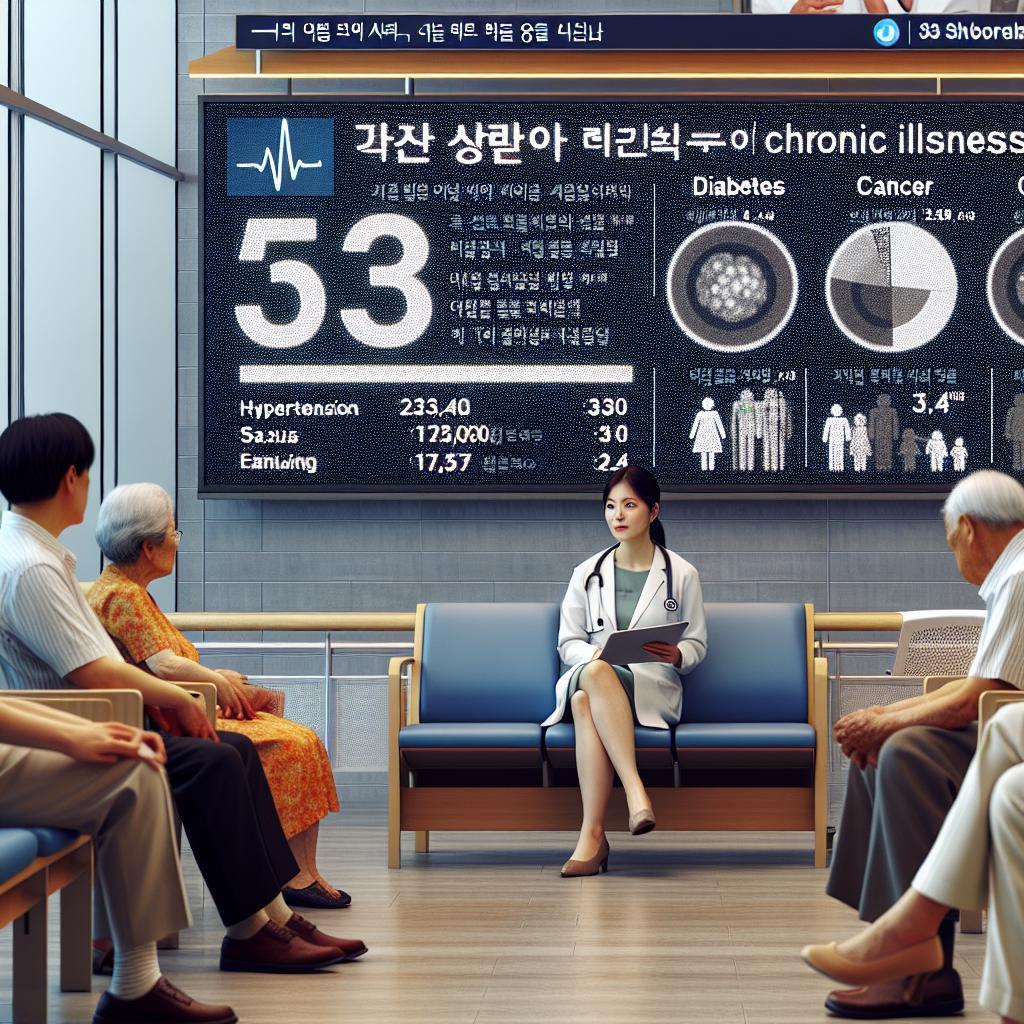
Chronic Illness Costs in South Korea

TABLE OF CONTENTS
- Summary
- Financial Burden of Chronic Diseases
- Chronic Disease Prevalence and Demographics
- Cancer Statistics and Treatment Landscape
- Innovations in Chronic Disease Treatment
- Public Health Strategies for Chronic Disease Management
- Conclusion
1. Summary
The financial implications of chronic diseases in South Korea are immense, with healthcare expenditure surpassing 90 trillion KRW annually. Chronic diseases such as hypertension, diabetes, and cancer present a looming threat, affecting the nation's healthcare budget and mortality rates. Specifically, these illnesses account for 84.5% of total healthcare costs and 78.1% of deaths in the country in 2023. The aging population exacerbates this issue, with prevalent conditions like cancer becoming more common, thereby increasing the burden on healthcare infrastructure. Furthermore, the report highlights worrying trends, such as the rapid rise in obesity and cholesterol levels, which further contribute to the spread of chronic diseases. Recent innovations in treatment methodologies, like the use of AI tools for diabetes risk assessment and novel drug trials for obesity, provide hope. However, accessing these advancements remains a challenge due to high costs and regulatory hurdles.
2. Financial Burden of Chronic Diseases
2-1. Healthcare expenditures attributed to chronic diseases
According to the data derived from the report, healthcare expenditures associated with chronic diseases, including hypertension, diabetes, and cancer, account for nearly 90 trillion KRW. This significant financial burden constitutes approximately 84.5% of the total healthcare expenses in South Korea. The rapid increase in the costs of treating chronic conditions poses a serious threat to the health insurance finances.
2-2. Statistics on chronic disease-related mortality
The report indicates that in 2023, the number of deaths due to chronic diseases reached 275,183, which represents 78.1% of total mortality in the country. The leading causes of death linked to chronic diseases include cancer and heart disease. This alarming statistic highlights the critical health challenges posed by chronic diseases within the aging population of South Korea.
2-3. Cost analysis of hypertension and diabetes treatments
For the year 2023, the treatment costs for essential hypertension and type 2 diabetes were notably high, amounting to 4.4 trillion KRW and 3.1 trillion KRW respectively. This data emphasizes the significant financial impact that these two prevalent chronic conditions have on the overall healthcare expenditure.
2-4. Comparison of treatment expenses across different diseases
In addition to hypertension and diabetes, the report provides a detailed breakdown of treatment costs for various chronic diseases. Chronic kidney disease incurred expenses of 2.6 trillion KRW, followed closely by dementia caused by Alzheimer's disease at 2.3 trillion KRW. Other costs included 2.2 trillion KRW for chronic periodontitis and other periodontal diseases, 2.1 trillion KRW for acute bronchitis, and 2 trillion KRW each for cerebral infarction and knee osteoarthritis. The costs for breast malignancies totaled 1.5 trillion KRW.
3. Chronic Disease Prevalence and Demographics
3-1. Prevalence rates of hypertension and diabetes in the adult population
According to the report from 2023, the prevalence rates of hypertension among adults aged 19 and above are consistently maintained at 20-22%. Additionally, the prevalence of diabetes in the same age group is around 10%. These statistics underline the significant burden of these chronic diseases within the South Korean adult population.
3-2. Impact of aging population on chronic disease statistics
The aging population has a notable impact on chronic disease statistics. As the population ages, there is an increasing incidence of chronic diseases such as cancer, with the report emphasizing that as of January 2023, there are 2,588,079 patients with cancer in Korea, translating to one in 20 individuals having a cancer diagnosis. Furthermore, it highlights that 1 in 7 individuals aged over 65 is diagnosed with cancer, reflecting the direct relationship between age and chronic disease prevalence.
3-3. Emerging trends in obesity and cholesterol levels
Recent trends show a concerning rise in obesity and cholesterol levels among adults in South Korea. The prevalence of high cholesterol among adults increased from 11.9% in 2012 to 22.0% in 2022. Additionally, the obesity rate, which rose significantly during the COVID-19 pandemic, has reached 37.2% in 2022. These trends indicate a growing public health concern that may exacerbate the prevalence and management of chronic diseases.
4. Cancer Statistics and Treatment Landscape
4-1. Incidence rates of various cancers in South Korea
As of 2022, the number of new cancer cases in South Korea was recorded at 282,047. This figure shows a slight decrease of 154 cases compared to 2021. The most frequently diagnosed cancer types include thyroid cancer, colorectal cancer, lung cancer, breast cancer, stomach cancer, and prostate cancer. Additionally, it has been noted that cancer prevalence is particularly high among older adults, with one in seven individuals over the age of 65 diagnosed with cancer as of January 2023.
4-2. Most common types of cancer diagnosed
The most prevalent types of cancer diagnosed in South Korea are thyroid cancer, followed by colorectal cancer, lung cancer, breast cancer, stomach cancer, and prostate cancer. The patterns of cancer incidence reflect demographic trends, with an increase in cancer types typically associated with aging populations. For instance, both prostate cancer in men and breast cancer in women continue to show increasing trends.
4-3. Financial implications of cancer treatment options
Cancer treatment is a significant financial burden within the South Korean healthcare system, contributing to the overall chronic disease treatment costs, which reached a staggering 90 trillion KRW in 2023. The distribution of costs highlights that essential hypertension treatment alone accounted for 4.4 trillion KRW, while type 2 diabetes accounted for 3.1 trillion KRW. The increasing cancer treatment costs are partially attributed to the higher incidence rates among the aging population and the need for advanced medical interventions.
5. Innovations in Chronic Disease Treatment
5-1. Recent advancements in diabetes and obesity treatments
Significant progress has been made in the development of novel therapies for the treatment of diabetes and obesity. Notably, the ongoing clinical trials of potential new medications, such as the combined drug 'Cagrisema' by Novo Nordisk, aim to surpass the effectiveness of existing GLP-1 class obesity treatments. Current studies have shown that while 'Cagrisema' recorded a weight loss effect of 22.7% over a 68-week treatment period, this was below the initially anticipated 25%. Furthermore, the research continues to investigate its effects on various populations, including those with type 2 diabetes. Additionally, the introduction of AI tools for predicting type 2 diabetes, such as the 'AI-ECG Diabetes Risk Assessment', has the potential to significantly impact management strategies for diabetes patients.
5-2. Role of novel therapies in managing chronic conditions
Novel therapies are becoming increasingly vital in managing chronic conditions, particularly diabetes and obesity. For instance, the SEEK for Diabetes project by the NHS aims to leverage advanced AI technologies to predict the risk of type 2 diabetes using ECG records from high-risk patients. This innovative tool is capable of detecting subtle changes in ECG rhythms and patterns that may indicate a risk for diabetes, facilitating early intervention. Advanced cancer treatments, such as antibody-drug conjugates (ADCs), are also gaining traction due to their targeted approach, although they remain expensive and often not covered by health insurance in South Korea.
5-3. Challenges in accessing innovative treatments
Despite the promising advancements in chronic disease treatments, significant barriers to access persist in South Korea. New innovative therapies, such as ADC cancer medications, face high entry barriers in the market, compounded by stringent health insurance assessments. Regulatory processes such as the review by the Cancer Disease Review Committee and the Pharmaceutical Benefit Evaluation Committee can delay the accessibility of these medications. Furthermore, the cost of innovative treatments remains prohibitively high for many patients, restricting their ability to benefit from the latest therapeutic developments. This presents a critical challenge to achieving improved health outcomes in the management of chronic diseases.
6. Public Health Strategies for Chronic Disease Management
6-1. Current public health initiatives aimed at reducing chronic disease prevalence
Despite advances in medicine, conditions such as hypertension, diabetes, and cancer pose an increasing financial burden on South Korea's health insurance system, accounting for almost 90% of total healthcare expenditures. As of 2023, chronic disease treatment costs reached 90 trillion KRW, constituting 84.5% of total medical expenses. The health authorities are intensifying efforts to manage and alleviate the burden of chronic diseases; however, there are limits to controlling the financial strain on citizens due to the super-aged society. The Korea Disease Control and Prevention Agency and the Ministry of Health and Welfare have published a report titled '2024 Chronic Disease Status and Issues' which outlines the ongoing state of chronic diseases and related health risks based on statistics.
6-2. Role of healthcare providers in chronic disease management
Healthcare providers play a crucial role in the management of chronic diseases. The report indicates a notable mortality rate attributable to chronic diseases, with 275,183 deaths in 2023, representing 78.1% of all fatalities. Cardiovascular diseases, diabetes, and cancers are leading causes of death, and there is a significant need for healthcare providers to implement effective management strategies. The increase in treatment costs over the past decade highlights the pressing need for innovation in care delivery to effectively manage the rising prevalence of chronic diseases.
6-3. Importance of lifestyle modifications and preventive strategies
Lifestyle modifications and preventive strategies are vital in addressing chronic diseases. The prevalence rates for hypertension among adults aged 19 and older have remained between 20% and 22%, while diabetes prevalence is around 10%. Alarmingly, the prevalence of hypercholesterolemia has climbed from 11.9% in 2012 to 22.0% in 2022, coinciding with an increased obesity rate during the COVID-19 pandemic, which reached 37.2% in 2022. Public health initiatives must prioritize lifestyle changes and preventive healthcare to combat these concerning trends effectively.
Conclusion
Key findings from this report highlight the substantial impact of chronic diseases on South Korea's healthcare expenditure, calculated at 90 trillion KRW in 2023. These expenditures, driven largely by hypertension, diabetes, and cancer, necessitate a critical re-evaluation of management strategies to address the dire mortality and financial statistics at hand. While recent enhancements in treatment technology and preventive healthcare offer promising avenues for addressing these issues, barriers such as high cost and limited accessibility persist. The report emphasizes the need for a collaborative effort between healthcare providers, policymakers, and the general public to optimize health outcomes. To mitigate current challenges, further investments in preventive strategies, lifestyle modifications, and improving access to cost-effective treatments are essential. Looking forward, sustainable healthcare funding models will be crucial in accommodating the aging population's needs, as will fostering innovation to reduce the healthcare system's financial burden.