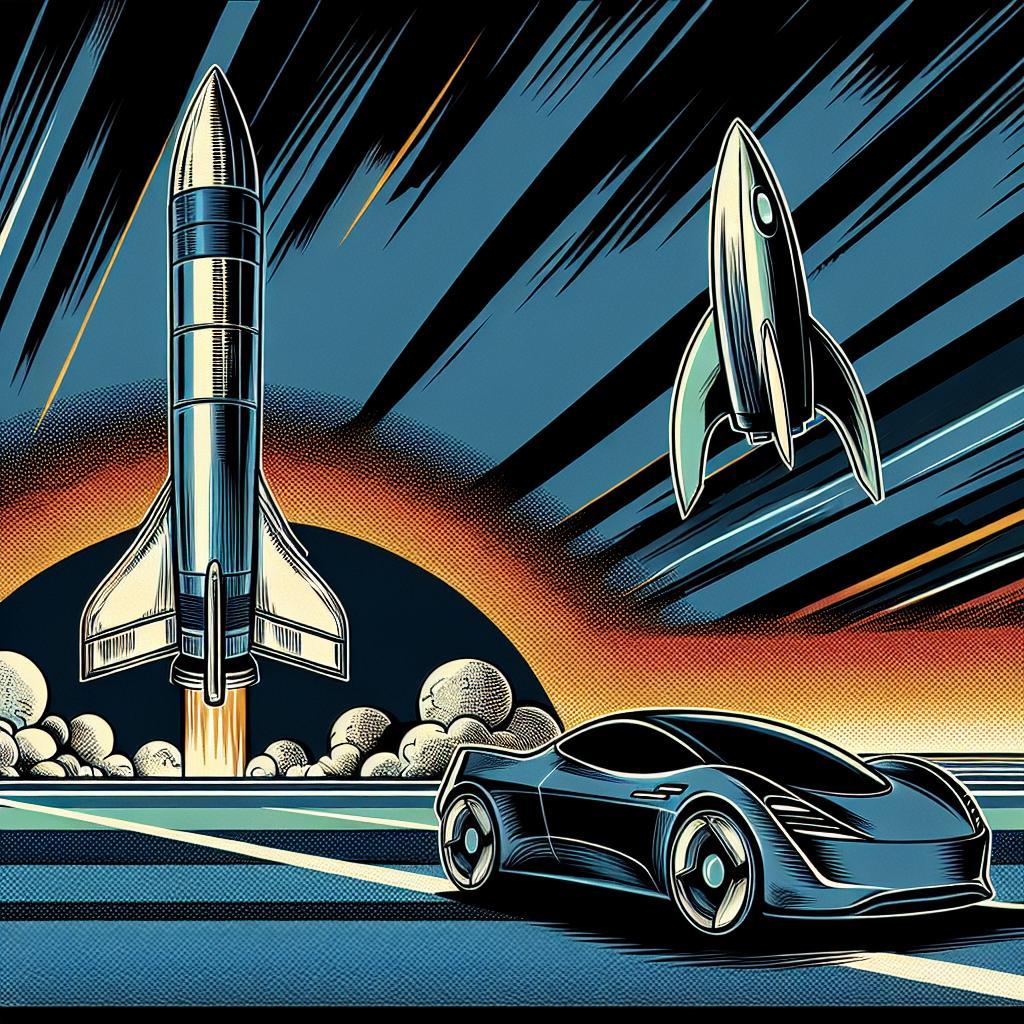
Revolutionizing Space and Energy: Musk's Vision

TABLE OF CONTENTS
- Summary
- Elon Musk's Leadership and Vision
- Mars Colonization Project
- Technological Innovations and Their Impact
- Conclusion
1. Summary
Elon Musk's endeavors in space exploration and sustainable energy have reshaped the technological landscape profoundly. Through his companies SpaceX and Tesla, Musk has led transformative initiatives. SpaceX revolutionized the aerospace sector with reusable rocket technology and the ambitious goal of Mars colonization. Meanwhile, Tesla has redefined the automotive industry by spearheading the shift from fossil fuel vehicles to electric power, substantially impacting global energy consumption standards. Musk's leadership style—marked by relentless ambition and innovation—has not only propelled these companies to the forefront of their industries but also inspired broader shifts in how society views technological advancement and sustainable practices. This report provides an in-depth analysis of Musk's influence, detailing his visionary leadership and the significant contributions of his companies towards a more connected and sustainable future.
2. Elon Musk's Leadership and Vision
2-1. The Dream of SpaceX and its Impact on Space Exploration
In 2002, Elon Musk founded SpaceX with the vision of reducing space travel costs and enabling the colonization of Mars. This initiative marked his entry into the aerospace sector, setting new standards for private space exploration. SpaceX aims to develop cutting-edge technologies that facilitate human presence beyond Earth, thereby impacting future missions and advancements in space exploration.
2-2. Leadership Influence at Tesla and the Shift to Sustainable Energy
Elon Musk joined Tesla in 2004, where his leadership, investment, and vision significantly influenced the company’s trajectory. His commitment to electric vehicles and sustainable energy transformed Tesla into a leading force in the automotive sector. Musk’s objective extended beyond financial success; he aimed to accelerate the transition to sustainable energy, demonstrating a long-term perspective on the future of energy consumption.
2-3. Visionary Leadership Style: Ambition and Innovation
Musk's leadership style is characterized by a unique blend of ambition and innovation, reflecting a commitment to a broader mission. He embraces relentless innovation, focusing on constant iteration and improvement in technology, which positions Tesla at the forefront of the automotive and energy industries. His efforts are not merely aimed at creating successful businesses but at enacting fundamental changes that can address society's most pressing challenges.
3. Mars Colonization Project
3-1. Ambitious Goals for Mars Colonization by 2050
Elon Musk aims to establish a self-sustaining Martian society of 1 million people by the year 2050. This vision entails a significant shift in human existence, making life on Mars a reality as part of Musk's overall mission to transform humanity into an interplanetary species.
3-2. Technological Innovations for Cost-Effective Space Travel
To facilitate Mars colonization, Musk is focusing on advancements in reusable launch vehicles and spacecraft technology. This innovation is intended to dramatically reduce the cost of space travel, making it more affordable and accessible for the general public. Through these technological advancements, Musk envisions accelerating the development of the Big Falcon Rocket and associated technologies, which are critical for Mars exploration.
3-3. Establishment of a Self-Sustaining Martian Society
Musk envisions the colonization of Mars as a crucial step for humanity's long-term survival, integrating both the technical and ethical considerations of establishing life on the red planet. SpaceX's Starship will play a pivotal role in carrying out this vision, as it is designed specifically for cargo and human transport to Mars. Musk views this interplanetary move as fundamental to protecting humanity against existential threats.
4. Technological Innovations and Their Impact
4-1. The SpaceX Revolution: Advancements in Space Exploration
Elon Musk established the aerospace enterprise SpaceX in 2002, marking the beginning of his visions for humanity’s space exploration. SpaceX has made significant achievements in space exploration, most notably by sending the Falcon 9 spacecraft to the International Space Station (ISS). This mission was historic, as it was the first spacecraft developed and operated by a private entity to successfully dock at the ISS after a 921,474 km journey. Furthermore, Musk's implementation of reusable rocket technology has revolutionized the space launch industry by significantly reducing costs and enabling more frequent space missions. The development of the Starship spacecraft marks another ambitious step by Musk, as it aims to transport over 100 passengers to Mars and build sustainable colonies there with the goal of Mars terraformation. This represents a bold aspiration to transform humanity into a multi-planetary species, making a profound mark on the field of space exploration and inspiring a new era of global space initiatives.
4-2. Tesla’s Role in Redefining the Automotive Industry
Under the leadership of Elon Musk, Tesla has become a leading name synonymous with innovation in the automotive industry. The company has been at the forefront of driving a significant shift from fossil fuel vehicles to electric power, which has redefined automotive standards and practices. Tesla's advancements not only include electric vehicles but also encompass improvements in technology, sustainability, and innovation in transportation. Through its mission of accelerating the world's transition to sustainable energy, Tesla has emerged as a pivotal player in changing how societies view and utilize vehicular technology.
4-3. Hyper-Connected Future: The Integration of Technology Across Industries
Elon Musk's vision for a hyper-connected and technologically advanced future spans multiple sectors, as demonstrated through his various companies, including SpaceX, Tesla, The Boring Company, Starlink, Neuralink, and OpenAI. His projects aim to intertwine advancements in artificial intelligence, renewable energy, and urban transit with space travel, thereby transforming everyday life and industry dynamics. The ambition for a hyper-connected future signifies an era where technology operates seamlessly across diverse platforms, enhancing global interactivity and efficiency while addressing essential human challenges.
Conclusion
Elon Musk's visionary leadership has instigated significant advancements in space exploration and renewable energy, spotlighting companies like SpaceX and Tesla as pioneers in their respective fields. SpaceX has notably impacted space exploration by developing reusable rockets, paving the way for cost-effective space travel and potentially enabling Mars colonization. Tesla has influenced the automotive industry significantly by promoting electric vehicles and clean energy solutions, changing public perceptions and environmental standards. Despite these achievements, the path to Mars colonization presents ethical and logistical challenges, while the transition to sustainable energy faces its share of societal and infrastructure hurdles. The report underscores how Musk's contributions are shaping the potential future of humanity as a multi-planetary species while emphasizing sustainable living on Earth. Future advancements could see even more integrated technological solutions across diverse industries, potentially revolutionizing transportation, energy, and space travel. The findings from SpaceX and Tesla offer valuable insights into practical applications in current and future technological developments, despite the limitations and challenges that lie ahead. Musk's work continues to inspire innovation and provoke critical thinking about sustainability and progress, potentially setting the stage for unprecedented developments in how humanity interacts with technology and the environment.