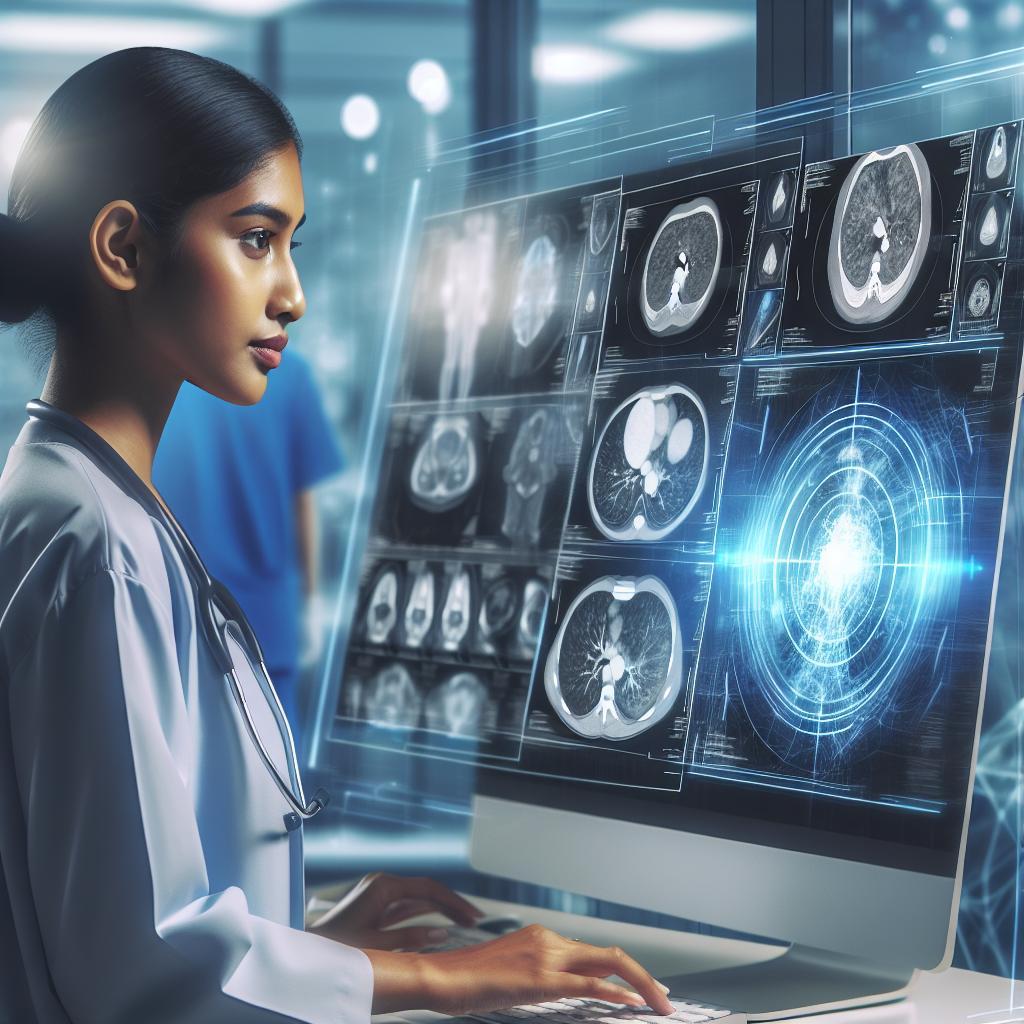
AI Revolutionizing Healthcare Diagnostics

TABLE OF CONTENTS
- Summary
- AI Applications in Medical Imaging
- Case Studies of AI in Diagnostics
- The Role of AI in Enhancing Healthcare Efficiency
- Conclusion
1. Summary
Artificial intelligence (AI) is transforming the healthcare industry by enhancing diagnostic procedures and improving patient outcomes, particularly in the domain of medical imaging. The report highlights the significant contributions of Zebra Medical Vision, a leader in AI medical imaging analysis, which has developed algorithms for detecting a range of conditions from osteoporosis to breast cancer. Technology developed by Zebra Medical Vision aids radiologists through early disease detection, increased diagnostic accuracy, and reduced treatment times. The report provides case studies on the role of AI in early cancer detection and pneumonia diagnosis, demonstrating how AI systems achieve higher accuracy rates than human radiologists. Moreover, the integration of AI in robotic surgery, exemplified by the da Vinci System, shows improved precision in minimally invasive procedures. AI's ability to minimize unnecessary invasive procedures and enhance screening rates is leading to broader patient access and more efficient healthcare delivery.
2. AI Applications in Medical Imaging
2-1. Zebra Medical Vision Overview and Capabilities
Zebra Medical Vision, now part of Nanox.AI, is recognized as a leader in AI-powered medical imaging analysis. Founded in 2014, the company has developed a comprehensive suite of AI algorithms capable of analyzing various types of medical images to detect multiple conditions. Key capabilities of Zebra Medical Vision include: - Bone health: Detection of osteoporosis and vertebral compression fractures on CT scans. - Breast cancer: Assistance in mammography analysis for early breast cancer detection. - Cardiovascular health: Quantification of coronary calcium and prediction of cardiovascular risk from CT scans. - Lung health: Detection of lung nodules, emphysema, and other lung abnormalities. Overall, their technology supports radiologists by streamlining the imaging analysis process and enhancing early detection strategies.
2-2. FDA Clearances and Clinical Implementations
Zebra Medical Vision has received multiple FDA clearances for its AI algorithms, demonstrating compliance with regulatory standards and their effectiveness in clinical settings. Notable FDA clearances include: - HealthCCS for coronary calcium scoring. - HealthMammo for breast cancer detection in mammograms. - HealthCXR for detecting pleural effusion in chest X-rays. These tools are implemented in hospitals and imaging centers worldwide, which assists in prioritizing urgent cases and reduces the time to treatment for critical conditions.
2-3. Impact on Diagnostic Procedures and Patient Outcomes
The implementation of AI technologies in medical imaging has significantly impacted diagnostic procedures and patient outcomes. AI systems have demonstrated a high accuracy rate in diagnosing various conditions, which leads to improved survival rates and reduced treatment costs. For instance, AI algorithms have achieved a diagnostic accuracy rate of 94% for diagnosing pneumonia, surpassing the 86% accuracy of human radiologists. In breast cancer diagnosis, AI has been reported to reduce the error rate by 9%. Zebra Medical Vision's AI platform has also facilitated earlier diagnoses of conditions such as lung cancer, enabling prompt treatment that positively influences patient prognoses.
3. Case Studies of AI in Diagnostics
3-1. Case Study: Early Cancer Detection
Zebra Medical Vision employs AI to analyze medical imaging, enabling the early detection of conditions such as cancers. In a specific example, at a busy urban hospital, a radiologist utilized Zebra Medical Vision’s AI platform to assess a patient's CT scan. The AI identified early signs of lung cancer that were not visually detectable by human practitioners, allowing for prompt treatment that significantly improved the patient's prognosis.
3-2. Case Study: AI in Pneumonia Diagnosis
Zebra Medical Vision demonstrates the application of advanced AI algorithms in analyzing chest X-rays for early pneumonia detection. These algorithms accurately identify subtle signs of pneumonia, significantly aiding radiologists in making quicker and more precise assessments. A study by Stanford University indicated that AI algorithms achieved a diagnostic accuracy rate of 94% for pneumonia, outperforming radiologists who had an accuracy of 86%.
3-3. Robotic Surgery Integration and Precision
AI integration in robotic surgery enhances precision and control during minimally invasive procedures. The da Vinci System by Intuitive Surgical exemplifies this, utilizing AI to assist surgeons, thereby improving the accuracy of surgical interventions. This integration demonstrates the potential for AI to elevate the standards of patient care through improved surgical outcomes.
4. The Role of AI in Enhancing Healthcare Efficiency
4-1. Reduction in Invasive Procedures
The integration of artificial intelligence in healthcare has the potential to significantly reduce unnecessary invasive procedures. This is achieved through earlier and more accurate detection of conditions, allowing for alternative treatment options that are less invasive. For instance, advancements in AI-powered medical imaging analysis demonstrate how improved diagnostics can minimize the need for exploratory surgeries, consequently leading to reduced patient recovery times and lower associated healthcare costs.
4-2. Improved Screening Rates and Patient Access
Artificial intelligence contributes to increased screening rates within healthcare systems, primarily due to the convenience and non-invasive nature of AI-driven tests. Enhanced screening protocols have been linked to earlier cancer detection, which not only leads to improved survival rates but also reduces treatment costs. The methodologies employed by AI technology enable wider patient access to crucial screenings, ensuring that more individuals receive timely medical attention.
4-3. AI's Contribution to Cost Management in Healthcare
AI technologies play a crucial role in cost management within the healthcare sector. By streamlining processes and improving diagnostic accuracy, AI reduces the overall expense incurred by healthcare providers. Example applications like Zebra Medical Vision demonstrate how AI algorithms can analyze medical images efficiently, thereby decreasing the instances of misdiagnosis and unnecessary treatments. The effectiveness of these AI solutions leads to better resource allocation and cost savings across healthcare systems.
Conclusion
The evidence presented underscores the transformative impact of AI, led by companies like Zebra Medical Vision, on the healthcare sector. AI's ability to diagnose conditions earlier and more accurately has evidently led to improved patient outcomes, enhancing survival rates and enabling prompt and effective treatments. Challenges such as widespread integration and regulatory compliance remain, yet the benefits, including cost reduction and streamlined procedures, cannot be overlooked. Awareness and adoption of AI solutions in healthcare are on the rise, promising even more advancements in the future. The continued evolution and incorporation of AI technologies will likely lead to scalable and sustainable improvements in diagnostics and patient care, ultimately transforming healthcare delivery on a global scale. Healthcare providers can leverage these technologies to optimize resource allocation and enhance overall healthcare efficiency. Therefore, AI stands as a pivotal force in both current and future healthcare innovations.