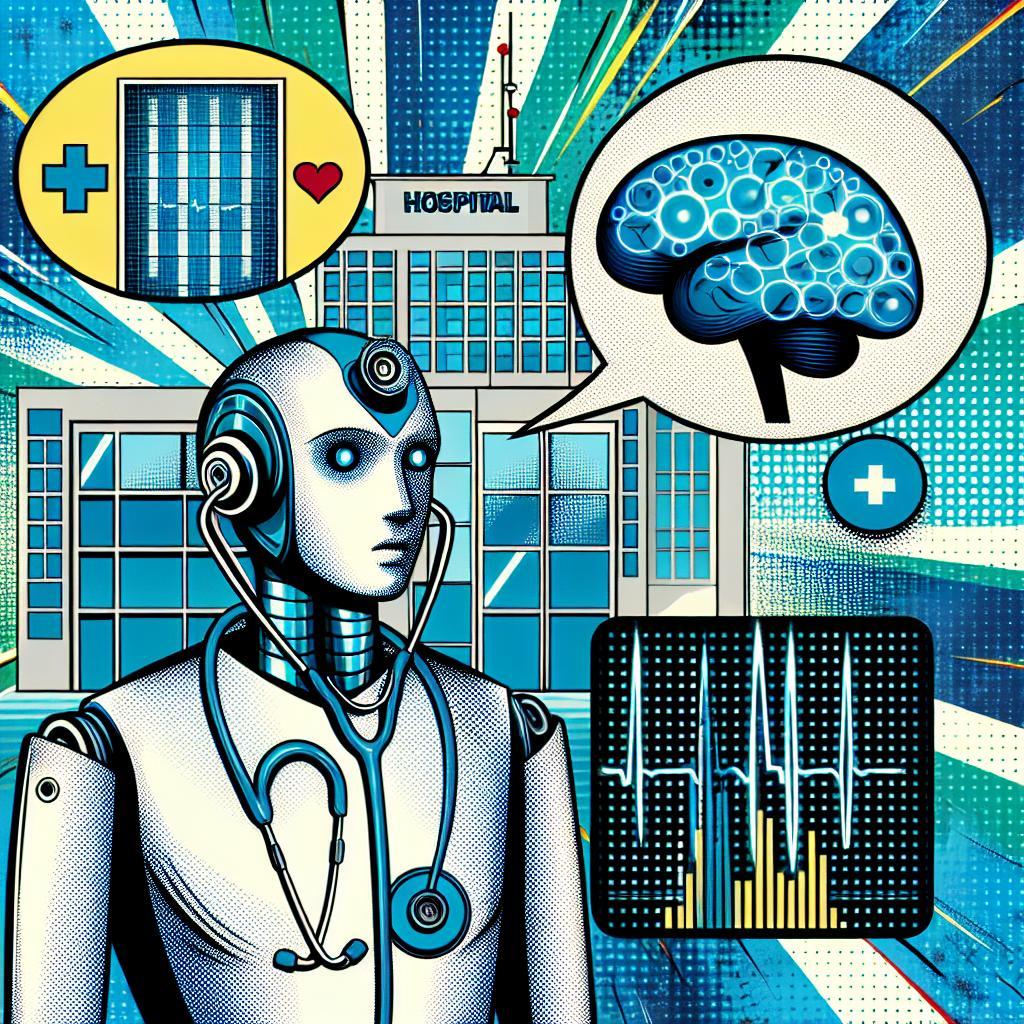
AI Revolutionizing Hospital Operations

TABLE OF CONTENTS
- Summary
- The Role of Artificial Intelligence in Healthcare
- Applications of AI in Hospital Operations
- Impact of AI on Administrative Operations
- Impact of AI on Clinical Operations
- Enhancement of Patient Outcomes and Experiences
- Challenges and Concerns in AI Deployment
- Conclusion
1. Summary
Artificial Intelligence (AI) is driving transformative changes in hospital operations, enhancing efficiency and patient care. It plays a crucial role in administrative tasks with tools like Robotic Process Automation (RPA), which streamline processes such as scheduling and billing, leading to substantial decreases in patient wait times and resource utilization. Clinically, AI technologies like Natural Language Processing (NLP) and generative AI improve diagnostic accuracy and decision-making, enabling personalized patient care and continuous monitoring. These advancements translate to better patient outcomes and experiences, as seen in reduced medical errors and improved communication through AI-powered virtual assistants and telehealth solutions. Nevertheless, the deployment of AI faces challenges regarding data quality, ethical issues, and regulatory compliance, which need careful attention to fully harness its potential in healthcare settings.
2. The Role of Artificial Intelligence in Healthcare
2-1. Definition and Overview of Artificial Intelligence
Artificial Intelligence (AI) is a relatively young discipline at the intersection of computer science and advanced analytics that aims to simulate human cognitive abilities. AI comprises several technologies including machine learning, natural language processing, and generative AI. Machine learning enables systems to learn from data and improve over time, while natural language processing facilitates the understanding and generation of human language. Generative AI focuses on producing new content or making predictions based on patterns found in existing data. The impact of AI is profound in healthcare, transforming various sectors including payers, providers, life sciences, and medical devices.
2-2. Subfields of AI Relevant to Healthcare
Key subfields of AI that are significantly relevant to healthcare include: 1. Machine Learning (ML), which allows systems to learn from data experiences to enhance decision-making processes; 2. Natural Language Processing (NLP), which aids in interpreting and generating human language for better communication and data extraction; and 3. Generative AI, which examines patterns to create new content or forecast results. These subfields contribute to improving patient care, streamlining processes, and enhancing diagnostic accuracy within hospital operations.
2-3. Transformative Effects of AI on Various Healthcare Segments
AI has transformative effects on various segments of healthcare, enhancing both administrative and clinical operations. In administrative areas, AI tools such as Robotic Process Automation (RPA) optimize scheduling, billing, and patient administration tasks, leading to increased efficiency and reduced costs. Clinically, AI supports decision-making through improved diagnostic algorithms and predictive analytics, resulting in faster and more accurate patient care. Furthermore, AI enhances the patient experience by providing personalized treatment recommendations and virtual health assistants. Overall, the integration of AI in hospital operations is revolutionizing the healthcare landscape, improving efficiency and patient outcomes.
3. Applications of AI in Hospital Operations
3-1. Administrative Operations
AI has had a significant impact on administrative operations within hospitals. AI-powered tools, such as Robotic Process Automation (RPA) and intelligent workflow management systems, streamline procedures like scheduling, billing, and patient administration. For instance, predictive analytics can estimate patient influx, allowing for efficient resource allocation and reducing expenses associated with overstaffing or inventory management. Hospitals have reported a 30 percent decrease in patient wait times and a 25 percent increase in resource utilization efficiency due to AI systems like LeanTaaS’s iQueue. Additionally, AI contributes to recruitment by analyzing candidate data, thereby expediting the hiring process and enhancing employee retention.
3-2. Clinical Operations
In clinical settings, AI enhances decision-making with improved diagnostic algorithms and predictive analytics, resulting in faster and more accurate patient care. For example, IBM Watson for Oncology assists oncologists with evidence-based therapy recommendations, improving diagnostic accuracy by 10-15 percent. AI also enables continuous patient monitoring through wearables and remote systems, significantly reducing hospital readmission rates. AI algorithms help healthcare providers identify potential issues in real-time, thereby enabling prompt interventions.
3-3. Patient Outcomes and Experiences
AI has improved patient outcomes by reducing medical errors and enhancing safety through precise diagnostics. For instance, the implementation of the Sepsis Watch system at Duke University Hospital has led to a 12 percent reduction in mortality rates by detecting early signs of sepsis. AI-powered chatbots and virtual assistants enhance patient communication and satisfaction, with reports indicating a 30 percent improvement in patient satisfaction due to timely responses from these tools.
3-4. Patient Access through Telehealth and Remote Monitoring
AI facilitates telehealth services, allowing for remote patient care, particularly essential during the COVID-19 pandemic. AI solutions such as Biofourmis’ Biovitals continuously monitor patient health, leading to an 18 percent decrease in hospital admissions for chronic disease patients. Remote monitoring has also improved patient adherence to treatment schedules by 22 percent, demonstrating AI's efficacy in enhancing healthcare access.
4. Impact of AI on Administrative Operations
4-1. Efficiency in Workflows and Process Management
AI is rapidly being used to optimize and streamline administrative operations that were previously labor-intensive and time-consuming. Predictive analytics in hospital management systems can estimate patient influx, assuring efficient resource allocation and reducing expenses associated with overstaffing or storing supplies. AI-powered systems like LeanTaaS’s iQueue have been reported to provide up to a 30% decrease in patient wait times and a 25% increase in resource utilization efficiency. AI tools can also aid workforce planning by forecasting fluctuations in hospital admissions and discharges, allowing better distribution of human and material resources.
4-2. Enhancements in Recruitment and Training
AI plays a significant role in recruitment by analyzing candidate data and efficiently matching job criteria. AI-powered platforms such as HireVue utilize machine learning to screen and evaluate candidates, thereby expediting the recruitment process. Reports indicate that these AI-driven systems have led to a 30% decrease in hiring time while simultaneously increasing employee retention by 15%. Furthermore, AI-powered training programs personalize learning experiences for healthcare employees, enabling ongoing professional development.
4-3. AI's Role in Optimizing Resource Allocation
AI enables hospitals to optimize resource allocation in various ways. For instance, Hartford HealthCare's Holistic Hospital Optimization (H2O) system employs predictive analytics to streamline numerous elements of hospital operations, leading to a reported 20% increase in staff utilization and a 15% decrease in overtime costs. AI tools help in organizing resources effectively, ensuring that supply and staffing levels are aligned with patient care needs.
5. Impact of AI on Clinical Operations
5-1. Improvement in Treatment Pathways and Clinical Decision Support
Artificial Intelligence (AI) enhances clinical decision-making by utilizing technologies such as Natural Language Processing (NLP) for data extraction, Generative AI for treatment simulations, and Robotics for precise surgeries. AI systems leverage patient data to customize treatment approaches, leading to improved clinical outcomes. Research indicates that AI assistance can enhance diagnostic accuracy by 10-15%. For instance, IBM Watson for Oncology serves as an AI-powered clinical decision support system that provides oncologists with evidence-based therapy recommendations.
5-2. Continuous Patient Monitoring and Care Management
AI facilitates continuous patient monitoring through wearable devices and remote monitoring systems, which allow for real-time data analysis and timely actions. The implementation of AI has resulted in a significant reduction in hospital readmissions and enhanced management of patients in critical care units. Notable examples include systems like EarlySense and Philips IntelliVue Guardian Solutions, which are applied in Neonatal Intensive Care Units (NICUs) and Pediatric Intensive Care Units (PICUs). AI algorithms analyze continuous patient data streams to identify potential issues, enabling prompt interventions that have led to a 20-25% reduction in adverse occurrences.
6. Enhancement of Patient Outcomes and Experiences
6-1. Safety and Quality Improvements
AI has significantly improved patient safety by minimizing medical errors through precise diagnostics and predictive analytics. Machine learning models for predicting hospital readmissions have enhanced patient outcomes by identifying high-risk patients and facilitating preventive care. For example, the Sepsis Watch system at Duke University Hospital employs AI to detect early signs of sepsis and alert healthcare providers, leading to a timely intervention. These AI predictive analytics identified sepsis risk in patients, contributing to a 12% reduction in mortality rates. Moreover, AI's capability to process large volumes of data can drastically enhance healthcare delivery. Tools like Butterfly Network’s handheld ultrasound devices democratize access to advanced diagnostic facilities, providing real-time insights and reducing the learning curve.
6-2. Enhanced Patient Interaction through Virtual Assistants
AI-powered chatbots and virtual assistants enhance communication between healthcare providers and patients, leading to increased patient satisfaction. These technologies ensure that patients receive immediate and accurate responses to their inquiries, thereby improving their overall healthcare experience. For instance, the Mayo Clinic has implemented an AI chatbot that aids patients with pre-visit planning and post-visit follow-up, resulting in a reported 30% increase in patient satisfaction due to timely and correct responses to their issues. It is crucial to present AI as a supportive tool for healthcare professionals and to highlight its potential to augment clinical judgments rather than replace them.
7. Challenges and Concerns in AI Deployment
7-1. Data Quality and Availability Issues
Ensuring high-quality data is critical for effective AI algorithms because inadequate or biased data can lead to inaccurate recommendations. Hospitals require reliable data collection and management systems to guarantee data integrity. Technical competence is also necessary to integrate AI, requiring ongoing training for healthcare workers. Furthermore, the high initial expenses of AI systems can be a barrier, necessitating a rigorous assessment of return on investment and exploration of funding alternatives. Transitioning to AI-driven processes necessitates significant changes in workflows and organizational culture, demanding strong change management tactics to overcome resistance and facilitate successful adoption.
7-2. Ethical and Regulatory Challenges
The use of AI in healthcare involves significant ethical and regulatory challenges that hospitals must navigate for successful deployment. Key considerations include ensuring patient data privacy, obtaining informed consent, and maintaining algorithmic transparency. Hospitals face complex regulatory landscapes to comply with technology standards such as the Health Insurance Portability and Accountability Act (HIPAA) and the General Data Protection Regulation (GDPR), which are crucial for safeguarding data privacy while leveraging advancements in AI. Furthermore, adhering to these regulatory requirements ensures that AI systems are safe, effective, and appropriate for clinical use, although this can be a complicated process.
Conclusion
The integration of Artificial Intelligence (AI) in hospital operations is undeniably enhancing administrative and clinical efficiencies while improving patient interactions. However, for AI to reach its full potential, healthcare facilities must address significant barriers, including data quality, ethical challenges, and the intricate regulatory compliance landscape. High-quality data is essential for effective AI functioning, yet issues such as biased data or insufficient training can lead to inaccurate AI-driven decisions. Ethical concerns, particularly regarding patient data privacy and algorithmic transparency, require stringent measures to ensure compliance with standards like HIPAA and GDPR. Looking forward, as AI technology advances, its strategic implementation in healthcare presents vast opportunities to refine patient care and operational effectiveness, but success will rely on overcoming these challenges, adopting robust change management, and fostering an environment where AI augments rather than replaces clinical judgments.