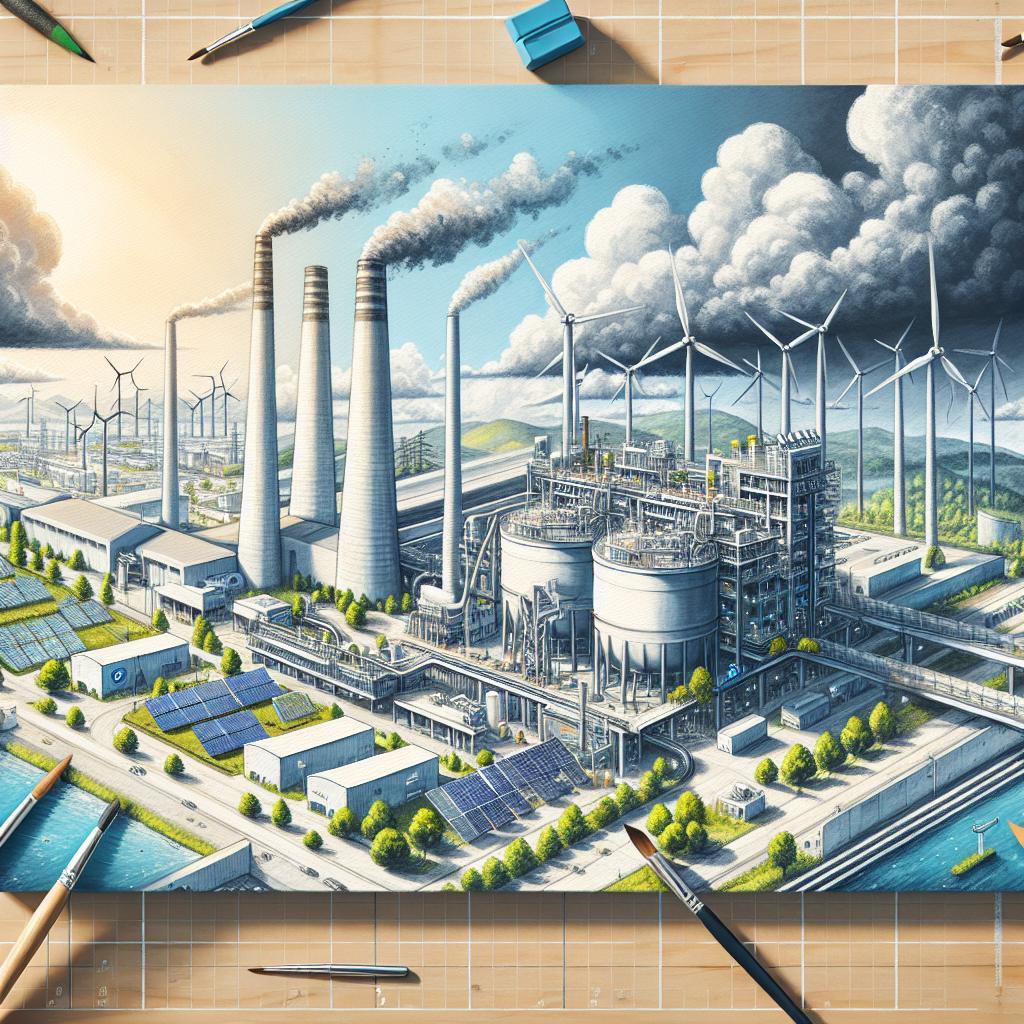
Decarbonizing Cement: Innovations Unveiled

TABLE OF CONTENTS
- Summary
- Overview of Cement Industry Emissions
- Sublime Systems: A Case Study in Low-Carbon Cement Innovation
- Comparative Analysis of Low-Carbon Technologies
- Market Dynamics and Future Outlook
- Conclusion
1. Summary
Exploring the forefront of sustainable construction, this report dives into the transformation of cement production through low-carbon technologies. At the center is Sublime Systems, recognized for its pioneering electrochemical process that reduces CO2 emissions significantly by producing cement at ambient temperatures without fossil fuels. Key strategic partnerships with industry giants CRH and Holcim amplify Sublime Systems’ ability to scale, showcasing a combined investment of $75 million towards a commercial facility. Highlighting supportive government initiatives like the DOE’s funding, this report underscores the projected shift towards low-carbon construction materials, amidst ongoing challenges in the cement sector attributed to high emissions, raw material costs, and traditional production dependencies.
2. Overview of Cement Industry Emissions
2-1. Contribution of Cement to Global CO2 Emissions
Cement production is a significant contributor to global greenhouse gas emissions, with approximately 8% of global carbon dioxide emissions attributed to this industry. It is reported that for every 1,000 kg of cement produced, over 900 kg of CO2 emissions are generated. These emissions arise predominantly from the traditional methods used in cement production, which heavily rely on fossil fuels and the heating of limestone.
2-2. Challenges in Decarbonizing Cement Production
Decarbonizing the cement industry presents substantial challenges due to its carbon-intensive processes. The historical manufacturing method of Ordinary Portland Cement (OPC) involves heating limestone at around 1,450°C in fossil fuel-powered kilns, leading to high levels of CO2 emissions. The transition to low-carbon alternatives is complicated by the industry’s reliance on fossil fuels and limestone, both significant sources of emissions.
2-3. Current Methods of Cement Production and Their Environmental Impact
Currently, the cement production process involves the heating of limestone and other materials in high-temperature kilns, which results in large emissions of CO2. This method is characterized by its high energy consumption, which necessitates the use of fossil fuels, contributing to the carbon footprint of the industry. Furthermore, traditional production methods release CO2 not only from fossil fuel combustion but also from the chemical process of converting limestone to lime, which continues to exacerbate the industry’s climate impact.
3. Sublime Systems: A Case Study in Low-Carbon Cement Innovation
3-1. Sublime Systems' Electrochemical Process
Sublime Systems has developed a proprietary electrochemical process that enables the production of low-carbon cement at near-ambient temperatures. This innovative method eliminates the need for traditional energy-intensive kilns that reach temperatures of approximately 1,450°C, which are a major source of CO2 emissions. The process instead utilizes clean electricity and carbon-free inputs to convert limestone into reactive cementitious ingredients, effectively reducing the carbon emissions typically associated with cement production. By avoiding fossil fuel and mineral emissions, Sublime's technology represents a transformative shift in cement manufacturing.
3-2. Partnerships with CRH and Holcim
Sublime Systems has established strategic partnerships with two leading building materials providers, CRH and Holcim, which include a combined investment of $75 million. These partnerships focus on the development and operations of Sublime's first commercial manufacturing facility in Holyoke, Massachusetts. Through these collaborations, CRH and Holcim bring valuable expertise and logistics capabilities to scale Sublime's technology effectively. The investment is set to facilitate the construction of the Holyoke plant, which is anticipated to commence operations as early as 2026, thereby advancing the transition to low-carbon cement production.
3-3. Funding and Support from Government Programs
Sublime Systems secured funding from the U.S. Department of Energy's Office of Clean Energy Demonstrations (OCED), enabling up to $86.9 million to support the Holyoke plant's construction. This funding will cover approximately 50% of the project costs, showcasing significant governmental support for innovation in low-carbon technologies. This financial backing underscores the importance of such investments in facilitating the necessary scale-up of low-carbon cement production and reducing the overall carbon footprint associated with this industry.
4. Comparative Analysis of Low-Carbon Technologies
4-1. Carbon-Negative Building Materials
Cement production is a significant contributor to global greenhouse gas emissions, accounting for up to 8% according to a 2023 study in Nature. Innovative approaches have emerged, one of which is the creation of carbon-negative building materials. Companies like Paebbl are capturing carbon dioxide from the atmosphere and utilizing ground olivine rock to produce a rock powder or slurry suitable for use in concrete and other building materials. This process, known as accelerated mineralization, can reduce the carbon footprint of concrete by up to 70%. Additionally, CarbonCure injects captured CO2 into fresh concrete during mixing, resulting in a 3% to 5% reduction in emissions. Collectively, these methods not only mitigate carbon emissions but also utilize captured carbon in construction applications.
4-2. Alternative Cement Production Methods
The landscape of cement production is evolving with the introduction of alternative methods that aim to reduce its carbon intensity. For instance, the incorporation of carbon capture technologies in cement production processes allows for significant reductions in emissions. The global commitment to sustainability has led to changes in building codes that now accommodate newer, lower-emission types of concrete. Furthermore, initiatives like the Federal Buy Clean Initiative in the U.S. encourage procurement of lower-carbon construction materials, influencing market dynamics favorably towards sustainable practices.
4-3. Success Stories and Industry Best Practices
The cement and concrete additives market is projected to experience a compound annual growth rate (CAGR) of 4.09%, reflecting a robust interest in low-carbon technologies. Notable players in this sector such as Sika AG, Elkem ASA, and Cemex are leveraging advanced technologies to drive market innovation. These companies are adopting practices that integrate sustainability into core business strategies, highlighting the importance of regulations and policies that support the growth of low-carbon technologies. Successful case studies include CarbonCure's carbon injection method which has successfully saved approximately 450,000 metric tons of CO2, showcasing the tangible benefits of adopting innovative practices within the industry.
5. Market Dynamics and Future Outlook
5-1. Investment Trends in Low-Carbon Technologies
The U.S. Department of Energy (DOE) has announced a Notice of Intent to fund up to $1.3 billion aimed at catalyzing investments in transformative carbon capture, utilization, and storage (CCUS) technologies. This initiative is a part of President Biden's Bipartisan Infrastructure Law, focusing on creating jobs, reducing pollution, and enhancing U.S. global leadership in developing cost-effective emissions reduction technologies. The funding is critical for scaling carbon capture technologies in sectors like cement production, which is a major contributor to carbon emissions.
5-2. Regulatory Frameworks and Supportive Policies
As part of the efforts to decarbonize heavy industries, including cement production, regulatory frameworks and supportive policies are continuously evolving. The DOE anticipates providing funding through three main topic areas that aim for commercial-scale carbon capture and storage projects, and enhancing infrastructure to support these technologies. These regulatory measures are essential for achieving the climate goals, which involve capturing and storing significant amounts of CO2 by 2050.
5-3. Potential Barriers to Adoption and Commercialization
Despite the promising investments and regulatory support, the cement industry faces several barriers to the adoption and commercialization of low-carbon technologies. Challenges such as the fluctuating costs of raw materials and transportation issues hinder progress. Furthermore, there are concerns related to managing carbon emissions and achieving net-zero targets, which pose formidable obstacles in the industry's transition toward sustainability.
Conclusion
The key findings of this report demonstrate a promising shift in the cement industry's journey toward sustainability, spearheaded by Sublime Systems’ innovative electrochemical method. By effectively reducing the reliance on carbon-intensive processes, their strategic partnership with CRH and Holcim and substantial funding from entities such as the DOE are instrumental in facilitating this transition. Despite barriers like fluctuating raw material costs and regulatory complexities, these partnerships highlight a collaborative future aimed at decarbonizing construction. The report acknowledges that ongoing and future investment in low-carbon technologies and supportive policies will be indispensable in addressing these challenges and cultivating an environment conducive to sustainable practices. Forward-looking innovations, regulatory frameworks, and strategic collaborations form the bedrock for future progress in this sector, promising practical applications that could redefine industrial practices substantially.