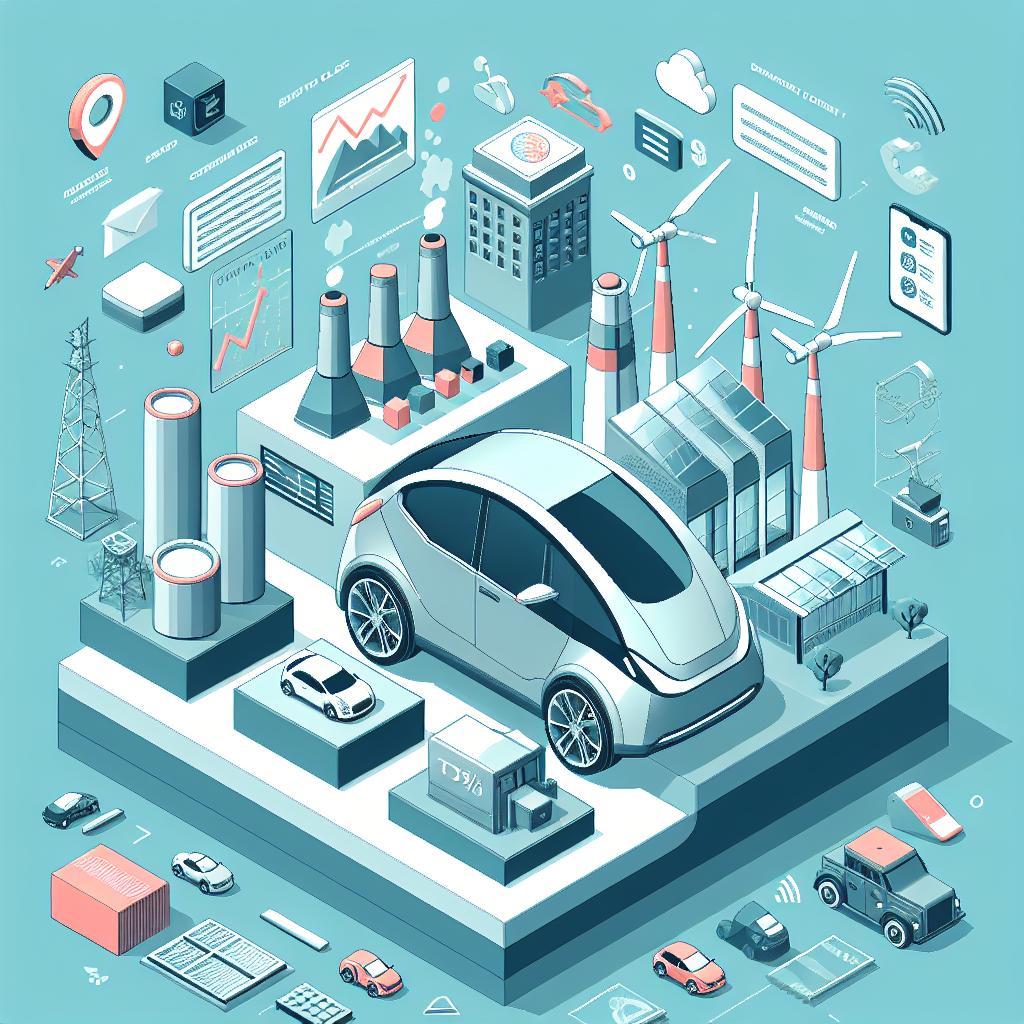
Tesla's Innovative Automotive and Energy Ventures

TABLE OF CONTENTS
- Summary
- Company Overview and Business Segments
- Tesla's Product Line and Global Operations
- Market Presence and Financial Performance
- Conclusion
1. Summary
This report delves into the expansive reach and influence of Tesla Inc., a key player in both the automotive and energy sectors. The document outlines Tesla's business operations, with particular focus on its automotive segment that features high-performance electric vehicles like the Model 3, Model Y, Model S, Model X, and the forthcoming Cybertruck. It also explores the company's robust energy segment, which includes innovative products such as Powerwall and Megapack, highlighting Tesla's commitment to sustainable energy practices. Tesla's global operations, including its strategic manufacturing and sales networks across the U.S., Germany, and China, are accompanied by an analysis of its financial performance. With over 1.8 million global vehicle deliveries in 2023 and a net profit margin of 18.8% in 2022, Tesla demonstrates both market leadership and financial efficacy. Attention is drawn to Tesla's role in driving the adoption of electric vehicles and renewable energy solutions worldwide.
2. Company Overview and Business Segments
2-1. Introduction to Tesla Inc.
Tesla, Inc. is a global leader in the design, development, manufacturing, sales, and leasing of high-performance fully electric vehicles and energy generation and storage systems. The company operates in two main segments: automotive and energy generation and storage. Tesla designs and manufactures electric vehicles and energy storage products primarily in the United States, China, Norway, and internationally. It sells its products through a network of company-owned stores, galleries, and online platforms. The company was previously known as Tesla Motors, Inc.
2-2. Automotive Segment Overview
The automotive segment of Tesla, Inc. encompasses the design, development, manufacturing, sales, and leasing of high-performance fully electric vehicles, along with the sale of automotive regulatory credits. This segment also includes sales of used vehicles, non-warranty after-sales vehicle services, body shop services, parts, paid supercharging, vehicle insurance, and retail merchandise. Tesla's consumer vehicle lineup includes the Model 3, Model Y, Model S, Model X, and the Cybertruck.
2-3. Energy Generation and Storage Segment
The energy generation and storage segment consists of the design, manufacture, installation, sales, and leasing of solar energy generation and energy storage products, including related services and sales of solar energy systems incentives. Key products in this segment include the Powerwall and Megapack, both of which are lithium-ion battery energy storage systems aimed at residential and commercial applications.
3. Tesla's Product Line and Global Operations
3-1. Electric Vehicles Range: Models and Production
Tesla Inc designs, develops, manufactures, sells, and leases a variety of electric vehicles. The current range includes models such as the Model Y, Model 3, Model X, Model S, Cybertruck, Tesla Semi, and Tesla Roadster. In 2023, Tesla achieved global deliveries of over 1.8 million vehicles, which underscores its strong position as a leader in the electric vehicle market.
3-2. Energy Products: Solar and Energy Storage Solutions
Tesla's energy division is involved in the production of stationary battery energy storage devices designed for both residential and commercial usage, covering everything from home battery systems to large-scale grid solutions. The company also offers solar energy products including solar panels and solar roof tiles. Furthermore, Tesla provides end-to-end clean energy products that encompass generation, storage, and consumption.
3-3. Global Manufacturing and Sales Network
Tesla operates manufacturing facilities located in the United States, Germany, and China, which allows it to effectively serve its operations across the Asia Pacific and Europe. The company markets and sells its vehicles through company-owned stores and galleries. The headquarters of Tesla is situated in Austin, Texas, USA.
4. Market Presence and Financial Performance
4-1. Stock Market Performance
As of the latest updates, Tesla, Inc. (NASDAQ: TSLA) is identified as a pioneering American multinational company based in Austin, Texas. It plays a crucial role in both the automotive and energy sectors. Information from the resource indicates that Tesla’s stock is followed closely by investors and traders, who seek the most recent updates regarding its market performance. The financial details surrounding its stock can impact investor confidence and market trends, reflecting the company's standing in the automotive and energy markets.
4-2. Sales and Profit Margin Analysis
The company, Tesla Inc., reported significant sales in 2023, achieving global deliveries of over 1.8 million vehicles. The financial performance highlights a notable net profit margin of 18.8% for the year 2022, alongside a 19.2% profit margin rate. This information emphasizes Tesla's strong position in the market, showcasing its effectiveness in maintaining profitability while scaling operations globally, demonstrating sound financial health rooted in its diverse product offerings.
4-3. Global Delivery and Market Leadership
Tesla’s commitment to innovation and technological solutions in electric vehicles has solidified its leadership position within the global automotive market. The company has established manufacturing facilities across the US, Germany, and China, and operates extensively in the Asia Pacific and Europe. This geographical reach empowers Tesla to enhance its delivery capabilities, ensuring it caters effectively to a growing consumer base for electric vehicles and sustainable energy solutions, further reinforcing its market dominance.
5. Conclusion
Tesla Inc. has undeniably established itself as a formidable force in both the automotive and energy sectors, leveraging innovation and sustainability to maintain its market leader status. The company's diverse range of electric vehicles, including models such as the Model 3, Y, S, X, and the upcoming Cybertruck, paired with its solar and energy storage products like Powerwall and Megapack, underscore its strategic focus on reducing fossil fuel dependency. Despite these achievements, Tesla faces challenges related to market volatility and logistics, necessitating continual operational efficiency. Addressing these challenges will be essential, as will maintaining adaptability in an ever-evolving market landscape. Looking ahead, Tesla's continued innovation and commitment to sustainable practices position it well to spearhead the transition towards a more energy-efficient future. Importantly, Tesla's strategies and products have practical applications in real-world settings, offering scalable solutions for residential and commercial energy needs, which are increasingly necessary in today's socio-economic climate.