Elon Musk: A Journey Through Innovation, Entrepreneurship, and Success

TABLE OF CONTENTS
- Summary
- Background and Early Ventures
- Major Companies Founded
- Recent Acquisitions and Leadership
- Philanthropy and Public Perception
- Net Worth and Influence
- Conclusion
1. Summary
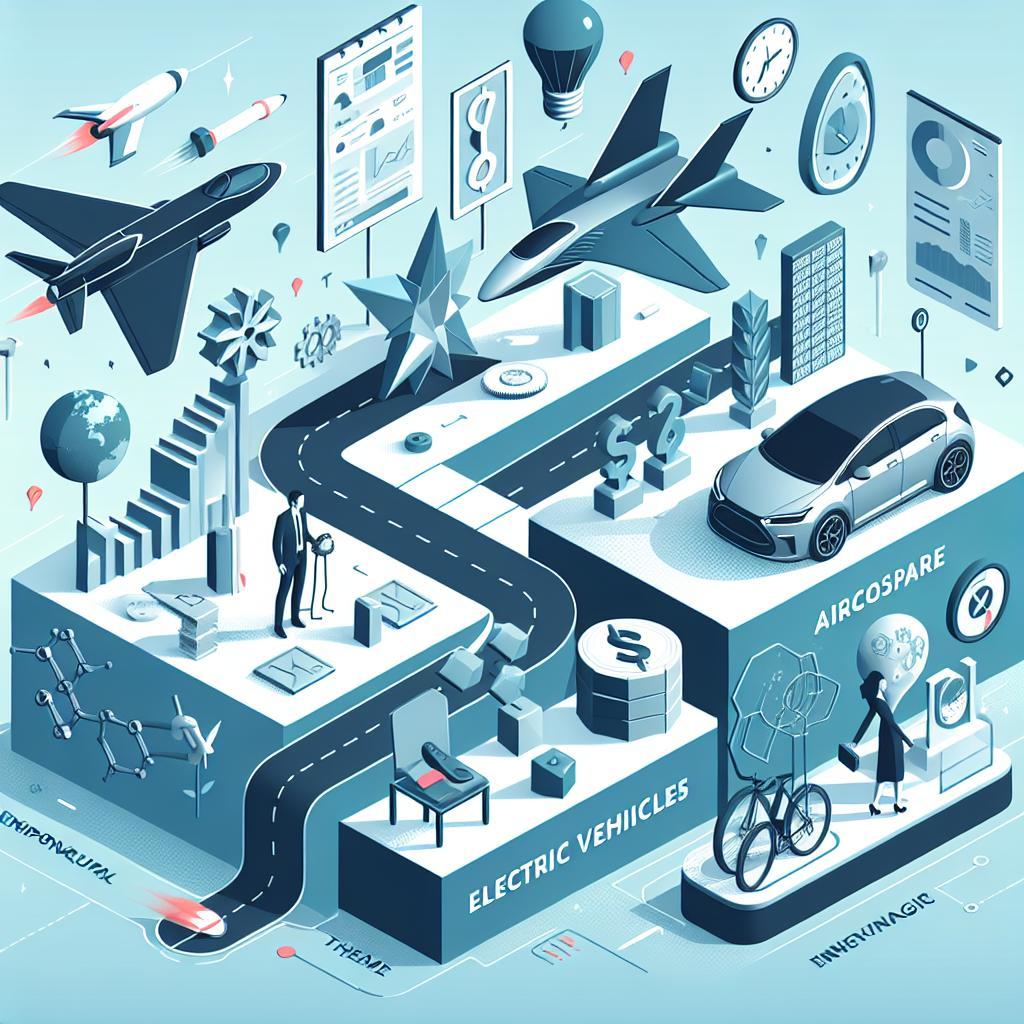
The report entitled "Elon Musk: A Journey Through Innovation, Entrepreneurship, and Success" provides an in-depth exploration of Elon Musk's entrepreneurial path and his substantial impact on technology and business. Covering his early life, the report details his initial ventures such as Zip2 and PayPal, progressing to major endeavors like SpaceX, Tesla, and Neuralink. Particular focus is given to the innovations brought by these companies in their respective fields—such as the affordable space travel initiated by SpaceX and the advancements in electric vehicles led by Tesla. The report also addresses Musk's acquisition and rebranding of Twitter to X Corp, emphasizing the drastic operational changes introduced. Additionally, Musk's philanthropic activities through the Musk Foundation and the public controversies surrounding his management style and personal remarks are highlighted. His net worth and influence on the global technology sector are also discussed, showcasing his stature as a leading figure in modern entrepreneurship.
2. Background and Early Ventures
2-1. Early Life and Education
Elon Reeve Musk was born on June 28, 1971, in Pretoria, South Africa, to a South African father and a Canadian mother. Musk showed an early talent for computers and entrepreneurship, developing a video game at the age of 12 and selling it for approximately $500. After obtaining a Canadian passport, he moved to Canada at 17, attending Queen's University before transferring to the University of Pennsylvania, where he earned bachelor's degrees in physics and economics. Musk briefly attended Stanford University for graduate studies but left after two days to pursue business opportunities.
2-2. Initial Entrepreneurial Ventures: Zip2 and PayPal
In 1995, Musk co-founded Zip2, a company providing online city guide software, which was sold to Compaq for $307 million in 1999. Following this success, Musk founded X.com, an online financial services company that later merged with Confinity to form PayPal. In 2002, eBay acquired PayPal for $1.5 billion, resulting in Musk receiving approximately $165 million for his shares.
3. Major Companies Founded
3-1. SpaceX: Revolutionizing Space Exploration
SpaceX, founded by Elon Musk in 2002, aims to revolutionize the aerospace industry by creating affordable rockets. The initial two rockets were the Falcon 1, first launched in 2006, and the larger Falcon 9, initiated in 2010. SpaceX has made significant progress in launching payloads into space, including contracted missions for NASA. The company is also developing the Super Heavy–Starship system designed for missions to Mars, demonstrating Musk's vision for human colonization of other planets.
3-2. Tesla: Innovating the Automotive Industry
Tesla, originally founded as Tesla Motors, became a major player in the electric vehicle market after Musk joined as chairman in 2004 and later assumed the role of CEO in 2008. The company has unveiled several successful models including the Roadster (2008), Model S (2012), Model X (2015), Model 3 (2017), and Model Y (2020). Tesla's innovations have positioned it as one of the most valuable car manufacturers globally, with initiatives to promote sustainable energy.
3-3. Other Ventures: SolarCity, Neuralink, and The Boring Company
Elon Musk co-founded SolarCity in 2006, which became a significant solar energy service provider in the United States before being acquired by Tesla in 2016. He is also a co-founder of Neuralink, focused on developing brain-computer interfaces, and The Boring Company, aimed at tunnel construction and urban transportation solutions.
3-4. OpenAI and the Hyperloop Initiative
Elon Musk co-founded OpenAI in 2015, a research organization dedicated to promoting friendly artificial intelligence. In addition, he proposed the Hyperloop in 2013, a high-speed transportation system utilizing pressurized air tubes to quickly transport passengers between cities. Although he did not further develop the Hyperloop, the concept gained significant attention and spawned various development efforts.
4. Recent Acquisitions and Leadership
4-1. Acquisition and Rebranding of Twitter to X Corp.
Elon Musk acquired Twitter in October 2022 for $44 billion. This decision culminated after a series of events that began with his purchase of over 9% of the company in early April 2022. Musk initially intended to join Twitter's board of directors but opted to make an offer to buy the entire company instead. After negotiations, Twitter's board agreed to Musk's bid, despite legal disputes that ensued regarding issues like bot accounts and alleged breaches of agreement. Upon completing the acquisition, Musk immediately made significant changes, including downsizing the workforce by about half and changing the name of the company to X Corp. in July 2023, with tweets being rebranded as posts.
4-2. Management Style and Public Controversies
Elon Musk's management approach has frequently come under scrutiny. His ownership of Twitter was marked by widespread layoffs and significant shifts in content moderation policies, which drew public controversies. Under Musk's leadership, Twitter saw increases in hate speech and misinformation. Following his takeover, he disbanded the platform's content-moderation body and reinstated numerous suspended accounts, including that of former President Donald Trump. His management decisions often sparked debate about the implications for free speech and the company's operational direction. Musk himself became a polarizing figure, facing criticism for his public statements and the impact of those decisions on the broader Twitter user base.
4-3. Influence on the Technology Sector
Elon Musk has profoundly impacted the technology landscape, particularly through his companies like SpaceX and Tesla. With the launch of SpaceX, he contributed to making space exploration more affordable and accessible, revolutionizing commercial spaceflight. As CEO of Tesla, he has pushed the boundaries in electric vehicles, making them more mainstream and promoting renewable energy. Musk's acquisition and rebranding of Twitter to X Corp. is seen as part of a broader vision to expand his influence in digital communication and social media innovation. His approach often prioritizes rapid innovation and a readiness to embrace risk, positioning him as a leading figure in technology and entrepreneurship.
5. Philanthropy and Public Perception
5-1. Philanthropic Efforts through the Musk Foundation
Elon Musk serves as the chairman of the Musk Foundation, which aims to provide solar energy systems for disaster relief among other objectives. Since its inception in 2002, the foundation has made over 350 donations, with approximately half going to scientific research or educational nonprofits. Noteworthy recipients include the Wikimedia Foundation, the University of Pennsylvania, and Big Green, a nonprofit founded by Musk's brother, Kimball Musk. Despite its contributions, the foundation has faced criticism for the relatively small amount it donates compared to Musk's overall wealth, having distributed around $25 million directly to nonprofits from 2002 to 2018, with nearly half of these funds allocated to Musk's OpenAI, which was a nonprofit at the time.
5-2. Criticisms and Controversies
Elon Musk has attracted significant criticism due to his unconventional views and public controversies. In 2018, he was sued for defamation by a British cave rescuer involved in the Tham Luang cave rescue; however, a California jury ruled in favor of Musk. In the same year, the U.S. Securities and Exchange Commission (SEC) sued him for allegedly tweeting misinformation about securing funding for a Tesla buyout. Musk reached a settlement that required him to step down temporarily from his chairman position and abide by limitations on his social media usage. He has also faced backlash for spreading misleading information regarding the COVID-19 pandemic, along with controversies surrounding his views on artificial intelligence, cryptocurrency, and public transportation.
5-3. Public Image and Media Representation
Elon Musk's public image is often seen as polarizing. While celebrated for his innovative contributions to technology and business—such as advancing electric vehicles with Tesla and reducing space transportation costs with SpaceX—he is also criticized for his erratic behavior on social media and controversial public statements. This complex persona is reflected in media portrayals, which oscillate between viewing him as a visionary entrepreneur and a reckless billionaire. The media has often focused on his ambitions and successes, but it equally highlights the controversies that surround his personal and professional life, impacting public perception.
6. Net Worth and Influence
6-1. Financial Success and Wealth Accumulation
As of August 1, 2024, Elon Musk is the richest person in the world with a net worth of $252 billion. Musk's wealth is primarily attributed to his roles as CEO of Tesla and SpaceX. His financial portfolio includes a 13% ownership stake in Tesla valued at approximately $95.4 billion, a 79% stake in Twitter (now X Corp.) worth $7.68 billion, and other significant assets such as Space Exploration Technologies valued at $82.2 billion, The Boring Company at $3.33 billion, Neuralink at $2.07 billion, and xAI at $13.3 billion. Musk's financial success is significant within the context of a larger group of billionaires, with 2,781 billionaires reported worldwide in 2024 according to Forbes.
6-2. Influence on Global Technology and Economy
Elon Musk's influence extends beyond his wealth, positioning him as a key player in the global technology landscape. Musk became an active investor and co-founder of PayPal, leading to his prominence in technological innovation. His ventures, such as Tesla and SpaceX, have not only propelled advancements in electric vehicles and space exploration but have also set new paradigms for entrepreneurship and risk-taking in the technology sector. As the founder of multiple companies, he has had a profound impact on the economy, stirring competition and innovation, particularly in electric transportation and space travel, thus shaping public discourse and investment trends.
7. Conclusion
The report illustrates Elon Musk's significant journey from a budding entrepreneur to a globally influential titan in technology and business. Key achievements in space exploration with SpaceX, groundbreaking advancements in the automotive industry through Tesla, and innovations in neural-technology via Neuralink underscore his unyielding commitment to pushing technological frontiers. While Musk has amassed considerable wealth and wielded vast influence, his decisions—particularly those concerning X Corp (formerly Twitter)—have often sparked public controversy and debate, emphasizing the complex nature of his leadership style. His philanthropic efforts through the Musk Foundation, though impactful, have been critiqued for not matching his wealth. The report suggests that Musk's duality as a visionary yet polarizing leader presents a nuanced view of his contributions and public perception. As the domains he operates in continue to evolve, Musk's role in shaping future technological trends remains pivotal, with applications of his innovations having the potential to alter everyday life profoundly.