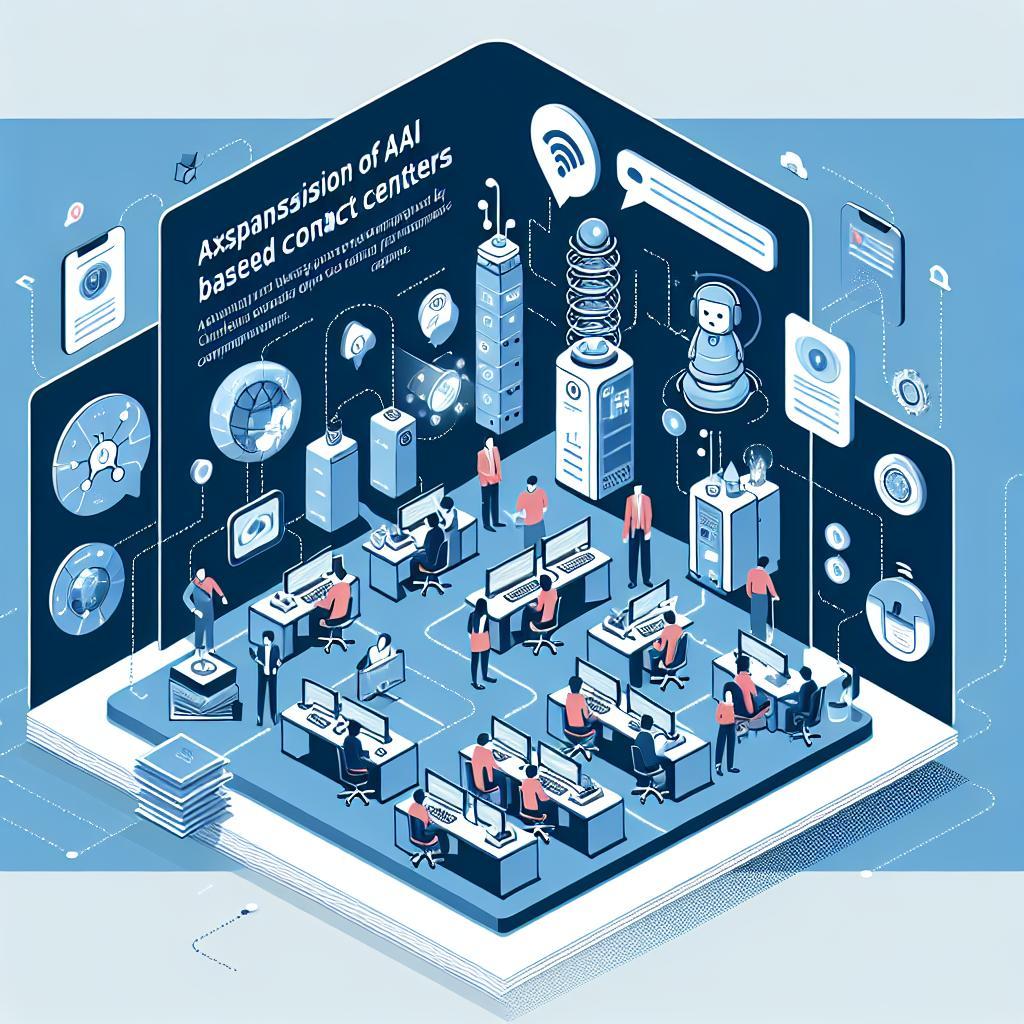
Adoption and Expansion of AI-based Contact Centers (AICC) by Korean Telecommunications Companies

TABLE OF CONTENTS
- Summary
- Introduction to AICC
- SK Telecom's AICC Initiatives
- KT's AICC Initiatives
- LG Uplus's AICC Initiatives
- Comparative Analysis of Telecom Companies' AICC Strategies
- Conclusion
1. Summary
The report titled 'Adoption and Expansion of AI-based Contact Centers (AICC) by Korean Telecommunications Companies' examines the implementation and growth of AICCs by major Korean telecom companies, including SK Telecom, KT, and LG Uplus. It emphasizes each company's strategies, technological advancements, and market projections aiming to automate customer service, improve operational efficiency, and cater to increasing automated service demands. Key findings include substantial revenue targets, strategic technological collaborations, and impressive annual growth rates for both the domestic and global AICC markets, increasingly positioning AICCs as a transformative force in customer service.
2. Introduction to AICC
2-1. Definition and Features of AICC
AI-based Contact Center (AICC) is an intelligent customer service platform that employs AI technologies such as voice recognition, conversational analysis, and chatbot functionalities to automate customer interactions. AICCs enable businesses to significantly improve customer service efficiency while reducing operational costs. They are essential for businesses looking to enhance their customer service capabilities by providing 24/7 automated responses to client inquiries.
2-2. Current State of AICC
Korean telecommunications companies SK Telecom, KT, and LG Uplus are actively expanding their AI-based contact center services. According to recent reports, LG Uplus is focusing on AICC as a core element for B2B business expansion, aiming for 2 trillion KRW in revenue by 2028. KT has reported sales exceeding 250 billion KRW in 2022 and aims for 300 billion KRW in 2023. SK Telecom is collaborating with global partners to implement advanced AI technologies in their AICC systems, such as the introduction of the 'Tello LLM'. As the demand for automated customer service increases, the AICC market is expected to see substantial growth, moving towards achieving a market size of approximately 13 trillion KRW annually.
2-3. Market Growth Projections
Market research indicates that the domestic AICC market is expected to grow significantly, with an annual growth rate of 23.7%. By 2030, the market size is projected to reach approximately 3.5 billion USD. The global AICC market is also anticipated to grow at an impressive yearly rate of 25%, potentially reaching 36.1 billion USD by 2025. This growth reflects a growing trend among businesses to adopt AI technologies, cementing AICC's role in digital transformation efforts within diverse industries.
3. SK Telecom's AICC Initiatives
3-1. Implementation Strategies
SK Telecom has been actively expanding its AI-based contact center (AICC) services and is currently testing the 'Telco LLM', a large language model developed in collaboration with the Global Telco AI Alliance (GTAA). The aim is to commercialize this technology within the year. The company is also working with PersonaAI, a leading local AICC developer, to promote joint projects. These initiatives indicate a strategic focus on enhancing customer service automation and overall efficiency.
3-2. Technological Collaborations
SK Telecom has strategically invested in PersonaAI, becoming one of its major shareholders. PersonaAI is known for its advanced natural language processing technology and was the first in South Korea to offer subscription-based AICC services. This collaboration is expected to enhance SK Telecom's capabilities in providing sophisticated AICC solutions to various sectors, including the financial industry.
3-3. Market Achievements and Projections
The AICC market in South Korea is projected to grow significantly, with a compound annual growth rate (CAGR) of 23.7%. For the telecom companies, implementing AICC is not merely about customer service automation; it is also viewed as a critical component of digital transformation in corporate operations. The collective AICC efforts by SK Telecom, KT, and LG Uplus are positioned to notably innovate customer service and also generate cost-saving advantages, with projections estimating the domestic AICC market to reach up to 600 billion won by next year.
4. KT's AICC Initiatives
4-1. Implementation Strategies
KT has developed a comprehensive strategy around its AI-based contact center (AICC) initiatives. The company launched its AICC product, ‘Aysen Cloud,’ in 2022, marking its entry into the AICC market. To further solidify its market position, KT has set an ambitious revenue target of 300 billion KRW for AICC this year, following a significant contract value exceeding 250 billion KRW the previous year. The company has focused its initiatives in three main areas: AI consultation, automation of customer center operations, and enhancing business performance. By transitioning its own customer service center to an AICC model, KT aims to leverage its experiences to build a unified customer feedback management system known as the 'AI-VOC portal,’ which rapidly addresses customer concerns.
4-2. Technological Collaborations
KT has engaged in strategic collaborations to enhance its AICC capabilities. The company has introduced AI technologies, such as voice recognition and natural language processing, to automate customer consultations. Additionally, KT plans to commercialize a super-large AI model within the year and intends to develop a next-generation AICC capable of understanding user emotions. This push into artificial intelligence also encompasses plans for specialized ‘multi-turn expert consultation’ services in various fields such as parenting and legal advice. These technological advancements highlight KT's commitment to leveraging AI for deeper customer interaction and improved service efficiency.
4-3. Market Achievements and Projections
KT has made notable achievements in the AICC market, demonstrating the growing demand for AI-enhanced customer service solutions. The company has recorded significant revenue growth with its AICC offerings and plans to capitalize on increasing market opportunities. The domestic AICC market is projected to grow to 13 trillion KRW annually, indicating a robust market potential for KT. Moreover, the integration of AI services has not only allowed KT to streamline customer interactions but also positioned its offerings as essential components driving digital transformation within the telecom industry.
5. LG Uplus's AICC Initiatives
5-1. Implementation Strategies
LG Uplus has positioned AI-based contact center (AICC) services as a cornerstone of its Business-to-Business (B2B) expansion strategy. They utilize their self-developed lightweight large language model, 'Xigen,' to provide customized AI models. The company aims to achieve 2 trillion KRW in revenue from AI B2B services by the year 2028.
5-2. Technological Collaborations
LG Uplus has already implemented an AI-based consultation analysis system known as 'VOC Lab.' This system enhances operational efficiency, reducing the time to check consultation records from over 10 minutes to under 30 seconds.
5-3. Market Achievements and Projections
The AICC sector is gaining momentum, evidenced by the significant annual increase in revenue from services. Market research firm Allied Market Research forecasts a 23.7% annual growth rate for the domestic AICC market, with expectations that the global market size will reach 45 trillion KRW by next year. The three major telecom companies in Korea anticipate that AICCs will simultaneously drive customer service innovation and cost reduction.
6. Comparative Analysis of Telecom Companies' AICC Strategies
6-1. Technological Implementations
The algorithms employed in these AICCs utilize voice recognition, sentence parsing, and various AI technologies to automate customer consultations. AICCs can efficiently process inquiries that previously took over 10 minutes, now reduced to less than 30 seconds. This technological advancement reflects a broader trend towards automation and efficiency within the customer service sector.
6-2. Market Position and Growth
Furthermore, as companies increasingly seek to streamline operations and reduce costs, the competitive landscape for AICC is expected to intensify. Telecom firms aim to enhance their service offerings while transitioning to digital-first customer service environments.
6-3. Challenges and Opportunities
Moreover, partnership opportunities with tech companies specializing in AI can provide telecom firms with advanced tools and systems to improve the efficacy and reach of their AICC services. Collaboration with companies like PersonaAI, which offers sophisticated natural language processing capabilities, enhances the telecom companies' ability to meet sophisticated customer service demands efficiently.
7. Conclusion
The integration of AI into customer service through AI-based Contact Centers (AICC) signifies a pivotal digital transformation for telecom companies like SK Telecom, KT, and LG Uplus. These companies enhance customer interactions and operational efficiency by leveraging sophisticated AI technologies. Although each company follows unique strategies and partnerships, their combined efforts underscore a promising market growth trajectory and the potential for significant industry transformation. While the report highlights the advancements and competitive landscape of AICC, it also underscores the importance of continued technological innovation to meet rising market demands. Future development prospects include more sophisticated AI applications and broader industry adoption, with practical implications driving digital transformation across various sectors.