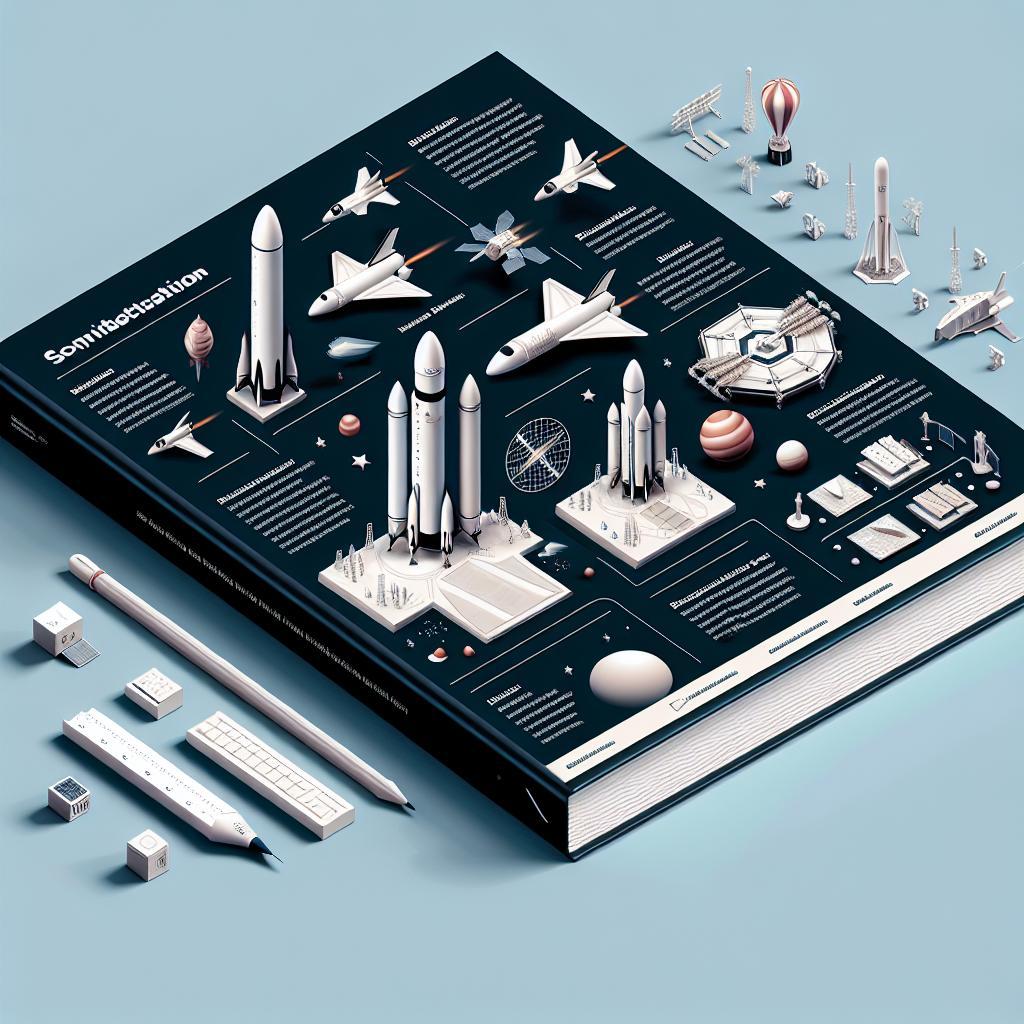
The Transformative Impact of SpaceX on Space Exploration and Colonization

TABLE OF CONTENTS
- Summary
- Introduction to SpaceX
- Technological Innovations
- Key Achievements and Milestones
- Mars Colonization Plans
- Economic Impact of SpaceX
1. Summary
The report titled 'The Transformative Impact of SpaceX on Space Exploration and Colonization' delivers a thorough analysis of SpaceX's pivotal role in advancing space exploration. Established by Elon Musk in 2002, SpaceX has revolutionized the aerospace industry through innovations such as reusable rockets (Falcon 9, Falcon Heavy) and the development of the Starship, a spacecraft designed for deep-space missions. Key achievements include successful private missions to the ISS, the launch of the Starlink Satellite Network to provide global internet access, and the ambitious goal of colonizing Mars. The report highlights how these milestones and technological advances have significantly reduced the cost of space travel, making space exploration more accessible and setting the stage for human colonization of Mars.
2. Introduction to SpaceX
2-1. Establishment of SpaceX in 2002
SpaceX, officially known as Space Exploration Technologies Corp., was established by Elon Musk in 2002. The foundation of the company aimed to reduce space transportation costs and enable the colonization of Mars. Since its inception, SpaceX has transformed the aerospace industry through various innovations and advancements.
2-2. Elon Musk's vision for space exploration
Elon Musk's vision for humanity's space exploration began with the establishment of SpaceX in 2002. He is driven by the ambition to make space travel more accessible and to colonize Mars, highlighted by the development of reusable rockets and the prototype spacecraft, Starship. His efforts aim to create sustainable colonies on Mars and foster a greater understanding of the universe.
3. Technological Innovations
3-1. Development and success of reusable rockets (Falcon 9, Falcon Heavy)
SpaceX has developed reusable rockets, specifically the Falcon 9 and Falcon Heavy, which have significantly transformed the landscape of space exploration. The Falcon 9 rocket is noted for its impressive 80% reusability rate, which drastically reduces the costs associated with launching payloads into space. This innovation has opened new possibilities for various missions, including commercial spaceflights and scientific endeavors. The successful launches and landings of these reusable rockets mark a pivotal achievement in SpaceX's goal of making space travel more accessible to a wider audience.
3-2. Cost-reduction strategies in space travel
SpaceX's approach to reducing the costs of space travel involves a multifaceted strategy centered around the development and use of reusable launch vehicles. By reusing rockets, SpaceX has effectively lowered the financial barrier to entry for both commercial and governmental space missions. This strategy not only democratizes access to space but is also crucial for achieving the long-term goal of establishing a permanent human presence on Mars. The advancements in technology aimed at cost reduction are foundational to SpaceX's mission of making space exploration feasible for all.
3-3. Introduction and significance of the Starship
The Starship is a next-generation spacecraft designed by SpaceX for deep-space travel, including missions to Mars. Standing at 120 meters tall, it is engineered with a focus on near-100% reusability, which is a significant advancement over previous spacecraft designs. The introduction of the Starship represents a game-changing development in space exploration, underpinning SpaceX's commitment to maximizing accessibility in space travel. By making this state-of-the-art spacecraft operational, SpaceX furthers its ambitions of not only reaching Mars but also ensuring that humanity can inhabit other planets in the future.
4. Key Achievements and Milestones
4-1. First private mission to ISS with Falcon 9
SpaceX's Falcon 9 spacecraft successfully completed the first private mission to the International Space Station (ISS), marking a historic achievement in space exploration. This mission was the first time a spacecraft developed and operated by a private entity made the journey to the ISS, which involved a significant distance of 921,474 kilometers. This accomplishment illustrates SpaceX's capability to contribute meaningfully to human spaceflight.
4-2. Development of the Starlink Satellite Network
SpaceX has developed the Starlink Satellite Network, which consists of a constellation of satellites aimed at providing high-speed internet access to remote and underserved areas around the world. This initiative has the potential to bridge the digital divide, fostering connectivity for billions of people globally, and represents a significant advancement in commercial satellite technology.
4-3. Launch of Starship prototype for Mars colonization
The launch of the Starship prototype is a pivotal milestone in SpaceX's ambition to colonize Mars. Starship is designed to carry more than 100 passengers and aims to create sustainable colonies on the Red Planet, with the goal of Mars terraformation. This ambitious project reflects SpaceX's overarching vision to establish a human presence on Mars, fundamentally changing the future of interplanetary exploration.
5. Mars Colonization Plans
5-1. Elon Musk's vision for a self-sustaining Martian society
Elon Musk, the founder and CEO of SpaceX, envisions a self-sustaining Martian society achievable by the year 2050. His objective encompasses establishing a colony on Mars that accommodates one million people. This vision is part of a broader plan to make humanity an interplanetary species and involves the use of advanced space technology to create a future where humans can thrive on Mars.
5-2. Timeline and goals for colonizing Mars
Musk's timeline for Mars colonization is ambitious, aiming to establish a self-sufficient colony by 2050. The overarching goals include not only the transportation of humans to Mars but also ensuring that the colony can sustain itself independently. This aligns with Musk's drive to make space travel more cost-effective and accessible to the general public.
5-3. Technological advancements supporting Mars missions
Supporting the Mars colonization efforts are several technological advancements, particularly the development of reusable launch vehicles like the Falcon 9 and Falcon Heavy rockets. These innovations significantly lower the cost of space travel, making Mars colonization feasible. Additionally, SpaceX is working on the Big Falcon Rocket and the Starship spacecraft, which are crucial for ferrying humans and cargo to Mars and will help accelerate the mission's goals.
6. Economic Impact of SpaceX
6-1. Financial strategies and profitability
SpaceX faces the ongoing challenge of maintaining profitability while funding ambitious projects such as Starship and its Starlink global satellite internet constellation. The company was founded by Elon Musk with a vision to reduce space transportation costs and enable Mars colonization. SpaceX has fundamentally transformed the aerospace industry since its inception in 2002, achieving significant milestones.
6-2. Impact on the global space economy
SpaceX has reshaped the global space economy through its technological advancements and cost-effective approaches. By developing the Falcon 1, the first privately developed liquid-fueled rocket to reach orbit, and subsequently, the Falcon 9 and Falcon Heavy rockets, SpaceX has demonstrated remarkable reliability. The introduction of reusable rockets has lowered access costs to space, disrupting traditional aerospace economics.
6-3. Commercial space ventures enabled by SpaceX
The reusability of SpaceX's Falcon rockets, with an 80% reusability rate, has significantly reduced financial barriers to entry in the space industry. This innovation has opened new avenues for commercial space ventures, making activities such as satellite deployment and space travel more accessible. Furthermore, the development of the Starship, designed for near-100% reusability, positions SpaceX as a leader in creating opportunities for commercial space exploration.