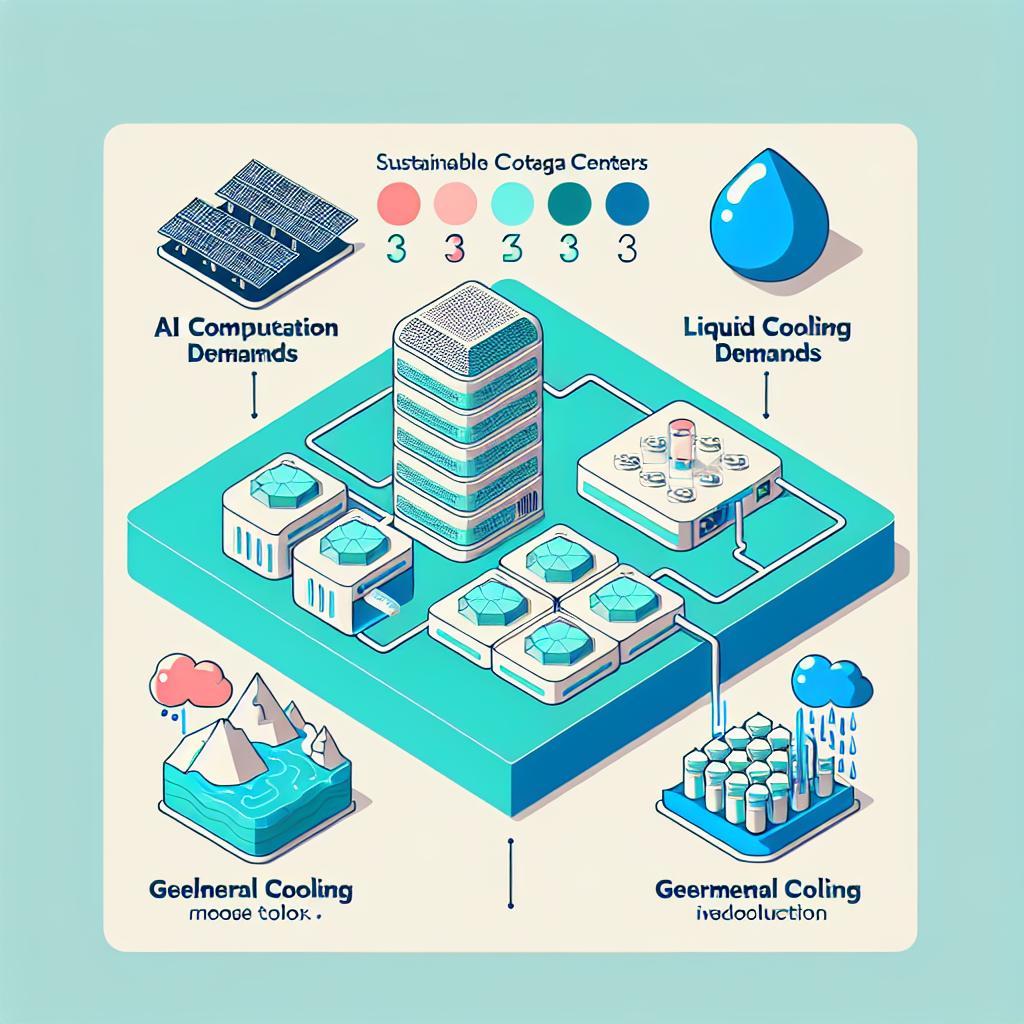
Efficient Cooling in AI-Powered Data Centers

TABLE OF CONTENTS
- Summary
- Introduction to Data Center Cooling Challenges
- Current Cooling Technologies
- Novel Cooling Solutions for Efficiency
- AI-Driven Optimizations in Data Centers
- Sustainability and Environmental Concerns
- Market Trends and Future Projections
- Conclusion
1. Summary
This report investigates the advancements in and necessity for energy-efficient cooling technologies in data centers, focusing on the heightened demands due to AI-related computations. It covers various sustainable methods such as liquid cooling, including Lenovo’s Neptune™ technology, geothermal cooling, and immersion cooling. Each approach is analyzed for its energy efficiency, cost-effectiveness, and environmental impact. Additionally, the role of AI in optimizing these cooling solutions is explored, highlighting its potential in dynamic workload management and predictive maintenance. This comprehensive analysis aims to provide stakeholders with a grounded understanding of sustainable practices and regulatory pressures in the data center industry.
2. Introduction to Data Center Cooling Challenges
2-1. Overview of data center energy consumption
Data centers represent some of the most energy-intensive building types, consuming between 10 to 50 times the energy per floor space compared to typical commercial office buildings. These facilities account for approximately 2 percent of total electricity use in the U.S. The average hyper-scale data center consumes between 20 to 50 megawatts annually, which is sufficient to power around 37,000 homes. As the use of information technology grows, data center energy consumption is projected to increase as well. Cooling accounts for nearly 40 percent of a data center's total power load, making it a significant target for improvements in energy efficiency.
2-2. Impact of AI on data center energy demands
With the surge in AI computational needs, data centers are facing unprecedented energy demands. Traditional air conditioning is becoming inadequate as the design loads for equipment rise to 75 kilowatts per rack, much higher than the cooling capacity of conventional methods, which is around 25 kilowatts per rack. This scenario creates an urgent need for more efficient cooling technologies to manage the increased heat output from high-density server environments effectively.
2-3. Need for sustainable cooling solutions
The shift towards sustainable cooling solutions has become essential due to rising energy costs and environmental impact concerns. An increasing focus on reducing operational costs and carbon emissions has led data center operators to explore various sustainable methods. These include liquid cooling, immersion cooling, and geothermal cooling, each offering different advantages in terms of energy efficiency and effectiveness in handling high-density heat outputs. The pressures from customers, stakeholders, and regulatory bodies underscore the importance of adopting greener practices in cooling technology.
3. Current Cooling Technologies
3-1. Traditional air cooling methods
Traditional air cooling methods, such as air conditioning systems used in data centers, are energy-intensive and often inefficient. This approach relies on large fan systems to circulate air, requiring additional infrastructure such as ducts to deliver cold air to the IT equipment. The process generates significant heat which must be expelled, often leading to high water consumption, especially in evaporative cooling systems that utilize water to cool air through evaporation.
3-2. Liquid cooling techniques
Liquid cooling techniques, such as Lenovo Neptune™, involve circulating coolant directly over the servers, which is more efficient than air cooling. This method can lead to substantial reductions in energy consumption—up to 40% according to reports—by eliminating the need for high-power mechanical cooling systems. Liquid cooling technologies allow for higher performance without exceeding thermal limits and can drastically lower water usage compared to traditional methods.
3-3. Free cooling and natural cooling methods
Free cooling methods utilize natural environmental conditions, such as outside air during cooler periods, to reduce reliance on mechanical systems. This technique leverages the ambient temperature to lower cooling costs and energy expenses. Although free cooling can be exceptionally effective in certain climates, its application varies based on geographical locations and requires careful planning to optimize its use effectively.
4. Novel Cooling Solutions for Efficiency
4-1. Air-assisted liquid cooling
Researchers are increasingly studying and developing data center cooling technologies. A report by the Electric Power Research Institute endorses new cooling methods such as air-assisted liquid cooling. This method combines the benefits of air and liquid cooling to improve efficiency. Unlike traditional air cooling that consumes significant power, air-assisted liquid cooling uses liquid to manage heat more effectively, offering a pathway toward enhanced energy efficiency.
4-2. Immersion cooling
Immersion cooling involves running computer servers in a liquid rather than air, potentially leading to improved efficiency. While traditional liquid cooling techniques have been implemented in many data centers, immersion cooling is still in development and has not yet been widely adopted. It allows for higher density deployments and is effective in transferring heat directly away from server components, although it requires specialized equipment and careful handling.
4-3. Geothermal cooling
Geothermal cooling is utilized in data centers located near geothermal energy sources, taking advantage of the natural cooling properties of the earth. This method has been in use for over a decade but can only be implemented where suitable geothermal resources are accessible. Geothermal cooling contributes to energy efficiency by utilizing stable underground temperatures, thus reducing reliance on traditional cooling methods and the associated energy consumption.
5. AI-Driven Optimizations in Data Centers
5-1. AI for dynamic workload management
AI can analyze patterns in server usage and adjust workloads dynamically to ensure that resources are used efficiently. This dynamic workload management helps to minimize idle time, thereby reducing unnecessary energy consumption. By optimizing the allocation of computing resources, AI contributes significantly to the overall efficiency of data center operations.
5-2. Predictive maintenance using AI
Predictive maintenance involves utilizing AI algorithms to foresee potential equipment failures before they occur, allowing for timely maintenance actions. This not only enhances the reliability of data center operations but also reduces downtime, which can be costly in terms of both time and energy usage. Through AI's predictive capabilities, data centers can maintain optimal performance and avoid inefficiencies associated with unplanned outages.
5-3. Energy efficiency through AI optimizations
The integration of AI-driven technologies leads to enhanced energy efficiency in data centers. Traditional cooling methods, such as air conditioning, are energy-intensive; however, modern solutions like liquid cooling are more effective and sustainable. AI supports these advancements by optimizing cooling systems and hardware utilization, thereby driving significant energy savings. Moreover, AI can assist in flexible computing, allowing data centers to adjust their energy usage based on grid conditions and optimize costs based on electricity availability.
6. Sustainability and Environmental Concerns
6-1. Water conservation in cooling practices
Water conservation is critical in cooling practices for data centers, especially as the average data center reportedly uses 300,000 gallons of water per day. This considerable consumption is equivalent to the water usage of about 100,000 homes. Strategies for reducing water usage include employing cooling technologies that require minimal to no water, such as Lenovo Neptune™ liquid cooling, which significantly optimizes energy efficiency while minimizing water dependency.
6-2. Impact of cooling solutions on the environment
The environmental impact of cooling solutions in data centers has become a major concern, as these facilities account for a significant percentage of global electricity consumption. Traditional air-cooled data centers not only require large amounts of power but also depend heavily on water for evaporative cooling methods, which can stress local water supplies, particularly in drought-prone regions. Research indicates that using more sustainable cooling solutions can enhance energy efficiency, reduce carbon emissions, and mitigate overall environmental consequences.
6-3. Regulatory standards and compliance
There is a growing emphasis on regulatory standards related to energy efficiency and environmental sustainability in the data center industry. Data center operators need to comply with regulations regarding energy consumption and water usage. As governments increasingly promote sustainability, the pressure for data centers to adopt greener cooling practices that align with these regulations is likely to intensify, impacting operational strategies and infrastructure investments.
7. Market Trends and Future Projections
7-1. Growth of the Asia-Pacific data center cooling market
The Asia-Pacific data center liquid cooling market is expected to see remarkable growth between 2022 and 2027. The market was valued at approximately US$ 663.4 million in 2022, with projections indicating a surge to about US$ 2,609.1 million by 2027. This growth trajectory suggests a compound annual growth rate (CAGR) of 31.51%. The expansion is influenced by several factors, including the need for energy-efficient cooling solutions and cutting-edge technologies that optimize cooling efficiency.
7-2. Adoption trends in innovative cooling solutions
The report indicates a rising demand for liquid cooling technologies in data centers, fueled by the growing computational demands associated with applications like artificial intelligence and blockchain. As data centers expand to meet increasing operational requirements, traditional air cooling methods are nearing their limits. Liquid cooling, which uses water and other liquids, offers significantly higher heat-carrying efficiency compared to air, making it a preferred choice for high-density computing environments.
7-3. Economic impacts of sustainable cooling technologies
Adopting sustainable cooling technologies, particularly liquid cooling, presents notable economic benefits. These solutions can lower operating costs and extend the life of equipment, thus providing a cost-effective route for data center operations. Additionally, liquid cooling is more environmentally friendly than conventional air cooling methods, contributing to reduced energy consumption and a smaller carbon footprint, aligning with global trends towards sustainability.
8. Conclusion
The key takeaway from the report is that adopting sustainable cooling technologies, like liquid cooling and AI-driven optimizations, is crucial for modern data centers to meet increasing computational demands efficiently. Liquid Cooling and innovations like Neptune™ technology offer notable reductions in energy consumption and environmental impact. Furthermore, AI integration enhances these systems by enabling dynamic workload management and predictive maintenance, crucial for maintaining operational efficiency. Despite the challenges in widespread adoption, particularly due to regulatory and geographical constraints, the growing market trends in regions like Asia-Pacific underscore the potential for significant advancements and economic benefits in sustainable cooling solutions. Future development in this domain will likely focus on overcoming existing limitations and broadening the applicability of these technologies.