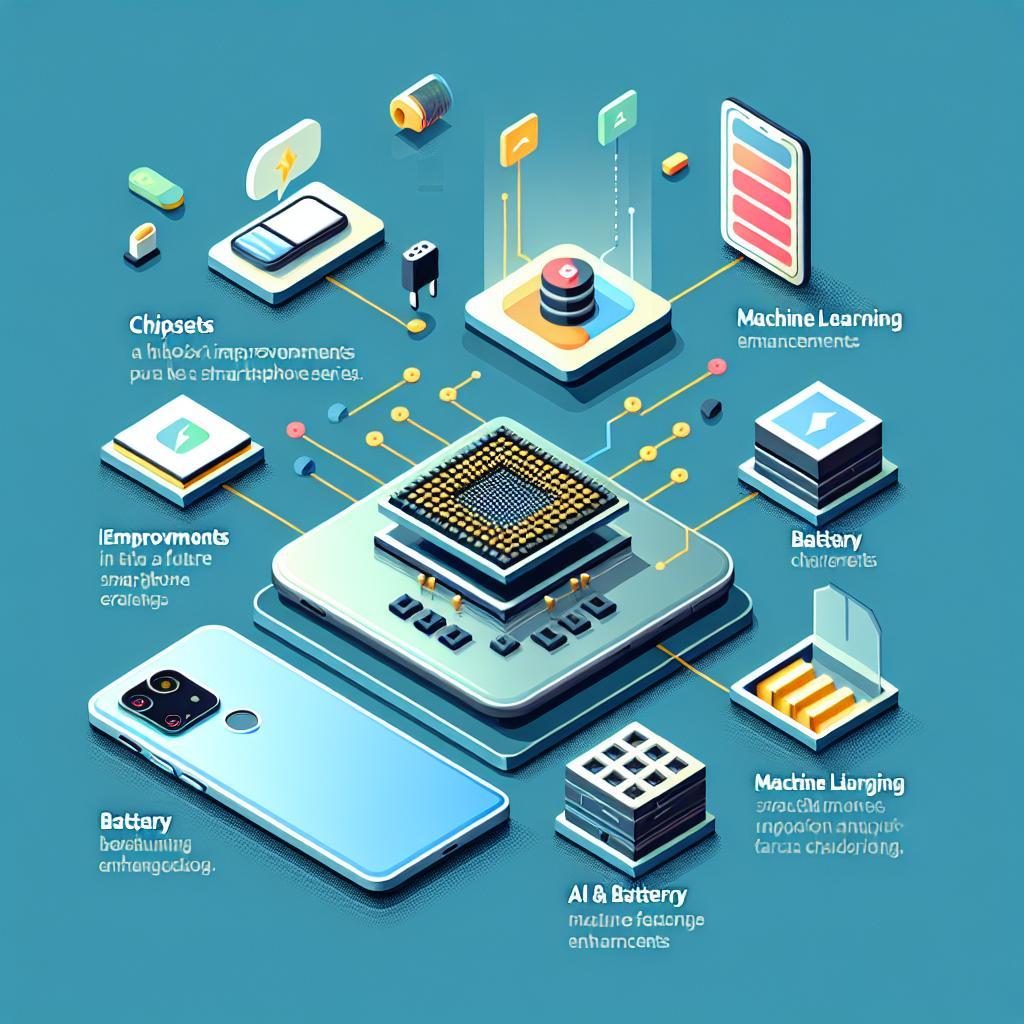
Expected Enhancements in the iPhone 16 Series: Chips, Battery, and Performance

TABLE OF CONTENTS
- Summary
- Overview of the iPhone 16 Series Chipsets
- Battery Capacities and Efficiency Improvements
- Charging Capabilities
- Conclusion
1. Summary
The report titled 'Expected Enhancements in the iPhone 16 Series: Chips, Battery, and Performance' explores the anticipated improvements in Apple's upcoming iPhone 16 series, particularly in terms of its new A18 chipsets, battery capacities, and overall performance enhancements. The report highlights Apple's decision to unify its chipsets across all models using the A18 chipset, which is expected to enhance AI and machine learning capabilities uniformly across the series. Additionally, significant advancements in battery capacities and the introduction of a stacked battery design aim to improve battery efficiency and longevity. The report also touches upon the expected improvements in charging capabilities, including the adoption of USB-C and increased charging speeds for Pro models, enhancing the user experience significantly.
2. Overview of the iPhone 16 Series Chipsets
2-1. Transition to Unified Chipset – A18 Across All Models
For the past two iPhone update cycles, Apple has used different silicon in different phones, reserving newer chipsets for the latest Pro models while turning to last year's system-on-chip for the standard iPhone. However, this practice ends with the arrival of the iPhone 16 series. According to an Apple code leak, all four iPhone 16 models expected later this year will have the same A18 chip. This unification is significant as it prioritizes parity of silicon among all models, ensuring that the same AI workloads and machine-learning algorithms can run across the entire lineup. This shift also suggests a substantial focus on AI capabilities which necessitates having uniform silicon to enhance smart tools and maintain a privacy-first approach to user data.
2-2. Advancements in AI and Machine Learning Capabilities
The anticipated A18 chipset in the iPhone 16 series is expected to prioritize Apple's Neural Engine, bolstering AI and machine learning capabilities. This can be seen as a strategic move considering the growing importance of AI workloads. The emphasis on AI and machine learning capabilities means that the devices will likely offer improved performance in tasks that require these technologies. Running AI models onboard the device aligns with Apple’s emphasis on privacy, as it reduces the need for data to be processed via cloud services. Additionally, integrating AI capabilities directly in the chip can lead to more efficient performance and reduced latency.
2-3. Manufacturing Process – TSMC's Second-Generation 3nm
Another critical aspect of the A18 chip is its manufacturing process. The chip will be manufactured using TSMC's second-generation 3nm technology. This advanced manufacturing process is expected to enhance power efficiency and performance. With smaller transistors, the new chip can offer more computational power while using less energy, thereby improving overall device efficiency. This advancement is key as it contributes to better performance and longer battery life, supporting the other enhancements planned for the iPhone 16 series.
3. Battery Capacities and Efficiency Improvements
3-1. Detailed Battery Capacities for Each Model
Multiple sources have reported on the battery capacities of the iPhone 16 series. The batteries are expected to see various changes compared to the iPhone 15 series. Specifically, the standard iPhone 16 will have a battery capacity of 3,561 mAh, which is a 6% increase from the previous model's 3,349 mAh. The iPhone 16 Plus will feature a modest increase of 2.47%, bringing its battery size to 3,355 mAh from the former 3,274 mAh. On the other hand, the iPhone 16 Pro Max is projected to have a significant battery size of 4,676 mAh, which marks a 5.58% increase compared to the previous model's 4,422 mAh.
3-2. Impact of A18 Chipsets on Battery Performance
The introduction of the A18 and A18 Pro chipsets in the iPhone 16 series is expected to significantly enhance battery performance and efficiency. These chipsets will utilize TSMC's second-generation 3nm process, known as N3E, which is designed to offer a better balance between power consumption and performance compared to its predecessor, the A17 Pro. This technological advancement is set to extend battery life while simultaneously improving overall device performance. Therefore, users can expect longer usage times and more efficient power management across all iPhone 16 models.
3-3. Introduction of Stacked Battery Design
The iPhone 16 series will introduce a new stacked battery design. This innovative approach is intended to improve the overall efficiency and longevity of the batteries. Sources reveal that the new design will help in enhancing heat dissipation and preventing potential overheating issues, a noted improvement from the previous film casing used in iPhone 15 batteries. This means users can expect longer battery life and better performance, even with intensive tasks and heavy usage throughout the day.
4. Charging Capabilities
4-1. Increased Wired and Wireless Charging Speeds for Pro Models
The iPhone 16 series has raised expectations for improved charging capabilities, specifically for Pro models. A notable mention from the collated documents is the anticipation of faster charging speeds due to the universal adoption of USB-C. The previous models were limited to charging speeds between 20W and 27W, but there is speculation that the new models may surpass these figures. However, it's also reported that Apple is traditionally slow in upgrading battery and charging performance, so tangible changes in this area remain uncertain as of now.
4-2. USB-C Adoption Across All Models
In a continuation of last year’s trend, all iPhone 16 models are expected to feature USB-C ports. This shift is said to enhance the overall charging experience by supporting higher charging speeds, which will be an improvement over the previous Lightning port standard. This adoption is a significant change in Apple's product design and is intended to standardize the charging interface across different tech ecosystems.
4-3. Potential Impact on User Experience
The collective improvements in charging technologies are anticipated to drastically improve user experiences. Faster charging times mean less downtime for users. The adoption of USB-C is also expected to provide more convenience in terms of compatibility with other devices and accessories. However, considering Apple's history of slow upgrades in battery and charging technology, the real impact on user experience will likely be clearer once the devices are in actual use.
5. Conclusion
The iPhone 16 series is projected to bring substantial hardware and performance advancements that can potentially redefine user experience. The unified A18 chipset, manufactured using TSMC's second-generation 3nm process, is expected to significantly boost AI and machine learning capabilities across all models, ensuring consistency and enhanced performance. Improvements in battery capacities and the introduction of the stacked battery design indicate longer usage times and better efficiency, crucial for users who rely heavily on their devices. Although the faster charging speeds and universal adoption of USB-C promise a much-enhanced charging experience, Apple's traditionally cautious approach to upgrades means that the real impact of these enhancements will become evident only after widespread user adoption. Going forward, the practical applicability of these innovations will be critical in driving consumer satisfaction and maintaining Apple's reputation for cutting-edge technology. Future developments are likely to continue in the direction of further enhancing AI capabilities, battery efficiencies, and interoperability within the broader tech ecosystem.