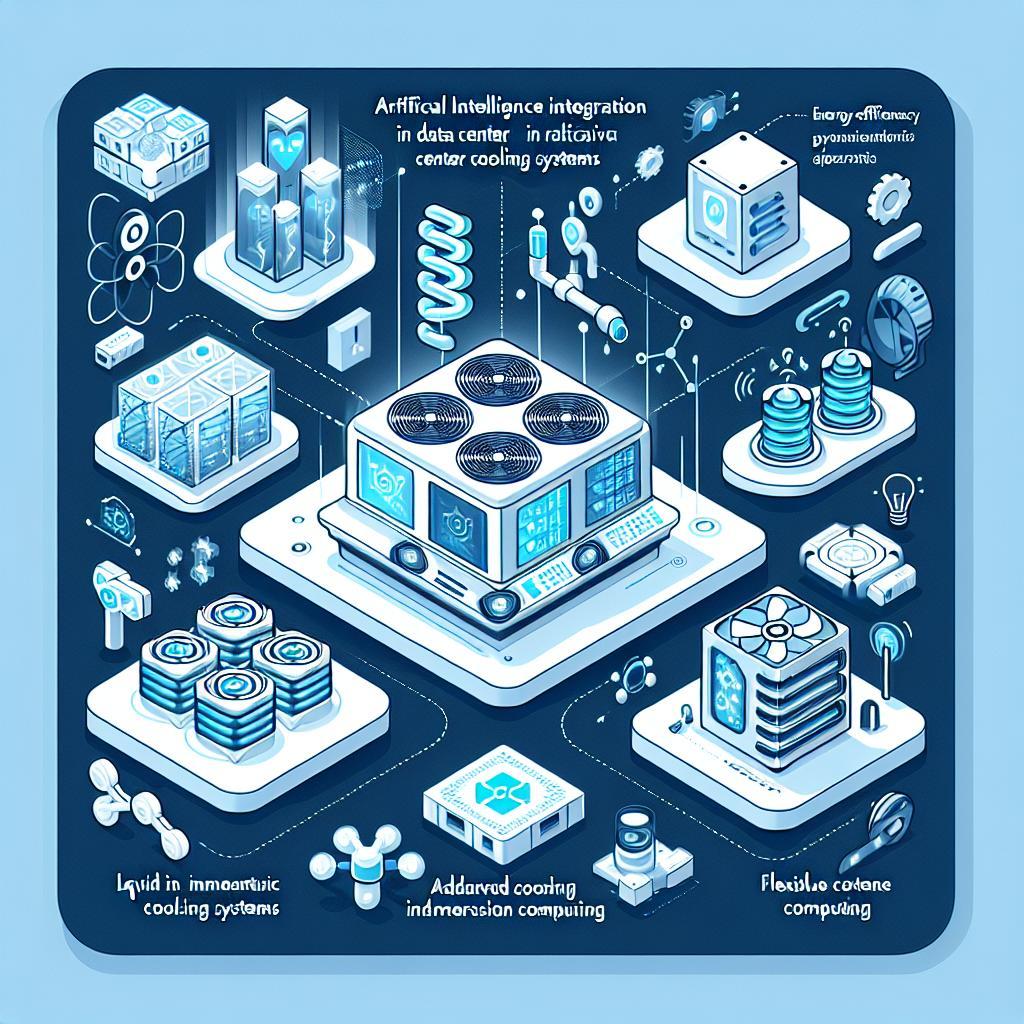
Advancements and Efficiency Improvements in Data Center Cooling Through Artificial Intelligence

TABLE OF CONTENTS
- Summary
- Introduction to AI in Data Center Cooling
- Innovations in Cooling Techniques
- Energy Efficiency and Cost Reduction
- Flexible Computing for AI Data Centers
- Conclusion
1. Summary
The report titled 'Advancements and Efficiency Improvements in Data Center Cooling Through Artificial Intelligence' examines the transformative impact of Artificial Intelligence (AI) on data center cooling systems. It highlights various AI-driven innovations that improve energy consumption, operational efficiency, and cost reduction. Key areas explored include real-time dynamic adjustments to cooling systems, advanced cooling techniques such as liquid and immersion cooling, and the concept of flexible computing. The report emphasizes that AI algorithms facilitate better temperature regulation by processing extensive sensor data, leading to significant energy savings. The insights provided include projected industry trends and research-backed data supporting the importance of AI in optimizing data center operations and energy usage.
2. Introduction to AI in Data Center Cooling
2-1. Role of AI in data center cooling
The integration of Artificial Intelligence (AI) in data center cooling systems has transformed efficiency and effectiveness in temperature regulation. AI algorithms process extensive data from sensors installed in data centers, enabling real-time dynamic adjustments to cooling systems. This continuous monitoring includes vital variables such as temperature, humidity, and airflow patterns, which help in optimizing performance while significantly reducing energy consumption. According to industry experts, by 2025, it is projected that 75% of large enterprises will utilize AI-powered infrastructure management tools to enhance data center performance and efficiency.
2-2. Overview of AI algorithms for temperature regulation
AI-based cooling optimization stands out as a major contributor to energy efficiency in data centers. Research from the Lawrence Berkeley National Laboratory indicates that implementing AI-driven cooling strategies can potentially lower data center energy consumption by up to 40%. In addition to this, traditional energy-intensive cooling methods are being supplemented or replaced with advanced cooling techniques, such as liquid and free cooling solutions. Liquid cooling involves circulating coolant directly over servers, while free cooling uses cooler outside air, both of which are more efficient than conventional air conditioning systems. Alongside these innovations, AI supports dynamic workload management and predictive maintenance by utilizing machine learning algorithms, which identify usage patterns and adjust server loads accordingly to minimize idle time and unnecessary energy usage.
3. Innovations in Cooling Techniques
3-1. Traditional vs. advanced cooling methods
Traditional cooling methods, such as air conditioning, are known to be energy-intensive, leading to higher operational costs in data centers. In contrast, advanced cooling techniques like liquid and free cooling have emerged as efficient alternatives. Liquid cooling involves circulating a coolant directly over the servers, significantly improving energy efficiency compared to conventional air cooling. Free cooling utilizes natural environmental conditions, such as cool outside air, to minimize the reliance on mechanical cooling systems, thereby reducing energy consumption.
3-2. AI-based cooling optimization
The integration of Artificial Intelligence (AI) in cooling systems has enabled more dynamic and efficient management of data center operations. Machine learning algorithms are utilized to optimize workload management and predictive maintenance, allowing data centers to adjust resource usage based on real-time analysis of server patterns. This helps in minimizing idle time and unnecessary energy consumption, contributing to overall energy savings.
3-3. Liquid and free cooling methods
Liquid cooling technologies, including air-assisted liquid cooling and immersion cooling, are being studied and implemented in modern data centers. Liquid cooling not only provides more efficient heat removal from servers but also enhances the overall performance of cooling systems. Immersion cooling, although still in development, shows promise in running computer servers submerged in liquid, which can further enhance cooling efficiency. Additionally, free cooling leverages low ambient temperatures to reduce dependency on mechanical cooling, thereby fostering energy conservation.
4. Energy Efficiency and Cost Reduction
4-1. Reduction in energy consumption with AI
The integration of Artificial Intelligence (AI) in data center cooling systems has led to a significant reduction in energy consumption. AI algorithms are capable of analyzing vast amounts of data generated by sensors within the data center. These algorithms facilitate dynamic adjustments to cooling systems by continuously monitoring variables such as temperature, humidity, and airflow patterns. According to research by the Lawrence Berkeley National Laboratory, AI-based cooling optimization can achieve energy consumption reductions by up to 40%. Additionally, industry insights indicate that by 2025, 75% of large enterprises are expected to utilize AI-powered infrastructure management tools to enhance data center performance and efficiency.
4-2. Cost benefits of AI-driven cooling
AI-driven cooling innovations not only enhance energy efficiency but also contribute to substantial cost benefits for data centers. Traditional cooling methods are known to be energy-intensive; however, advancements such as liquid cooling and free cooling techniques offer alternative solutions that significantly reduce energy usage. Liquid cooling circulates coolant directly over servers, proving to be more efficient than conventional air cooling systems. The optimization of hardware also plays a crucial role, as modern servers are designed to be more energy efficient, delivering superior performance while consuming less power. By implementing AI solutions, data centers benefit from dynamic workload management and predictive maintenance, which minimizes idle time and reduces unnecessary energy costs.
5. Flexible Computing for AI Data Centers
5-1. Flexible computing concepts
Flexible computing refers to a modern approach in constructing AI data centers that prioritize computational resource management based on electricity costs, availability, and environmental impact. This methodology advocates for increasing computational tasks when electricity is cheaper and more sustainable, while reducing them during peak pricing or less environmentally friendly periods. The concept aims to enhance the overall efficiency of data center operations and energy consumption.
5-2. Demand response and grid coordination
Demand response in the context of AI data centers involves adjusting power usage based on the needs of the electrical grid. Researchers and industry professionals have demonstrated initial practices where data centers manage their energy consumption according to grid demands. This allows operators to perform certain computing tasks during off-peak hours, contributing to more stable grid performance and optimizing electricity usage.
5-3. Scalability of flexible power consumption
The scalability of flexible power consumption in data centers necessitates innovative advancements across hardware and software infrastructure. It requires enhanced strategies for aligning data center operations with real-time power grid conditions. The potential for scaling up flexible computing is significant, particularly for AI applications, as data centers can adjust their computational loads and energy usage according to fluctuating grid requirements. This flexibility is essential for maximizing efficiency and minimizing operational costs.
6. Conclusion
The integration of Artificial Intelligence (AI) into data center cooling systems marks a major leap towards enhanced energy efficiency and cost reduction. The report's findings showcase how innovations like liquid cooling and immersion cooling outperform traditional air cooling methods by delivering higher efficiency and better heat dissipation. Coupled with flexible computing approaches, these technologies highlight AI's potential in revolutionizing data center operations by dynamically adjusting operational parameters based on real-time data. Nevertheless, the future success of these advancements is contingent upon continuous research and development to overcome current limitations. Emphasizing sustainable energy use, these innovations pave the way for smarter and greener data centers. As more enterprises adopt AI-powered cooling systems, we anticipate substantial operational improvements and energy savings, with flexible computing playing a pivotal role in harmonizing data center activities with grid demands, thereby optimizing resource usage.