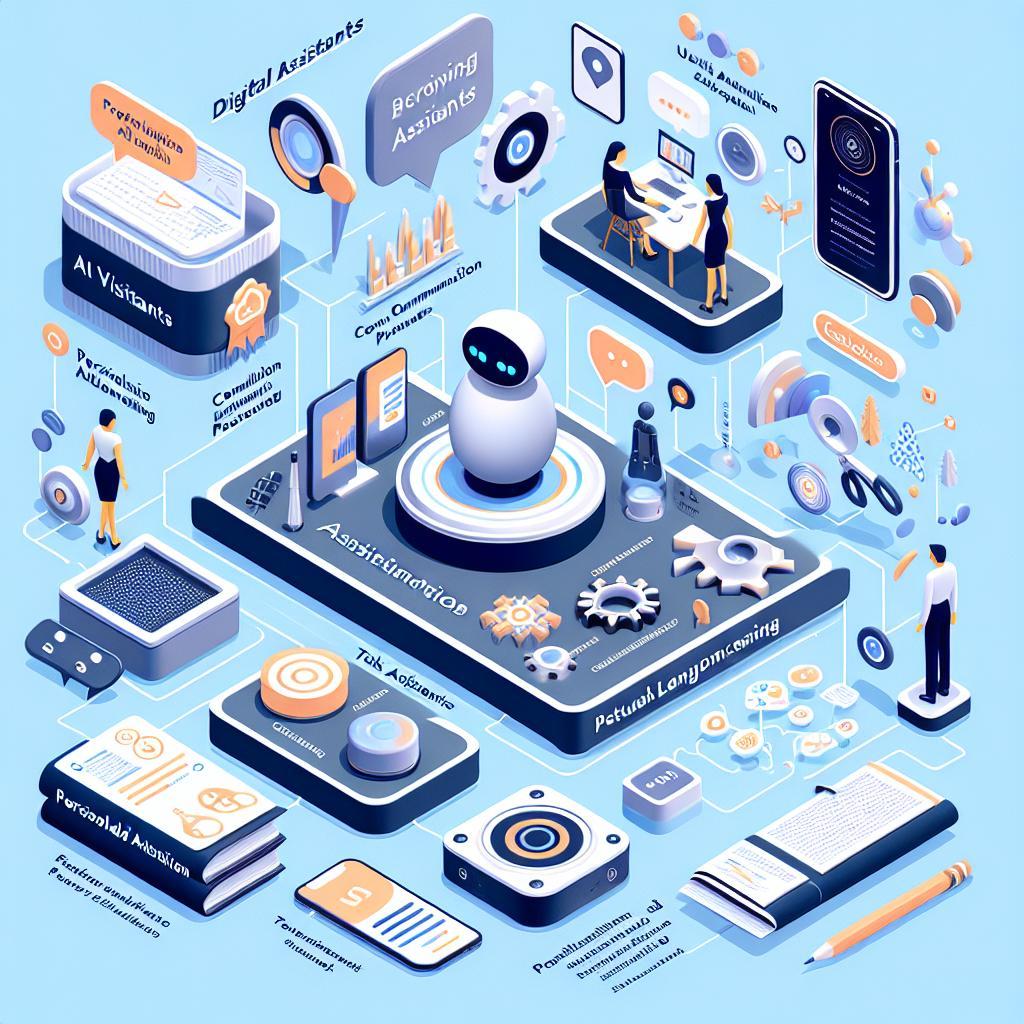
Impact of AI-Powered Virtual Assistants on Efficiency and Productivity

TABLE OF CONTENTS
- Summary
- Introduction to AI-Powered Virtual Assistants
- Technological Capabilities and Functionalities
- Integration and Applications Across Domains
- Impact on Efficiency and Productivity
- Challenges and Considerations
- Conclusion
1. Summary
The report titled 'Impact of AI-Powered Virtual Assistants on Efficiency and Productivity' investigates how AI-powered virtual assistants like Siri, Alexa, and Google Assistant are enhancing productivity and communication in both personal and professional contexts. Leveraging advanced technologies such as Natural Language Processing (NLP), these assistants automate tasks, provide personalized assistance, and integrate with various platforms to improve efficiency. Key findings indicate that these virtual assistants boost workplace productivity, streamline customer service, and facilitate smart home integration. However, challenges such as privacy concerns, reliance on internet connectivity, and integration issues remain prominent obstacles that need addressing.
2. Introduction to AI-Powered Virtual Assistants
2-1. Scope and Definition of AI-Powered Virtual Assistants
AI-powered virtual assistants, also known as digital assistants or AI assistants, are software applications designed to understand natural language voice commands and perform tasks for users. These assistants leverage advanced artificial intelligence, natural language processing (NLP), and machine learning algorithms to comprehend and address user commands and inquiries. The tasks they can perform include setting reminders, sending messages, playing music, managing smart home devices, and much more. They serve as digital companions in various forms such as AI chatbots, conversational agents, and advanced AI virtual assistants. Their applications range from personal productivity to enhancing customer service by automating responses and improving user experiences.
2-2. Historical Development and Evolution
The development of AI-powered virtual assistants has been a transformative journey, significantly impacting both personal and professional spheres. Initially, these assistants were simple voice-activated search tools like Apple's Siri, which primarily executed basic commands. Over the years, the integration of more sophisticated AI technologies has vastly expanded their capabilities. Major advancements include natural language understanding, multi-platform integration, and continuous learning. Market leaders such as Siri, Alexa, and Google Assistant exemplify this evolution. These assistants have moved from executing simple commands to becoming complex conversational companions, capable of adapting to user preferences, managing intricate tasks, and even facilitating multilingual communication in a globalized workplace.
3. Technological Capabilities and Functionalities
3-1. Natural Language Processing and Voice Recognition
AI-powered virtual assistants like Siri, Alexa, and Google Assistant utilize advanced natural language processing (NLP) algorithms that enable them to interpret speech patterns, consider context, and provide accurate responses. This evolution from rudimentary speech recognition systems has significantly contributed to their popularity. For instance, they can understand and set alarms based on conversational requests like 'What's my schedule tomorrow?' This contextual understanding is bolstered by algorithms capable of sentiment analysis, named entity recognition (NER), and language generation. NER, for example, allows assistants to identify and classify entities such as names, organizations, and locations in user queries, ensuring accurate and relevant responses.
3-2. Personalization and Contextual Understanding
One key feature of modern virtual assistants is their ability to learn from user interactions and provide personalized recommendations. They analyze data patterns and adapt over time to recognize individual preferences. For example, virtual assistants can suggest music based on past listening habits or recommend restaurants that cater to specific dietary restrictions. This level of personalization enhances the user experience by making interactions more relevant and efficient. Furthermore, advancements in contextual understanding enable these assistants to provide more accurate and nuanced responses by interpreting the semantic relationships within user queries.
3-3. Task Automation and Multilingual Support
AI-powered virtual assistants excel in automating a variety of routine tasks, thereby boosting productivity. They can manage calendars, schedule appointments, set reminders, send messages, and control smart home devices through simple voice commands. This automation extends to multilingual support, where advancements in NLP have enabled these assistants to process and respond to commands in multiple languages. For instance, virtual assistants leverage machine translation and cross-lingual embeddings to bridge language barriers, making them versatile tools for users across different linguistic and cultural backgrounds.
4. Integration and Applications Across Domains
4-1. Smart Home Integration
AI-powered virtual assistants have become integral in smart home systems. Assistants like Siri, Alexa, and Google Assistant offer convenience by allowing users to control smart home devices using voice commands. These assistants can manage devices such as lights, thermostats, and security systems, creating a seamless and interconnected home environment. With natural language processing and voice recognition, virtual assistants enhance user experience by providing personalized and context-aware interactions within smart homes.
4-2. Workplace Productivity Enhancements
AI-powered virtual assistants significantly boost workplace productivity by automating routine tasks. They can manage schedules, set reminders, draft emails, and support document creation. Virtual assistants like ChatGPT enable efficient information retrieval through advanced intent recognition and semantic search capabilities. Additionally, these assistants offer continuous learning, adapting to user preferences and improving over time. By offloading mundane tasks, virtual assistants allow employees to focus on more strategic and creative work, enhancing job satisfaction and overall productivity.
4-3. Customer Service Improvements
AI virtual assistants are revolutionizing customer service by providing 24/7 support and handling customer inquiries efficiently. They use natural language processing and machine learning to understand and respond to customer queries, offering personalized and timely assistance. Virtual assistants help reduce operational costs by automating customer service functions, thus improving customer satisfaction and loyalty. They also support multilingual capabilities, bridging communication gaps in globalized businesses and fostering better customer relationships.
5. Impact on Efficiency and Productivity
5-1. Enhancement of Personal Productivity
AI-powered virtual assistants such as Siri, Alexa, and Google Assistant have significantly enhanced personal productivity by automating a wide range of tasks. These tasks include setting reminders, scheduling meetings, sending messages, and even providing personalized recommendations based on user preferences. The capabilities of these virtual assistants extend to managing smart home devices, suggesting the best meeting times by considering schedules and preferences, and drafting documents. Furthermore, continuous learning enables these assistants to become more efficient over time by adapting to new contexts and staying updated with the latest trends.
5-2. Boosting Workplace Communication and Collaboration
AI-powered virtual assistants have revolutionized workplace communications by providing efficient information retrieval, round-the-clock assistance, and multilingual support. They utilize advanced algorithms and natural language processing to understand user queries and provide relevant information from various sources. These assistants eliminate the need to wait for business hours, enhancing workplace collaboration globally by providing instant translations and supporting communications in multiple languages. Additionally, they help retrieve information quickly through features like intent recognition, semantic search, and speech-to-text capabilities.
5-3. Cost Savings and Operational Efficiency
Incorporating AI virtual assistants into business operations can lead to substantial cost savings and improved operational efficiency. By automating repetitive and mundane tasks, organizations can offload duties like automated email responses and customer support interactions to AI systems. This shift allows employees to focus on more engaging and challenging work, subsequently boosting job satisfaction and retention. Additionally, AI virtual assistants play a crucial role in customer service by answering common queries and facilitating online purchases, which helps reduce operational costs and enhances customer satisfaction.
6. Challenges and Considerations
6-1. Privacy and Ethical Concerns
AI virtual assistants often require access to sensitive data such as voice recordings, search history, and device usage patterns, raising significant privacy concerns. Proper data security measures must be implemented to protect user information. Additionally, AI assistants may inadvertently reinforce biases embedded in the data they are trained on, raising ethical questions. Ensuring user privacy, transparency, and unbiased data training are crucial for fostering trust and ethical AI usage.
6-2. Dependence on Internet Connectivity
Most AI virtual assistants rely heavily on internet connectivity to function. This reliance limits their usability in offline scenarios and can disrupt functionality during internet outages. Users in areas with limited connectivity may find these assistants less effective. Ensuring consistent internet access is essential for the optimal performance of AI virtual assistants.
6-3. Integration Challenges with Existing Systems
Integrating AI virtual assistants into existing systems and devices can be complex and may require substantial customization. This complexity can be a barrier for seamless usage and effective deployment in diverse environments and existing workflows. Solving integration challenges is crucial for maximizing the efficiency and usability of AI virtual assistants across various platforms and systems.
7. Conclusion
AI-powered virtual assistants have revolutionized productivity and efficiency across different domains by seamlessly integrating into daily routines and professional workflows. Their ability to enhance personal productivity, support multilingual communication, and automate mundane tasks underscores their significance. However, critical issues such as privacy concerns related to handling sensitive data, dependence on consistent internet connectivity, and difficulties in integrating with existing systems and devices limit their full potential. To maximize the benefits of AI assistants, it's essential to address these challenges through robust data protection measures, improved internet infrastructure, and better integration solutions. Future advancements in AI technology should focus on ethical considerations and responsible usage to ensure sustainable growth and broader acceptance of these digital assistants.