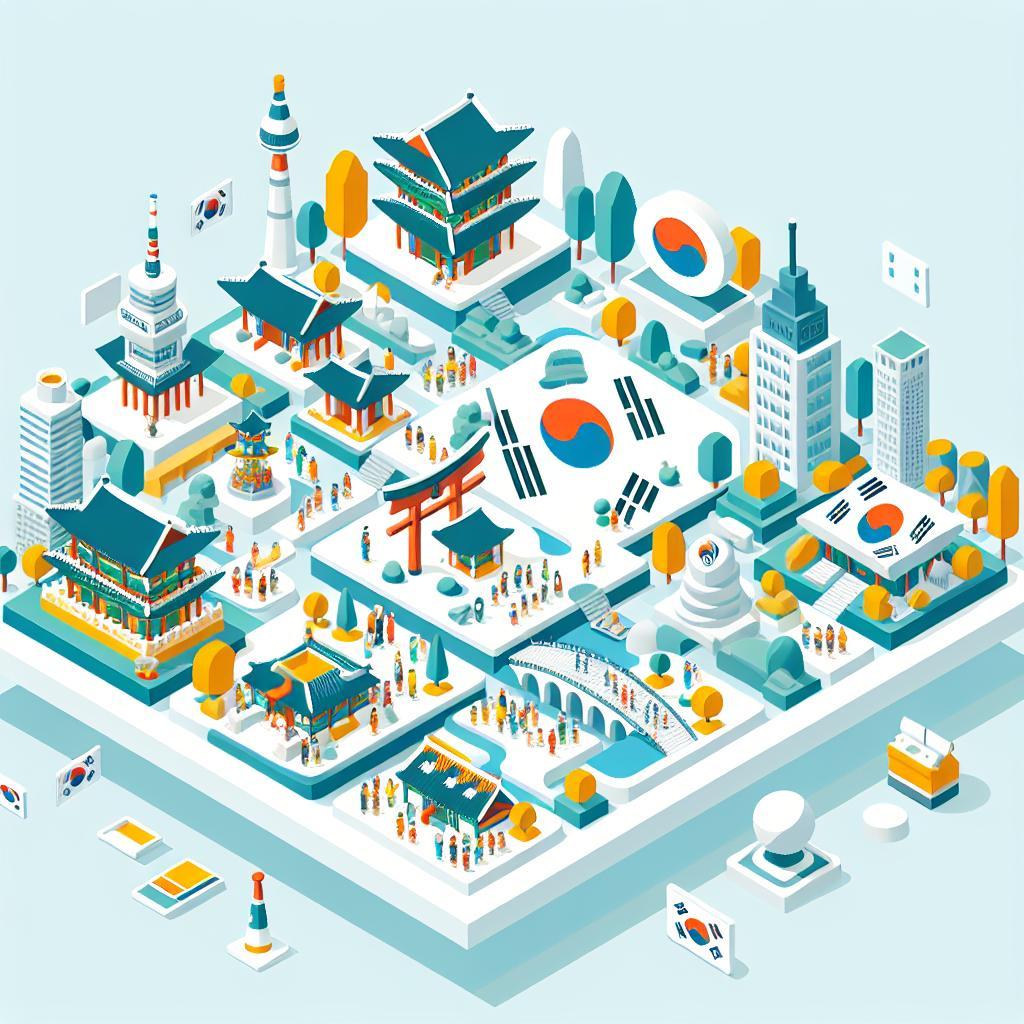
Exploring South Korea: Culture, Tourism, and Geopolitical Landscape

TABLE OF CONTENTS
- Summary
- Unique Aspects of Korean Culture
- Tourism in South Korea
- Geopolitical Context
- Demographic and Socio-Economic Overview
- Conclusion
1. Summary
This report, titled 'Exploring South Korea: Culture, Tourism, and Geopolitical Landscape,' provides an extensive overview of South Korea's unique cultural facets, tourism destinations, geopolitical context, and socio-economic environment. It delves into the country's rich culture, including traditional practices, superstitions, and celebrated events like Pepero Day. Highlighting key tourism spots, it covers popular destinations both within Seoul and beyond, such as the Demilitarized Zone (DMZ) and Taebaek Snow Festival. The report also explores the ongoing division between North and South Korea, comparing their political, economic, and social differences. Finally, it presents an in-depth demographic and socio-economic analysis, emphasizing South Korea's urbanization, economic classification, and participation in international organizations.
2. Unique Aspects of Korean Culture
2-1. Expensive fruit prices and their impact on consumption
Fruit prices in South Korea are notably high. Apples alone can cost between 6,000 and 10,000 Korean won each, equivalent to around $5 to $7. This price inflation has led to a decrease in fruit consumption, with a 19% drop from 67.9 kilograms of fruit per person in 2007 to 55 kilograms in 2022. Despite these high prices, luxury fruits like Shine Muscat grapes remain popular gifts during holidays. For example, a set of three apples in a local supermarket costs $16.
2-2. Giving cash as wedding gifts
In Korean weddings, it is traditional to give cash as a gift, known as chug-ui-geum (축의금), or congratulatory money. The amount typically ranges from 30,000 to 100,000 Korean won, depending on the giver's relationship to the bride or groom and whether they attend the ceremony. A 2022 Statista survey found that 50,000 won is the most common amount given. For those unable to attend, it is now possible to wire the gift directly to the couple's bank account.
2-3. Superstitions involving the number four and red ink
In South Korea, the number four and red ink carry strong superstitions. The word for 'four' ('sa') sounds like the word for 'death,' making it an unlucky number. As a result, some buildings skip the fourth floor, using 'F' instead, and properties with the number 4 are valued lower. Additionally, writing a person's name in red ink is taboo because red ink was historically used to mark the names of the deceased, thus symbolizing death.
2-4. Celebration of Pepero Day
Pepero Day is celebrated annually on November 11th in South Korea, inspired by the resemblance of the date (11/11) to Pepero sticks. This day is dedicated to giving Pepero to friends, family, and loved ones. Since its inception by Lotte Corporation in 1997, Pepero has come in numerous flavors. The holiday has become a major commercial success, generating annual sales of 100 billion won.
2-5. Use of electric heating mats during winters
To cope with freezing winters, many South Koreans use electric heating mats. Though most homes have 'ondol' or floor heating systems, they can be expensive to run continuously. Thus, portable electric heating mats are a popular alternative for use in beds or living rooms. Users are advised to monitor the temperature settings to avoid burns.
2-6. Urban legends and traditions regarding Deoksugung stone-wall road and Korean cars
Deoksugung stone-wall road (Deoksugung Doldam-gil) is shrouded in an urban legend that suggests couples who walk along it will break up. This superstition originated from the road's proximity to the Seoul Family Court, which handled divorces until 1995. Moreover, small blue sponges seen on many Korean cars signify newness as they are remnants from the manufacturing process. Koreans often retain these sponges to prevent scratches and to indicate that the car is new.
3. Tourism in South Korea
3-1. Top day trips from Seoul
Several top day trips can be easily taken from Seoul, offering a range of experiences from cultural sites to natural wonders. Notable destinations include Nami Island, known for its tree-lined pathways and vibrant scenery; Petite France, a charming village showcasing French culture; the Garden of Morning Calm, famous for its tranquil botanical gardens and winter light festival; and the DMZ (Demilitarized Zone), offering a glimpse into the Korean divide with historic sites like the 3rd Infiltration Tunnel and the Bridge of Freedom. Additionally, Seoraksan Mountain is perfect for autumn visits with its vibrant fall foliage, and Haneul Park offers picturesque views of pink muhly grass during autumn.
3-2. Exploring South Korea beyond Seoul
Exploring beyond Seoul, South Korea boasts numerous historical and cultural sites. Gyeongju, often referred to as 'the museum without walls,' is home to ancient tombs and relics from the Silla Dynasty. Jeonju Hanok Village offers a glimpse into traditional Korean architecture with its well-preserved hanok houses. The city of Suwon is notable for the UNESCO-listed Hwaseong Fortress, built during the Joseon dynasty. The Korean Folk Village in Yongin provides an immersive experience into Korea's cultural heritage with restored traditional houses and live performances.
3-3. Goseong tourism: hotels, landmarks, and activities
Goseong, a destination with significant historical and natural attractions, features hotels that cater to various budgets. As of July 9, 2024, the average hotel price in Goseong is $120 per night. Notable landmarks include the Goseong Dinosaur Museum, one of the world's largest dinosaur footprint fossil sites, and the Goseong Unification Observatory, offering views of North Korea's Geumgangsan Mountain. Hwajinpo Beach is a popular spot, famed for its appearance in the South Korean drama 'Autumn in My Heart.' Tourists can also purchase North Korean goods at the Goseong Unification Observatory.
3-4. Seoul as a romantic destination for couples
Seoul offers numerous romantic spots perfect for couples. Dongdaemun Design Plaza, with its unique architecture and design exhibitions, provides a creative and inspiring environment. Everland, Korea's largest theme park, features thrilling rides and picturesque gardens ideal for dates. N Seoul Tower, located on Mt. Namsan, offers panoramic city views and is accessible via walking trails lined with cherry blossoms in the spring. Han River cruises provide a unique perspective of the city, with options for music, dinner, and even fireworks cruises.
3-5. Best summer getaway destinations
Ideal summer getaways include Bogildo Island, a tranquil destination known for its pristine landscape and historical sites like Seyeonjeong Pavilion. Jeongdongjin Sunrise Park in Gangwon-do is famous for its stunning sunrise views and was a filming location for the popular drama 'Hourglass.' Jeju Island, another popular spot, offers beautiful beaches and volcanic landscapes. The coastal city of Busan is known for its beaches, vibrant markets, and cultural sites like Gamcheon Culture Village.
3-6. Winter tourism in Sokcho: activities and packing tips
Sokcho transforms into a winter wonderland offering various activities such as hiking in Seoraksan National Park, known for its snow-covered peaks and frozen waterfalls. The Sokcho Tourist Fish Market is a must-visit for fresh seafood. To stay warm, visitors should layer up with thermal clothing, wear waterproof boots, and pack winter accessories like gloves and scarves. The average temperature in Sokcho during winter ranges from 26°F to 38°F.
3-7. Snow festivals in Taebaek and their attractions
The Taebaek Snow Festival, held annually in the picturesque Taebaek Mountain range, features impressive ice and snow sculptures, winter sports, and cultural performances. The festival is typically held from late January to early February and includes activities like snow sledding and ice fishing. Nearby attractions include Mandeoksa Temple and the Taebaek Coal Museum. Visitors can reach Taebaek via bus or train from Seoul.
3-8. Ski resorts near Seoul
Ski resorts near Seoul offer convenient options for winter sports enthusiasts. Popular resorts include Vivaldi Park, known for its variety of slopes and family-friendly Snowy Land theme park; Alpensia Ski Resort, which hosted the 2018 Winter Olympics and offers luxurious accommodations; and Yongpyong Resort, the largest ski resort in South Korea with 28 slopes and scenic gondola rides. These resorts are accessible from Seoul via shuttle buses, trains, or private transfers.
4. Geopolitical Context
4-1. The division between North and South Korea
The Korean War ended in a stalemate in 1953. Both North and South Korea signed a truce to end hostilities; however, no official peace treaty was ever agreed to, leaving the two Koreas still officially at war. The division is demarcated by the 160-mile-long and 2.5-mile-wide Demilitarized Zone (DMZ), established as part of the Korean Armistice Agreement of 1953. Each government claims sovereignty over the entire Korean Peninsula. This prolonged state of division has significantly impacted both countries politically, economically, and socially.
4-2. Touring the Demilitarized Zone (DMZ) and its historical significance
The DMZ serves as a buffer zone where both North and South Korea refrain from combat, despite the significant presence of military personnel. Touring the DMZ often includes visiting the Joint Security Area (JSA), where North and South Korean forces stand face-to-face. These tours highlight the volatile history and current tensions between the two nations. Another popular tourist site within the DMZ is the Third Infiltration Tunnel, an area fraught with historical significance due to its use by North Korea to secretly infiltrate the south. Such tours though part of high-security areas, continue to attract tourists, underscoring the region's historical and geopolitical importance.
4-3. Differences between the two Koreas in political, economic, and social contexts
In terms of political structure, North Korea operates under a centralized, authoritarian regime led by the Kim dynasty, while South Korea is a democratic republic. Economically, South Korea is significantly more developed, boasting a robust market economy and being one of the world’s leading industrialized nations. North Korea, in contrast, maintains a command economy that faces numerous challenges including international sanctions and economic isolation. Socially, South Korea enjoys a higher standard of living and greater personal freedoms, whereas North Korea remains tightly controlled with limited access to global information and communication.
4-4. Achievements and challenges in inter-Korean tourism
Inter-Korean tourism has seen varied achievements and challenges over the past few decades. The Mt. Geumgangsan tour, launched 10 years ago, was one of the significant developments. However, political instability such as the deadly shooting of a tourist and North Korea's nuclear tests have led to subsequent suspensions and declines in tourist exchanges. Despite these issues, efforts have continued, with the opening of the Gaeseong tour in recent years. Issues such as the need for better infrastructure, predictable socio-political dynamics, and mutual agreements remain critical for future tourism ventures between the two Koreas.
5. Demographic and Socio-Economic Overview
5-1. Population density and urbanization
South Korea has a high population density with 515.0 inhabitants per square kilometer, making it one of the most densely populated countries in the world. The total population is approximately 51.67 million people living in a total area of just 100,339 square kilometers. A substantial proportion, specifically 81.4% of the population, resides in urban areas. The capital city, Seoul, alone is home to nearly one-fifth of all South Koreans, and if considering the metropolitan region, it encompasses almost half of the population. The major urban areas include Seoul with 9.988 million people, Busan with 3.472 million, Incheon with 2.849 million, Daegu (Taegu) with 2.181 million, Daejeon (Taejon) with 1.577 million, and Gwangju (Kwangju) with 1.529 million (2023 Est.).
5-2. Economic classification and income levels
South Korea is classified as a high-developed economy according to the Human Development Index (HDI), with a value of 0.929. The International Monetary Fund (IMF) also categorizes it under high-income countries. The average annual income stands at 36,190 USD. The country's robust economy is markedly export- and technology-oriented, fueled by industries such as semiconductors and automotive. South Korea ranks 9th globally for both exports and imports. Key export commodities include integrated circuits, refined petroleum, cars, broadcasting equipment, and ships, while major import commodities consist of crude petroleum, integrated circuits, natural gas, coal, and refined petroleum. In recent years, South Korea's credit ratings have been strong, with Fitch rating it AA-, Moody’s Aa2, and Standard & Poor's AA.
5-3. Political indicators and international codes
South Korea's political environment is reflected through various international indicators and codes. It is a presidential republic with the current President being YOON Suk Yeol since May 10, 2022. The country uses various international codes like ISO 3166-1 alpha3: KOR, ISO 3166-1 alpha2: KR, and the internet domain name: kr. These codes are essential for global identification and interoperability in international platforms.
5-4. Government structure and political parties
The government of South Korea functions as a presidential republic with President YOON Suk Yeol, who is both the head of state and government. The executive branch also includes the State Council appointed by the president on the prime minister's recommendation. Legislative power is vested in a unicameral National Assembly consisting of 300 seats, with members serving four-year terms. The judicial system combines European civil law, Anglo-American law, and Chinese classical thought. Major political parties include the Democratic Party of Korea (DPK), People Power Party (PPP), and multiple smaller entities like the Basic Income Party and New Reform Party. This multi-faceted structure ensures a balance of power across the government.
5-5. Participation in international organizations and diplomatic relations
South Korea plays an active role in numerous international organizations and maintains strong diplomatic relationships globally. It is a member of organizations such as the UN, OECD, WTO, IMF, and more, contributing to international economic policies, peacekeeping, and development projects. The country has essential diplomatic representation in the US, with an embassy in Washington D.C. and consulates in major cities like New York, Los Angeles, and Chicago. Conversely, the US maintains its embassy in Seoul, ensuring robust bilateral relations.
6. Conclusion
The report underscores the multifaceted nature of South Korea, from its vibrant cultural heritage and diverse tourism sector to its intricate geopolitical dynamics and robust socio-economic framework. The insights provided reveal the country’s rich traditions and modernity, exemplified by practices such as gifting cash at weddings and superstitions about the number four. While the thriving tourism industry highlighted by places like Seoul and the DMZ attracts global visitors, the persistent North-South Korea division remains a vital aspect of its geopolitical reality. South Korea’s strong economic performance and high urbanization rates further illustrate its developmental trajectory. Despite the continued tensions embodied by the DMZ, South Korea’s role in international organizations and its active diplomatic engagement signify its growing global influence. Future prospects for the country include enhancing its tourism infrastructure and fostering inter-Korean cooperation, which are pivotal for sustained growth and stability. For practical applications, these insights can guide policy-making, tourism strategies, and international relations, ensuring South Korea remains a dynamic and central player on the world stage.